

Alba lip balm is a plant-based moisturizing balm built around coconut oil, shea butter, and aloe vera, with several SKUs offering SPF 18 or SPF 25 sun protection. For most ingredient-conscious shoppers it’s a solid, affordable pick, though the line’s naturally derived fragrance and occasional essential oils mean anyone with eczema-prone or reactive lips should read the ingredient panel before buying.
TL;DR:
- Alba lip balms with SPF provide broad-spectrum protection and are effective for short outdoor activities, but require frequent reapplication every two hours for sustained coverage.
- Fragrance, menthol, and certain essential oils can trigger irritation or worsen reactive lips, making patch testing essential for sensitive skin.
- Shelf life ranges from 12 to 18 months after opening, with SPF variants degrading faster and requiring proper storage in cool, dry places to maintain effectiveness.
- The formula’s plant-based emollients like coconut oil and shea butter actively nourish and reinforce the lip barrier, especially for eczema-prone or chronically chapped lips.
- For prolonged sun exposure or sensitive lips, pairing SPF balm with additional sun protection measures is advised, as no balm offers all-day, foolproof coverage.
Table of Contents
- What Is Alba Lip Balm? Variants, Sizes, and Where to Buy
- Alba Lip Balm Ingredients: What Each One Actually Does
- How SPF Lip Balm Works and When to Reapply
- Is Alba Lip Balm Safe for Sensitive or Eczema-Prone Lips?
- Choosing and Using Alba Lip Balm: A Quick Checklist
- Why Biocompatible Fats Matter More Than a Long Ingredient List
- What Alba Lip Balm Customers Actually Say
- Shelf Life and Storage: How Long Alba Lip Balm Actually Lasts
- How Alba Compares to Other Popular Lip Balms
- Alba Botanica’s Brand Story: A Legacy Built on Natural Formulation
- Where Alba Gets It Right, and Where It Falls Short
- Try Nourishing Lipstick for Restorative, Barrier-First Lip Care
What Is Alba Lip Balm? Variants, Sizes, and Where to Buy
Alba Botanica’s lip balm lineup splits into a few recognizable families, and knowing which one you’re looking at matters more than the branding suggests. The moisturizing sunscreen version carries a broad-spectrum SPF commonly marketed around 25 and leans on coconut oil, shea butter, and aloe vera as its headline ingredients. The Un-Petroleum line includes a cherry variant with broad-spectrum SPF protection typically noted as 18 built around jojoba oil, vitamin E, and natural waxes, positioned as a petrochemical-free alternative to standard drugstore balms. Then there are the flavored, non-SPF options, including a coconut cream Hawaiian-inspired stick that’s more about everyday hydration than sun defense.
Each tube in the range ships in a small compact size suitable for daily use, and retail pricing is generally affordable and varies somewhat by retailer. You’ll find Alba lip balm at Whole Foods, on the brand’s own site, and across major online marketplaces.
Common on-package claims include:
- Vegetarian formulation
- Cruelty-free production
- Free of parabens, phthalates, and synthetic colors
- USDA Organic certification on select SKUs
Before you buy, flip the tube over and check the Drug Facts panel. Only the SPF-labeled variants qualify as sunscreen products under FDA rules, and that panel is where the active ingredient actually lives.
Alba Lip Balm Ingredients: What Each One Actually Does
Reading an ingredient list is easier once you sort each component into a job category instead of trying to memorize the whole panel.
Emollients and occlusives are the workhorses. Coconut oil, shea butter, jojoba oil, and sunflower or olive oil soften the skin’s surface and then form a light barrier that slows water loss. Shea butter in particular sits higher on most Alba ingredient lists, which usually signals a thicker, more cushioning texture. Coconut oil absorbs faster and feels lighter, so a balm that leads with coconut oil will glide on differently than one led by shea butter.
Soothers and antioxidants round out the supporting cast. Aloe vera calms irritated or sun-exposed skin, while vitamin E helps stabilize the oils in the formula and offers a modest antioxidant boost, useful for lips that have just spent an afternoon outside.
Sunscreen actives are what turn a moisturizer into sun protection. These are always listed separately in the Drug Facts box, not buried in the cosmetic ingredient list, so that’s the section to check if SPF is your priority.
A few ingredients deserve a second look if your lips are reactive: synthetic fragrance, menthol, and certain essential oils. Dermatology research on contact sensitization notes that fragrance compounds and some essential oils can trigger irritation or worsen existing lip dermatitis in sensitive individuals. If you spot any of these near the top of the list, patch-test first or choose a formula that skips them entirely.
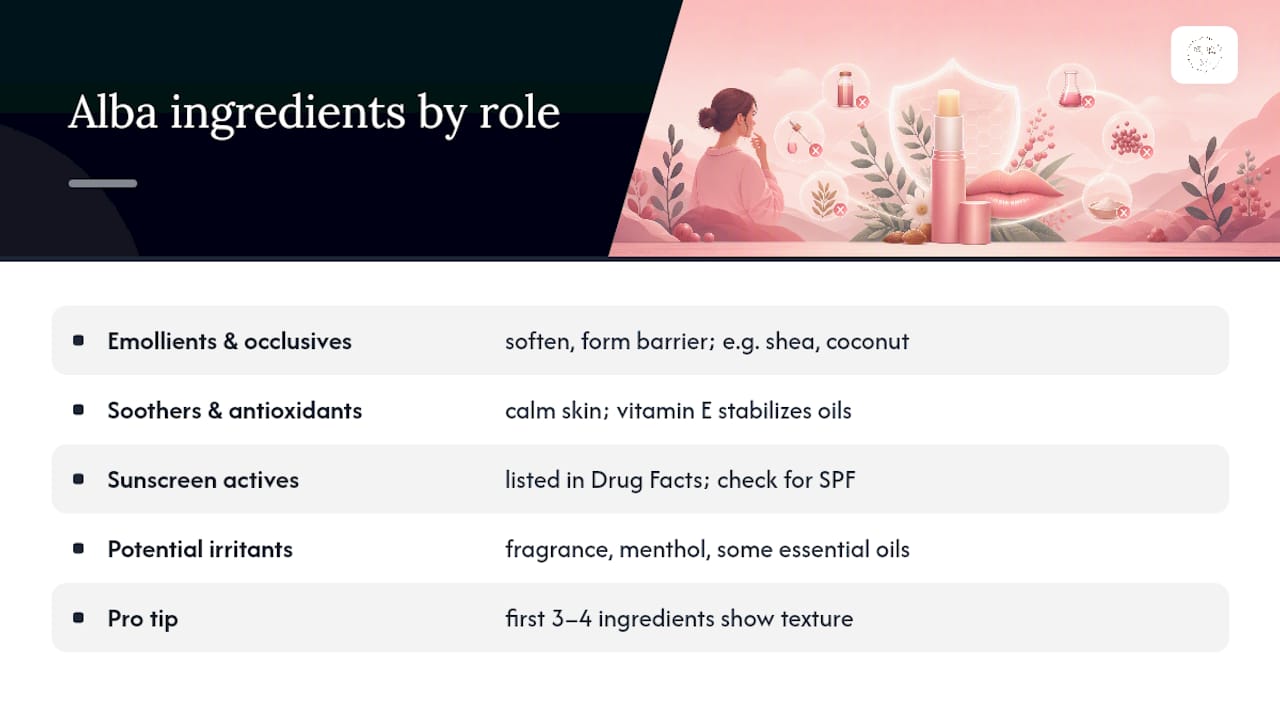
Pro Tip: Ingredients are listed in descending order by concentration, so the first three or four names tell you more about how a balm will feel and perform than the marketing copy ever will.
For a deeper look at how plant oils compare to more restorative formulations, our guide on plant-based lip balm for sensitive skin breaks down which oils actually rebuild the lip barrier versus which ones just sit on the surface.
How SPF Lip Balm Works and When to Reapply
An SPF number tells you how much longer your lips can handle UV exposure before burning compared to bare, unprotected skin. Alba’s SPF 25 sunscreen lip balm and SPF 18 Un-Petroleum cherry variant both fall into the broad-spectrum range, meaning they’re formulated to block UVA and UVB rays rather than just one type.
The jump from SPF 18 to SPF 25 is smaller in real-world terms than the numbers suggest. Both offer meaningful protection for short outdoor stretches, but neither is designed to last all day without help.
- Reapply regularly during sun exposure and after activities like eating, drinking, or wiping your mouth to maintain protection.
- For extended time outdoors, whether hiking, at the beach, or on the water, pair your lip balm with a dedicated sunscreen stick or reapply more frequently than the two-hour minimum.
- Check the Drug Facts panel for the listed “active ingredients,” since that’s the section regulated by the FDA and the only reliable way to confirm what’s actually delivering the SPF.
Sunscreen lip balm works best as part of a routine, not a one-and-done application before you walk out the door.
Is Alba Lip Balm Safe for Sensitive or Eczema-Prone Lips?
Sensitive lips react to a shorter list of triggers than most people expect, and knowing that list saves you a lot of trial and error.
- Fragrance (natural or synthetic) is the single most common lip irritant across balm formulas.
- Essential oils like peppermint or citrus oils can sensitize thin, reactive skin over repeated use.
- Menthol creates a cooling sensation that many people mistake for effectiveness, but it can also worsen dryness and irritation on already-compromised lips.
Claims like “no parabens” or “no phthalates” tell you what’s absent, not whether the remaining ingredients are gentle. Cruelty-free labeling addresses animal testing, not skin compatibility. Neither claim substitutes for reading the actual ingredient panel.
Independent databases like EWG’s Skin Deep rate individual Alba Botanica products and ingredients, which gives you a second opinion beyond the marketing language on the box. Ratings vary by specific SKU, so check the exact product you’re considering rather than the brand as a whole.
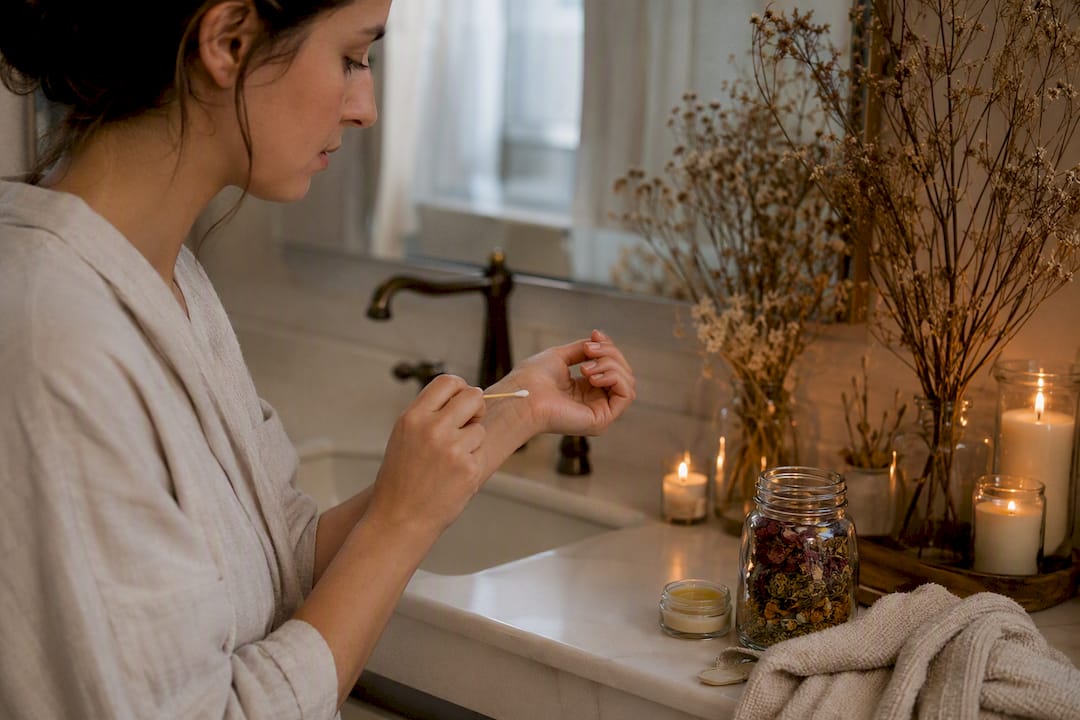
Quick patch test: Apply a small amount to the inner wrist or the corner of your mouth, wait 24 hours, and watch for redness, itching, or swelling before applying it across both lips. If you have diagnosed eczema or a history of lip dermatitis, loop in a dermatologist before adding any new balm to your routine, especially one with fragrance or essential oils on the label.
Choosing and Using Alba Lip Balm: A Quick Checklist
Match the product to your actual situation before you check out, not after.
- SPF need: Daily commuters and anyone spending real time outdoors should prioritize the SPF 25 or SPF 18 variants over the flavored, non-SPF sticks.
- Fragrance sensitivity: If you’ve reacted to lip products before, scan for fragrance, menthol, and essential oils near the top of the ingredient list.
- Texture preference: Shea-forward formulas feel thicker and more cushioning; coconut and jojoba-forward formulas absorb faster and feel lighter.
- Certification priorities: If USDA Organic or specific sourcing claims matter to you, confirm the certification directly on the current packaging, not an older listing.
Read the Drug Facts panel and ingredient order together. A daily-use balm for dry winter lips has different priorities than a beach-day SPF stick or a nighttime repair balm applied before bed. Manufacturer formulas do shift over time, so confirm the current ingredient list on the brand’s product page or your retailer’s listing right before you buy, rather than relying on an old label photo or a review from a few years back.
Why Biocompatible Fats Matter More Than a Long Ingredient List
Not every plant oil rebuilds the lip barrier the same way. Industry skincare commentary draws a real distinction between hydration, which adds water, and moisturization, which seals it in. A balm can hydrate beautifully and still let that moisture evaporate within the hour if it lacks fats that are biocompatible with skin lipids, meaning they integrate into the barrier rather than just sitting on top of it.
Dermatology research on contact sensitization is clear that fragrance and menthol carry real irritation risk for sensitive populations, which is exactly why a minimal, restorative ingredient list matters more than a long one. Fewer ingredients means fewer chances for something to provoke a reaction.
If your lips are chronically chapped or eczema-prone, a formulation built around barrier-repairing fats, rather than surface-level shine, tends to serve you better long term.
What Alba Lip Balm Customers Actually Say
Customer feedback on Alba lip balm tends to split along two lines: people who love the lightweight, non-greasy texture, and people whose lips are simply too reactive for a formula that includes any fragrance at all.
The most consistent praise centers on the SPF 25 variant’s feel. Shoppers frequently describe it as absorbing quickly without the waxy, thick residue common in petroleum-based balms, and the coconut oil and aloe vera combination gets called out often for calming sun-exposed or wind-chapped lips. The Un-Petroleum SPF 18 cherry version draws similar comments, with reviewers appreciating the mild flavor and the fact that it doesn’t rely on petrolatum as its base.
The recurring complaint comes from a smaller but vocal group: people with genuinely reactive lips who found the natural fragrance or flavor oils caused stinging, tingling, or mild swelling. This tracks with what dermatology sources say about fragrance and essential oil sensitization. It’s not a formulation flaw so much as a mismatch between an otherwise well-regarded product and a subset of buyers who need something even more minimal.
Reapplication frequency also comes up often in reviews, particularly for the SPF variants, since sunscreen lip balm wears off faster than face sunscreen simply because lips move, get licked, and touch cups and utensils throughout the day.
Shelf Life and Storage: How Long Alba Lip Balm Actually Lasts
Most Alba lip balm tubes carry a shelf life of roughly two to three years unopened, though once opened, plan on 12 to 18 months of reliable performance before texture and scent start to shift. SPF variants are more time-sensitive than flavor-only sticks, since sunscreen active ingredients degrade faster than the moisturizing base once a tube is opened and exposed to air and light repeatedly.
Store your balm somewhere cool and dry. Glove compartments, gym bags left in hot cars, and windowsills are the worst offenders. Heat can separate the oils from the wax base, leaving a greasy film on the surface or a grainy texture when you swipe it on. If your balm has changed color, developed a noticeably different smell, or separated visibly, it’s past its useful life, especially for an SPF product where the active ingredient’s stability can no longer be assumed.
A simple habit: jot the purchase date on the bottom of the tube with a permanent marker. Since Alba doesn’t always print a clear “period after opening” symbol on every SKU, that small note is the easiest way to track when a tube has passed the point of reliable sun protection versus when it’s simply due for replacement as a matter of routine.
How Alba Compares to Other Popular Lip Balms
Against the broader lip balm market, Alba occupies a middle ground: more ingredient-transparent than most petroleum-based drugstore staples, but less concentrated on barrier repair than formulations built specifically around biocompatible, skin-identical fats.
Petroleum-based balms dominate the mass market because petrolatum is an effective occlusive. It seals in moisture reliably and costs little to produce. The tradeoff is that it doesn’t nourish or actively repair the skin underneath. It simply blocks water loss. Alba’s plant-oil approach with coconut oil, shea butter, and jojoba does more active work, feeding the skin with fatty acids while still sealing moisture in.
Where Alba sits apart from ultra-minimal, single-ingredient balms (think plain beeswax or pure shea butter sticks) is in its added functionality: SPF variants, antioxidant vitamin E, and aloe vera for post-sun calming. That complexity is a genuine benefit for most buyers, but it’s also exactly why fragrance-sensitive shoppers need to read labels closely, since more ingredients mean more surface area for a reaction.
For lips that need more than surface-level moisture, particularly chronic chapping or eczema flare zones, formulations centered on biocompatible fats designed for barrier repair, rather than general moisturizing, tend to outperform both petroleum balms and standard plant-oil sticks over time.
Alba Botanica’s Brand Story: A Legacy Built on Natural Formulation
Alba Botanica built its identity around plant-derived ingredients and cruelty-free production well before “clean beauty” became a retail category unto itself. The brand’s positioning has consistently centered on avoiding parabens, phthalates, and synthetic colors, paired with vegetarian formulations across most of its lip and body care lines.
That commitment shows up most clearly in the sourcing choices behind products like the SPF 25 lip balm, which leans on coconut oil, shea butter, and aloe vera rather than synthetic emollients, and in the Un-Petroleum line’s explicit rejection of petroleum-derived bases in favor of plant waxes and oils. Select SKUs carry USDA Organic certification, reflecting an effort to meet a verified standard rather than relying on vague “natural” language alone.
Alba’s approach reflects a broader shift happening across the natural beauty space: brands moving from single-ingredient purity claims toward fuller formulations that still respect ingredient-conscious priorities. It’s a philosophy Purelightbotanicalbeauty shares, even as our own formulations push further into biocompatible, barrier-repairing territory built specifically for sensitive and eczema-prone skin. Readers interested in the reasoning behind that distinction can find more in our guide to botanical lip care benefits.
Where Alba Gets It Right, and Where It Falls Short
The research here supports a fairly clear judgment: Alba lip balm is a legitimate, well-formulated option for the average ingredient-conscious buyer, and the SPF variants in particular deliver real, broad-spectrum sun protection at a genuinely accessible price. That’s not a small thing. Plenty of “clean” competitors charge triple the price for a comparable formula.
Where conventional advice falls short is in treating “plant-based” as synonymous with “gentle.” It isn’t. Coconut oil, shea butter, and jojoba are excellent emollients, but a formula’s fragrance and flavor oils matter just as much for sensitive skin, and those get far less attention in most buying guides. The ingredient list deserves the same scrutiny as the SPF number.
If your lips are healthy and just need everyday protection, Alba’s mainstream formulas are a reasonable, affordable choice. If you’re managing eczema-prone lips or chronic chapping that never fully resolves, prioritize a minimal, fragrance-free, barrier-focused formulation first. Sun protection matters, but it shouldn’t come at the cost of ongoing irritation.
— Kaitlyn
Try Nourishing Lipstick for Restorative, Barrier-First Lip Care
If Alba’s SPF formulas cover your daily sun protection but your lips still crave deeper repair, Nourishing Lipstick was built for exactly that gap: a botanical, biocompatible formula designed to work with a sensitive or eczema-prone barrier instead of just sitting on top of it.
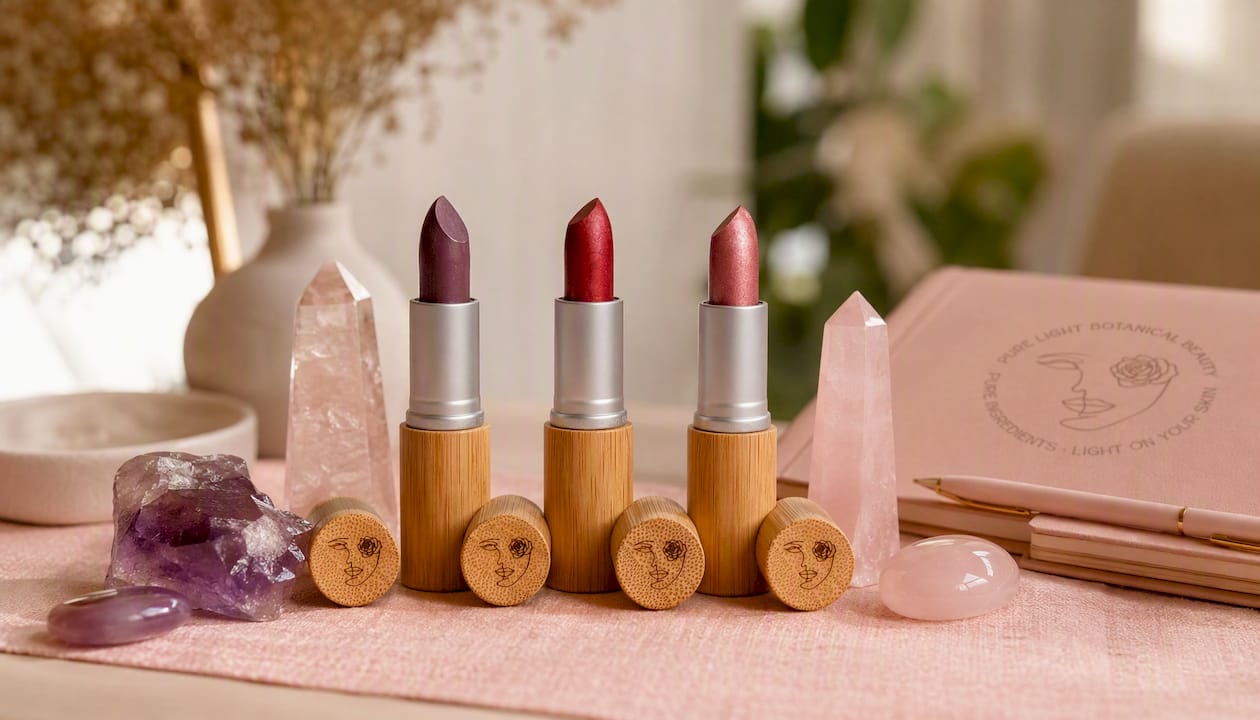
Each shade, from the deep, cool tone of Nourishing Lipstick in Amethyst to the warm brightness of Cherry Quartz to the soft, everyday wearability of Rose Quartz, carries the same restorative base underneath the pigment. Apply it as your nightly repair step, or wear it during the day layered under an SPF balm for lips that need both color and real barrier support. Pick a shade and add it to your routine tonight to see how a minimal, restorative formula feels against skin that’s tired of reacting to everything else it tries.