

You’ve been told beauty is about looking perfect, but what if the real transformation happens when you stop chasing perfection and start nurturing yourself? True self-love in beauty isn’t about covering up or conforming to trends. It’s about creating mindful rituals with plant-based products that honor your skin, boost your confidence from within, and reconnect you with your authentic self. When you shift your focus from external validation to internal growth, beauty becomes a healing practice that radiates outward.
Table of Contents
- Key takeaways
- Understanding self-love in beauty: Beyond appearance
- The role of plant-based cosmetics in nurturing self-love and skin health
- Mindful beauty rituals: Framework for authentic confidence
- Common pitfalls and how to avoid them in self-love beauty routines
- Explore Pure Light Botanical Beauty for your self-love journey
- Frequently asked questions
Key Takeaways
| Point | Details |
|---|---|
| Plant based rituals | Mindful beauty rituals using natural products nurture inner confidence and skin health. |
| Ritual adherence matters | Aim for about eighty percent consistency to sustain the benefits of mindful beauty practices. |
| Mood and skin glow | Tracking mood changes alongside visible skin glow helps you observe progress over time. |
| Self concept clarity | High self concept clarity buffers objectification by anchoring worth in internal beliefs rather than appearance. |
| Daily mindful beauty | Engaging mindful beauty rituals every day supports overall well being and skin health. |
Understanding self-love in beauty: Beyond appearance
Self-love in beauty means accepting and nurturing yourself through intentional rituals, not just achieving a certain look. It’s the practice of treating your skin and spirit with compassion, using products and routines that honor your body’s needs rather than forcing it to meet external standards. Many women confuse self-love with vanity or indulgence, but the two are fundamentally different. Vanity seeks approval from others, while self-love cultivates approval from within.
Research shows that high self-concept clarity buffers objectification, meaning when you have a strong sense of who you are beyond your appearance, you’re less vulnerable to external judgment. This is where mindful beauty rituals become powerful tools for psychological well-being. When you approach your beauty routine with intention, you’re not just applying makeup or skincare. You’re affirming your worth, practicing self-compassion, and building resilience against the pressures to conform.
Common misconceptions about beauty and self-love include:
- Beauty rituals are shallow or superficial activities
- Self-love means ignoring your appearance entirely
- Using makeup contradicts body positivity or self-acceptance
- Natural beauty requires no effort or intention
- Self-care routines are indulgent or selfish
These beliefs miss the deeper truth: beauty rituals can be acts of self-respect when performed mindfully. The key is your intention. Are you applying why beauty is self love principles by choosing products that nourish your skin and soul? Or are you chasing an impossible standard set by filters and photo editing?
Pro Tip: Before starting your beauty ritual, pause for 30 seconds to set an intention focused on internal growth, such as “I honor my skin’s natural texture” or “I nurture my well-being with this practice.” This simple act shifts your mindset from external judgment to self-compassion.
“When we use beauty rituals mindfully to foster internal confidence rather than external validation, we build a protective buffer against objectification and cultivate authentic self-worth that lasts.”
The difference between seeking validation and cultivating confidence lies in where you place your attention. External validation asks, “Do others approve of how I look?” Internal confidence asks, “Do I feel aligned with my authentic self?” When you prioritize the latter, beauty becomes a form of self-expression and healing rather than a performance for others.
The role of plant-based cosmetics in nurturing self-love and skin health
Plant-based cosmetics offer a unique advantage for women seeking to align their beauty routines with holistic wellness goals. Unlike synthetic products that may contain harsh chemicals or irritants, natural formulations work with your skin’s biology rather than against it. This is especially important for those with sensitive skin or conditions like eczema, where conventional makeup can trigger inflammation and discomfort.
When you choose botanical ingredients, you’re making a statement about what you value. You’re saying your health matters, your comfort matters, and your long-term well-being matters more than quick fixes or trendy colors. This alignment between your values and your actions strengthens ritual adherence, making it easier to maintain consistent mindful beauty practices skin health routines that support both physical and emotional wellness.
Research indicates you should aim for 80% ritual adherence to experience meaningful benefits. This doesn’t mean perfection. It means showing up for yourself most days, even when life gets busy or motivation wanes. Tracking your skin glow and mood in a journal creates a feedback loop that reinforces your commitment and helps you notice subtle improvements you might otherwise miss.
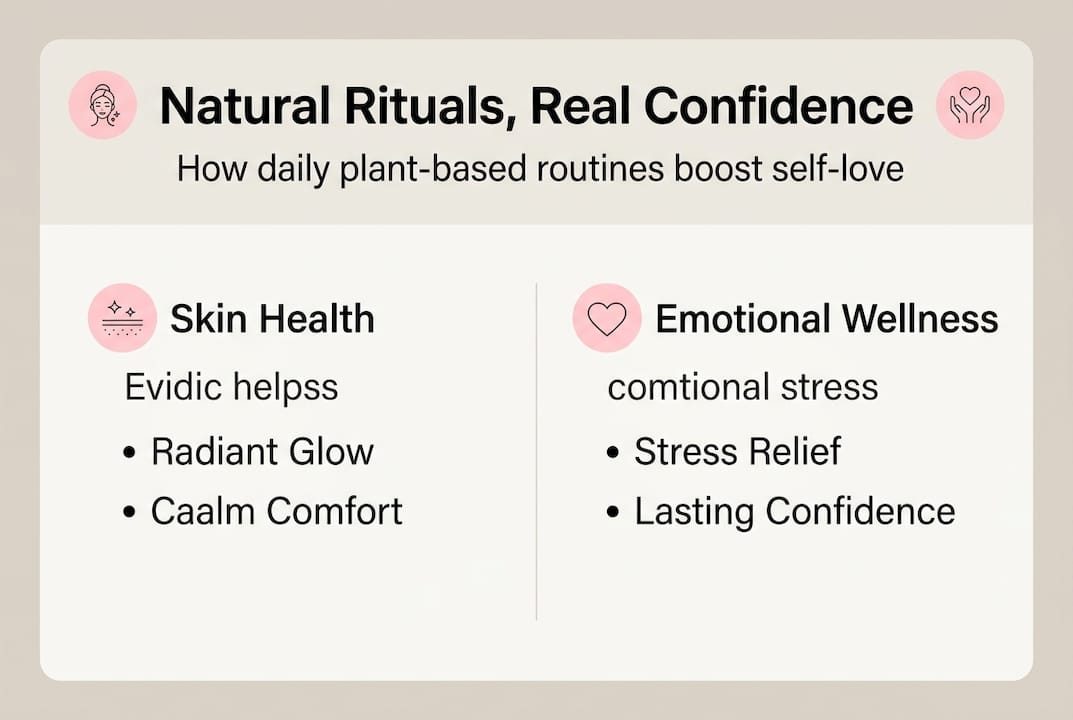
| Ingredient Type | Skin Health Impact | Emotional Wellness Impact |
|---|---|---|
| Plant-based botanicals | Nourishes sensitive skin, reduces inflammation, supports natural barrier function | Aligns with self-care values, promotes ritual consistency, fosters self-compassion |
| Synthetic chemicals | May irritate sensitive skin, disrupt skin microbiome, cause allergic reactions | Creates cognitive dissonance between health goals and product choices, reduces ritual adherence |
| Clean formulations | Gentle on eczema-prone skin, supports healing, avoids common irritants | Builds trust in products and self, reinforces authentic self-love practices |
Journaling your skin glow and mood serves multiple purposes. First, it helps you identify which products and practices truly serve you versus which ones you use out of habit. Second, it provides tangible evidence of progress during moments of doubt. Third, it deepens your self-awareness and strengthens the mind-skin connection that’s central to self-care in beauty.
Pro Tip: Create a simple weekly tracker with three columns for date, skin observations (texture, glow, comfort), and emotional state (calm, confident, stressed). After eight weeks, review your entries to identify patterns and celebrate your progress.
Plant-based cosmetics also support self-love by removing the worry that you’re harming your skin in pursuit of beauty. When you know your lipstick contains nourishing oils instead of drying agents, or your blush includes skin-soothing botanicals, you can apply it with full presence and joy. There’s no internal conflict, no guilt, no compromise. Just pure alignment between caring for yourself and expressing yourself.
Mindful beauty rituals: Framework for authentic confidence
Building authentic confidence through beauty rituals requires a structured approach that goes beyond random product application. Here’s a clear framework to transform your routine into a self-love practice:
- Set a clear intention before beginning your ritual, focusing on internal qualities you want to nurture such as peace, strength, or authenticity.
- Choose plant-based products that align with your skin’s needs and your wellness values, avoiding anything that causes discomfort or conflict.
- Slow down each step, paying full attention to the sensations, textures, and scents rather than rushing through on autopilot.
- Practice gratitude for your skin’s functions and resilience, acknowledging what it does for you daily beyond appearance.
- Notice thoughts without judgment, gently redirecting focus from critical self-talk to compassionate observation.
- Journal briefly after your ritual, noting how you feel emotionally and what you observed about your skin’s response.
- Commit to consistency while allowing flexibility, aiming for that 80% adherence rate without demanding perfection.
The distinction between mindful and habitual beauty rituals is crucial for cultivating self-love:
| Mindful Beauty Rituals | Habitual Beauty Rituals |
|---|---|
| Performed with present-moment awareness and intention | Done on autopilot while multitasking or distracted |
| Focus on internal experience and self-compassion | Focus primarily on achieving a specific look |
| Incorporate reflection, gratitude, and emotional check-ins | Skip the emotional component entirely |
| Use products chosen for alignment with values and skin health | Use products based on trends, ads, or convenience |
| Build authentic confidence from within over time | May boost temporary confidence tied to external appearance |
Daily practice is non-negotiable if you want lasting results. You can’t meditate once and expect permanent peace, and you can’t perform one mindful beauty ritual and expect sustained confidence. The step by step mindful makeup naturally approach works because repetition rewires your neural pathways, gradually shifting your default mindset from self-criticism to self-acceptance.

Research confirms that empirical gains in 8-week programs can be sustained for a year when you maintain your practice. This isn’t about willpower or forcing yourself to continue something unpleasant. When rituals are genuinely nurturing and aligned with your values, they become something you want to do, not something you have to do.
Pro Tip: If you find yourself rushing through your ritual or skipping steps, it’s a sign you’re slipping into habit mode. Pause, take three deep breaths, and reconnect with your intention before continuing.
Self-reflection throughout the process helps you stay honest about your motivations and adjust your approach as needed. Ask yourself regularly: Am I doing this to feel good or to look good for others? Both can coexist, but the primary driver should always be your internal experience. When you notice yourself seeking external validation, gently redirect your focus to how the ritual makes you feel in your body and spirit.
The benefits of mindful beauty guide extend far beyond skin deep. Women who practice mindful beauty rituals report greater body acceptance, reduced anxiety about appearance, stronger sense of self, and improved overall well-being. These outcomes emerge naturally when you consistently choose self-compassion over self-criticism.
Common pitfalls and how to avoid them in self-love beauty routines
Even with the best intentions, women often stumble into patterns that undermine their self-love journey. Recognizing these pitfalls early helps you course-correct before they become ingrained habits.
Relying on external validation is perhaps the most common trap. You might start a beauty ritual for yourself, but gradually find yourself checking mirrors constantly, seeking compliments, or feeling deflated when others don’t notice your efforts. This shift is subtle but significant. It transforms a self-love practice into a performance, draining the emotional benefits and leaving you dependent on others’ reactions for your sense of worth.
Inconsistent rituals prevent you from experiencing the cumulative benefits that research demonstrates. Skipping days here and there might seem harmless, but it disrupts the neural rewiring process and keeps you from reaching that critical 80% adherence threshold. Without consistency, you’ll struggle to notice improvements in mood or skin health, which can lead to discouragement and abandonment of the practice altogether.
Neglecting emotional health while focusing solely on physical appearance is another major pitfall. You might have a flawless skincare routine and perfect makeup application, but if you’re not addressing the internal dialogue running through your mind during these rituals, you’re missing the transformative potential. Beauty routines without emotional awareness are just routines, not self-love practices.
“Research shows that high self-concept clarity serves as a protective buffer against objectification. When you truly know and accept yourself beyond physical appearance, external pressures lose their power to shake your confidence.”
To maintain focus on inner growth over appearance, try these mindful strategies:
- Replace appearance-based affirmations (“I look beautiful”) with character-based ones (“I am worthy of care and respect”)
- Limit mirror time during rituals, focusing more on how products feel than how they look
- Choose one non-appearance goal for each ritual, such as cultivating patience or practicing gratitude
- Celebrate internal shifts like feeling calmer or more confident, not just visible changes
- Regularly review your intentions to ensure they remain focused on self-love rather than external approval
High self-concept clarity protects against objectification by anchoring your identity in qualities that can’t be taken away or diminished by others’ opinions. When you know who you are at your core, you can enjoy beauty rituals as expressions of that identity rather than desperate attempts to create or maintain it.
Tracking progress realistically means acknowledging both advances and setbacks without judgment. Some weeks your skin will glow and you’ll feel radiant. Other weeks, stress or hormones will cause breakouts and you’ll feel disconnected from your practice. Both experiences are valid and part of the journey. The goal isn’t linear improvement but overall trend toward greater self-acceptance and well-being.
Avoiding perfectionism requires conscious effort in a culture that constantly pushes unrealistic beauty standards. Remember that why beauty rituals matter isn’t because they make you flawless, but because they offer opportunities to practice self-compassion, presence, and acceptance. Every time you show up for yourself with kindness rather than criticism, you’re succeeding, regardless of the outcome.
Self-compassion and patience are the foundations that make sustainable self-love beauty practices possible. When you inevitably miss days, use products that don’t work for you, or catch yourself seeking validation, respond with understanding rather than harsh judgment. Treat yourself as you would a dear friend learning something new: with encouragement, grace, and faith in the process.
Explore Pure Light Botanical Beauty for your self-love journey
If you’re ready to transform your beauty routine into a true self-love practice, Pure Light Botanical Beauty offers plant-based cosmetics designed for both skin health and emotional wellness. Every product is thoughtfully crafted with clean, botanical ingredients that nurture sensitive skin while supporting your holistic well-being goals.
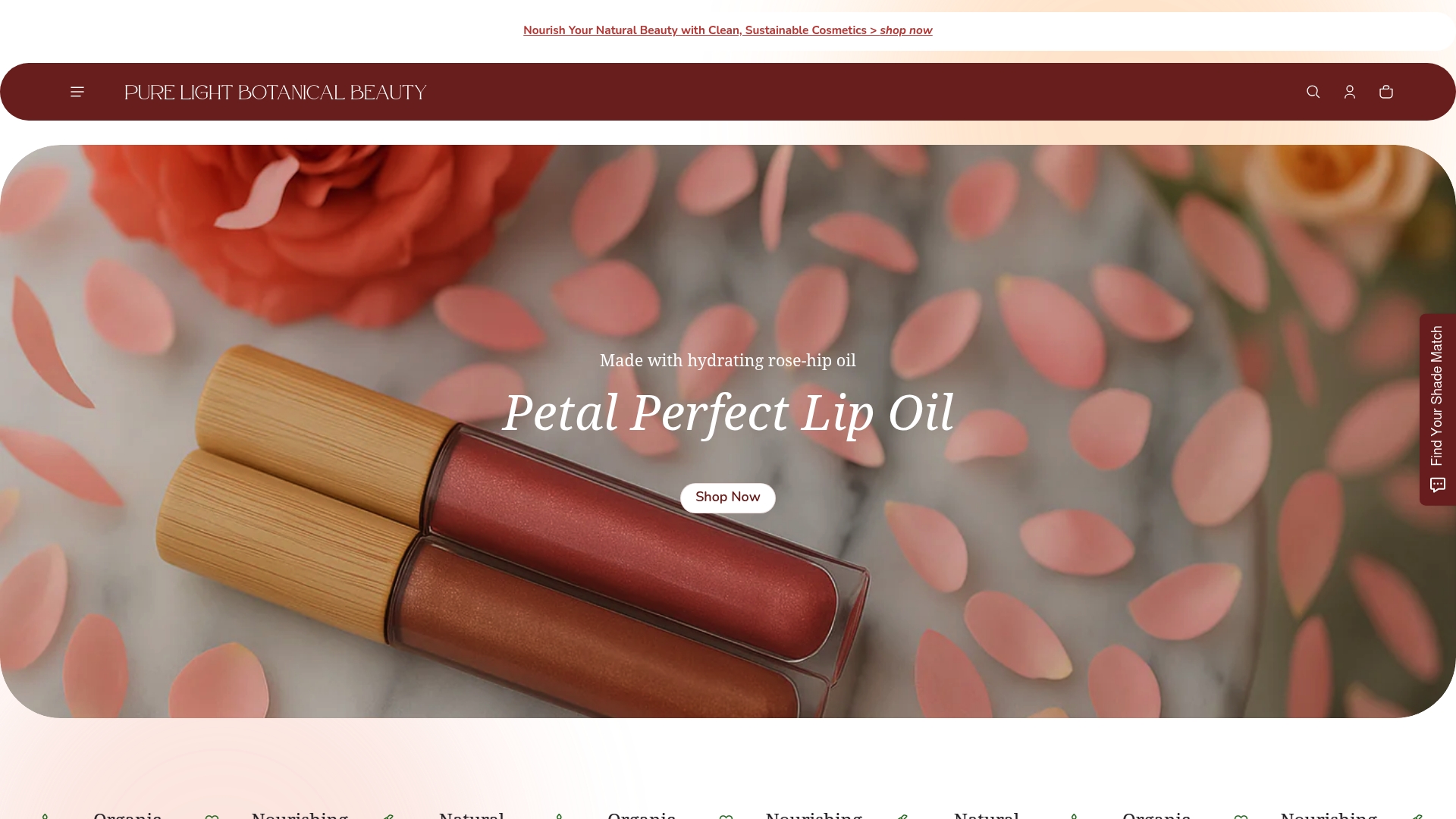
Unlike conventional brands that prioritize trends over health, Pure Light Botanical Beauty creates formulas that align with mindful beauty values. Whether you’re dealing with eczema, seeking gentler alternatives, or simply wanting products that feel as good as they look, this collection supports your journey toward authentic confidence. Explore offerings like Petal Perfect Lip Oil, Botanical Crème Blush, and Nourishing Lipstick that embody the harmony between self-care and self-expression.
Frequently asked questions
What is the difference between self-love and self-care in beauty?
Self-love in beauty is the underlying mindset of accepting and valuing yourself beyond appearance, while self-care refers to the specific nurturing actions you take for your skin and well-being. Self-love is the why behind your rituals, the intention that transforms routine tasks into meaningful practices. Self-care is the how, the actual steps of cleansing, moisturizing, or applying makeup with products that support your health. Both work together: self-love provides the foundation of worthiness, and self-care expresses that worthiness through consistent, compassionate actions.
How can I maintain high self-concept clarity during my beauty rituals?
Focus on affirmations and practices that reinforce your authentic self beyond physical appearance, such as acknowledging your kindness, creativity, or resilience. Practice mindful reflection during rituals by journaling your feelings and observations without judgment. Avoid comparing yourself to others or seeking approval, as research demonstrates that high self-concept clarity protects against objectification. When you know who you are at your core, beauty rituals become expressions of that identity rather than attempts to create it.
How long does it take to notice benefits from mindful beauty rituals?
Most people observe noticeable improvements in both skin health and emotional well-being after approximately 8 weeks of consistent practice. These benefits can be sustained for a year or longer when you maintain your rituals and continue practicing self-compassion. Tracking your mood and skin glow in a journal helps you recognize gradual progress that might otherwise go unnoticed. Remember that transformation happens in layers, with some changes visible quickly and others emerging more slowly as your relationship with yourself deepens.
Can I practice self-love in beauty if I have skin conditions like eczema?
Absolutely, and in many ways, skin conditions make mindful beauty rituals even more important. Choosing plant-based products formulated for sensitive skin allows you to care for your skin’s unique needs without compromise or discomfort. Self-love means accepting your skin as it is while providing gentle, effective support for healing. When you approach eczema or other conditions with compassion rather than frustration, your beauty ritual becomes an act of partnership with your body rather than a battle against it. This shift in perspective often reduces stress, which can itself improve skin health over time.
Recommended
- Self-Expression in Beauty: Pathway to Healing and Confidence – Pure Light Botanical Beauty
- Why Beauty Is Self-Love: Holistic Healing for Sensitive Skin – Pure Light Botanical Beauty
- Top Ways to Enhance Natural Beauty Naturally: Step-by-Step Guide – Pure Light Botanical Beauty
- How to Embrace Natural Beauty Naturally for Sensitive Skin – Pure Light Botanical Beauty