

Spiritual beauty is the inner radiance of a heart shaped by love, humility, and the fruit of the Spirit rather than by face or figure. It matters because it reflects the character of God himself, and Scripture treats it as the only beauty that never fades. Where physical beauty ages, spiritual beauty deepens with practice, faithfulness, and time.
TL;DR:
- Spiritual beauty depends on daily choices rooted in love, humility, and fruit of the Spirit, which deepen over time while physical features fade.
- The Bible emphasizes internal qualities like a gentle spirit and virtues such as kindness, faithfulness, and self-control as true signs of spiritual beauty.
- Genuine inner beauty shows in consistent acts of kindness, patience, and humility, especially when no one else is watching.
- Cultivating it requires deliberate practices like prayer, scripture reading focused on specific virtues, and maintaining a regular reflection routine.
- Mindful beauty rituals can serve as moments of inward reflection, combining external self-care with inner character development.
Table of Contents
- What Is Spiritual Beauty, and How Does It Differ From Physical Beauty?
- What Does the Bible Say About Spiritual Beauty?
- What Are the Core Attributes of a Spiritually Beautiful Person?
- How Do You Cultivate Spiritual Beauty in Daily Life?
- Aligning Spiritual Cultivation With Mindful Beauty Rituals
- Support for the Beauty-Within Practice
- Further Reading on Spiritual Beauty
- FAQ
What Is Spiritual Beauty, and How Does It Differ From Physical Beauty?
Physical beauty lives in the mirror. Spiritual beauty lives in the choices nobody sees: the patience held onto during a hard conversation, the forgiveness offered before an apology arrives, the quiet integrity that doesn’t need an audience. Christian theology frames it as an inward radiance that mirrors God’s own nature, not a set of features that photograph well.
Christian Science commentary describes this kind of beauty as something visible only when a person looks upward toward God instead of at the mirror. That framing matters because it flips the usual question. Instead of asking “how do I look?” the better question becomes “what am I becoming?”
A few contrasts make the difference concrete:
- A striking face can mask cruelty; a plain face can carry warmth that people remember for years.
- Physical beauty depends on genetics and upkeep; spiritual beauty depends on daily, repeatable choices.
- Outward beauty fades with age; theological writing on the topic argues that beauty rooted in love and goodness actually deepens over a lifetime.
Other faith traditions echo this distinction in their own language. Swedenborgian and New Church writings, for instance, describe spiritual beauty as the outward form of one’s inner loves, visible in the next life to those who genuinely love what is true and good. Buddhist and Stoic thought likewise treat detachment from vanity and cultivation of virtue as the deeper measure of a person. The details differ, but the direction points the same way: character outlasts appearance.
What Does the Bible Say About Spiritual Beauty?
Scripture is not shy about this topic. Two passages anchor almost every serious discussion of it.
- 1 Samuel 16:7 records God telling Samuel not to judge by appearance or height, “for the Lord does not look at the things people look at. People look at the outward appearance, but the Lord looks at the heart.” This is the verse Christian teaching returns to again and again when explaining why God’s standard of beauty differs from culture’s.
- 1 Peter 3:3-4 builds on that idea directly, describing beauty that should not come “from outward adornment” but from “the unfading beauty of a gentle and quiet spirit.” The word “unfading” is doing real work here. It is a direct contrast with cosmetics, jewelry, and hairstyles, which fade, break, or go out of style.
- Galatians 5:22-23 supplies the working definition of what that inner beauty actually looks like in practice: “love, joy, peace, forbearance, kindness, goodness, faithfulness, gentleness and self-control.” This list, known as the fruit of the Spirit, functions as a kind of checklist for spiritual beauty across the rest of this article.
Biblical figures give that checklist a face. Esther risked her life for her people, showing courage rooted in conviction rather than status. Ruth’s loyalty to Naomi, a woman she had no obligation to follow, modeled steadfast love in action. Mary’s response to an impossible calling, “let it be to me according to your word,” modeled humility under pressure most people never face.
What Are the Core Attributes of a Spiritually Beautiful Person?
The fruit of the Spirit from Galatians gives structure to what spiritual beauty looks like day to day. Each virtue has a visible marker, something you could actually notice in a person over the course of a normal week.
- Love shows up as sacrifice without keeping score, not just warm feelings.
- Humility shows up as the ability to be corrected without getting defensive.
- Kindness shows up in small, unglamorous acts, like checking on someone nobody else remembered.
- Gentleness shows up as restraint in speech, especially when a sharp reply would feel justified.
- Faithfulness shows up as consistency, doing the right thing on the boring days as well as the dramatic ones.
The gap between real and performative virtue is worth naming directly. Genuine spiritual beauty tends to show up when there is nothing to gain from it. Performative displays, by contrast, usually need an audience.
Pro Tip: Watch what someone does when no one is watching and nothing will be posted about it. That single habit tells you more about spiritual beauty than any public gesture ever will.
How Do You Cultivate Spiritual Beauty in Daily Life?
Spiritual beauty grows the same way physical fitness does: through repetition, not intensity. A single powerful moment of insight rarely changes character on its own. Small, repeated practices do.
- Start with prayer or quiet reflection. Even five focused minutes each morning reorients attention away from appearance and toward character.
- Read Scripture with a specific virtue in mind. Pick one fruit of the Spirit, like patience, and notice every time it appears in that day’s reading.
- Do one small, unnoticed act of kindness daily. Send the message, cover the task, let the small inconvenience go without comment.
- Practice a Sabbath rhythm. Regular rest interrupts the hustle that crowds out reflection in the first place.
- Journal a single virtue for 30 days. Track moments you lived it and moments you missed it, without judgment, just observation.
- Find an accountability partner. Character grows faster when someone else is allowed to ask how it’s actually going.
The discipline behind this matters more than the inspiration. Practical guides on inner beauty consistently point to the same pattern: mindfulness, self-reflection, and deliberate virtue-focused practice, sustained over weeks rather than days, is what produces lasting character change. Inspiration fades by Wednesday. Practice compounds.
Aligning Spiritual Cultivation With Mindful Beauty Rituals
At Purelightbotanicalbeauty, we believe the space between your morning prayer and your morning skincare routine is smaller than most people assume. Caitlin Grey built this brand on the conviction that beauty rituals, done slowly and with attention, can become a form of embodied reflection rather than a rushed chore squeezed in before the day starts.
A few ways to pair the two: apply a lip balm slowly while naming one thing you are grateful for, treat a five-minute blush application as a pause rather than a task, or use a Sabbath morning to skip makeup entirely and simply notice your face without judgment. These small rituals echo the same idea explored in why beauty for inner growth: the outward routine can serve the inward work instead of distracting from it.

Support for the Beauty-Within Practice
Cultivating spiritual beauty is a daily discipline, and daily disciplines hold up better with structure and gentle tools around them. There are ways to support that work without asking you to choose between inner character and outward care.
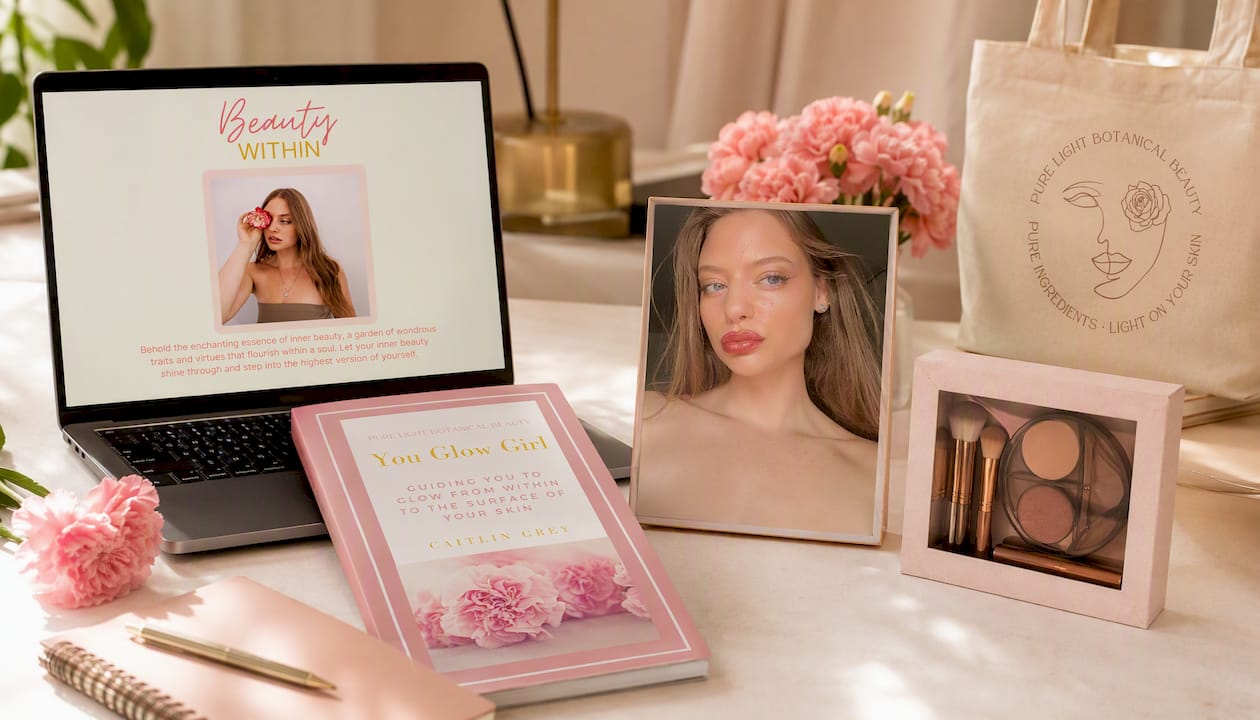
Beauty Within™ ~ Online Coaching pairs habit formation with reflection prompts, built for readers who want guided accountability rather than a self-guided journal. You Glow Girl™ ~ Transformative Beauty Rituals offers a ritual framework you can follow at your own pace, blending skincare steps with the kind of mindful pauses described above. Radiant Makeup Services gives you gentle, plant-based application designed for sensitive skin, so the outward moment of getting ready never works against the inward one.
Each option meets a different need: coaching for structure, the ritual guide for independence, makeup services for a hands-on, gentle touch. If you want to start where the cultivation habits in this guide connect most directly to a beauty practice, Beauty Within™ Online Coaching is the clearest next step.

Further Reading on Spiritual Beauty
A few sources worth exploring if you want to go deeper: GotQuestions.org’s overview of what the Bible says about beauty grounds the discussion in specific passages. Topical Bible compilations on spiritual beauty gather the relevant verses in one place for quick reference. Swedenborgian and New Church writings offer a useful comparative lens on how another Christian tradition frames inward beauty.
FAQ
What Is the Meaning of Spiritual Beauty?
Spiritual beauty means an inward character that reflects God’s nature through virtues like love, humility, and the fruit of the Spirit, rather than physical features. It is considered lasting because, unlike appearance, it can deepen with age and practice instead of fading.
What Does the Bible Say About Spiritual Beauty?
The Bible teaches that God values the heart over appearance, most directly in 1 Samuel 16:7, and describes a “gentle and quiet spirit” as unfading beauty in 1 Peter 3:3-4. Galatians 5:22-23 lists the specific virtues, known as the fruit of the Spirit, that make up this inner beauty.
What Is the Beauty of Spirituality?
The beauty of spirituality is the way disciplined inner practice, like prayer, reflection, and small daily acts of kindness, gradually shapes visible character. It shows up as consistency and warmth rather than a single dramatic moment of transformation.
How Is Spiritual Beauty Different From Being a Good Person?
Spiritual beauty includes moral goodness but adds a specific orientation toward God as the source of that character, rather than self-generated willpower alone. In Christian teaching, it grows through connection to God and the Holy Spirit’s work rather than effort alone.
Can Beauty Rituals Support Spiritual Growth?
Yes, when approached mindfully, everyday rituals like skincare or makeup application can become moments of reflection rather than distraction. Purelightbotanicalbeauty’s You Glow Girl™ ritual guide is built around exactly that pairing of gentle self-care and inward attention.