

Squalane, hemp seed oil, grapeseed oil, high-linoleic sunflower oil, jojoba, rosehip, and argan are the oils most consistently regarded as non-comedogenic. Acne-prone skin tends to respond especially well to the linoleic-rich options among them. That said, tolerance is personal, and how an oil is formulated, stored, and blended matters just as much as the oil itself.
TL;DR:
- Oils rich in linoleic acid, such as hemp seed, grapeseed, and high-linoleic sunflower oil, are most suitable for acne-prone skin and should be stored carefully to avoid oxidation.
- Patch testing new oils for 48 to 72 hours and starting with small amounts in a routine helps prevent breakouts, especially when using unstable oils like rosehip.
- The effectiveness of an oil depends more on its formulation, including antioxidants and storage, than on its comedogenic rating alone, which is a rough guide not a fixed property.
- Proper storage in dark glass bottles, refrigerating delicate oils, and using within the labeled timeframe significantly reduce the risk of oxidation-related skin issues.
- Individual skin chemistry remains the most important factor, so patch tests and a detailed usage log are essential before full facial application.
Table of Contents
- What Oil Is Non-Comedogenic, and Why Does It Vary by Skin?
- The Non-Comedogenic Oils Worth Knowing
- Why Do Some Oils Clog Pores and Others Don’t?
- How Do You Introduce a New Facial Oil Without Breaking Out?
- Storing Oils So They Don’t Turn on Your Skin
- When Should You See a Dermatologist Instead of Troubleshooting Alone?
- Pure Light Botanical Beauty’s Take on Choosing Oils for Reactive Skin
- Your Quick Decision Checklist
- Why the “Just Use Non-Comedogenic Oils” Advice Falls Short
- Try Oils and Formulas Built for Sensitive Skin, Not Around It
- FAQ
What Oil Is Non-Comedogenic, and Why Does It Vary by Skin?
The question “what oil is non-comedogenic” doesn’t have one tidy answer, because comedogenicity isn’t a fixed property of an ingredient. It’s a relationship between that ingredient, your skin’s own oil composition, and everything else sitting in the bottle with it. Two people can use the same rosehip serum and get opposite results: one gets a dewy glow, the other gets a chin full of new bumps within a week.
That inconsistency is actually the entire story. Your sebum has its own fatty-acid signature, and skin that leans oily or acne-prone frequently runs lower in linoleic acid relative to oleic acid than clear skin does. Oils that lean heavily linoleic tend to sit closer to what that skin type is missing, which is a large part of why dermatology writers keep steering acne-prone readers toward hemp seed, grapeseed, and sunflower oil instead of the richer, oleic-dominant options like coconut oil. Understanding that ratio is worth more than memorizing any single “safe oils” list, including the one below.
The Non-Comedogenic Oils Worth Knowing
Here’s a working list of oils considered non-comedogenic, plus a few worth watching closely and a short list to skip if your skin is reactive.
- Squalane. A saturated, highly stable emollient derived from olives or sugarcane, squalane resists oxidation far better than the polyunsaturated oils on this list. It has a dry, silky finish rather than a greasy one, which makes it a sensible first oil to trial if you’ve never used a facial oil before.
- Hemp seed oil. Rich in linoleic acid relative to many plant oils, hemp seed oil is frequently recommended specifically for acne-prone skin because that skin type often runs low on this fatty acid. It’s lightweight, but it’s also a polyunsaturated fat, meaning it oxidizes faster than squalane and needs careful storage (more on that shortly).
- Grapeseed oil. Thin, fast-absorbing, and linoleic-heavy, grapeseed oil layers well under makeup. Its downside mirrors hemp seed oil’s: without antioxidant stabilizers, it degrades quickly once opened, and a rancid oil behaves differently on skin than a fresh one.
- Sunflower oil (high-linoleic). Look specifically for high-linoleic sunflower oil, not the standard cooking variety, which skews oleic. The high-linoleic version supports the skin barrier while staying light enough for daily wear.
- Jojoba oil. Technically a liquid wax ester, not a triglyceride oil, jojoba’s structure closely resembles human sebum. That similarity is likely why it absorbs rather than sits on the surface and why it’s tolerated across such a wide range of skin types, including reactive skin.
- Rosehip oil. Generally low to moderate on the comedogenic scale and popular for fading post-acne marks and scarring, rosehip oil is also one of the more delicate options here. It oxidizes readily, and once it turns, it can irritate skin it was meant to soothe.
- Argan and safflower oil. Argan suits normal-to-dry skin that wants a bit more richness without heaviness, while safflower, like sunflower, comes in a high-linoleic form that works well for oilier or blemish-prone complexions.
Red flags: coconut oil, cocoa butter, and wheat germ oil consistently rank higher on comedogenic scales and show up often in breakout reports from acne-prone users. None of these are “bad” ingredients in every context, but they’re not where a cautious reader with reactive or blemish-prone skin should start experimenting.
Why Do Some Oils Clog Pores and Others Don’t?
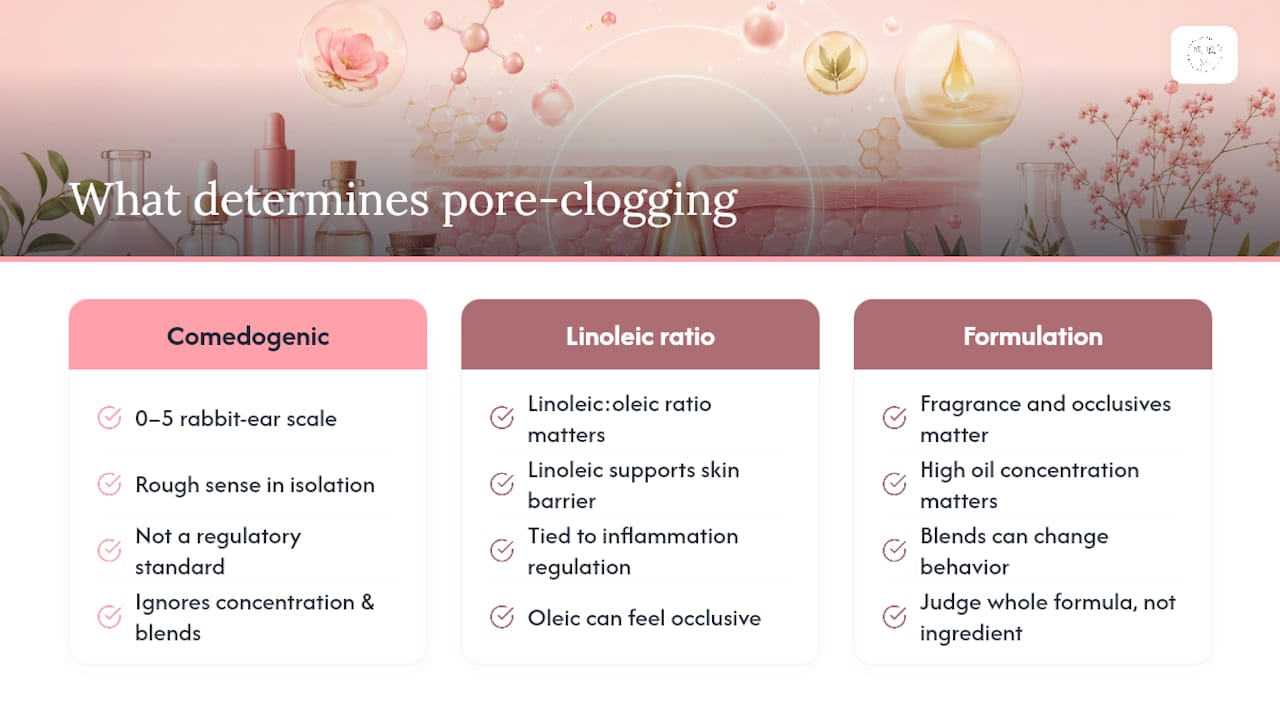
The comedogenic scale, the 0 to 5 rating system popularized decades ago through rabbit-ear testing, gives a rough sense of an ingredient’s pore-clogging potential in isolation. It was never built to be a strict regulatory standard, and it doesn’t account for concentration, blending with other ingredients, or how an individual’s skin actually reacts. An oil rated low can still cause problems in the wrong formula, and one rated moderate can behave fine in a low percentage, well-balanced product.
The number that matters more than the scale: the ratio of linoleic acid (omega-6) to oleic acid (omega-9) in an oil. Skin-health research on essential fatty acids ties linoleic acid to barrier support and inflammation regulation, and clinical discussion of topical oils has repeatedly pointed to oleic-heavy oils as more likely to feel occlusive on skin that’s already prone to congestion.
Formulation can override all of it. Fragrance, occlusive waxes, and high concentrations of any oil, linoleic-rich or not, can turn a “non-comedogenic” ingredient into a breakout trigger once it’s part of a finished product. That’s why review literature on topical oils and skin keeps landing on the same point: judge the whole formula, not the headline ingredient.
How Do You Introduce a New Facial Oil Without Breaking Out?
Test before you commit, and start smaller than you think you need to.
- Patch test first. Apply a small amount to your jawline or inner arm and wait 48 to 72 hours before judging the result.
- Apply oil last. Water-based serums and moisturizers go on first; oil seals the routine, not opens it.
- Use a pea-sized amount. A few drops massaged into damp skin covers the whole face. More isn’t better here.
- Start with the stable options. Squalane or a high-linoleic oil in a small dose gives acne-prone skin a lower-risk entry point than jumping straight to a rich, oleic-heavy blend.
- Track your skin for two to three weeks. New congestion, texture changes, or breakouts along the jaw and chin are your signal to stop and reassess.
Pro Tip: Keep a one-line note in your phone each time you try a new oil, the date, the amount, and how your skin looked three days later. That tiny log turns “I think it broke me out” into evidence you can actually hand a dermatologist.
For a longer walkthrough of layering order and quantities, Pure Light Botanical Beauty’s guide to using facial oils safely covers the routine in more depth.
Storing Oils So They Don’t Turn on Your Skin
Polyunsaturated, linoleic-rich oils like hemp seed and rosehip oxidize faster than saturated ones, and an oxidized oil can irritate skin or shift its comedogenic behavior entirely. A fresh bottle and a rancid one are not the same product, even with an identical label.
- Buy cold-pressed oils in dark glass bottles; light and clear plastic speed up degradation.
- Refrigerate delicate, PUFA-heavy oils like rosehip and hemp seed once opened.
- Use opened oils within the timeframe printed on the label, typically a short time after opening, not a year.
- Check ingredient lists for vitamin E or other antioxidants, which slow oxidation, and consider squalane-stabilized blends if you want a longer shelf life without the fuss.
When Should You See a Dermatologist Instead of Troubleshooting Alone?
Stop self-experimenting if breakouts turn cystic, painful, or infected, or if they persist for weeks after you’ve cut oils out entirely. Bring your usage log and full ingredient list to the appointment. Worth mentioning too: prescription acne treatments often change how your skin barrier handles oils, so what worked before a new medication may not work after.
Pure Light Botanical Beauty’s Take on Choosing Oils for Reactive Skin
I’ve spent years watching women with eczema and reactive skin get burned, sometimes literally, by products marketed as “gentle” with no real transparency behind that word. That experience shapes how Pure Light Botanical Beauty approaches every formula: plant-based ingredients you can actually name, sourced with intention, built for skin that doesn’t tolerate guesswork.
Four checks worth running on anything you put on reactive or acne-prone skin: is the full ingredient list visible and readable, is fragrance minimal or absent, is the oil cold-pressed rather than heavily refined, and have you patch-tested it on your own skin before your face?
Those four checks won’t replace a dermatologist visit, but they’ll filter out a lot of noise before you get there. If you want a longer routine breakdown, our checklist for non-comedogenic products walks through the same logic in more detail. And if you’re looking specifically for lips rather than full-face application, the Petal Perfect Lip Oil™ is formulated as a lip-specific botanical blend, not a facial oil substitute, but it’s a good example of what ingredient transparency looks like in practice.
Your Quick Decision Checklist
Before you buy or apply anything new, run through this:
- Pick a stable or lightweight, linoleic-leaning oil to start (squalane, grapeseed, or high-linoleic sunflower).
- Patch test for 48 to 72 hours before applying to your full face.
- Store it properly, dark glass, cool, used within a short time after opening.
- Stop immediately if you notice new congestion, and don’t blame yourself; skin chemistry is individual, and testing is the only real shortcut.
Why the “Just Use Non-Comedogenic Oils” Advice Falls Short
The internet’s shorthand advice, “just use non-comedogenic oils,” treats comedogenicity like a fixed property instead of the variable relationship it actually is. That framing sets people up to buy the “right” oil, break out anyway, and conclude that facial oils in general aren’t for them. The research doesn’t support that conclusion. It supports a more specific one: linoleic-rich, well-formulated, properly stored oils tend to work better for acne-prone and reactive skin than oleic-heavy or heavily processed ones, but the formula around the oil and your own skin’s response still decide the outcome.
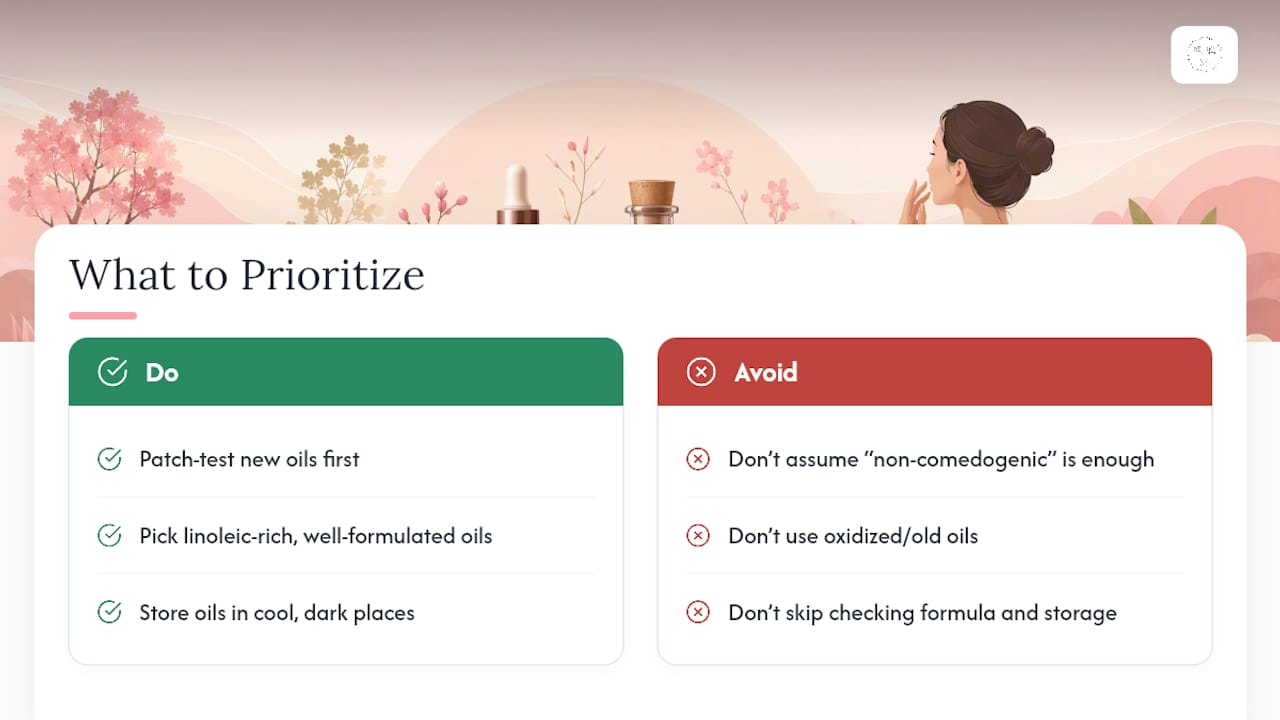
Where conventional advice falls shortest is storage. Almost no consumer guide mentions that a rosehip oil sitting in a clear bottle on a bathroom shelf for eight months is a chemically different product than the one you bought. Oxidized oil is a real, underdiscussed cause of “this non-comedogenic oil broke me out” complaints.
If you’re prioritizing one thing first, prioritize the patch test over the ingredient list. A perfect formula on paper still needs your skin’s approval before it earns a permanent spot in your routine.
— Caitlin Grey
Try Oils and Formulas Built for Sensitive Skin, Not Around It
This brand exists for exactly the reader this article was written for: someone whose skin doesn’t tolerate guesswork and needs ingredient lists that hold up to scrutiny. Their formulas are built with clean, plant-based ingredients chosen for how they actually behave on reactive and eczema-prone skin, not just how they photograph.
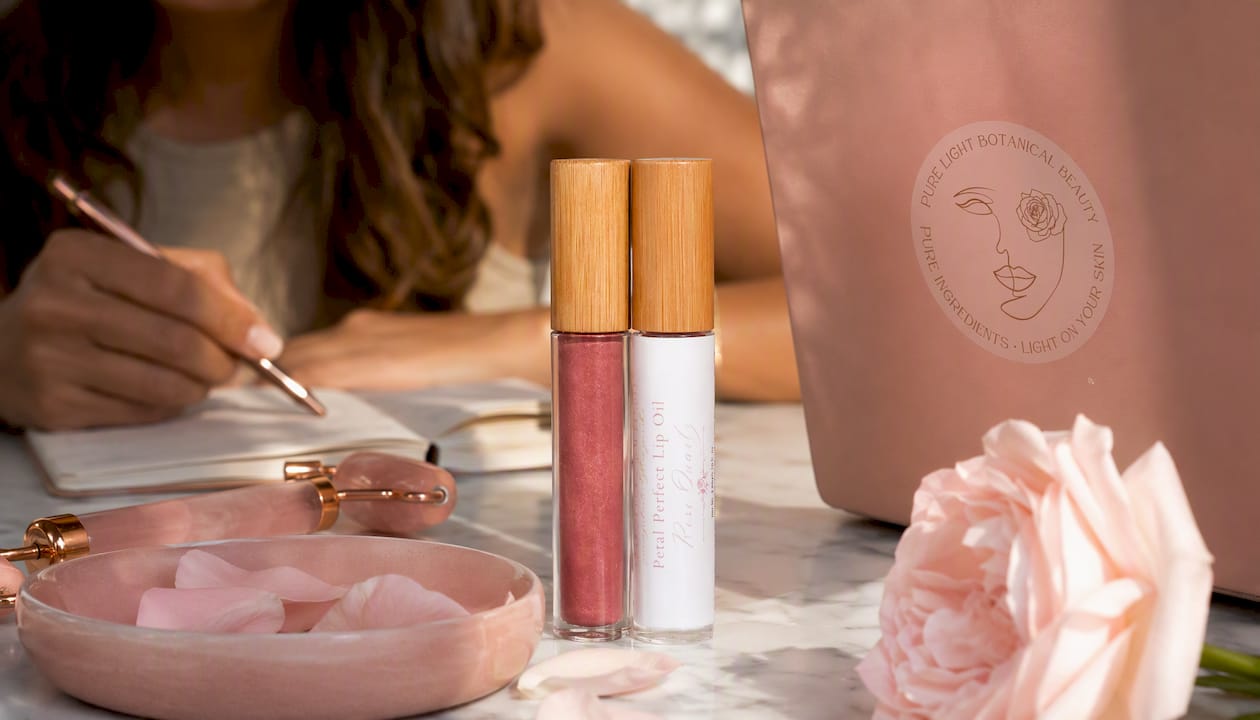
If lip care is where you want to start testing a gentler, botanical approach, the Petal Perfect Lip Oil™ collection is a low-commitment entry point at the listed price. For a broader look at what’s available, the full product lineup includes the Nourishing Lipstick™ and other formulas designed with the same transparency standard. Readers who want more support in decoding their own skin’s reactions, or building a full routine around it, can also book an Eczema Healing Consultation for one-on-one guidance at $444. Start with one product, patch test it the way this article describes, and let your skin tell you the rest.
FAQ
Is jojoba oil non-comedogenic?
Jojoba oil is generally considered non-comedogenic because its wax ester structure closely resembles human sebum, allowing it to absorb rather than sit on the skin’s surface. It’s tolerated by a wide range of skin types, including reactive and acne-prone skin, though individual response still varies.
What oil doesn’t clog pores if my skin is very acne-prone?
Squalane and high-linoleic oils like hemp seed, grapeseed, and sunflower are the safest starting points for acne-prone skin. These oils tend to align better with the fatty-acid balance that blemish-prone skin already lacks, though patch testing remains essential before full use.
Is “oil-free” the same as “non-comedogenic”?
No, these are different claims. “Oil-free” simply means a product contains no oils, while “non-comedogenic” refers to a lower likelihood of clogging pores, and a product can be oil-free yet still contain other pore-clogging ingredients like certain waxes or silicones.
How long can I keep a bottle of facial oil once opened?
Most cold-pressed facial oils, especially linoleic-rich ones like rosehip and hemp seed, should be used within a short time after opening of opening and stored in a cool, dark place. Oxidized oil can irritate skin and behave differently than a fresh bottle, even under the same label.
Does Pure Light Botanical Beauty make non-comedogenic facial oils?
This brand currently focuses on plant-based color cosmetics including a lip oil product. For full ingredient details and current listings, visit the brand’s official website.