

Noncomedogenic products are formulated to be unlikely to clog pores, the precursors to blackheads and whiteheads. They’re built for oily, acne-prone, and sensitive skin, though most skin types benefit from fewer clogged pores. The label is a helpful guide, not a legal guarantee, so a patch test still matters before you trust any new formula on your face.
TL;DR:
- Noncomedogenic products use light, small molecules that do not sit on the skin’s surface and minimize pore clogging, but the label is not a formal guarantee.
- Oily, acne-prone, and sensitive skin benefit most from noncomedogenic formulas, while severely dry skin may require occlusive ingredients despite their higher comedogenic risk.
- Ingredients like glycerin, hyaluronic acid, niacinamide, and lightweight plant oils support healthy, hydrated skin without clogging pores, unlike common culprits such as coconut oil and lanolin.
- Trustworthy pore-friendly products involve examining the full ingredient list, patch testing, and avoiding known comedogens, rather than relying solely on marketing claims.
- Hormonal fluctuations and product layering can cause breakouts regardless of product labels, so response varies individually and should be monitored carefully.
Table of Contents
- What Does Noncomedogenic Mean for Your Skin?
- Who Actually Needs Noncomedogenic Formulas?
- How Noncomedogenic Products Support Clearer Skin
- Ingredients to Look for on the Label
- Ingredients That Tend to Clog Pores
- Noncomedogenic vs. Oil-Free: What’s Actually Different
- How to Check if a Product Is Really Pore-Friendly
- Can Noncomedogenic Products Still Break You Out?
- A Formulator’s View on Pore-Friendly, Barrier-Supportive Beauty
- Ready to Build a Pore-Friendly Routine That Actually Works?
What Does Noncomedogenic Mean for Your Skin?
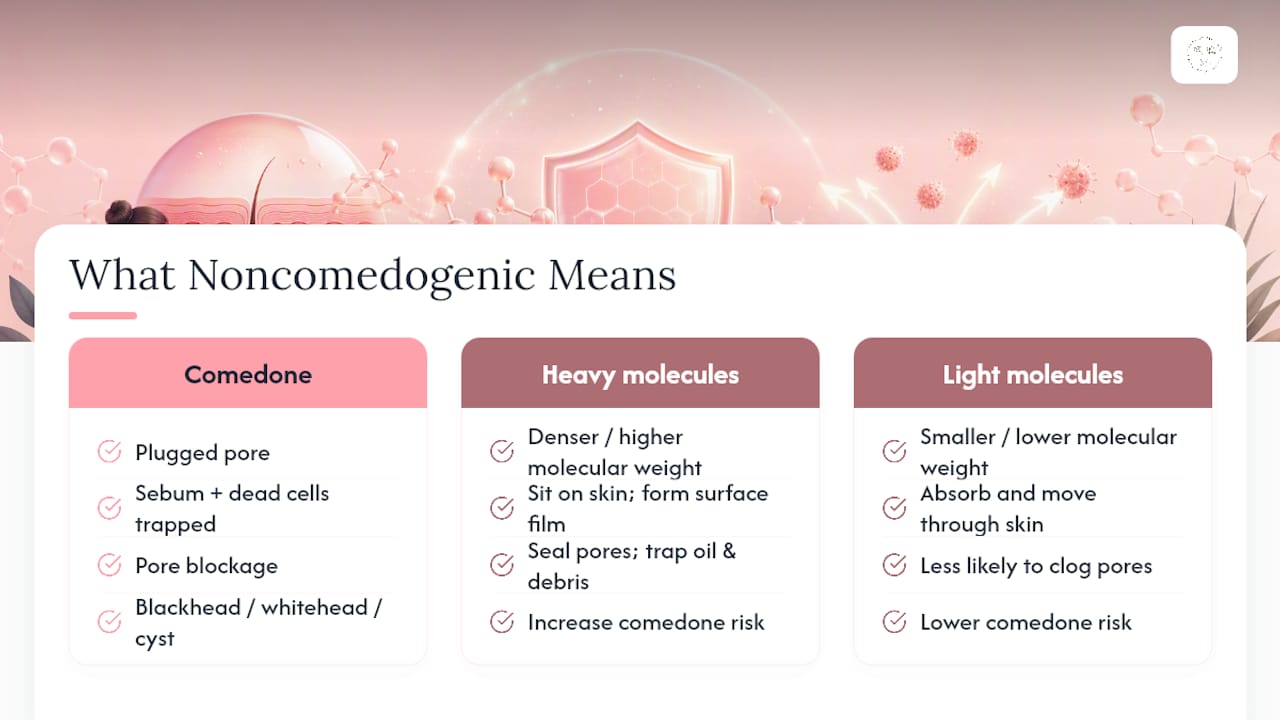
A comedone is a plugged pore. Sebum, dead skin cells, and sometimes bacteria get trapped beneath a partial or full blockage, and the result is a blackhead, a whitehead, or the deeper cystic breakouts that never seem to fully heal. Noncomedogenic products are designed to minimize that kind of buildup, using ingredients less prone to sitting on the skin’s surface and sealing pores shut.
Molecular weight matters here more than most shoppers realize. Heavier, denser molecules tend to sit on top of skin rather than absorb, creating a film that traps oil and debris underneath. Lighter, smaller molecules move into and out of skin more easily. Some clinical resources rank ingredients on a comedogenic scale indicating their relative pore-clogging risk, from low to high. It’s a useful reference, but no U.S. regulatory body enforces “noncomedogenic” as a standardized claim, so the term on a label is a signal, not a promise.
Who Actually Needs Noncomedogenic Formulas?
Oily, acne-prone, and combination skin see the most obvious payoff, since these skin types already produce more sebum and have less room for error. Sensitive and reactive skin types benefit too, since pore-friendly formulas tend to skip the heavy occlusives that can trigger irritation alongside breakouts.
Dry skin is the exception worth noting. Severely dry or flaking skin sometimes needs a heavier emollient to hold moisture in overnight, even if that ingredient sits higher on the comedogenic scale. This is where “skinimalism” earns its reputation: fewer products, each doing real work, lowers the odds of layering three or four occlusive formulas without realizing it. A streamlined routine built on noncomedogenic makeup tends to outperform a crowded one, pore for pore.
How Noncomedogenic Products Support Clearer Skin
The core benefit is straightforward: fewer clogged pores means fewer visible comedones over time. But the better formulas do more than avoid harm. Many pair pore-friendly bases with ceramides, hyaluronic acid, or niacinamide, ingredients that reinforce the skin barrier while they hydrate.
A healthy barrier matters because damaged skin lets in irritants that provoke inflammation, which can worsen acne independent of pore clogging. Pairing a noncomedogenic moisturizer with acne actives, such as AHAs, BHAs, or a topical retinoid, works best when the moisturizer goes on first to buffer irritation, or last to seal in the treatment without smothering it. Introduce one active at a time so you can tell what’s actually helping.
Ingredients to Look for on the Label
A few ingredient categories show up again and again in genuinely pore-friendly formulas. Scan for these when you flip a product over:
- Humectants: glycerin and hyaluronic acid (often listed as sodium hyaluronate) pull water into skin without leaving residue.
- Calming actives: niacinamide, aloe vera, and allantoin ease redness and support barrier repair.
- Non-occlusive emollients: dimethicone, squalane, and lightweight plant oils like grapeseed and sunflower oil hydrate without sealing pores.
- Antioxidants: vitamin C, vitamin E, and peptides help protect skin when formulated in lightweight vehicles rather than heavy balms.
Squalane deserves a specific mention. It’s a skin-mimicking oil that often outperforms heavier botanical butters for acne-prone users precisely because its molecular structure resembles skin’s own lipids rather than sitting on top of them. Check our breakdown of oils that won’t clog pores for a deeper ingredient comparison.
Ingredients That Tend to Clog Pores
Some ingredients show up on comedogenic watch lists often enough to warrant real caution. The usual suspects: coconut oil, cocoa butter, lanolin, isopropyl myristate, and wheat germ oil. All five sit high on comedogenic rating scales, which means they’re more likely to trap oil and dead skin cells beneath the surface.
Here’s the part that trips people up: “natural” doesn’t mean noncomedogenic. Coconut oil is about as natural as it gets, and it’s still one of the more reliable pore bloggers on the list. Ingredient derivatives complicate things further, since a fractionated or modified version of an oil can behave very differently from its raw form on an INCI list.
Pro Tip: Search the INCI name of any oil or butter before you buy. A quick look at where it lands on a 0 to 5 comedogenic scale takes thirty seconds and can save you weeks of frustrating breakouts.
Noncomedogenic vs. Oil-Free: What’s Actually Different
These terms get used interchangeably, but they’re not the same thing. Oil-free means a product contains no oil at all. Noncomedogenic means the formula, oils included, is unlikely to clog pores. Non-acnegenic goes a step further, referring specifically to products unlikely to trigger acne breakouts, a slightly different mechanism than pore blockage alone.
That distinction explains why some oils earn a noncomedogenic label while others don’t. Squalane and sunflower oil mimic skin’s natural lipids and rate low on comedogenic scales. Coconut oil and wheat germ oil don’t, despite being just as “natural.”
How to Check if a Product Is Really Pore-Friendly
Trusting a front-of-pack claim alone isn’t enough. Run through these steps before committing to a new product:
- Read the full INCI ingredient list and scan for known comedogens like coconut oil or lanolin, not just the marketing copy.
- Cross-check against a pore-friendly ingredient checklist, prioritizing formulas built on humectants and lightweight emollients.
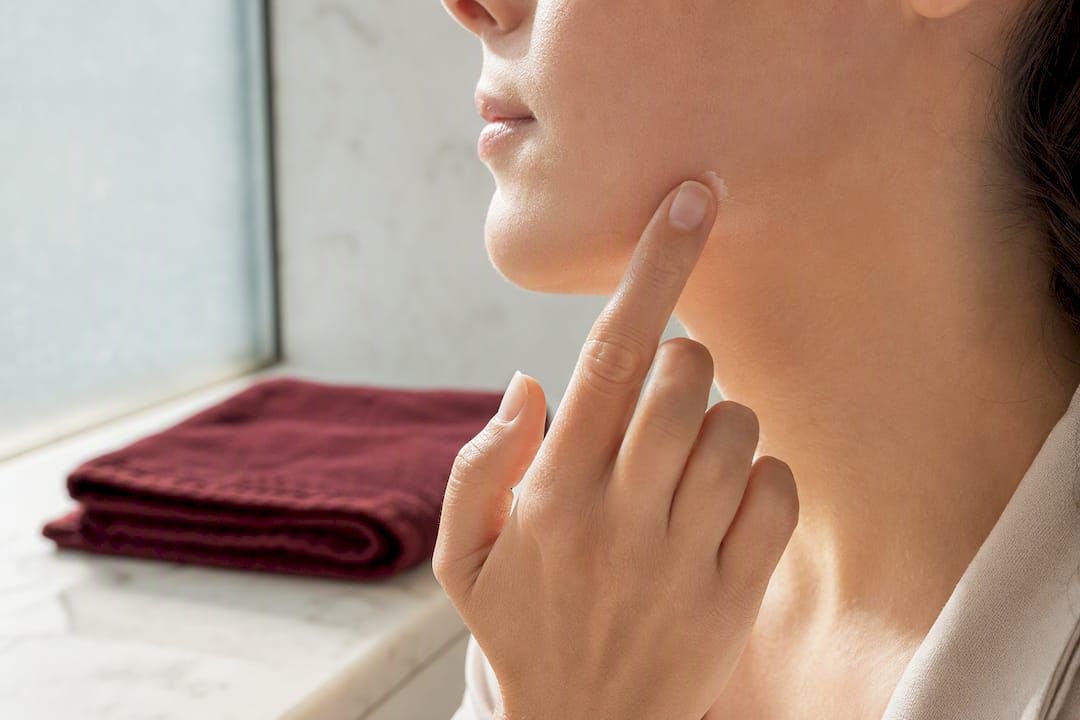
- Patch test on your inner arm or jawline for 48 hours before applying anything new to your full face.
- Watch for redness, bumps, or itching during that window; a clean test means you’re likely safe to proceed gradually.
If breakouts persist despite passing every check, that’s a signal to consult a dermatologist rather than keep swapping products at random. Our quick verification checklist walks through this process in more detail.
Pro Tip: Patch test on your jawline, not your wrist. Jawline skin behaves more like facial skin in oil production and sensitivity, so it gives you a more accurate read.
Can Noncomedogenic Products Still Break You Out?
Yes, and that’s worth knowing before you get discouraged. Hormones, stress, and layering too many occlusive products can trigger breakouts regardless of what any single label claims. The American Academy of Dermatology notes that acne is multifactorial, meaning ingredient choice is one variable among several, not the whole equation.
Since the term isn’t federally regulated, personal response matters more than the words on the bottle. If breakouts start after a routine change, remove one product at a time, simplify down to the basics, and see a dermatologist if the acne persists past a few weeks.
A Formulator’s View on Pore-Friendly, Barrier-Supportive Beauty
At Purelightbotanicalbeauty, every formula starts from the same question: does this nourish skin, or just sit on top of it? That priority shapes our approach to sensitive and eczema-prone skin especially, where the wrong occlusive ingredient can undo weeks of careful barrier repair.
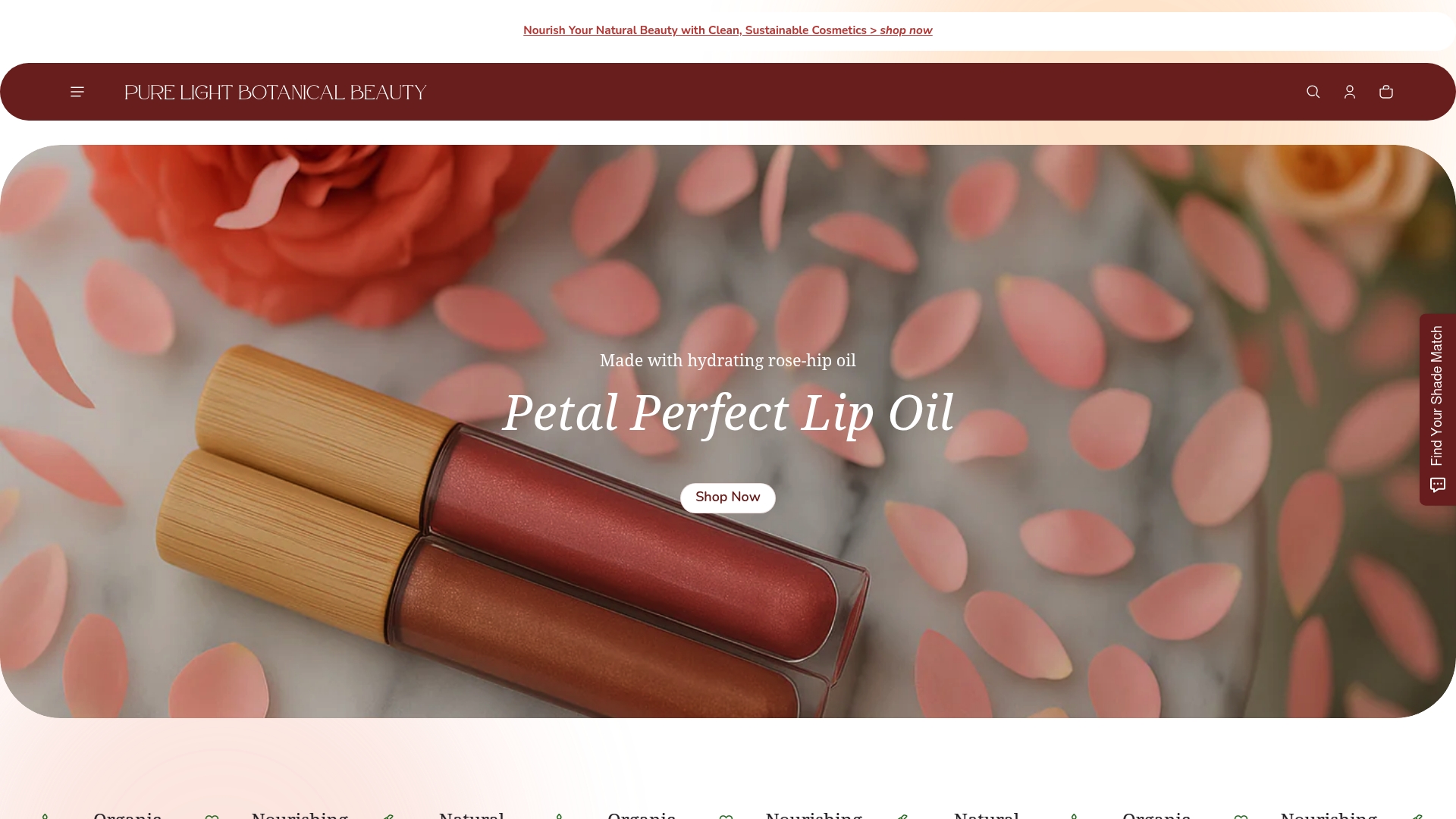
Our Botanical Beauty Balm™ ~ Calendula & Rose leans on calendula’s calming reputation rather than heavy waxes, making it a gentle first layer for reactive skin. The Nourishing Lipstick™ ~ Cherry Quartz, ~ Garnet, ~ Rose Quartz, and ~ Ruby shades all skip heavy waxes in favor of plant-based nourishment for sensitive lips. Our Botanical Crème Blush™ line, in Rose Quartz, Cherry Quartz, and Rhodonite, adds color without the occlusive film heavier cream formulas leave behind.
Apply thinnest layers first, and always patch test before a full application.
— Caitlin Grey
Ready to Build a Pore-Friendly Routine That Actually Works?
This brand exists for readers seeking clean color and real hydration without worrying about pore-clogging formulas. While many brands prioritize trend colors over formulation, this approach prioritizes skin health underneath makeup, especially for sensitive and eczema-prone complexions.
If you want to test the philosophy in one step, The Ruby Face™ Bundle pairs a lip and cheek color built on the same barrier-friendly logic covered above. Prefer to build gradually? Start with the Botanical Crème Blush™ and Petal Perfect Lip Oil™ Duo for a two-product minimal routine, or browse the full Nourishing Lipstick collection to find your shade. Add products to your cart to begin observing how your skin responds.