

TL;DR:
- Non-comedogenic makeup is formulated to prevent pore blockage and reduce acne risk by using ingredients rated 2 or below on a 0 to 5 scale. The label is unregulated, so reading ingredient lists and patch testing are essential for safe use, as individual skin responses vary. Proper application and thorough nightly removal support skin health and minimize breakouts for sensitive or acne-prone skin.
Non-comedogenic makeup is defined as makeup formulated to avoid blocking hair follicles, which reduces the formation of comedones like blackheads and whiteheads. For anyone with sensitive or acne-prone skin, this distinction is not cosmetic preference. It is the difference between a product that supports your skin and one that quietly works against it. Understanding what is non-comedogenic makeup, how it is rated, and why the label has real limits gives you the knowledge to make choices your skin will thank you for.
What is non-comedogenic makeup and how does it work?
Non-comedogenic makeup relies on a comedogenicity rating scale of 0 to 5, where ingredients rated 2 or below are considered safe for pore-prone skin. A rating of 0 means the ingredient does not clog pores at all. A rating of 5 means it is highly likely to cause blockages. This scale gives formulators a framework for building products that sit lightly on skin without suffocating it.
The term “comedogenic” comes from the word comedone, the clinical name for a clogged pore. Comedogenic ingredients are those that physically block the follicle opening, trapping sebum and dead skin cells underneath. Non-comedogenic formulas avoid these ingredients or use them at concentrations low enough to stay below the risk threshold.
Makeup artists and aestheticians consistently note that non-comedogenic products tend to be lightweight and avoid heavy occlusive ingredients, helping skin breathe and reducing acne risk. That lightness is not accidental. It reflects deliberate ingredient selection designed to let your skin function normally while still delivering color and coverage.
What ingredients make makeup comedogenic versus safe?
The ingredient list on your makeup is the most reliable tool you have. Knowing which names to look for, and which to avoid, puts you in control of what goes on your skin.
High-risk comedogenic ingredients to avoid:
- Coconut oil (rated 4 on the comedogenicity scale)
- Shea butter (rated 0–3 depending on processing, but often problematic for acne-prone skin)
- Cocoa butter (rated 4)
- Marula oil (rated 3–4)
- Isopropyl myristate (rated 5)
Safe, non-comedogenic ingredients to seek:
- Squalane (rated 1, lightweight and skin-identical)
- Hyaluronic acid (rated 0, draws moisture without clogging)
- Glycerin (rated 0, hydrating and gentle)
- Sunflower oil (rated 0–2, light and nourishing)
- Niacinamide (rated 0, also reduces inflammation)
Skin experts emphasize ingredient chemical profiles over natural versus synthetic origins. Hyaluronic acid and glycerin are both beneficial and non-comedogenic regardless of how they are derived. The source of an ingredient matters far less than its behavior on skin.
Pro Tip: Focus on the first five ingredients listed on any product. The top five ingredients dominate the formula’s concentration, so ingredients beyond that point generally have minimal impact on comedogenicity.
One more thing worth knowing: water-based and mineral formulas consistently score lower on the comedogenicity scale than oil-heavy or wax-based alternatives. If you are choosing between a natural makeup option and a conventional one, the formula type matters more than the “natural” label alone.
How does “non-comedogenic” labeling work, and what are its limits?
The term “non-comedogenic” is not regulated by the FDA or any equivalent body. Any brand can print it on a label without meeting a defined standard. That fact alone is reason enough to read ingredients rather than trust claims.
Testing methods add another layer of complexity. The rabbit ear assay, once the standard for measuring comedogenicity, does not accurately reflect how human skin responds to ingredients. Rabbit ear skin is far more reactive than human facial skin, which means results from that method often overstate or misrepresent real-world risk. Inconsistent labeling follows directly from inconsistent testing.
Individual skin response varies enormously. A product that works perfectly for one person with oily skin may trigger breakouts for someone with a different skin barrier or hormonal profile. No single test or label can account for that variability.
What to do instead of trusting the label:
- Read the full ingredient list, not just the front-of-pack claim
- Cross-reference key ingredients against a comedogenicity database
- Note how your skin responds over at least two weeks of use
- Consult a dermatologist if breakouts persist despite switching products
Pro Tip: Patch test every new product on a small area, like your jawline, for a full week before applying it to your entire face. This reveals individual reactions that no label can predict.
The label is a starting point, not a guarantee. Ingredient literacy and personal observation are the real tools for sensitive skin.
How to choose and apply non-comedogenic makeup for acne-prone skin
Choosing the right product is only half the work. How you apply and remove makeup shapes your skin’s response just as much as the formula itself.

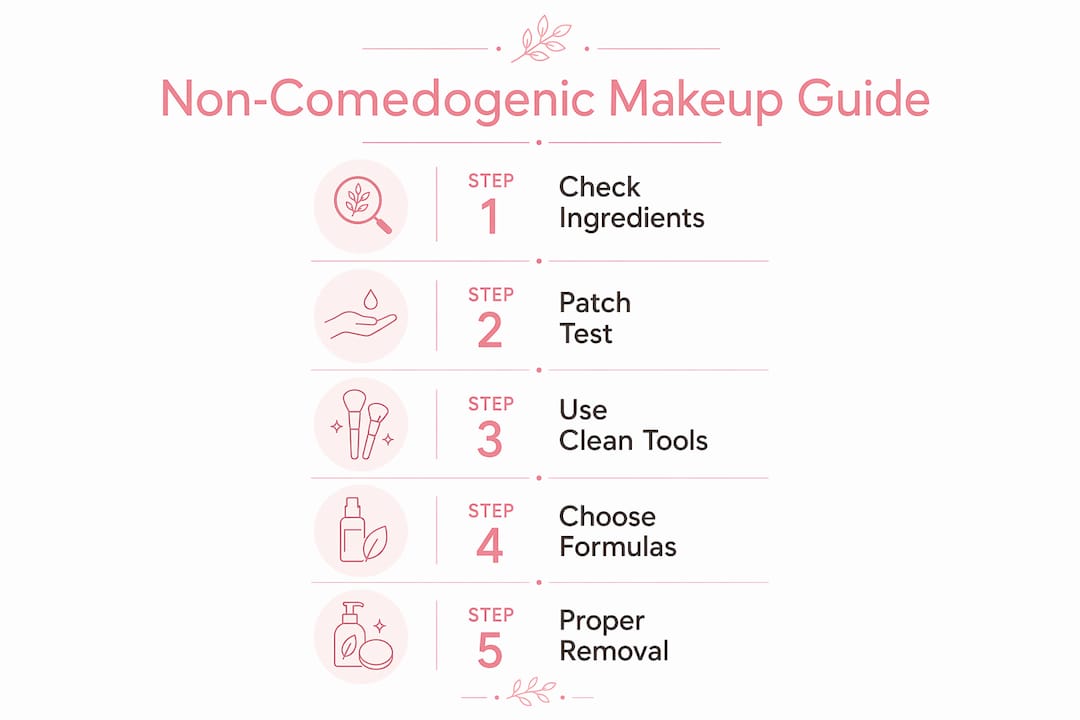
Step 1: Start with formula type. Mineral powder foundations and water-based liquid foundations are the most consistently safe choices for acne-prone skin. They avoid the heavy waxes and oils that trap debris in pores. Look for labels that say “oil-free” alongside “non-comedogenic” for the strongest signal.
Step 2: Patch test before committing. Apply a small amount to your jawline or inner arm. Leave it for one week without washing the area with harsh cleansers. If no reaction appears, the product is likely safe for your skin type.
Step 3: Apply with clean tools. Dirty brushes and sponges transfer bacteria directly onto skin. Wash applicators at least once a week with a gentle, fragrance-free cleanser. This step alone reduces breakout risk significantly.
Step 4: Remove makeup thoroughly every night. Improper cleansing causes clogged pores even when the makeup itself is non-comedogenic. Use a gentle micellar water or oil-free cleanser to dissolve product fully before washing your face.
Step 5: Build a supporting skincare routine. Non-comedogenic makeup works best alongside a clean skincare routine that includes a gentle cleanser, a non-comedogenic moisturizer, and SPF. Skipping moisturizer because your skin is oily is a common mistake. Dehydrated skin overproduces sebum, which increases pore-clogging risk.
Consistency in cleansing and product application is the foundation of clear skin. Applying makeup sparingly and removing it thoroughly matters as much as the products you choose.
Pro Tip: Apply non-comedogenic foundation with a damp beauty sponge rather than a brush. Damp application sheers out the product, reducing the amount sitting on your skin and lowering the chance of pore blockage.
Common misconceptions about non-comedogenic makeup
Several widely held beliefs about non-comedogenic products lead people to make choices that worsen their skin. Knowing the truth behind these myths saves time, money, and breakouts.
Myth 1: Natural means non-comedogenic. Natural ingredients can clog pores just as readily as synthetic ones. Coconut oil, cocoa butter, and beeswax are all natural and all carry high comedogenicity ratings. The word “natural” on a label tells you nothing about pore safety. Check the ingredients, not the marketing.
Myth 2: Alcohol-based products are safe because they feel drying. Alcohol-based products may feel like they are controlling oil, but they often trigger a rebound oil effect, increasing sebum production and raising the risk of clogged pores. Drying out the skin signals it to produce more oil to compensate. The result is often worse than before.
Myth 3: Non-comedogenic makeup guarantees acne-free skin. Non-comedogenic formulas reduce risk. They do not eliminate it. Acne has multiple causes including hormones, stress, diet, and bacteria. Makeup choice is one variable in a larger picture. If breakouts continue despite switching to non-comedogenic products, the cause may lie elsewhere.
Myth 4: You only need to worry about foundation. Every product that touches your face contributes to pore load. Primers, setting sprays, blushes, bronzers, and even lip products that migrate can introduce comedogenic ingredients. Evaluate your full routine, not just the base.
Understanding these myths helps you approach your skin with clearer eyes. For a deeper look at how to evaluate clean beauty claims beyond surface-level marketing, ingredient literacy is always the most reliable guide.
Key takeaways
Non-comedogenic makeup reduces pore-clogging risk through deliberate ingredient selection, but the label alone is not enough. Ingredient literacy, patch testing, and thorough cleansing are the three practices that actually protect sensitive and acne-prone skin.
| Point | Details |
|---|---|
| Comedogenicity scale | Ingredients rated 0–2 are generally safe; prioritize these in your formula. |
| Label limitations | “Non-comedogenic” is unregulated; always read the ingredient list yourself. |
| Safe ingredients to seek | Squalane, hyaluronic acid, and glycerin are effective and pore-safe choices. |
| Patch testing is non-negotiable | Test every new product on your jawline for one week before full use. |
| Cleansing matters as much as formula | Thorough nightly makeup removal prevents clogged pores regardless of product choice. |
Why I think most people are reading non-comedogenic labels backwards
Most people scan a label looking for reassurance. They see “non-comedogenic” and stop reading. I did the same thing for years, and my skin paid for it.
The shift that actually changed my skin was learning to read ingredient lists as the primary source of truth, not the front-of-pack claim. Once I understood that coconut oil rated a 4 on the comedogenicity scale and was sitting in my “natural” foundation, the breakouts along my jawline finally made sense. No label had warned me. The ingredient list had been telling me the whole time.
What I have found over years of working with sensitive skin routines is that patience and observation matter more than any single product switch. Your skin needs at least two to four weeks to respond to a formula change. Switching products every few days because you are not seeing instant results is one of the most common mistakes. Give your skin time to speak.
The other thing I wish more people knew: cleansing is where most routines fall apart. You can wear the most carefully formulated non-comedogenic foundation and still break out if you are not removing it fully every night. A gentle double cleanse, starting with a micellar water and following with a mild gel cleanser, removes product residue that a single wash often misses.
Be patient with your skin. Observe it. Treat it like a conversation, not a problem to fix overnight.
— Kaitlyn
Purelightbotanicalbeauty: makeup that works with your skin
Purelightbotanicalbeauty was built on the belief that makeup and skin health belong together. Every formula in the nourishing cosmetics collection is crafted with clean, plant-based ingredients chosen for their skin-supporting profiles, not just their color payoff. Products like the Nourishing Lipstick and Botanical Crème Blush avoid heavy pore-clogging oils and instead use lightweight botanicals that sit gently on skin. If you have been searching for makeup that feels as good as it looks, especially on sensitive or acne-prone skin, Purelightbotanicalbeauty offers a full range designed to nourish while it beautifies.
FAQ
What does non-comedogenic mean in makeup?
Non-comedogenic means the product is formulated to avoid blocking hair follicles, reducing the risk of blackheads and whiteheads. Ingredients in these formulas typically score 2 or below on the comedogenicity scale of 0 to 5.
Is non-comedogenic makeup better for acne-prone skin?
Non-comedogenic makeup reduces pore-clogging risk, making it a better choice for acne-prone skin than conventional formulas. It does not guarantee acne-free skin, since acne has multiple causes beyond makeup alone.
Can natural makeup still clog pores?
Yes. Natural ingredients like coconut oil and cocoa butter carry high comedogenicity ratings and can clog pores just as readily as synthetic alternatives. Always check the ingredient list rather than relying on “natural” claims.
How do I know if a product is truly non-comedogenic?
Read the ingredient list and cross-reference the top five ingredients against a comedogenicity database. Patch test the product on your jawline for one week to observe your personal skin response.
Does removing makeup matter for pore health?
Thorough nightly makeup removal is as critical as product choice. Leaving makeup on overnight causes clogged pores even when the formula is non-comedogenic, so a complete cleansing routine is non-negotiable.
Recommended
- What Is Non-Toxic Makeup? Benefits, Ingredients, and More – Pure Light Botanical Beauty
- Skin-Friendly Makeup Tips: Complete Expert Guide – Pure Light Botanical Beauty
- What is holistic makeup? A guide for sensitive skin – Pure Light Botanical Beauty
- 7 Essentials for a Clean Makeup Checklist for Sensitive Skin – Pure Light Botanical Beauty