

TL;DR:
- Women are exposed to about 168 chemicals daily from personal care products, increasing their chemical load. Toxic makeup contains synthetic chemicals such as parabens, phthalates, lead, and PFAS, which bioaccumulate and disrupt hormones. Switching gradually to non-toxic, plant-based formulas improves skin health and reduces long-term health risks.
Toxic makeup is defined as cosmetic products containing synthetic chemicals that accumulate in the body and disrupt normal biological function. The average woman uses 12 personal care products daily, exposing herself to roughly 168 unique chemicals before she leaves the house. That number is not a scare tactic. It is a baseline. The industry term for this problem is “chemical load,” and it is the reason why so many women with sensitive skin, hormonal concerns, or conditions like eczema are asking why ditch toxic makeup and choosing plant-based alternatives instead.
Why ditch toxic makeup: the chemical load your skin carries
The skin is not a barrier that blocks everything. It absorbs what you put on it, and that absorption adds up over time. Skincare expert Gemma Clare notes that cumulative toxic load compromises the skin barrier and overactivates the immune system. A single product may contain a safe level of any one chemical. The problem is that you are not using a single product.
Common harmful ingredients and what they do
The most frequently flagged chemicals in conventional makeup fall into a few clear categories.
- Parabens (methylparaben, propylparaben): Used as preservatives. The American Cancer Society notes that parabens mimic estrogen, raising concerns about hormone disruption even though study results remain mixed.
- Phthalates: Used to make fragrance last longer and to soften plastics in packaging. They are classified as endocrine disruptors and are linked to reproductive health concerns.
- Lead: FDA lipstick tests show average lead levels above 1 ppm, with the safety threshold set at 10 ppm. Lead has no safe level of accumulation in the body, so even low doses applied daily to the lips carry real risk.
- PFAS (per- and polyfluoroalkyl substances): Found in long-wear foundations and waterproof mascaras. They do not break down in the body or the environment.
- Synthetic fragrance: A single “fragrance” listing on a label can represent dozens of undisclosed chemicals. Fragrance is a leading cause of cosmetic allergy and irritation, particularly near the eyes.
Pro Tip: When reading a label, treat “fragrance” or “parfum” as a red flag. Neither term tells you what is actually in the product.
The concept of bioaccumulation explains why these ingredients matter even at low doses. Your liver and kidneys filter out many toxins, but fat-soluble chemicals like PFAS and certain phthalates store in fatty tissue. Over months and years, that storage builds. The body’s detox systems were not designed to handle a daily chemical cocktail from 12 products.
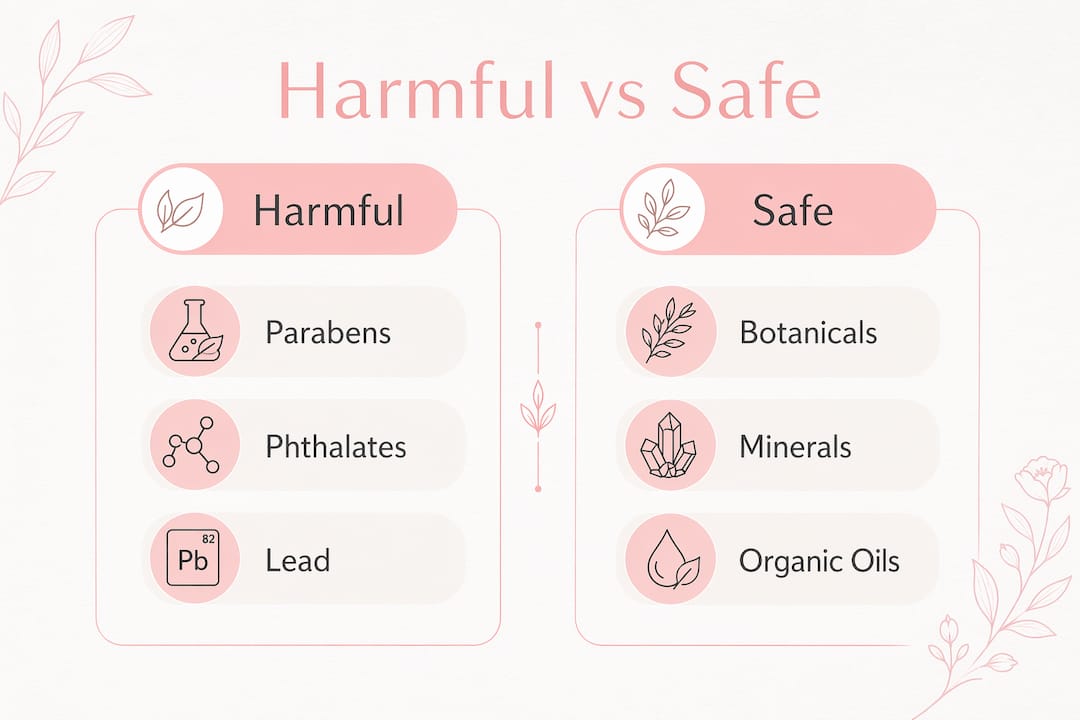
| Ingredient | Common Use | Primary Concern |
|---|---|---|
| Parabens | Preservative | Estrogen mimicry, hormone disruption |
| Phthalates | Fragrance fixative | Endocrine disruption |
| Lead | Color pigment contaminant | Neurotoxicity, accumulation |
| PFAS | Long-wear coating | Bioaccumulation, organ stress |
| Synthetic fragrance | Scent | Allergic reaction, undisclosed chemicals |
How do US and EU cosmetic regulations compare?
The regulatory gap between the United States and the European Union is the single most important fact in this conversation. The EU bans or restricts more than 1,400 cosmetic ingredients. The US restricts fewer than 20. That gap means a product sold legally in an American drugstore may contain ingredients that are prohibited in Europe.
“The US cosmetic industry operates largely on a self-regulation model. Brands are not required to prove safety before a product reaches shelves.”
This matters because the phrase “non-toxic” carries no legal definition in the United States. Neither does “clean beauty” or “natural.” A brand can print any of those words on a label without meeting a single regulated standard. That is not cynicism. That is the current legal reality.
| Regulatory Body | Banned or Restricted Ingredients | Pre-market Safety Review Required |
|---|---|---|
| European Union | More than 1,400 | Yes |
| United States | Fewer than 20 | No |
The practical takeaway is that label claims alone are not enough. Certifications from recognized third-party organizations, such as the Environmental Working Group’s EWG Verified standard or COSMOS certification, provide more reliable guidance than marketing language. Reading the actual ingredient list is still the most reliable skill you can develop.
What are the real benefits of non-toxic makeup?
Switching to cleaner formulas does more than remove harmful chemicals. It actively supports skin health. Plant-based ingredients like rosehip oil, shea butter, and botanical waxes nourish the skin barrier rather than sitting on top of it. Women with eczema, rosacea, or chronic sensitivity often report fewer flare-ups after removing synthetic fragrance and preservatives from their routine.
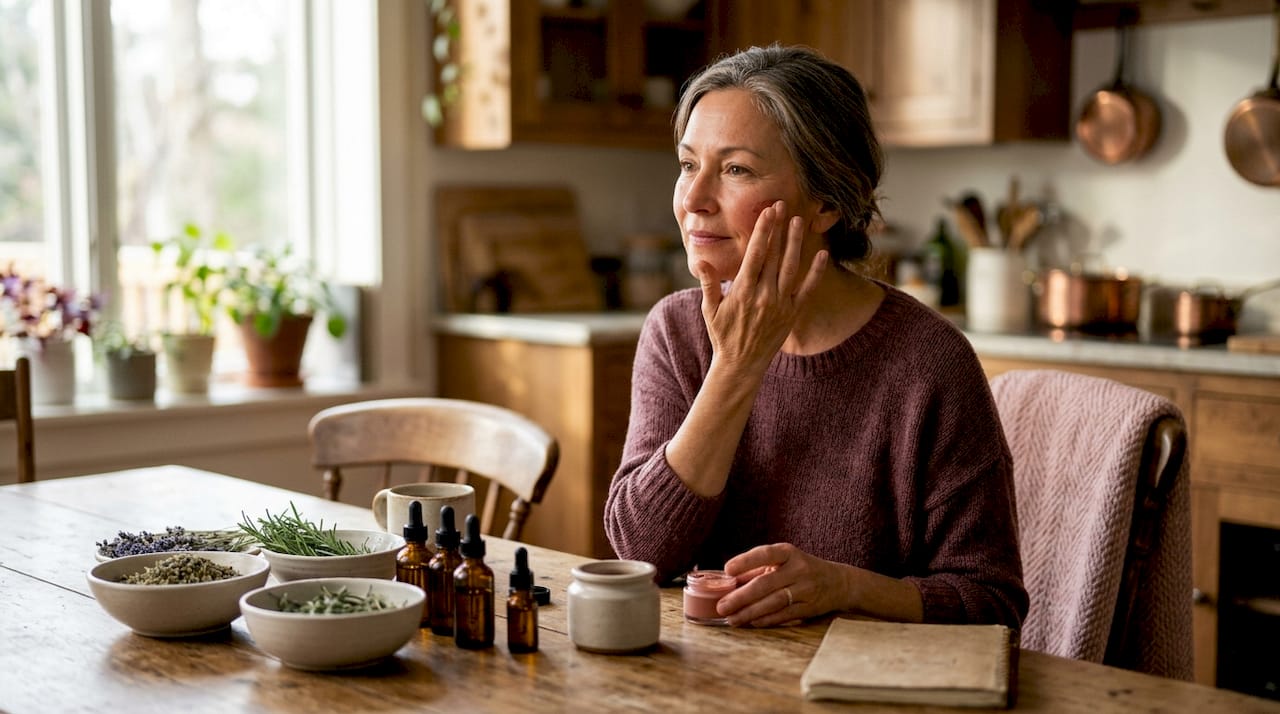
The hormonal connection is real and underappreciated. Removing endocrine-disrupting ingredients like parabens and phthalates reduces the daily chemical signals competing with your body’s natural hormone production. This is not a guaranteed cure for hormonal imbalance, but it removes a consistent source of interference.
There is also a psychological dimension worth naming. A self-care approach to non-toxic beauty produces more sustainable results than a fear-driven purge. When you choose products that feel good on your skin and align with your values, the routine becomes a ritual rather than a chore. That shift in mindset has real effects on stress levels and consistency.
Pro Tip: Non-toxic makeup performance often improves with layering. A botanical crème blush applied over a moisturized base, for example, blends more naturally than a powder formula over dry skin.
The performance myth deserves a direct answer. Non-toxic formulas have improved significantly. Botanical pigments, mineral-based foundations, and plant-wax lip products now deliver color payoff and wear time that match conventional products. The idea that clean makeup means sheer or short-lasting is outdated.
How to transition to a non-toxic makeup routine
A full product overhaul on day one is not necessary and rarely sticks. Replacing products gradually as they run out is the most sustainable approach. Start with the products you wear on the most sensitive areas of your face and body.
- Start with lip products. Lipstick and lip gloss are ingested in small amounts throughout the day. Given the FDA’s findings on lead levels in lipstick, this is the highest-impact swap you can make first.
- Replace your foundation next. Foundation covers the largest surface area of your face and sits on skin for the longest time. Switching to a mineral or botanical base reduces your overall daily chemical exposure significantly.
- Swap your mascara. Mascara sits near the eyes and mucous membranes. Fragrance-free, plant-based mascaras reduce the risk of irritation and allergic reaction in this sensitive zone.
- Read every label before you buy. Look for fragrance-free formulas. Avoid products listing “parfum,” phthalates, parabens, or any ingredient ending in “-paraben.” A short ingredient list with recognizable plant names is a good sign.
- Upgrade your tool hygiene. Replace mascara every 3 months and clean brushes weekly. Bacteria on old tools cause breakouts and irritation that no clean ingredient list can fix.
Pro Tip: You do not need to throw away products you already own and love. Check them against the EWG Skin Deep database. If they score well, keep them. Focus your swaps on the products that score poorly.
The non-toxic beauty guide from Purelightbotanicalbeauty walks through this process in detail, including which botanical ingredients to look for and which label claims to ignore. For those with sensitive skin, the transition guide for sensitive skin offers a gentler, more targeted approach.
Key Takeaways
Ditching toxic makeup protects your skin barrier, reduces hormone disruption, and supports long-term health by removing chemicals that accumulate in the body over time.
| Point | Details |
|---|---|
| Chemical load is cumulative | Women are exposed to roughly 168 chemicals daily from personal care products alone. |
| US regulation is minimal | The US restricts fewer than 20 cosmetic ingredients; the EU restricts more than 1,400. |
| “Non-toxic” has no legal definition | Rely on third-party certifications and ingredient lists, not label claims. |
| Start with lip and foundation swaps | These products carry the highest exposure risk and make the biggest impact when replaced. |
| Tool hygiene matters as much as ingredients | Replace mascara every 3 months and clean brushes weekly to protect skin health. |
What I’ve learned from years of watching women switch to clean beauty
I have watched hundreds of women approach the switch to non-toxic makeup with the same initial energy: they want to throw everything out and start fresh. I understand that impulse. Once you know what is in conventional products, keeping them feels uncomfortable. But that all-or-nothing approach almost always leads to frustration, overspending, and eventually going back to what was familiar.
The more honest truth is that 100% toxin-free is not the goal for most people. The goal is meaningfully reducing your chemical load while building a routine that feels good and actually works. That means being selective. Some products in your current collection may already be safe. Some clinical formulas, like a medicated eczema treatment, may need to stay even if they contain a synthetic ingredient. That is a reasonable trade-off.
What I have found is that the women who thrive in this transition are the ones who treat it as self-care rather than a detox project. They replace one product at a time. They pay attention to how their skin responds. They choose botanical formulas not just because they are safer, but because they genuinely feel better on the skin. That is the version of this transition that lasts.
— Kaitlyn
Clean beauty that actually performs: Purelightbotanicalbeauty
Purelightbotanicalbeauty was built on the belief that makeup and skin healing can come from the same formula. Every product in the line is crafted with plant-based ingredients chosen for both color performance and skin nourishment. The Botanical Crème Blush is a strong starting point for anyone making the switch. It delivers buildable, natural-looking color without synthetic fragrance, parabens, or PFAS. For lip products, the nourishing lipstick collection offers rich pigment with botanical ingredients that condition rather than dry. Visit Purelightbotanicalbeauty to find formulas designed for sensitive skin, eczema-prone skin, and anyone ready to make beauty feel like care.
FAQ
What makes makeup “toxic”?
Toxic makeup contains synthetic chemicals like parabens, phthalates, lead, and PFAS that accumulate in the body and disrupt hormones, irritate skin, or raise cancer concerns with repeated exposure.
Is toxic makeup actually harmful in small amounts?
Individual doses may be low, but cumulative toxic load from using 12 or more products daily adds up. The concern is not one product but the combined daily exposure over months and years.
How do I know if my makeup is safe?
Check ingredients against the EWG Skin Deep database and look for third-party certifications like EWG Verified or COSMOS. Avoid products listing “fragrance,” parabens, or phthalates.
Does non-toxic makeup perform as well as conventional makeup?
Yes. Botanical and mineral-based formulas now match conventional products in color payoff and wear time. Performance improves further when products are layered over a well-moisturized base.
Where do I start when switching to clean makeup?
Start with lip products and foundation, since these carry the highest daily exposure risk. Replace products gradually as they run out rather than replacing everything at once.
Recommended
- Complete Guide to Non-Toxic Beauty Essentials – Pure Light Botanical Beauty
- Your Guide to Clean Makeup Swaps for Sensitive Skin – Pure Light Botanical Beauty
- How to Replace Conventional Makeup Safely in 2026 – Pure Light Botanical Beauty
- Complete Guide to Mindful Makeup Application – Pure Light Botanical Beauty