

TL;DR:
- Transparent beauty labeling requires full ingredient disclosure, standardized scientific naming, and honesty about potential hazards. It helps consumers identify safe, effective products, especially for sensitive skin or allergies. Trustworthy brands explain their ingredients, moving beyond vague marketing terms to foster confidence and informed choices.
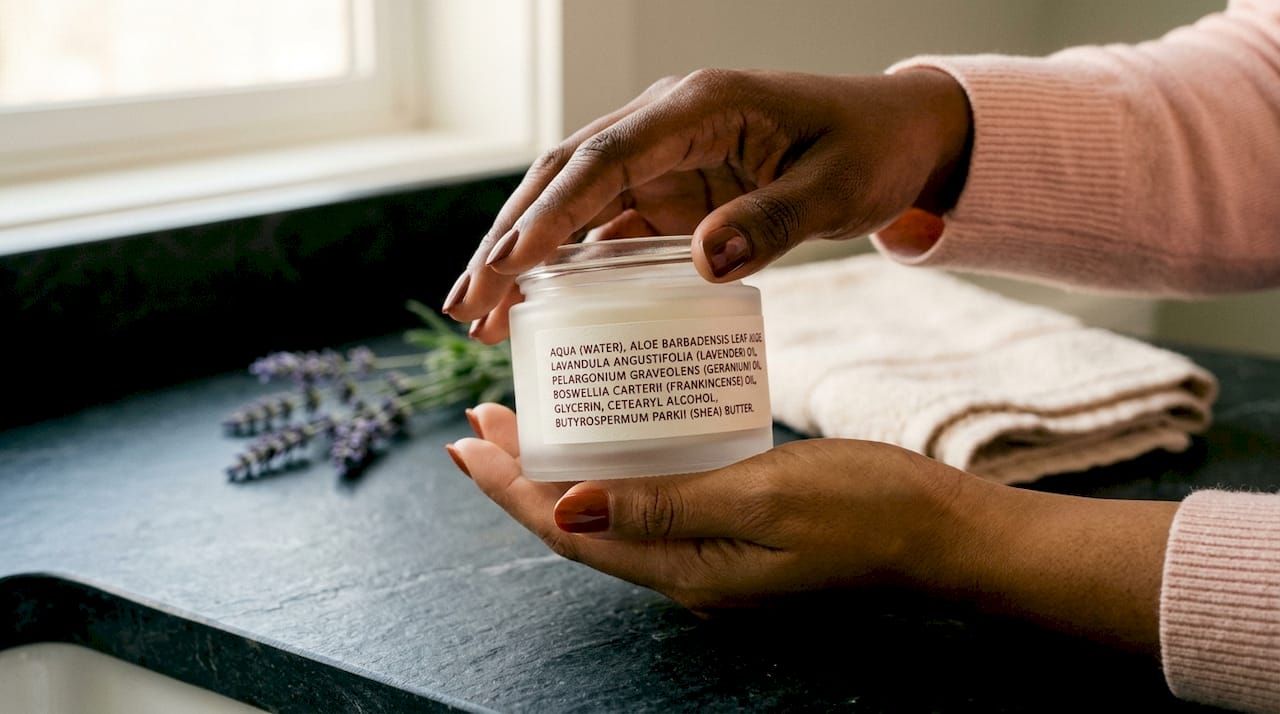
Transparent beauty labeling is defined as the full, honest disclosure of every ingredient in a beauty product, listed clearly and in a standardized format that any consumer can read and verify. This practice goes far beyond printing a long list on the back of a bottle. It means naming each ingredient using the INCI system, flagging potential allergens, and presenting information in a way that protects your health rather than just satisfying a legal checkbox. Understanding beauty product transparency is the first step toward choosing products that genuinely serve your skin, especially if you have sensitive skin, eczema, or known allergies. Purelightbotanicalbeauty was built on exactly this principle: that you deserve to know what you are putting on your skin, every single time.
What is transparent beauty labeling and what makes it complete?
Transparent beauty labeling requires three things: a full ingredient list, standardized scientific naming, and honest disclosure of anything that could cause harm. The FDA’s cosmetics labeling requirements and standards like ISO 22715 enforce clarity, font size, and placement so that ingredient information is actually readable, not buried in tiny print. The Personal Care Products Council oversees the INCI naming system, which assigns standardized scientific names to cosmetic ingredients for global consistency.
The core components of a truly transparent label include:
- Full ingredient list: Every active and inactive ingredient appears, with no omissions. Transparency helps consumers identify and avoid allergens that can cause reactions ranging from mild irritation to severe allergic responses.
- INCI naming conventions: Ingredients use their internationally recognized scientific names, reducing confusion across brands and countries.
- Allergen disclosure: Known sensitizers like nickel, lanolin, or specific botanical extracts are clearly identified rather than hidden under vague category terms.
- Concentration order: Ingredients appear from highest to lowest concentration, giving you a real picture of what the formula actually contains.
- Honest function labeling: Brands that go beyond legal minimums explain what each ingredient does, building trust rather than just meeting compliance.
Pro Tip: When you pick up a new product, scan the first five to seven ingredients first. Those represent the bulk of the formula. Everything after that exists in smaller amounts, and some ingredients under 1% can appear in any order at the end of the list.
The difference between a transparent label and a marketing-heavy one is stark. A transparent label tells you what is in the product and why. A marketing label tells you what the brand wants you to feel about it.
How do science-led transparent beauty standards differ from “free-from” claims?
The clean beauty movement started with “free-from” claims: no parabens, no sulfates, no silicones. Those claims felt reassuring, but they measured absence rather than quality. The shift to science-led standards replaces vague marketing perceptions with measurable data like biodegradability, renewable ingredient content, and lifecycle environmental impact.
This evolution matters because “free-from” tells you nothing about what is actually in the product. A formula can be paraben-free and still contain synthetic fragrances, hormone-disrupting preservatives, or poorly sourced plant extracts. Science-led transparency closes that gap by requiring brands to show their work.
The new transparent beauty standards include four measurable dimensions:
- Biodegradability data: Ingredients are assessed for how they break down in the environment, not just whether they sound natural.
- Renewable content verification: The percentage of ingredients sourced from renewable raw materials is disclosed and verifiable.
- Ethical sourcing documentation: Supply chain transparency covers where botanicals are grown, how they are harvested, and whether fair labor practices apply.
- Performance evidence: Efficacy claims are backed by testing data, not just consumer perception surveys.
“Transparency is necessary protection that grounds consumer expectations in reality, fostering mental well-being by countering unrealistic beauty standards.” — Why Transparency Is the Only Beauty Trend That Matters
The future of transparent beauty involves end-to-end supply chain disclosure, including post-use environmental impact. That means knowing not just what is in your moisturizer, but where the shea butter was sourced and what happens to the packaging after you finish the jar. Purelightbotanicalbeauty’s approach to certified clean beauty reflects this shift, moving from “free-from” promises to ingredient-level honesty.
What common labeling terms should you know to decode beauty labels?
Most beauty labels carry terms that sound scientific or protective but carry no legal definition. Knowing what these terms actually mean, and what they do not guarantee, is the foundation of reading labels critically.
| Term | What it sounds like | What it actually means |
|---|---|---|
| Hypoallergenic | Unlikely to cause allergies | No universal testing standard; varies by brand |
| Non-comedogenic | Won’t clog pores | No regulated definition; self-reported by brands |
| Clean | Free from harmful ingredients | No legal definition; each brand sets its own rules |
| Natural | Derived from nature | No regulated standard; can include heavily processed botanicals |
| Fragrance-free | Contains no scent ingredients | More reliable; means no added fragrance compounds |
Terms like “hypoallergenic” and “clean” lack universal regulation and testing standards, varying widely by brand. That means a product labeled “hypoallergenic” by one company may contain the same sensitizing ingredients that another brand lists as an allergen concern.
The word “fragrance” deserves special attention. “Fragrance” or “parfum” on a label can conceal dozens or even hundreds of individual chemical components, some of which are known allergens. A product labeled “fragrance-free” is a more reliable choice for anyone managing sensitive skin or eczema, because it signals that no fragrance compounds were added at all.
Pro Tip: Ignore the front of the packaging entirely when evaluating a new product. The front is marketing. The back, specifically the ingredient list, is where the real information lives. Cross-reference unfamiliar ingredient names using a resource like the Environmental Working Group’s Skin Deep database.
Understanding ingredient order adds another layer of clarity. Ingredients appear in descending order by weight, so the first ingredient is present in the largest amount. If water is first and a hero botanical is listed near the end, that botanical is present in a very small concentration, regardless of how prominently it appears on the front label.
Why does transparent labeling matter for sensitive skin and allergies?
Transparent labeling is a safety tool, not just a marketing preference. For people with sensitive skin, eczema, or known contact allergies, a vague or incomplete ingredient list is a genuine health risk. Full ingredient disclosure allows you to identify and avoid the specific substances that trigger your reactions, rather than guessing after the fact.
The benefits of clear beauty labels for sensitive skin consumers include:
- Allergen avoidance: You can cross-check every ingredient against your known triggers before the product touches your skin.
- Reaction tracking: When a reaction does occur, a complete ingredient list lets you identify the likely cause and avoid it in future products.
- Informed substitution: Transparent labels make it easier to find products with similar formulas but without the specific ingredient causing your issue.
- Reduced anxiety: Knowing exactly what is in a product removes the uncertainty that often accompanies shopping with sensitive skin.
- Trust in the brand: Brands that disclose everything signal that they have nothing to hide, which builds long-term loyalty.
Brands that treat ingredient lists as strategic assets go beyond legal minimums to explain what each ingredient does and why it was chosen. That proactive transparency builds the kind of trust that turns a one-time purchase into a lasting relationship. For someone managing a skin condition, that trust is not a luxury. It is a necessity. Purelightbotanicalbeauty’s guide to transparency in beauty for sensitive skin covers exactly how this works in practice.
How to use transparent labeling to make better skincare choices
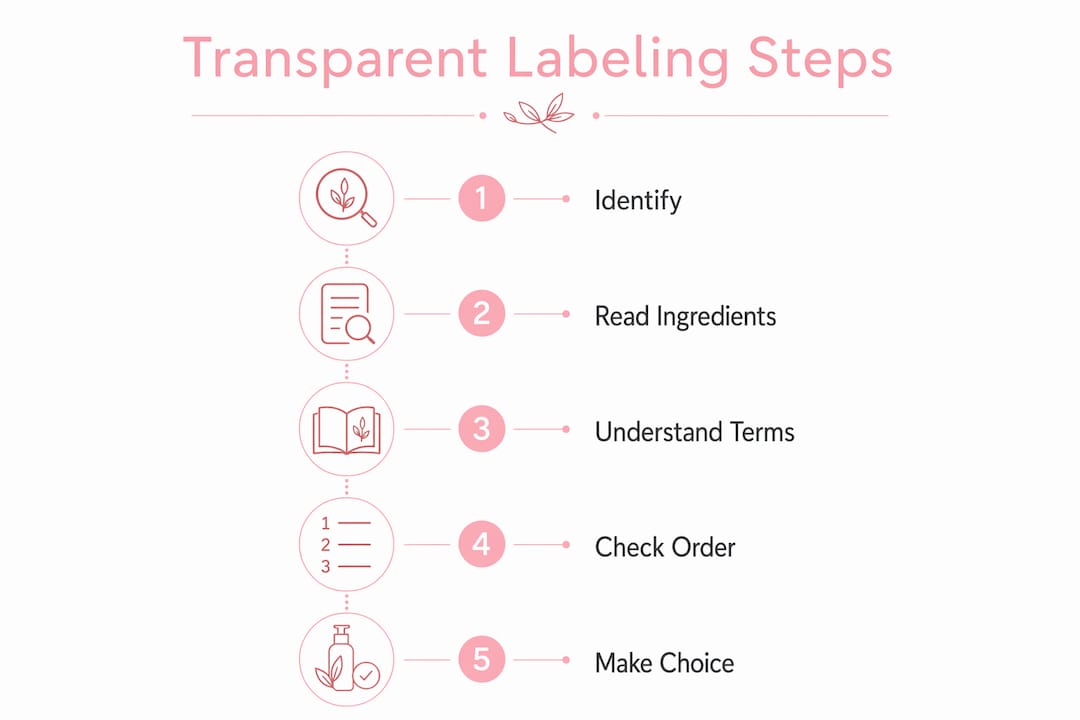
Reading labels well is a skill, and it gets easier with practice. A few consistent habits will help you cut through marketing noise and choose products that actually match your skin’s needs.
- Start with the first five ingredients. These make up the majority of the formula. If the first ingredient is an alcohol or a filler, the product is built on that foundation regardless of what hero ingredients appear later.
- Search unfamiliar names before you buy. The INCI system uses Latin and chemical names that look intimidating but are easy to look up. A quick search on a reputable ingredient database tells you what a substance does and whether it has known sensitizing properties.
- Treat “fragrance” as a red flag if you have reactive skin. A single word on a label can represent a complex mixture. Choose fragrance-free formulas when your skin is compromised or inflamed.
- Compare labels across products in the same category. When two moisturizers make similar claims, their ingredient lists reveal which one actually delivers on those claims and which relies on marketing language.
- Choose brands that explain their choices. A brand that tells you why it chose a specific botanical, what it does for your skin, and where it was sourced is a brand worth trusting. Purelightbotanicalbeauty’s ingredient list decoding guide walks through this process step by step.
The goal is not to become a cosmetic chemist. The goal is to read a label with enough confidence to know whether a product belongs on your skin.
Key Takeaways
Transparent beauty labeling is the single most reliable tool consumers have for making safe, informed skincare decisions, and it requires full ingredient disclosure, standardized naming, and honest communication from brands.
| Point | Details |
|---|---|
| INCI naming is the standard | Standardized scientific names on labels reduce confusion and enable global ingredient verification. |
| Ingredient order reveals concentration | The first 5–7 ingredients make up most of the formula; hero ingredients listed last are present in small amounts. |
| Marketing terms are unregulated | Words like “hypoallergenic” and “clean” have no universal legal definition; rely on the ingredient list instead. |
| “Fragrance” hides many chemicals | A single fragrance listing can represent hundreds of components; choose fragrance-free products for reactive skin. |
| Transparency builds real trust | Brands that explain ingredient functions beyond legal requirements earn deeper consumer loyalty and confidence. |
Why I think transparency is the only beauty standard worth demanding
I have spent years reading ingredient lists, and the single most consistent pattern I have noticed is this: the brands with the most to offer are always the ones with the most to say about their formulas. They do not hide behind “clean” or “natural.” They tell you what is in the product, what each ingredient does, and why it belongs there.
The beauty industry spent decades selling aspiration over information. That model worked because consumers did not know what questions to ask. That is changing fast. Shoppers now arrive at the shelf with ingredient databases on their phones and a healthy skepticism toward front-of-pack claims. The brands that thrive in this environment are the ones that welcome that scrutiny.
What I find most compelling about the transparency movement is its effect on mental well-being. Transparency grounds consumer expectations in reality, countering the kind of perfection-focused marketing that has done real psychological damage over the years. When a brand shows you exactly what is in a product and explains what it can realistically do for your skin, it treats you as an adult. That respect matters.
My honest advice: stop giving your attention to brands that refuse to be specific. If a brand cannot tell you what “fragrance” means in its formula, or why it chose one preservative over another, that silence is information. Demand more. Your skin and your peace of mind are worth it.
— Kaitlyn
Purelightbotanicalbeauty and the promise of honest ingredients
Purelightbotanicalbeauty was founded on the belief that beauty and healing come from the same source: nature, honestly applied.
Every product in the Purelightbotanicalbeauty line, from the Petal Perfect Lip Oil to the Botanical Crème Blush and Nourishing Lipstick, carries a full, clear ingredient list built on plant-based formulas designed for skin health. The brand discloses not just what is in each product but why each botanical was chosen and what it does for your skin. That level of honesty is not common in the beauty industry. At Purelightbotanicalbeauty, it is the baseline. Visit Purelightbotanicalbeauty to read the full ingredient story behind every formula and find products that your skin can trust.
FAQ
What is transparent beauty labeling?
Transparent beauty labeling is the complete, honest disclosure of all ingredients in a cosmetic product using standardized INCI names, listed in descending order of concentration. It goes beyond legal minimums to include allergen flagging and ingredient function explanations.
Are terms like “hypoallergenic” and “clean” regulated?
No. These terms lack universal regulation and vary widely by brand, making them unreliable without supporting ingredient data. Always read the full ingredient list rather than relying on front-of-pack claims.
Why does ingredient order matter on a beauty label?
Ingredients are listed from highest to lowest concentration, so the first five to seven ingredients make up the majority of the formula. An ingredient listed near the end is present in a very small amount, regardless of how prominently it is featured in marketing.
What does “fragrance” mean on an ingredient list?
“Fragrance” or “parfum” is a catch-all term that can represent dozens or hundreds of individual chemical components, some of which are known allergens. Choosing products labeled “fragrance-free” is the safer option for sensitive or reactive skin.
How do I find brands that practice genuine ingredient transparency?
Look for brands that name every ingredient using INCI conventions, explain the function of key ingredients, and disclose sourcing information. Purelightbotanicalbeauty publishes full ingredient details and the reasoning behind each formula choice, which is the standard all transparent brands should meet.
Recommended
- Certified Clean Beauty—Why Ingredient Transparency Matters – Pure Light Botanical Beauty
- What Is Clean Label Beauty? Complete Overview – Pure Light Botanical Beauty
- Transparency in Beauty – Why It Matters for Sensitive Skin – Pure Light Botanical Beauty
- Clean Beauty Certification: What It Really Means – Pure Light Botanical Beauty