

More than eighty percent of American shoppers now check ingredient labels before buying skincare. Clean beauty standards have become a powerful force, reshaping how companies and consumers view health and safety. This guide breaks down what clean beauty certification really means, the strict rules brands follow, and how transparent labeling helps you make safer choices every time you reach for a product.
Table of Contents
- Defining Clean Beauty Certification Standards
- Major Certification Bodies And Their Criteria
- Key Ingredients And Labeling Requirements
- How Brands Achieve Clean Certification
- Common Misconceptions And Red Flags
Key Takeaways
| Point | Details |
|---|---|
| Clean Beauty Certification Standards | Clean beauty emphasizes ingredient safety and environmental wellness, promoting transparency and ethical manufacturing. |
| Certification Bodies | Various organizations, like ECOCERT and Green Seal, define clean beauty standards through rigorous evaluation criteria. |
| Ingredient Transparency | Clean beauty labeling requires full disclosure of ingredients, including their origins, concentrations, and potential health impacts. |
| Consumer Awareness | Consumers must be cautious of misleading marketing practices like greenwashing, and should remain informed about product certifications and claims. |
Defining Clean Beauty Certification Standards
Understanding clean beauty certification means navigating a complex landscape where transparency meets consumer health. Unlike traditional cosmetic regulations, clean beauty standards represent a grassroots movement prioritizing human and environmental wellness. The Clean Beauty Movement guide reveals this isn’t just about marketing—it’s a comprehensive approach to product safety and ingredient integrity.
At its core, clean beauty certification focuses on eliminating potentially harmful ingredients while promoting rigorous transparency. The Clean Beauty Coalition defines these standards through several key principles:
- Ingredient Screening: Excluding chemicals linked to health risks
- Transparent Sourcing: Providing clear information about ingredient origins
- Ethical Manufacturing: Ensuring environmentally responsible production processes
- Third-Party Verification: Obtaining independent assessments of product safety
Currently, no universal governmental framework regulates clean beauty claims. This means brands like Pure Light Botanical Beauty voluntarily adopt stringent internal standards to protect consumer health. Most certifications evaluate products based on exclusion lists that prohibit ingredients like parabens, phthalates, sulfates, and synthetic fragrances.
The lack of standardized regulations creates both challenges and opportunities for conscious consumers. While this means researching individual brand commitments becomes crucial, it also empowers companies to innovate beyond minimal safety requirements. Ultimately, clean beauty certification represents a consumer-driven movement pushing the beauty industry toward greater accountability and holistic wellness.
Major Certification Bodies and Their Criteria
The landscape of clean beauty certifications is complex, with multiple organizations establishing standards that protect consumer health and environmental integrity. While no single global authority exists, several prominent certification bodies have emerged to provide rigorous evaluation frameworks for beauty and personal care products.
ECOCERT stands out as a pioneering certification organization, originating in France and now recognized internationally. Their comprehensive standards include:
- Minimum 95% plant-based ingredient requirements
- Strict restrictions on synthetic chemical usage
- Mandatory organic ingredient percentage thresholds
- Comprehensive environmental manufacturing assessments
- Packaging sustainability evaluations
Clean Beauty Terminology Explained highlights how these certifications go beyond simple ingredient lists. Green Seal, another significant certification body, takes a broader approach by evaluating products across performance, health, and sustainability dimensions. Their criteria extend beyond cosmetics to encompass broader environmental impact considerations.
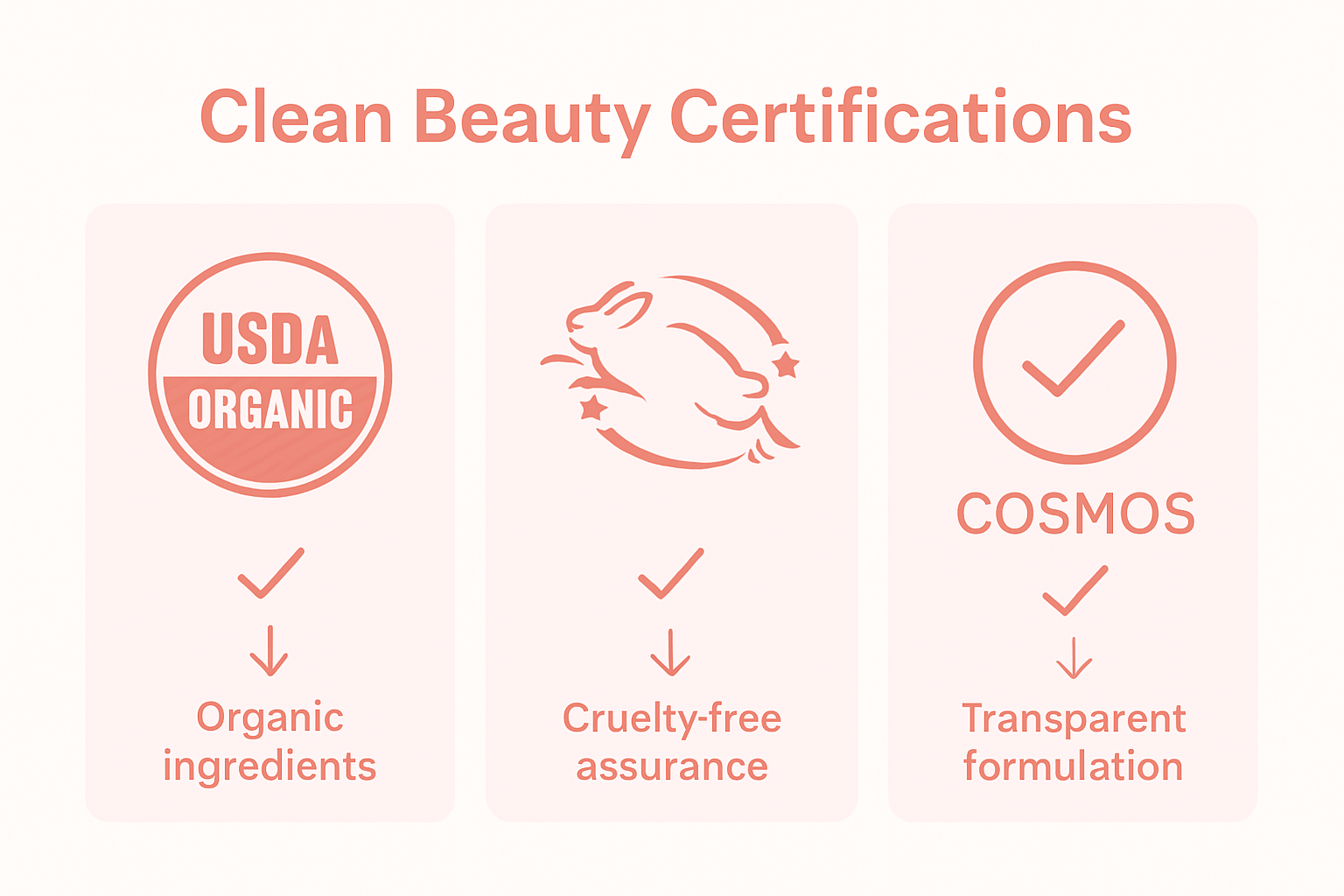
Other notable certification organizations include the USDA Organic, Leaping Bunny, and COSMOS Standard, each offering unique perspectives on clean beauty. These bodies collectively work to establish transparent guidelines that empower consumers to make informed choices about personal care products, driving industry accountability and promoting safer, more sustainable beauty practices.
Key Ingredients and Labeling Requirements
Clean beauty labeling represents a critical intersection of consumer protection and ingredient transparency. Unlike traditional cosmetic regulations, these standards demand comprehensive disclosure that goes far beyond basic ingredient listings. 7 Ways to Decode a Pure Beauty Ingredient List reveals the nuanced approach required to truly understand product compositions.
Key ingredients in clean beauty are typically evaluated based on several critical criteria:
- Natural Origin: Preferential treatment for plant-based, sustainably sourced ingredients
- Toxicity Screening: Strict exclusion of known harmful chemicals
- Concentration Transparency: Clear percentage reporting of active ingredients
- Allergen Identification: Mandatory declaration of potential irritants
- Processing Method Disclosure: Information about extraction and preparation techniques
Labeling requirements for clean beauty products focus intensely on full ingredient transparency. Consumers now expect detailed information about:
- Scientific names of ingredients
- Percentage of organic or natural components
- Sourcing locations and sustainability practices
- Potential environmental and health impacts
The Clean Beauty Coalition emphasizes that true transparency means more than just listing ingredients—it requires contextualizing how those ingredients interact with human health and environmental systems. This approach empowers consumers to make informed choices that align with their personal wellness and ecological values.
How Brands Achieve Clean Certification
Clean beauty certification represents a rigorous journey of commitment and transparency for cosmetic brands. The process demands more than simple ingredient selection—it requires comprehensive evaluation of every aspect of product development and manufacturing. Advantages of Clean Cosmetics illuminates the extensive requirements brands must navigate to earn trusted certification.
The certification process typically involves several critical stages:
- Ingredient Audit: Comprehensive screening of all product components
- Sourcing Verification: Tracing ingredient origins and sustainability
- Manufacturing Transparency: Detailed documentation of production processes
- Ethical Compliance: Ensuring environmental and social responsibility
- Third-Party Validation: Independent assessment and verification
Brands seeking clean beauty certification must demonstrate meticulous attention to multiple dimensions of product development. This includes:
- Eliminating potentially harmful synthetic chemicals
- Documenting precise ingredient percentages
- Proving sustainable and ethical sourcing practices
- Maintaining comprehensive manufacturing records
- Submitting to regular independent audits
Ultimately, achieving clean beauty certification is not a destination but an ongoing commitment to consumer health, environmental stewardship, and transparent manufacturing practices. Brands must continuously evolve, demonstrating their dedication to both ingredient integrity and holistic wellness principles.
Common Misconceptions and Red Flags
Clean beauty marketing is rife with misleading claims and confusing terminology that can easily overwhelm consumers seeking genuine product transparency. Role of Authenticity in Cosmetics reveals the critical importance of understanding the nuanced landscape of beauty product claims and certifications.
Consumers should be wary of several common red flags in clean beauty marketing:
- Greenwashing: Using eco-friendly language without substantive changes
- Partial Ingredient Disclosure: Hiding potentially harmful components
- Misleading Natural Claims: Labeling products as ‘natural’ with minimal plant-based ingredients
- Unsubstantiated Health Claims: Making broad wellness promises without scientific backing
- Vague Certification Language: Using undefined terms like ‘clean’ or ‘pure’
Key misconceptions that frequently mislead consumers include:
- Believing ‘natural’ automatically means safe or healthy
- Assuming all organic ingredients are superior
- Thinking certification guarantees complete product safety
- Overlooking the importance of processing methods
- Equating higher price with better quality
Navigating the clean beauty landscape requires critical thinking and a healthy dose of skepticism. While certifications provide valuable guidance, they are not infallible. Consumers must remain informed, ask questions, and look beyond marketing rhetoric to truly understand the products they are putting on their skin.
Embrace True Clean Beauty with Confidence and Care
Navigating the complex world of clean beauty certification can feel overwhelming when faced with unclear claims and confusing labels. This article unpacks key challenges like greenwashing, ingredient transparency, and the vital importance of strict standards. At Pure Light Botanical Beauty, we understand your desire for skincare and cosmetics that genuinely nurture your skin without compromise. Our products embody the very principles highlighted here—plant-based formulations, full ingredient disclosure, and ethical sourcing—to bring you beauty that heals and empowers.
Discover how you can transform your daily routine into a ritual of nourishment that supports sensitive skin and promotes holistic wellness. Explore our thoughtfully crafted collections like the Petal Perfect Lip Oil and botanical makeup essentials that reflect our commitment to transparency and clean ingredients. We invite you to learn more about our philosophy and ingredients by visiting our Clean Beauty Movement guide and deepen your knowledge with 7 Ways to Decode a Pure Beauty Ingredient List.
Ready to experience beauty that is as pure as it is powerful
Shop now at Pure Light Botanical Beauty and take your first step toward radiant skin that glows with authenticity and care
Frequently Asked Questions
What does clean beauty certification mean?
Clean beauty certification signifies that a product meets specific standards for ingredient safety, transparency, and ethical manufacturing. It focuses on eliminating harmful chemicals and promoting healthier options for consumers.
How do brands achieve clean beauty certification?
Brands must undergo a rigorous process that includes ingredient audits, sourcing verification, manufacturing transparency, and third-party validation. This ensures that they adhere to strict standards for ingredient safety and environmental impact.
What are common ingredients excluded from clean beauty products?
Commonly excluded ingredients in clean beauty products include parabens, phthalates, sulfates, and synthetic fragrances, which are linked to potential health risks.
What should I look for on a clean beauty label?
Look for complete ingredient transparency, including scientific names, percentages of natural or organic components, sourcing information, and any allergens. This helps you make informed choices about the products you use.
Recommended
- What Is Clean Label Beauty? Complete Overview – Pure Light Botanical Beauty
- Advantages of Clean Cosmetics: Complete Guide – Pure Light Botanical Beauty
- What Is Cruelty-Free Beauty? Complete Guide – Pure Light Botanical Beauty
- Clean Beauty Terminology Explained: A Deep Dive – Pure Light Botanical Beauty
- Organic Hair Conditioner: Everything You Need to Know | MyHair