

TL;DR:
- Switching to clean makeup involves replacing conventional products with non-toxic, skin-safe alternatives guided by ingredient screening rather than marketing labels. Prioritize swapping foundation and face products first due to their prolonged skin contact, and maintain consistent brush hygiene to prevent breakouts that undermine your efforts. Fragrance and certain preservatives are common allergens in natural products, making ingredient awareness essential for sensitive skin.
A guide to clean makeup swaps is defined as a structured process of replacing conventional cosmetics with non-toxic, skin-safe alternatives chosen through ingredient screening rather than marketing labels. If your skin flares up after wearing foundation all day or your eyes water every time you apply mascara, the problem is almost certainly in the formula. The good news: switching to cleaner options does not mean sacrificing color payoff or performance. This guide walks you through how to evaluate products using tools like the EWG Skin Deep® database, which rates over 130,000 personal care products on a hazard scale from 1 to 10, how to prioritize which products to swap first, how to keep your tools clean, and how to spot hidden allergens even in “natural” formulas.
What does a guide to clean makeup swaps actually cover?
Clean beauty product swaps are not about buying anything labeled “green” or “botanical.” Dermatologist Dr. Heather D. Rogers defines clean skincare formulations as those that exclude fragrances, essential oils, propylene glycol, sulfates, parabens, PFAS, and other ingredients linked to hormone disruption or irritation. That definition is grounded in chemistry, not marketing. Understanding it protects you from spending money on products that swap one irritant for another.
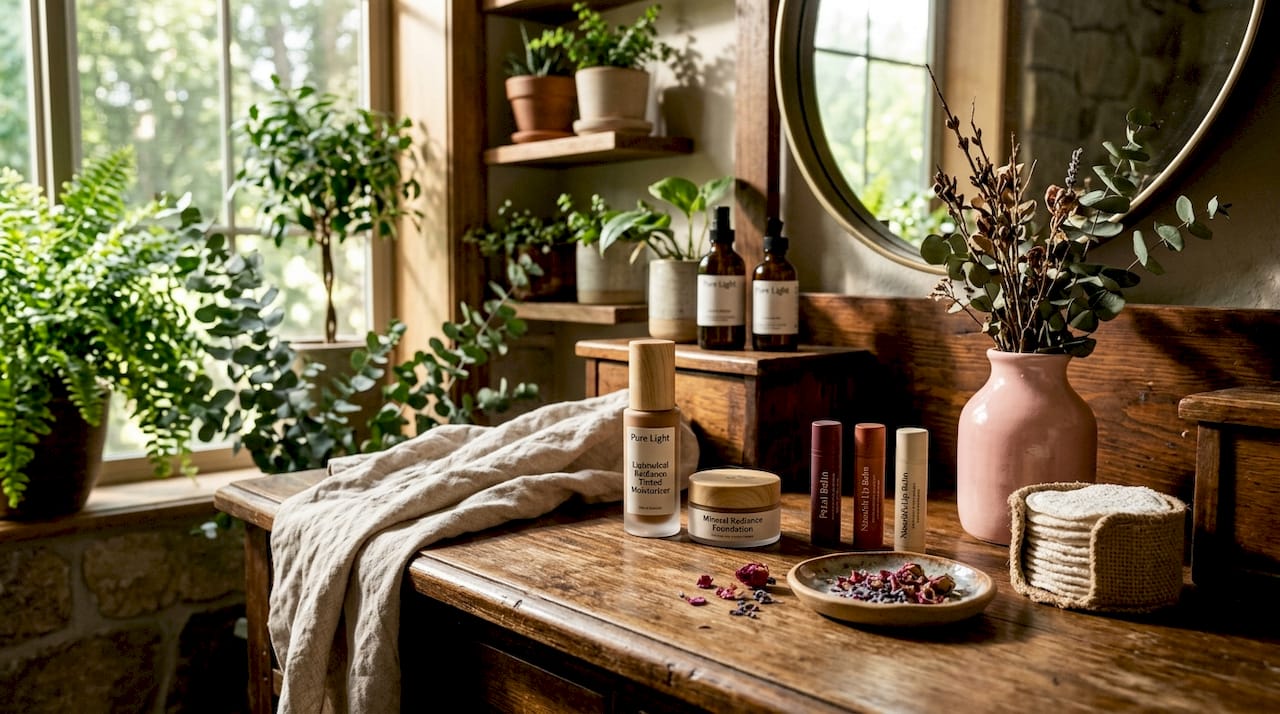
The first tool every clean beauty beginner needs is the EWG Skin Deep® database. You type in a product name, and the database returns a hazard score alongside ingredient-level detail. A score of 1 to 2 signals low concern; a score of 7 to 10 signals high concern. EWG also offers a Healthy Living app that lets you scan barcodes in-store, which makes real-time decisions much faster. Treat these scores as a first-pass screen rather than a final verdict, because hazard ratings can overstate risk when exposure levels are low.
Here are the key ingredients to flag when reading a label:
- Parabens (methylparaben, propylparaben): synthetic preservatives linked to endocrine disruption
- PFAS (“forever chemicals”): used in long-wear formulas for water resistance; associated with hormone and immune concerns
- Synthetic fragrance: a single “fragrance” listing can contain dozens of undisclosed chemicals
- Propylene glycol: a penetration enhancer that can trigger contact dermatitis in sensitive skin
- Certain preservatives like methylisothiazolinone: a known skin sensitizer banned at certain concentrations in the EU
One critical myth to dismantle: natural does not automatically mean safe. Many plant-derived ingredients are potent allergens. The naturalistic fallacy in beauty is one of the most common clinical mistakes dermatologists see when patients request clean skincare. Poison ivy is natural. So is urushiol. Ingredient safety depends on the specific compound and your skin’s history with it, not its origin.
Pro Tip: When you find a product with a low EWG score, cross-check it against your own known sensitivities. A score of 2 on a product containing an ingredient you personally react to is still a product to avoid.
Which products should you swap first?
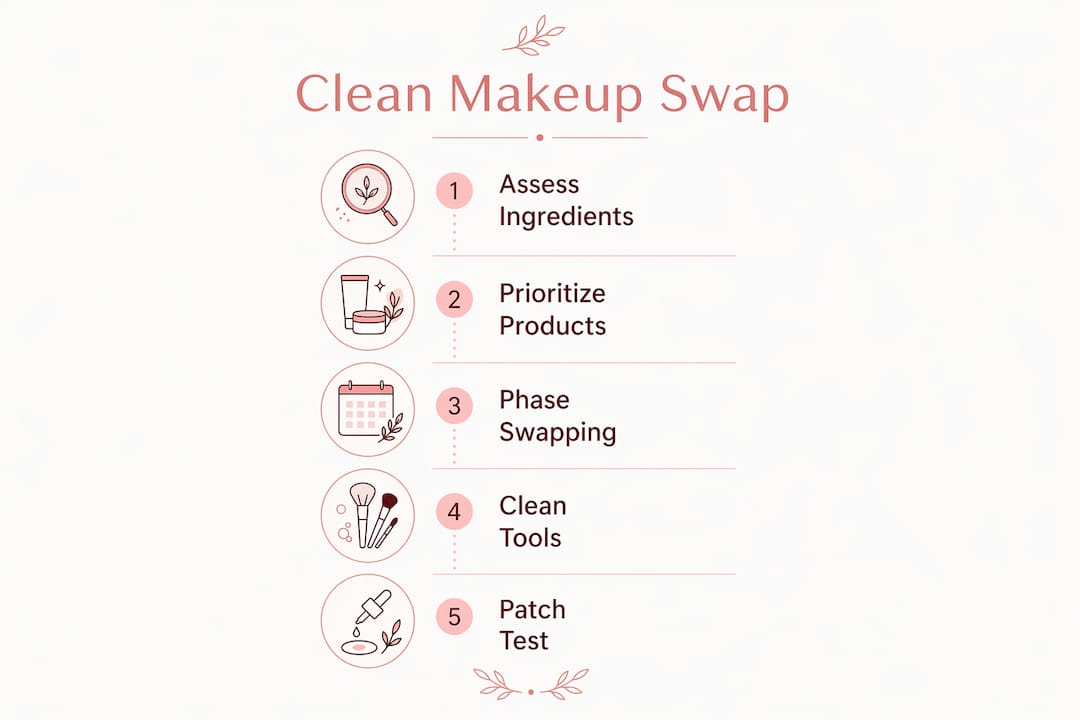
Not all makeup sits on your skin equally. The most effective strategy for prioritizing clean beauty swaps is to start with products that cover the most surface area or stay on your skin the longest. Foundation, tinted moisturizer, and face lotion are the highest-priority swaps because they contact your entire face for eight or more hours daily. Lip products come next because they are ingested in small amounts throughout the day.
Starting with mascara or eyeliner first, while tempting because those products are smaller and cheaper, is a less efficient approach. You reduce your total daily exposure far more by swapping a full-coverage foundation than by swapping a single eye pencil. This phased approach also protects your budget. Replacing every product at once leads to wasted money when you discover a formula does not work for your skin tone or texture preferences.
| Swap priority | Product type | Reason |
|---|---|---|
| 1 (highest) | Foundation, tinted moisturizer | Largest surface area, longest wear time |
| 2 | Face lotion, primer | Applied daily under makeup, absorbed deeply |
| 3 | Lip color, lip gloss | Partially ingested; direct mucous membrane contact |
| 4 | Blush, bronzer, highlighter | Moderate surface area, shorter wear |
| 5 | Eye products (mascara, liner) | Small surface area, lower total exposure |
A phased swap also gives your skin time to adjust and lets you accurately identify what is working. If you swap five products at once and your skin reacts, you cannot pinpoint the cause. Swap one product per week, observe for seven days, then move to the next. This is the same elimination protocol dermatologists use for contact dermatitis diagnosis.
Pro Tip: Before you discard a conventional product mid-swap, use it up on lower-priority areas or finish the bottle. Wasting a full foundation adds unnecessary cost to your transition. The goal is a gradual, intentional shift, not an overnight overhaul.
How do dirty makeup tools sabotage clean swaps?
You can invest in the cleanest formula on the market and still break out if your brushes are contaminated. Poorly cleaned brushes cause breakouts that are easily misattributed to a new clean product, which sends people back to conventional formulas unnecessarily. Your tools are part of your formula.
Here is the cleaning schedule that prevents bacterial buildup without damaging your brushes:
- Brushes used with wet products (foundation brush, concealer brush): wash weekly with a gentle, fragrance-free cleanser
- Eye brushes (eyeshadow, blending): wash every two weeks; the eye area is especially vulnerable to bacterial infection
- Dry powder brushes (blush, bronzer, setting powder): wash monthly, as dry formulas harbor fewer bacteria
- Sponges and beauty blenders: wash after every single use; their porous texture traps bacteria rapidly
For synthetic brushes, dish soap like Dawn removes cosmetic oils and silicones that gentle cleansers cannot fully break down. Work the soap into the bristles at the base, rinse thoroughly, reshape the brush head, and lay flat to air dry. Never dry brushes upright. Water seeps into the ferrule (the metal band), loosens the glue, and causes bristle shedding over time.
Sponges deserve special attention. A damp sponge left in a closed makeup bag is a bacterial incubator. After washing, squeeze out all water and store in an open, ventilated space. Replace sponges every one to three months regardless of how well you clean them, because the foam degrades and becomes impossible to fully sanitize.
Pro Tip: Keep a small spray bottle of 70% isopropyl alcohol at your vanity. A light mist over your brushes between full washes reduces bacterial load without requiring a full cleaning session.
What allergens hide in “natural” makeup products?
Fragrance is the most common allergen in natural skin products, present in 36.6% of products analyzed in a Stanford Medicine study. That statistic is striking because most people assume natural products are automatically gentler. The specific allergens driving reactions include limonene (found in citrus-derived ingredients), eugenol (found in clove and rose oils), and hexyl cinnamal (found in chamomile). All three appear regularly in products marketed as clean, botanical, or organic.
Contact dermatitis from these allergens is not a minor inconvenience. Allergic reactions from natural skincare cost the US $1.5 billion annually in medical costs, and reactions can persist with repeated exposure even after you stop using the offending product. For anyone with sensitive skin or eczema, this is the most important section of any sustainable cosmetics guide.
Here is what to look for when reading ingredient labels:
- “Fragrance” or “parfum”: a single term that can legally conceal dozens of chemical compounds
- Essential oils (lavender, tea tree, eucalyptus, peppermint): among the top contact allergens in natural products
- Limonene and linalool: naturally occurring compounds in citrus and floral extracts; required to be listed separately in the EU but not always in the US
- Beeswax and lanolin: common in lip products; known sensitizers for some individuals
- Vitamin E (tocopherol): generally well tolerated, but high concentrations can trigger reactions in sensitive skin
The safest approach for sensitive skin is to choose products labeled “fragrance-free” rather than “unscented.” Unscented products can still contain masking fragrances designed to neutralize odor without adding a perceptible scent. Fragrance-free means no fragrance compounds were added at all. For a clean beauty routine for sensitive skin, fragrance-free is the non-negotiable starting point.
When testing a new product, apply a small amount to the inner forearm for three to five consecutive days before applying it to your face. This patch test protocol catches delayed hypersensitivity reactions, which can take 48 to 72 hours to appear and are often missed with single-application tests.
Key takeaways
Switching to clean makeup is most effective when you combine ingredient screening, strategic swap prioritization, and consistent tool hygiene rather than relying on marketing labels alone.
| Point | Details |
|---|---|
| Screen ingredients, not labels | Use EWG Skin Deep® to evaluate products; “natural” and “clean” labels carry no regulated standard. |
| Swap high-exposure products first | Foundation and face lotion contact the most skin for the longest time, making them the highest-priority swaps. |
| Clean your tools weekly | Dirty brushes cause breakouts that are easily misattributed to new clean products, derailing your progress. |
| Fragrance is the hidden trigger | Fragrance appears in 36.6% of natural products and is the leading allergen for sensitive skin users. |
| Patch test every new product | Apply to the inner forearm for three to five days before using on your face to catch delayed reactions. |
Why I think most clean beauty advice skips the hard part
I have spent years reading ingredient lists, testing formulas, and talking with people who switched to clean makeup only to find their skin got worse before it got better. The hard part is not finding cleaner products. There are more options now than ever. The hard part is resisting the pull of marketing language that makes every product sound like a dermatologist-approved miracle.
The most useful shift I made was treating ingredient screening as a skill rather than a chore. Once you recognize parabens, PFAS, and fragrance compounds on a label, you stop relying on front-of-pack claims entirely. That knowledge is permanent. No brand can take it from you.
What I also learned is that hygiene is where most people quietly fail their clean swap. They buy a beautiful botanical foundation, apply it with a brush they have not washed in three weeks, and wonder why their skin is still reacting. The product gets blamed. The brush is the actual culprit. Treating your tools as part of your formula changed everything for me.
My honest advice: do not try to build a perfect clean kit overnight. Start with your foundation, get your brush-cleaning habit in place, and learn to read one label per week. The transition to clean makeup is a process, not an event. Give yourself the grace to do it slowly and do it right.
— Kaitlyn
Where to start your clean makeup swap today
If you are ready to move from conventional to clean but want formulas you can trust from the first application, Purelightbotanicalbeauty was built for exactly this moment. Every product in the line is formulated without synthetic fragrance, parabens, PFAS, or common irritants, with plant-based ingredients chosen for both skin health and performance.
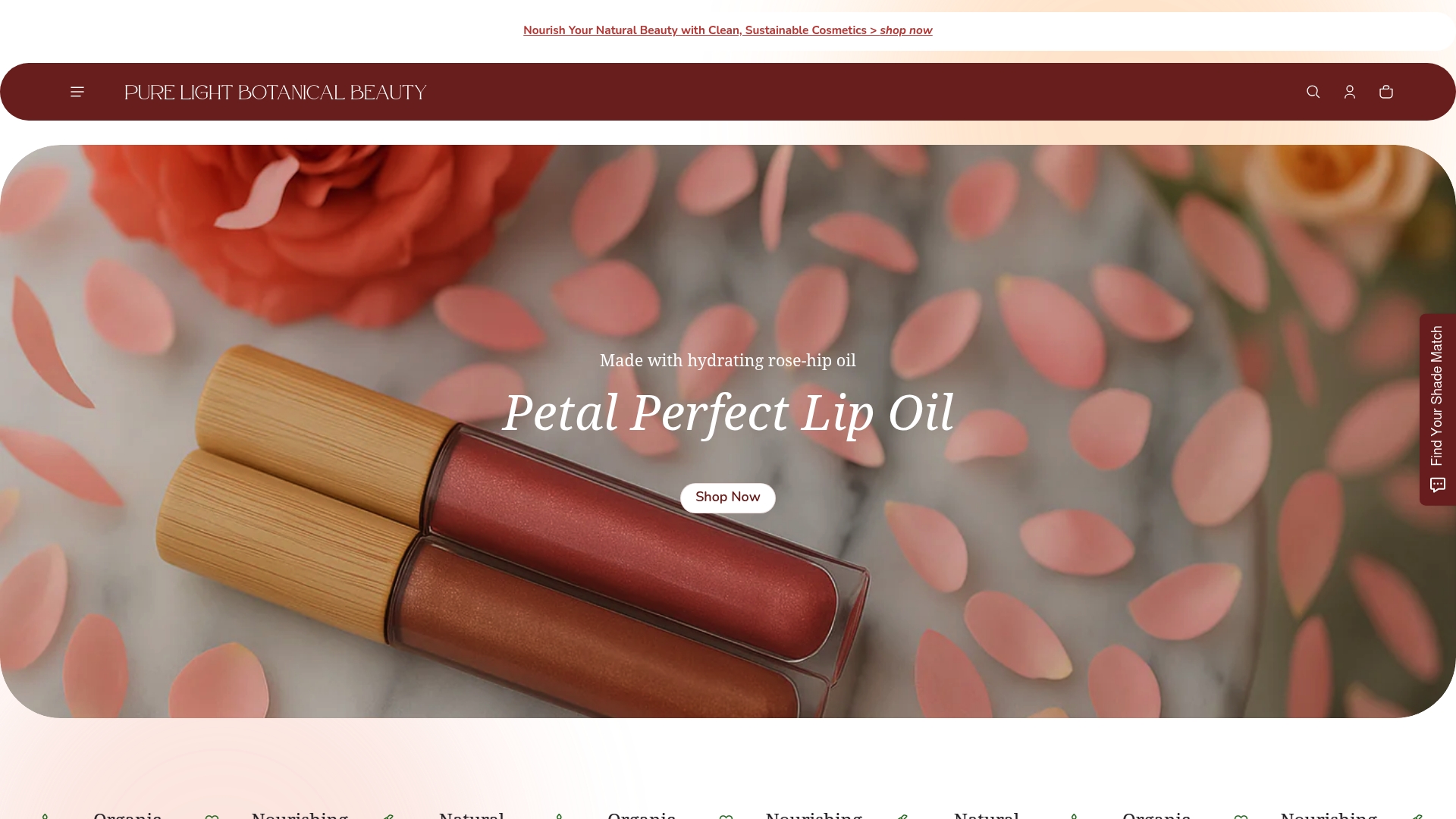
Products like the Botanical Crème Blush, Petal Perfect Lip Oil, and Nourishing Lipstick are designed with sensitive and eczema-prone skin in mind. Each formula meets the ingredient-safety standards outlined in this guide, so you can skip the label-reading anxiety and go straight to feeling good in your skin. Explore the full clean makeup collection at Purelightbotanicalbeauty and find the swap that fits your routine.
FAQ
What is a clean makeup swap?
A clean makeup swap is the process of replacing a conventional cosmetic product with a safer alternative formulated without common irritants like synthetic fragrance, parabens, PFAS, and sulfates. The goal is to reduce skin irritation and long-term ingredient exposure without sacrificing performance.
How do I know if a makeup product is truly clean?
Use the EWG Skin Deep® database to check a product’s hazard score and review its individual ingredients. A score of 1 to 2 indicates low hazard, but always cross-check against your personal sensitivities and look for fragrance-free labeling.
Can natural makeup products still cause allergic reactions?
Yes. Fragrance is present in 36.6% of natural products and is the most common allergen in that category. Essential oils like lavender, tea tree, and eucalyptus are among the top contact allergens regardless of their natural origin.
Which makeup product should I swap first?
Start with foundation or tinted moisturizer. These products cover the most surface area and stay on your skin the longest, so replacing them delivers the greatest reduction in daily ingredient exposure.
How often should I clean my makeup brushes during a clean swap?
Brushes used with wet products should be washed weekly, eye brushes every two weeks, and dry powder brushes monthly. Sponges and beauty blenders should be washed after every use and replaced every one to three months.
Recommended
- 7 Essentials for a Clean Makeup Checklist for Sensitive Skin – Pure Light Botanical Beauty
- Sensitive skin makeup: calm, clean steps for radiant results – Pure Light Botanical Beauty
- How to Transition to Clean Makeup Without Irritating Sensitive Skin – Pure Light Botanical Beauty
- 7 Types of Clean Makeup for Sensitive Skin and Confidence – Pure Light Botanical Beauty