

TL;DR:
- Patch testing is essential to prevent allergic reactions in sensitive skin routines.
- Simplified, low-irritation makeup routines with gentle products support skin health.
- Tracking skin progress helps identify triggers and improve routine effectiveness.
If you have sensitive skin or eczema, getting ready in the morning can feel like walking through a minefield. One wrong product and you’re dealing with redness, burning, or a flare-up that lasts for days. It doesn’t have to be this way. A thoughtful, gentle makeup workflow can actually support your skin’s health rather than work against it. In this guide, we’ll walk you through exactly what to prepare, how to apply products safely, how to avoid the most common mistakes, and how to track your skin’s progress so you can feel confident and radiant every single day.
Table of Contents
- What you need to prepare your skin
- Step-by-step: The sensitive skin makeup workflow
- Troubleshooting: Avoiding common mistakes
- Tracking your results: How to verify and adapt
- Why most sensitive skin routines get it wrong—and how to truly soothe your skin
- Discover truly soothing, clean beauty solutions
- Frequently asked questions
Key Takeaways
| Point | Details |
|---|---|
| Prioritize preparation | Gentle prep and patch testing catch most skin issues before they start. |
| Simplify your routine | Fewer products mean fewer reactions and a calmer complexion. |
| Verify and adapt | Track your skin’s progress, adjusting steps to maintain a radiant, healthy glow. |
| Expert guidance matters | Following science-backed workflows can dramatically improve sensitive skin outcomes. |
What you need to prepare your skin
After understanding your primary challenges, let’s set you up for success with the right preparation and tools. Preparation is honestly the most underrated part of any sensitive skin makeup routine. Skipping it is where most flare-ups begin.
Why patch testing matters more than you think
Before anything touches your face, patch testing is non-negotiable. Patch testing detects 79% of allergens responsible for cosmetic facial dermatitis, including common culprits like PPD at 17.5% and thiomersal at 13.4%. That’s a significant number of reactions that could be prevented with one simple step.
To patch test correctly, apply a small amount of product to the inside of your wrist or behind your ear. Leave it for 48 hours without washing. If you notice redness, itching, or swelling, that product is not for you. If nothing happens, you’re likely safe to use it on your face.
Your essential sensitive skin toolkit
Having the right products on hand makes everything easier. Here’s a simple checklist to build your routine around:
- Fragrance-free, gentle cleanser
- Unscented, hydrating moisturizer
- Mineral-based sunscreen (zinc oxide or titanium dioxide)
- Silicone-free, hypoallergenic primer
- Clean, soft brushes or allergen-free cotton rounds
- Patch-tested foundation and concealer
- A clean makeup checklist to keep track of what works
When shopping, look for labels like “fragrance-free,” “non-comedogenic,” and “dermatologist-tested.” These aren’t just marketing words. They signal that a brand has taken extra steps to reduce the likelihood of irritation.
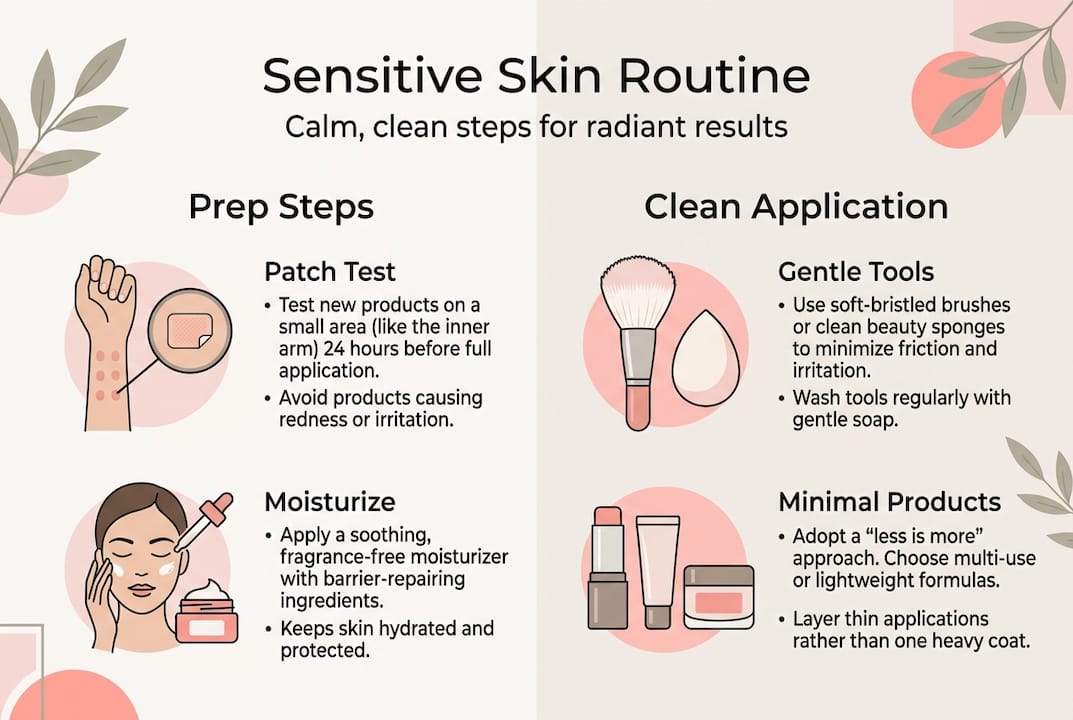
A quick reference: skin prep essentials
| Product type | What to look for | What to avoid |
|---|---|---|
| Cleanser | Gentle, pH-balanced | Sulfates, fragrance |
| Moisturizer | Ceramides, hyaluronic acid | Alcohol, artificial scent |
| Sunscreen | Mineral-based | Chemical filters, oxybenzone |
| Primer | Silicone-free, soothing | Dimethicone, parabens |
| Brushes | Natural or soft synthetic | Rough bristles, dirty tools |
Pro Tip: The night before a big day, apply a fragrance-free moisturizer and let your skin rest without any products. This gives your skin barrier time to recover, so it’s calm and ready for makeup in the morning. Use allergen-free cotton rounds to remove any residue gently.
Step-by-step: The sensitive skin makeup workflow
Once you have your gentle products ready, here’s how to apply them in a way that supports sensitive skin. The order you apply products matters just as much as what you use.
- Moisturize first. Apply your fragrance-free moisturizer and let it absorb for at least two minutes. Rushing this step means your foundation won’t sit evenly, and you’ll be tempted to rub it in, which irritates skin.
- Apply sunscreen. Use a mineral sunscreen as your second layer. Pat it on gently using your fingertips. Never rub.
- Prime with care. A hypoallergenic primer creates a smooth base and helps your makeup last longer without clogging pores. Tap it on lightly.
- Foundation, tapped not rubbed. Use a soft brush or clean fingertips. Tapping motions reduce friction and minimize the risk of irritation. [Mindful makeup steps](https://purelightbotanicalbeauty.com/blogs/news/step by step mindful makeup naturally) like this one make a real difference over time.
- Concealer only where needed. Less is more. Apply only to areas that need coverage and blend gently.
- Blush with a light hand. A cream blush is often gentler than powder for sensitive skin. Tap it onto the apples of your cheeks.
- Eye makeup last. The eye area is delicate. Use clean, soft brushes and avoid waterproof formulas that require harsh removers.
- Lips as a finishing touch. Choose a nourishing lip product with plant-based ingredients. Avoid matte formulas with drying alcohols.
HRIPT studies on irritation confirm that simplified routines with low-irritation formulas significantly reduce the chance of adverse reactions. Fewer products equal fewer opportunities for something to go wrong.
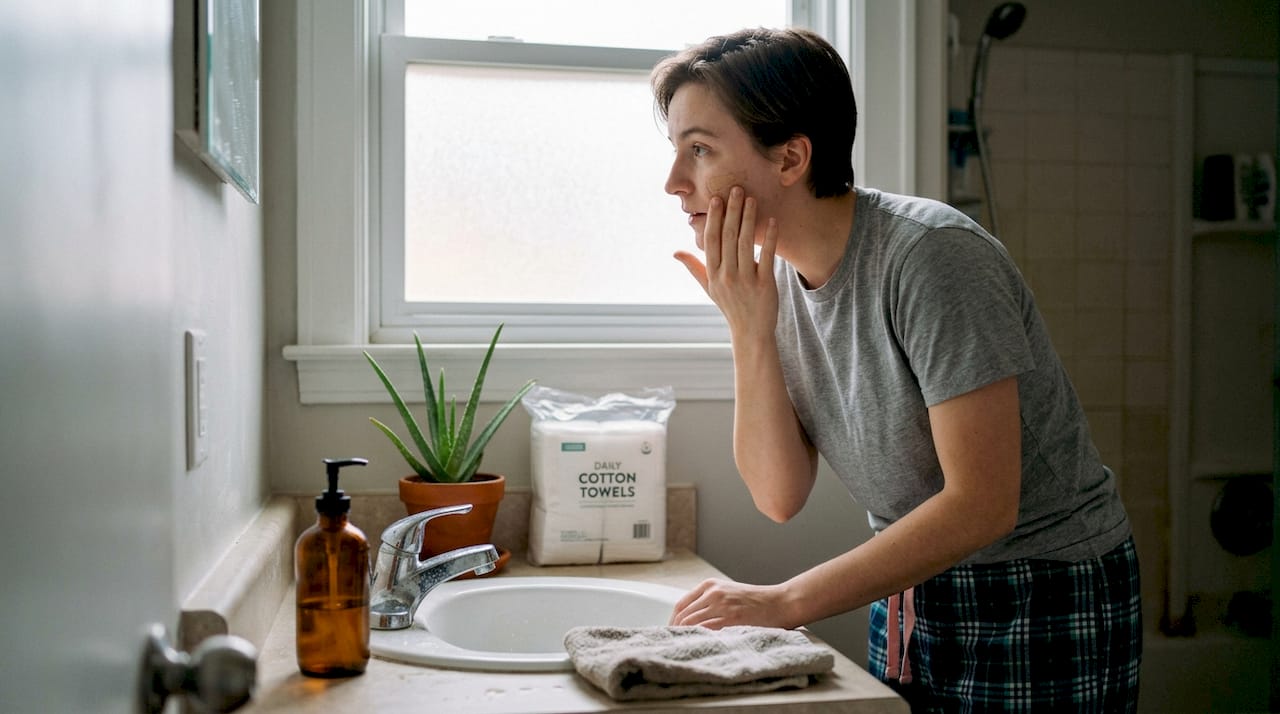
Pro Tip: Clean fingers can actually be gentler than sponges for sensitive skin. Sponges can harbor bacteria and create more friction. If you prefer tools, wash your brushes weekly with a fragrance-free cleanser. Explore natural makeup tips for more technique ideas tailored to sensitive skin.
Troubleshooting: Avoiding common mistakes
Following the steps carefully is key, but even the best routines can go awry. Here’s how to avoid setbacks.
Some of the most common mistakes are also the easiest to fix once you know what to look for.
Mistakes that lead to flare-ups:
- Skipping patch testing on new products
- Layering too many products at once
- Applying makeup over already-irritated or broken skin
- Using dirty brushes or sponges
- Switching multiple products at the same time (so you can’t identify the trigger)
- Using expired products
If you notice redness, stinging, or swelling during or after application, stop immediately. Remove the product gently with a fragrance-free micellar water and let your skin rest. Don’t try to push through it.
Worth knowing: 60% of sensitive reactions improve within two weeks when people simplify their routines. That means cutting back, not adding more, is often the most powerful thing you can do.
This is where many people go wrong. When skin reacts, the instinct is to add more products, a soothing serum here, a calming mask there. But layering more onto reactive skin often makes things worse. The better approach is to strip back to the basics: cleanser, moisturizer, sunscreen, and one or two tested makeup products.
Building holistic beauty routines around simplicity gives your skin the breathing room it needs to heal. And when you do reintroduce products, add one at a time and wait a full week before adding another. This way, if a reaction happens, you’ll know exactly what caused it.
For more ideas on streamlining your approach, clean beauty routine tips can help you build a sustainable, low-irritation practice without feeling like you’re giving up your love of makeup.
Tracking your results: How to verify and adapt
After troubleshooting problems, it’s important to check your skin’s progress and adjust when needed. Tracking doesn’t have to be complicated. A simple approach works beautifully.
How to keep a skin journal:
- Take a photo of your skin each morning before applying makeup.
- Note any new products you introduced or removed.
- Record any symptoms: redness, itching, dryness, or breakouts.
- Write down how your skin feels at the end of the day.
- Review your notes at the end of each week to spot patterns.
This habit takes about two minutes a day and gives you real data to work with. Routine simplification studies show that measurable improvement typically appears within two weeks. Your journal will help you see that progress clearly, even when it feels slow.
If irritation returns after you’ve found a routine that works, go back to your journal. Look at what changed in the past few days. A new product, a different brand of cleanser, or even stress can trigger a reaction.
Comparing workflow outcomes:
| Symptom | Optimal workflow | Poor workflow |
|---|---|---|
| Redness | Rare or none | Frequent, lasting hours |
| Itching | Minimal | Persistent throughout day |
| Dryness | Controlled with moisturizer | Worsens with makeup |
| Flare-ups | Occasional, mild | Regular, hard to manage |
| Skin texture | Smooth, calm | Rough, reactive |
Use your skin routine guide as a reference point when adapting your workflow. When something isn’t working, adjust one variable at a time. Patience here is genuinely a skincare tool.
Why most sensitive skin routines get it wrong—and how to truly soothe your skin
Now that you know how to review and adapt your process, let’s reconsider what really makes a difference for sensitive skin.
Here’s something most beauty guides won’t tell you: the problem usually isn’t the products you’re missing. It’s the products you keep adding. The beauty industry profits from complexity. New launches, trending ingredients, multi-step systems. But sensitive skin doesn’t thrive on novelty. It thrives on consistency and calm.
We’ve seen it time and again. Someone with eczema or reactive skin spends months chasing the next “soothing” serum, only to find that their skin settles when they finally stop experimenting and commit to a short, gentle routine they trust.
The real shift happens when you approach your skin with curiosity instead of frustration. When a reaction occurs, it’s information, not failure. Your skin is telling you something. Listen to it. Build transformational beauty habits slowly and with intention, and you’ll find that your natural glow wasn’t hiding behind more products. It was waiting for fewer.
Discover truly soothing, clean beauty solutions
If you’re ready to simplify your routine and elevate your natural glow, supportive products and further guidance are available.
At Pure Light Botanical Beauty, every product is crafted with sensitive skin in mind. From the Petal Perfect Lip Oil to the Botanical Crème Blush, each formula is built on clean, plant-based ingredients that nourish while they beautify. There’s no guesswork, no hidden irritants, just thoughtful formulas designed to work with your skin. If you want to go deeper into the brand’s mission around wellness and sustainability, the Positive beauty impact page is a wonderful place to explore. Because beautiful skin and a healthy planet deserve the same care.
Frequently asked questions
How do I know if a makeup product will irritate my sensitive skin?
Patch test a small amount on your wrist or jawline for 48 hours before full application. Patch testing detects 79% of allergens in cosmetic facial dermatitis cases, making it your most reliable first defense.
What is the safest way to remove makeup for sensitive skin?
Use a fragrance-free gentle cleanser with lukewarm water and pat your skin dry with a soft cloth, avoiding any scrubbing or tugging.
How quickly can I expect my skin to improve with a new routine?
60% of sensitive reactions improve within two weeks when people switch to a simplified, gentle routine. Consistency matters more than speed.
Are there makeup ingredients I should always avoid?
Yes. Common triggers include fragrance, alcohol, harsh preservatives, and known allergens like PPD and thiomersal. Always read the ingredient list before buying.
Can I still wear bold makeup if I have sensitive skin?
Absolutely. Choose hypoallergenic formulas, patch test every new color or product, and apply in moderation while watching carefully for any early signs of irritation.
Recommended
- Clean Beauty Routine Steps for Sensitive, Radiant Skin – Pure Light Botanical Beauty
- Step by Step Mindful Makeup for Sensitive Skin Glow – Pure Light Botanical Beauty
- Clean Makeup and Self-Care: Nurturing Sensitive Skin – Pure Light Botanical Beauty
- How to Prep Skin for Makeup Naturally and Flawlessly – Pure Light Botanical Beauty