

Finding the right approach to sensitive skin can feel overwhelming when so many routines cause irritation instead of comfort. Women across the world long for beauty habits that nurture both body and spirit, not just surface appearance. By embracing transformational beauty habits rooted in intentional, holistic practices, you create real change that honors your skin’s natural rhythms and needs while deepening your connection to self-care and wellness.
Table of Contents
- Defining Transformational Beauty Habits
- Holistic Rituals For Sensitive Skin Healing
- Botanical Ingredients And Their Impact
- Integrating Wellness Into Daily Routines
- Common Pitfalls And Safe Practices
Key Takeaways
| Point | Details |
|---|---|
| Transformational Habits | Beauty habits are intentional practices that enhance outer appearance and inner mindset. |
| Holistic Rituals | Daily rituals should integrate cleansing, treatment, moisturizing, and protection for sensitive skin. |
| Botanical Ingredients | Use botanicals for their anti-inflammatory and soothing properties, tailored to individual skin needs. |
| Consistency with Awareness | Maintain a regular routine while being mindful and responsive to your skin’s changing needs. |
Defining transformational beauty habits
Transformational beauty habits are more than skincare routines or makeup application. They’re intentional practices that shift how you see yourself, interact with your skin, and experience beauty as a personal ritual.
At their core, transformational beauty habits create meaningful change. Research shows that aesthetic experiences depend on adaptive habits that evolve over time, balancing consistent practice with moments of discovery and growth.
These habits operate on two levels:
- Outer transformation: Visible improvements in skin health, confidence, and appearance
- Inner transformation: Shifts in mindset, self-compassion, and how you relate to your body
For sensitive skin specifically, transformational habits mean developing a personalized approach that honors your skin’s unique needs rather than forcing it into rigid routines.
The Psychology Behind Transformational Beauty
When you establish a beauty habit intentionally, you’re not just cleansing or applying color. You’re creating a space where aesthetic appreciation strengthens your sense of self. Studies on transformative experiences reveal that habitual beauty practices reshape personal identity and enhance overall wellbeing when they align with your values.
This is especially powerful for sensitive skin, where mindful beauty practices help you develop responsiveness to what your skin actually needs rather than following trends that irritate it.
Three Pillars of Transformational Beauty Habits
Transformational beauty habits rest on three essential foundations:
-
Consistency with flexibility. Show up for your skin regularly, but adapt when your skin’s needs change seasonally or due to stress.
-
Ingredient awareness. Know what you’re applying and why—especially critical for sensitive skin prone to reactions.
-
Ritual intention. Transform routine into meaningful practice by slowing down, noticing how products feel, and connecting the act of beauty to self-care.
Transformational beauty habits create sustainable change because they address both how your skin functions and how you feel about yourself.
The difference between a habit and a transformational habit is awareness. When you move through your routine mindfully—noticing the texture of botanical oils on your skin, the scent of plant-based ingredients, the softness building over weeks—beauty becomes a practice of nourishment, not just maintenance.
For sensitive skin, this shift matters profoundly. Instead of viewing your skin as problematic, transformational habits help you see it as communicative, responsive, and worth understanding deeply.
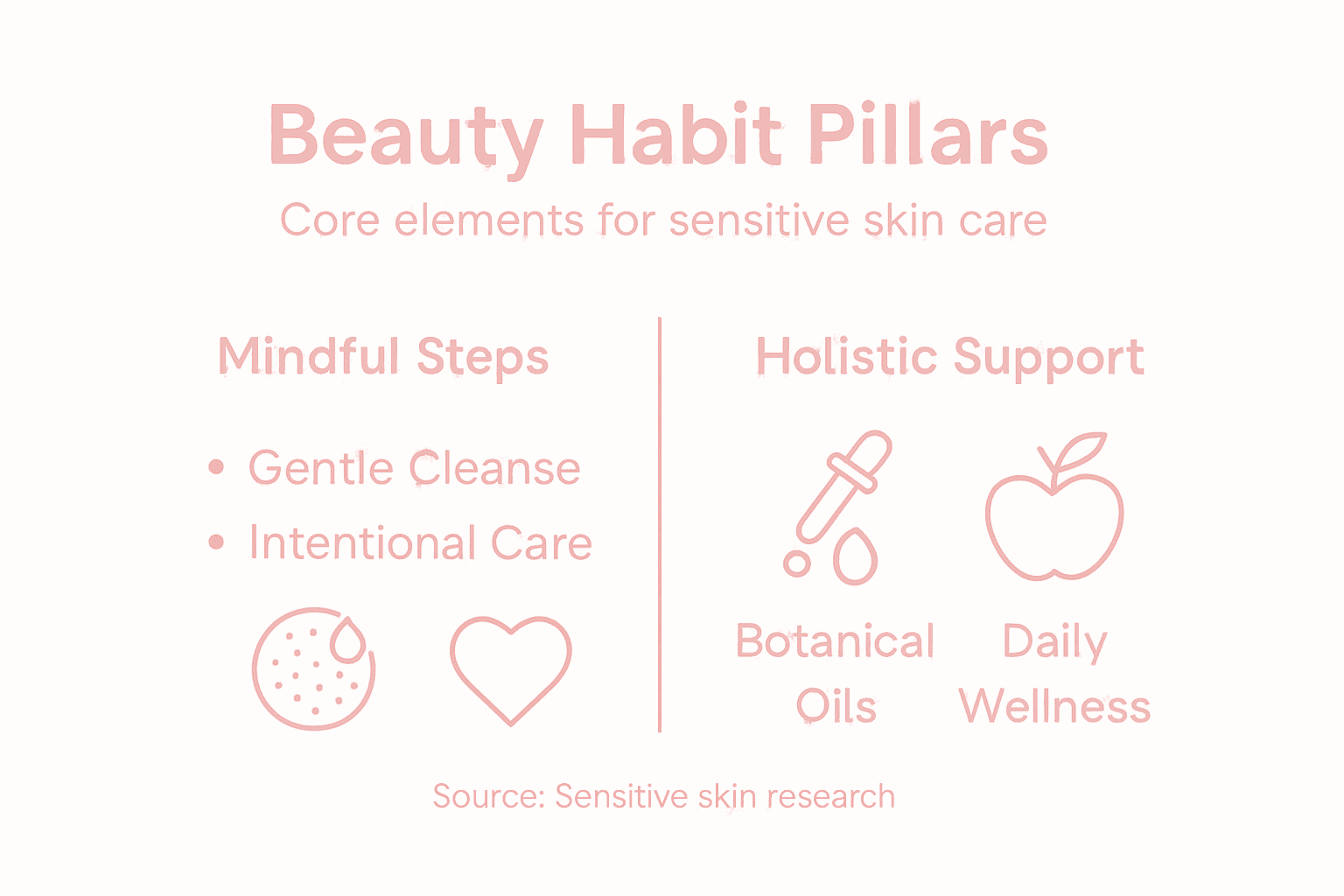
Here’s a summary of how transformational beauty habits support both outer and inner change:
| Focus Area | What Transforms | Lasting Benefits |
|---|---|---|
| Outer transformation | Skin texture/glow | Increased confidence, resilience |
| Inner transformation | Self-perception | Greater self-acceptance, calm |
| Ritual intention | Daily routines | Consistent motivation, pleasure |
Pro tip: Start by identifying one current beauty habit you perform daily, then spend three days observing it without judgment—notice the texture, scent, and how your skin responds—before deciding whether to keep, modify, or replace it.
Holistic rituals for sensitive skin healing
Holistic rituals for sensitive skin go beyond single products or quick fixes. They’re integrated daily practices that address your skin’s physical needs while honoring your emotional relationship with self-care.
Sensitive skin requires a multifaceted approach that considers physiological barriers, environmental triggers, and psychological wellbeing together. Expert consensus shows that effective healing rituals combine four essential components:
- Cleansing: Remove irritants gently without stripping natural oils
- Treatment: Address specific concerns like redness or reactivity
- Moisturizing: Restore and strengthen your skin barrier
- Protection: Shield skin from environmental stressors daily
When these elements flow together as ritual rather than routine, something shifts. Your skin receives consistent support, and you develop awareness of what genuinely calms versus what aggravates your unique sensitivity.
Building Your Personal Healing Ritual
Your holistic ritual should reflect your skin’s individual complexity. Sensitive skin isn’t one-size-fits-all—it responds to different triggers based on stress levels, seasons, hormones, and product chemistry.
Start by identifying which daily practices truly calm your skin versus which ones cause reactions. This awareness becomes your foundation for building a personalized approach.
A healing ritual typically unfolds in this sequence:
- Morning cleanse: Use warm water and gentle plant-based cleansers to remove overnight buildup
- Targeted treatment: Apply botanical serums or oils addressing your primary concern
- Barrier support: Moisturize with nourishing plant-based creams
- Daily protection: Incorporate photoprotection appropriate for your routine
- Evening ritual: Repeat cleansing and treatment, allowing overnight restoration
Holistic healing rituals work because they treat your skin as a living system with changing needs, not as a problem requiring constant correction.
The psychological component matters as much as the physical one. When you slow down during your ritual—feeling botanical textures, breathing in plant aromas, observing how your skin responds—you’re rewiring your relationship with sensitivity from shame to curiosity.
For many, this shift alone reduces stress-triggered reactivity significantly. Your nervous system calms, inflammation decreases, and healing accelerates.
Pro tip: Set aside the same 10 minutes each morning and evening for your ritual, creating a predictable rhythm that signals to your skin and nervous system that healing is happening.
Botanical ingredients and their impact
Botanical ingredients work differently than synthetic chemicals. They contain multiple active compounds that work synergistically, offering layered benefits rather than single-action solutions perfect for sensitive skin healing.
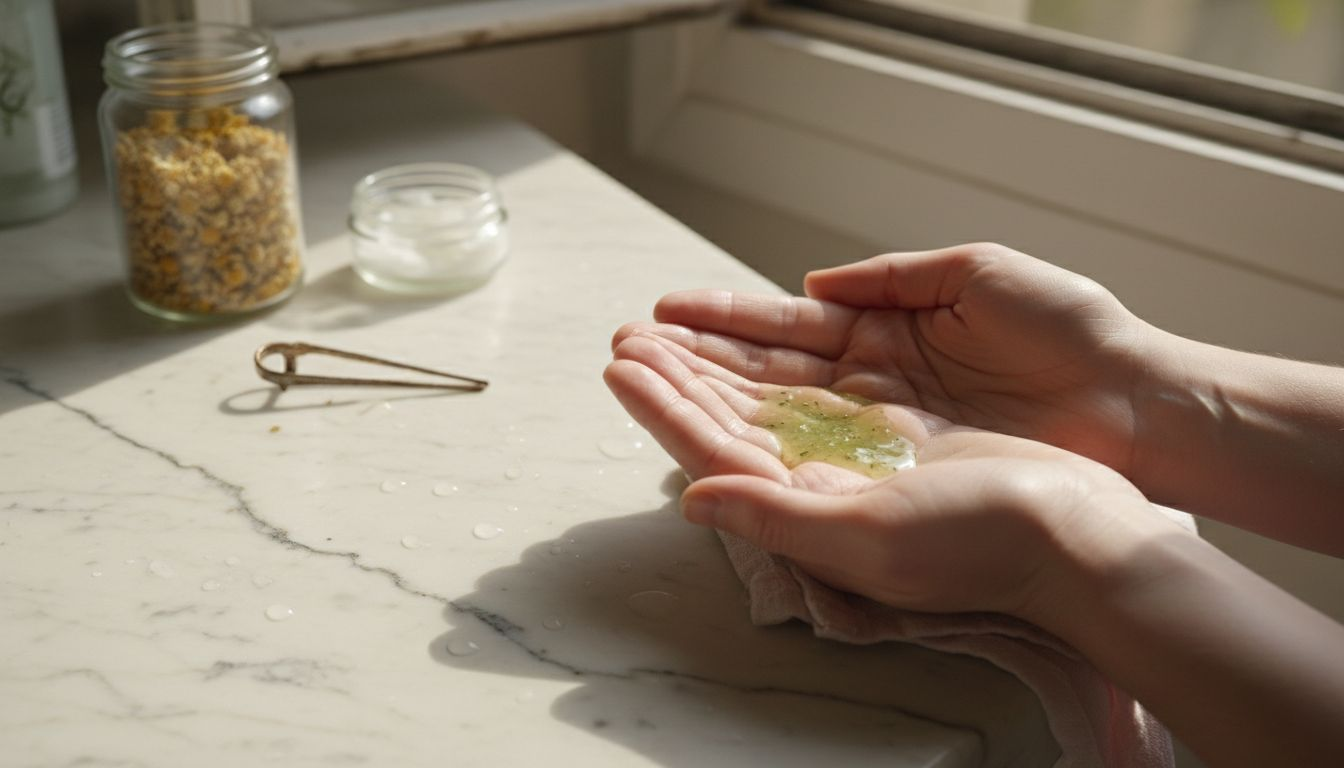
When you use plant-based skincare, you’re accessing thousands of years of traditional knowledge combined with modern scientific validation. Research confirms that botanical extracts deliver measurable results across multiple skin concerns simultaneously.
How Botanicals Soothe Sensitive Skin
Sensitive skin responds powerfully to botanicals because plants naturally contain compounds that calm inflammation, support barrier repair, and reduce reactivity. Plant extracts deliver anti-inflammatory and antioxidant protection without the harshness of synthetic alternatives.
The magic happens at the cellular level. Botanical ingredients work to strengthen your skin barrier while reducing the overactive immune responses that trigger sensitivity and redness.
Key botanical benefits for sensitive skin include:
- Anti-inflammatory action: Reduces redness and swelling from reactivity
- Antioxidant protection: Shields against environmental stressors and free radical damage
- Barrier support: Strengthens the skin’s natural moisture barrier
- Wound healing: Accelerates skin repair at the microscopic level
- Antimicrobial properties: Protects without disrupting healthy skin flora
Why botanical ingredients matter becomes clear when you understand how they address the root causes of sensitivity rather than masking symptoms.
Specific Botanicals That Transform Sensitive Skin
Not all botanicals are created equal. The most effective ones for sensitive skin offer proven therapeutic impact with minimal irritation potential.
Plant oils like botanical seed and nut oils deliver deep moisturizing without clogging pores. They restore lipid balance critical for barrier health.
Botanical extracts from flowers, leaves, and roots contain concentrated healing compounds. These work systemically to reduce inflammation throughout skin tissue.
Herbal infusions provide gentle, cumulative benefits through sustained use. Over weeks, they visibly reduce reactivity and improve resilience.
Botanical ingredients transform sensitive skin because they work with your skin’s natural healing processes, not against them.
The compounds in botanicals—like plant polyphenols, flavonoids, and essential fatty acids—penetrate deeply while remaining gentle enough for compromised skin barriers. This is why consistent botanical skincare often outperforms harsher actives for sensitive types.
Your skin recognizes botanical compounds as compatible rather than foreign threats, reducing the defensive reactions that cause flaring.
Pro tip: Introduce new botanical ingredients one at a time over two weeks, observing how your skin responds before adding another, ensuring you identify which plants your unique skin loves.
Integrating wellness into daily routines
Beauty habits become transformational when you weave wellness into the entire routine, not just the skincare steps. This means connecting your skin care to physical health, emotional balance, and spiritual grounding simultaneously.
When you integrate holistic wellness into daily beauty practices, something shifts internally. Research shows that structured daily wellness practices build resilience, improve coping skills, and create lasting positive changes in how you feel and look.
The Wellness Framework for Beauty Routines
Holistic wellness operates across multiple dimensions. A transformational beauty routine addresses several simultaneously rather than focusing narrowly on appearance alone.
The key wellness dimensions to weave into your routine include:
- Physical wellness: Movement, hydration, and nourishment supporting skin health
- Emotional wellness: Calming practices that reduce stress-triggered flaring
- Mental wellness: Mindfulness and intentional awareness during routines
- Spiritual wellness: Connection to purpose and self-love through ritual
- Social wellness: Sharing practices with community or partners
When these dimensions flow together during your beauty ritual, your entire nervous system receives the message that you’re worth caring for. This psychological shift has measurable impacts on skin reactivity and healing speed.
Practical Ways to Embed Wellness Into Beauty Habits
Integrating wellness doesn’t require overhauling your entire day. Small, intentional additions create cumulative transformation over weeks and months.
Consider these practical integration points:
- Morning hydration: Drink water before touching skincare, signaling nourishment as priority
- Breathing practice: Take three deep breaths before cleansing, activating your parasympathetic nervous system
- Mindful application: Feel each product’s texture and temperature consciously, engaging all senses
- Gratitude pause: Notice one thing your skin did well today before moving forward
- Evening reflection: Journal one observation about how your skin responded to your care
Identity and authentic self-care become intertwined when beauty routines reflect your actual values rather than external expectations.
Integrating wellness into beauty routines transforms them from obligation into genuine self-nurturing that sustains you long-term.
The difference between a routine and a wellness practice is intention. A routine is something you do. A wellness practice is something that does something for you—it changes your nervous system state, reduces inflammation, and strengthens your relationship with yourself.
When your beauty habit includes wellness dimensions, you’re building resilience that extends far beyond your skin. You’re developing habits that support you through stress, season changes, and life transitions.
Pro tip: Pick one wellness dimension to add this week—perhaps three deep breaths before cleansing or five minutes of reflection after—then expand to another dimension weekly until wellness naturally integrates into your entire routine.
Common pitfalls and safe practices
Many women with sensitive skin unknowingly sabotage their healing by repeating common mistakes. Understanding these pitfalls and adopting safe practices is essential for building transformational habits that actually work.
Sensitive skin management requires a tailored approach because triggers and reactions vary dramatically between individuals. What calms one person’s skin may irritate another’s, making personalized observation more valuable than one-size-fits-all advice.
Pitfalls That Worsen Sensitivity
These habits damage rather than heal sensitive skin. Recognizing them helps you course-correct quickly.
Common pitfalls include:
- Over-stripping with harsh cleansers: Removes natural oils and damages your moisture barrier further
- Layering too many actives: Overwhelms fragile skin and triggers inflammatory responses
- Ignoring barrier repair: Treating symptoms without addressing the root problem
- Inconsistent routines: Frequent switching prevents your skin from stabilizing
- Using fragrant or alcoholic products: Irritates sensitive skin despite pleasant scents
- Skipping sun protection: Leaves compromised skin vulnerable to UV damage
The biggest mistake is assuming sensitivity means your skin is weak. Actually, sensitive skin is highly responsive—it just needs careful, intentional support rather than aggressive treatment.
Compare common pitfalls with safe practices for sensitive skin transformation:
| Common Pitfall | Harmful Effect | Suggested Safe Practice |
|---|---|---|
| Over-stripping cleansers | Damages moisture barrier | Use gentle, pH-balanced cleanser |
| Too many actives | Causes irritation, redness | Limit to 1-2 gentle actives |
| Ignoring barrier repair | Prolongs sensitivity | Apply nourishing plant oils |
| Inconsistent routines | Delays skin adaptation | Maintain routine 4-6 weeks |
Safe Practices for Sensitive Skin Transformation
Safe practices protect your barrier while allowing healing to occur. Research emphasizes that gentle cleansing, barrier protection, and irritant avoidance form the foundation of effective sensitive skin care.
Implement these safe practices:
- Cleanse gently: Use lukewarm water and pH-balanced, plant-based cleansers without sulfates
- Patch test everything: Apply new products to a small area first, waiting 48 hours before full use
- Prioritize barrier repair: Use nourishing oils and botanical ingredients supporting lipid restoration
- Reduce active ingredients: Limit to one or two gentle actives maximum per routine
- Maintain consistency: Stick with proven routines for at least 4-6 weeks before evaluating
- Protect daily: Apply broad-spectrum protection every single day regardless of weather
Safe practices for sensitive skin mean moving slowly, observing closely, and letting your skin guide what it actually needs.
Barrier repair takes time. Your skin’s protective layer needs weeks of consistent support to rebuild strength. During this period, avoid introducing new products, aggressive techniques, or stressful changes.
The safest approach combines minimal ingredients with maximum intention. Fewer products mean fewer potential irritants and clearer understanding of what helps versus hurts your skin.
When your skin stabilizes, you can gradually introduce supportive botanicals. But rushing this process by adding too much too quickly causes setbacks that delay transformation.
Pro tip: Before adding anything new to your routine, ask yourself: “Is this supporting my barrier or challenging it?” If uncertain, wait two weeks before introducing it, allowing your current routine to prove its value first.
Embrace Transformational Beauty Habits with Pure Light Botanical Beauty
Sensitive skin deserves more than quick fixes or harsh treatments. It needs a thoughtful, healing approach that honors its unique nature while nurturing both outer radiance and inner calm. If you found yourself connecting with the ideas of consistency, ritual intention, and botanical healing in the article, you will appreciate our carefully crafted products that support your skin’s transformation gently and effectively.
Discover the power of clean, plant-based formulations that nourish your skin barrier while elevating your daily routine into a mindful act of self-care. Our Nourishing Cosmetics collection offers solutions designed to soothe sensitivity, restore balance, and invite you to slow down and reconnect with your natural beauty. From the subtle glow of our Botanical Crème Blush to the enriching touch of Nourishing Lipstick, each product blends botanical wisdom with modern science to support lasting skin health and radiant confidence.
Start your journey toward transformative beauty today by exploring our full range at Pure Light Botanical Beauty. Embrace a routine that not only enhances your appearance but also nurtures your skin and soul with every ritual. Experience the difference that intentional beauty habits and gentle botanicals can make now.
Frequently Asked Questions
What are transformational beauty habits for sensitive skin?
Transformational beauty habits involve intentional practices that enhance both outer and inner well-being, specifically tailored for sensitive skin. They focus on consistency with flexibility, ingredient awareness, and ritual intention to create a personalized skincare routine.
How can I create a holistic healing ritual for my sensitive skin?
To create a holistic healing ritual, incorporate gentle cleansing, targeted treatments for specific concerns, moisturization, and daily protection from environmental stressors. This approach honors both the physical and emotional aspects of skin care.
What botanical ingredients are best for soothing sensitive skin?
Botanical ingredients such as plant oils, herbal infusions, and concentrated extracts are effective for sensitive skin. They offer anti-inflammatory, antioxidant, and barrier-supporting benefits while minimizing irritation potential.
What common mistakes should I avoid in my skincare routine for sensitive skin?
Common pitfalls include using harsh cleansers, layering too many active ingredients, neglecting barrier repair, and inconsistency in routines. It’s essential to adopt gentle, consistent practices that prioritize skin health and protection.
Recommended
- 7 Holistic Beauty Routines for Sensitive Skin Wellness – Pure Light Botanical Beauty
- Mindful Beauty Practices for Sensitive Skin Health – Pure Light Botanical Beauty
- How to Embrace Natural Beauty Naturally for Sensitive Skin – Pure Light Botanical Beauty
- Clean Makeup and Self-Care: Nurturing Sensitive Skin – Pure Light Botanical Beauty