

TL;DR:
- A plant-based clean beauty routine minimizes irritation and promotes skin health for sensitive skin.
- Consistency, proper layering, and patch testing are key for effective sensitive skin care.
- Slow, gradual improvements over time build healthier, calmer, and more radiant skin.
If you have sensitive skin or eczema, you already know how exhausting it feels to try product after product only to end up with redness, tightness, or a flare-up that sets you back weeks. The beauty industry is full of promises, but most formulas are loaded with synthetic fragrances, sulfates, and preservatives that your skin simply cannot tolerate. Here is the good news: a thoughtfully built, plant-based clean beauty routine can genuinely change that experience. This guide walks you through exactly what you need, how to apply it, what to avoid, and how to track your progress so your skin can finally feel calm, nourished, and radiant.
Table of Contents
- What you need for a gentle clean beauty routine
- Step-by-step clean beauty routine for sensitive skin
- Common mistakes to avoid in a clean beauty routine
- How to track results and tailor your clean beauty routine
- A fresh perspective: Why slow beauty beats fast fixes
- Nourish your skin with Pure Light Botanical Beauty
- Frequently asked questions
Key Takeaways
| Point | Details |
|---|---|
| Clean routine benefits | A clean beauty routine can significantly reduce irritation and restore radiance to sensitive skin. |
| Patch testing | Always patch test new products to avoid unexpected reactions and flare-ups. |
| Personalized steps | The best clean routine is tailored to your unique skin needs and adjusted over time. |
| Progress tracking | Keep a simple skin log to monitor improvements and fine-tune your approach. |
| Patience matters | Consistent, plant-based steps produce better results than chasing quick fixes. |
What you need for a gentle clean beauty routine
Clean beauty is not just a marketing term. It refers to products formulated without known harmful or irritating ingredients, prioritizing plant-derived actives, gentle preservatives, and transparent labeling. For sensitive or eczema-prone skin, this distinction matters enormously. Using plant-based products reduces irritation and actively promotes skin health in ways that conventional formulas simply cannot.
Before you shop, it helps to know which ingredients to look for. The most skin-loving botanicals for sensitive skin include:
- Aloe vera: Soothes inflammation and provides lightweight hydration
- Calendula extract: Calms redness and supports the skin barrier
- Rosehip oil: Delivers essential fatty acids without clogging pores
- Oat extract (colloidal oatmeal): Relieves itch and reinforces the moisture barrier
- Chamomile: Reduces irritation and has gentle antibacterial properties
- Jojoba oil: Mimics the skin’s natural sebum for balanced moisture
- Shea butter: Deeply nourishes and protects dry, compromised skin
These are the building blocks of any non-toxic beauty essentials collection worth investing in. When you see these on a label, you can feel confident that the formula was designed with your skin’s wellbeing in mind.
Here is a simple reference table to help you match products to their purpose in your routine:
| Product type | Key ingredient to look for | Purpose in your routine |
|---|---|---|
| Gentle cleanser | Aloe vera, oat extract | Remove impurities without stripping |
| Alcohol-free toner | Rose water, chamomile | Balance pH, prep skin for treatment |
| Serum or treatment | Rosehip oil, niacinamide | Target redness, hyperpigmentation |
| Moisturizer | Shea butter, jojoba oil | Lock in hydration, protect barrier |
| Mineral SPF | Zinc oxide | Shield skin from UV without irritation |
| Clean makeup | Calendula, plant pigments | Color with care for sensitive skin |
If you are new to clean beauty for eczema, start with just three or four products before building out your full shelf. Less is genuinely more when your skin is reactive.
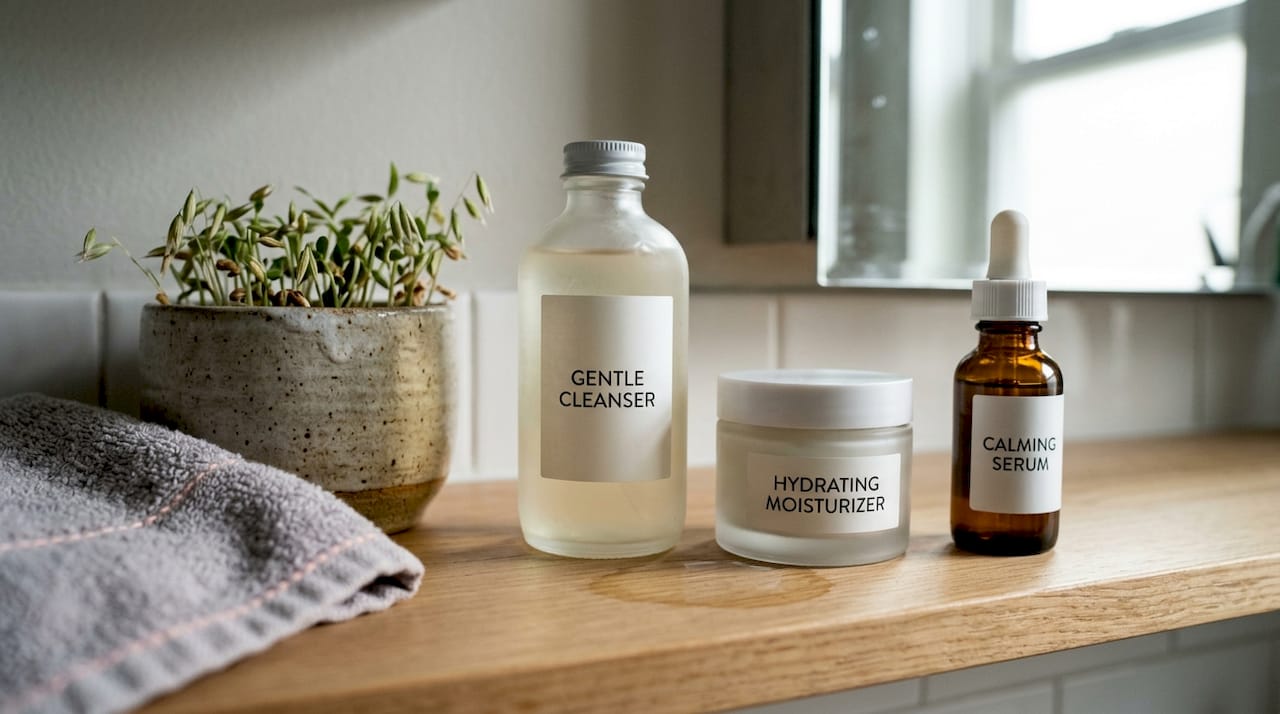
Pro Tip: Before applying any new product to your face, do a patch test on the inside of your wrist or behind your ear for 24 to 48 hours. This one small habit can save you from a painful flare-up.
Step-by-step clean beauty routine for sensitive skin
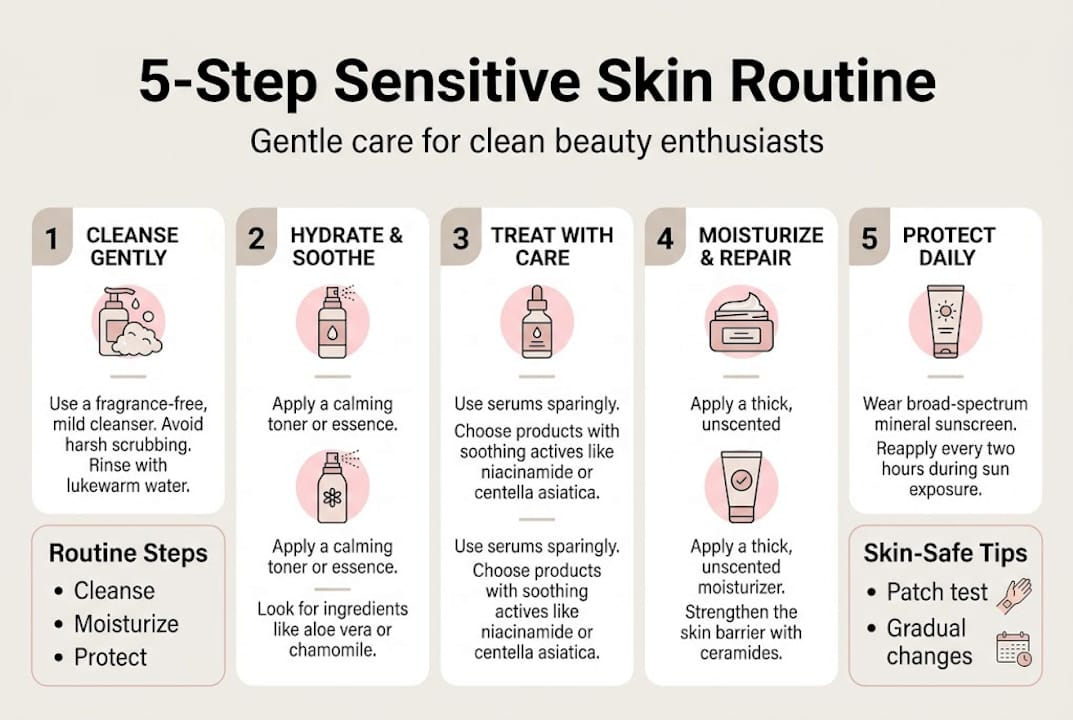
With your essentials ready, follow this easy-to-customize process for sensitive or eczema-prone skin. The order matters just as much as the products themselves. Layering from lightest to heaviest is key for maximum absorption and the least possible irritation. Skipping this principle is one of the most common reasons people feel like clean beauty “isn’t working” for them.
- Cleanse gently: Use a fragrance-free, sulfate-free cleanser with lukewarm water. Hot water strips the skin’s natural oils and worsens dryness. Massage in slow, circular motions for about 30 seconds, then rinse thoroughly.
- Tone mindfully: Apply an alcohol-free toner using a soft cotton pad or your fingertips. Rose water and chamomile-based toners restore your skin’s natural pH after cleansing and prepare it to absorb the next layers more effectively.
- Treat with intention: If you use a serum, this is the step for it. A rosehip oil serum or a niacinamide formula (which calms redness and evens tone) goes on next. Use only two to three drops and press gently into the skin rather than rubbing.
- Moisturize generously: This is the most protective step for eczema-prone skin. Choose a rich but non-comedogenic moisturizer with shea butter or oat extract. Apply while your skin is still slightly damp from the toner to seal in hydration.
- Protect with mineral SPF: In the morning, always finish with a mineral sunscreen containing zinc oxide. UV exposure worsens inflammation and can trigger flare-ups, even on cloudy days. At night, skip SPF and let your moisturizer do the work overnight.
For a more detailed step-by-step clean beauty checklist, you can explore additional guidance tailored to various skin concerns. Women who follow a consistent routine for sensitive, radiant skin report noticeably less redness and improved comfort within just a few weeks of staying committed to the process.
If you want to go deeper into the wellness side of beauty, exploring holistic beauty steps can help you connect your inner health habits, like hydration and sleep, to what you see in the mirror.
Pro Tip: Introduce one new product at a time, waiting at least five to seven days before adding another. This makes it easy to identify exactly what your skin loves and what it does not.
Common mistakes to avoid in a clean beauty routine
Even the best routines can go astray with a few common missteps. Here are the ones that most frequently derail sensitive skin progress, and how to correct them.
- Over-cleansing: Washing your face more than twice a day strips the skin’s protective barrier, leaving it vulnerable to irritants. Once in the morning and once at night is enough.
- Skipping sunscreen: Many people with sensitive skin avoid SPF because chemical sunscreens sting. The solution is not to skip it but to switch to a mineral formula with zinc oxide, which sits on top of the skin rather than absorbing into it.
- Fragrance overload: Even natural fragrances like essential oils can trigger reactions on sensitive or eczema-prone skin. Look for products labeled “fragrance-free” rather than just “unscented,” which can still contain masking agents.
- Mixing conflicting actives: Combining certain ingredients, like vitamin C and niacinamide in the wrong concentrations, or retinol with exfoliating acids, can cause irritation even in people without sensitive skin. Keep your routine simple.
- Changing products too frequently: When your skin does not respond immediately, the temptation is to swap everything out. This actually prevents your skin from adapting and makes it harder to identify what is helping.
- Skipping patch tests: Patch testing is crucial for sensitive and eczema-prone skin, yet it is the step most people skip when they are excited about a new product.
Important: Mixing active ingredients without understanding their interactions can cause more harm than the original skin concern. When in doubt, choose one active at a time and give it a full four weeks before evaluating results.
Understanding the clean cosmetics benefits goes beyond just avoiding bad ingredients. It is about building a relationship with your skin that is rooted in trust and consistency. For those who also wear makeup, finding calm, clean makeup tips designed specifically for reactive skin makes a meaningful difference in how your skin feels by the end of the day.
How to track results and tailor your clean beauty routine
To make the most of your efforts, you need to see how well your routine is working and adapt as your skin changes. Skin is not static. It shifts with the seasons, your stress levels, your hormones, and even your diet. A routine that works beautifully in winter may need adjusting by summer.
Tracking your routine and product results helps you spot what works best for your unique sensitivities, and it removes the guesswork that leads most people to give up too soon.
Here is a simple process to follow:
- Start a skin log: Use a notebook or a notes app on your phone. Each morning, jot down how your skin feels, any redness, dryness, or breakouts, and what products you used the night before.
- Rate your skin weekly: On a scale of one to ten, rate your comfort, hydration, and clarity each week. This gives you a visual trend over time.
- Note environmental factors: Record major changes like travel, stress, hormonal shifts, or weather changes. These often explain unexpected reactions that have nothing to do with your products.
- Evaluate at the four-week mark: Give any new product or routine change a full four weeks before deciding if it is working. Skin cell turnover takes approximately 28 days, so results before that point are not the full picture.
- Celebrate small wins: Did your skin feel less tight this week? That is progress. Noticing and acknowledging these moments keeps you motivated through the slower phases.
Here is a comparison table to help you adapt your routine based on common skin responses:
| Skin response | Likely cause | Suggested adaptation |
|---|---|---|
| Increased redness | New active ingredient | Pause the new product, simplify routine |
| Dryness or flaking | Over-cleansing or low humidity | Add a hydrating serum, use a richer moisturizer |
| Breakouts | Comedogenic ingredient | Check product labels, switch to lighter formula |
| Itching or stinging | Fragrance or alcohol | Switch to fragrance-free, alcohol-free alternatives |
| Improved texture | Routine is working well | Maintain consistency, consider adding one new step |
Tracking also connects you to the bigger picture of your clean beauty impact, both on your skin and on your overall wellness. When you see real progress documented in your own handwriting, it becomes much easier to stay the course.
A fresh perspective: Why slow beauty beats fast fixes
Here is something the beauty industry rarely tells you: your skin did not become sensitive overnight, and it will not heal overnight either. Most of us have been conditioned to expect instant results, and when a new product does not transform our skin in three days, we assume it is not working. That mindset is one of the biggest obstacles to real skin wellness.
The holistic beauty approach asks you to think differently. Plant-based ingredients work gently and cumulatively. Calendula does not blast your skin into submission. It quietly, consistently reduces inflammation over time. That is not a weakness. That is how healing actually works.
Resisting the urge to constantly switch routines is one of the most powerful things you can do for sensitive or eczema-prone skin. Each time you introduce a new product, your skin has to adapt. Give it the grace of consistency and you will be surprised by what it can do on its own. The most radiant skin we have ever seen comes from women who chose patience over trends.
Nourish your skin with Pure Light Botanical Beauty
Ready for the next step? Your sensitive skin deserves products that were created with its specific needs in mind, not adapted from formulas designed for everyone else.
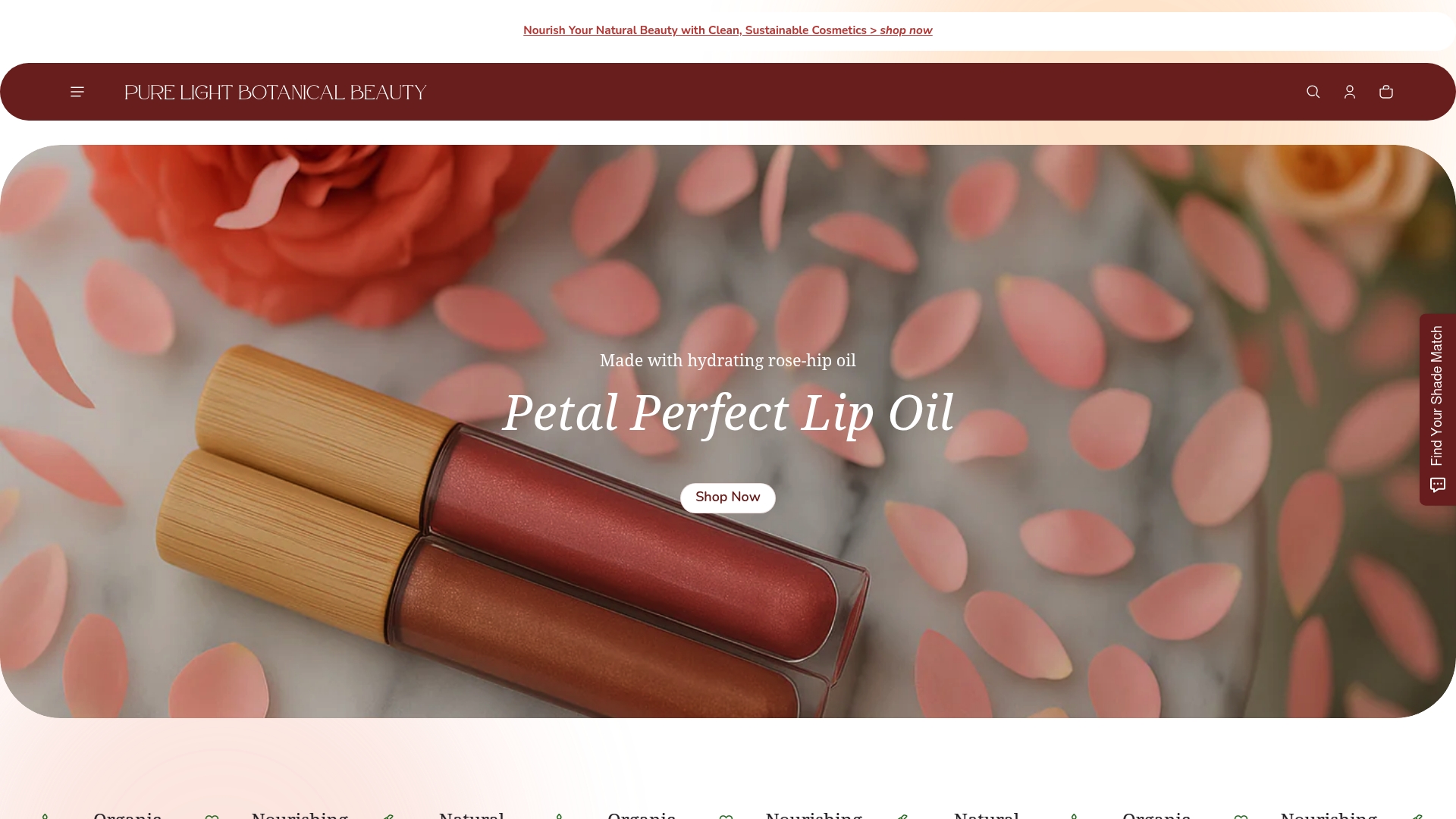
At Pure Light Botanical Beauty, every product is formulated with clean, plant-based ingredients chosen for their ability to nourish, protect, and calm even the most reactive skin. From our Botanical Crème Blush to our Petal Perfect Lip Oil, each formula is a step toward beauty that feels as healing as it looks. Explore our full collection, discover routine guides tailored to eczema-prone skin, and find the products that will become your most trusted daily rituals. Your skin is worth the care.
Frequently asked questions
What is a clean beauty routine for sensitive skin?
A clean beauty routine for sensitive skin uses gentle, plant-based products without harsh chemicals to minimize irritation and support long-term skin health. Clean routines reduce exposure to potential irritants that commonly trigger flare-ups.
How long does it take to see results from a clean beauty routine?
You may notice less redness and more comfort within two to four weeks as your skin adjusts to the new regimen. Clean routines support gradual improvement in sensitive skin rather than delivering overnight changes.
Should I patch test every new clean beauty product?
Yes, always patch test a new product before using it widely, especially on eczema-prone or highly sensitive skin. Patch testing prevents adverse reactions that can set your skin’s healing back significantly.
What ingredients should I avoid in my routine?
Avoid added fragrances, sulfates, parabens, and harsh alcohols that commonly trigger sensitive skin or eczema flare-ups. Common irritants can worsen even mild sensitivity over time with repeated exposure.
Can I use makeup in a clean beauty routine for sensitive skin?
Yes, opt for hypoallergenic, fragrance-free, and non-comedogenic makeup products made with clean, gentle ingredients. Clean makeup options are widely available and designed to work with, not against, sensitive skin.
Recommended
- Clean Beauty Routine Steps for Sensitive, Radiant Skin – Pure Light Botanical Beauty
- Sensitive skin makeup: calm, clean steps for radiant results – Pure Light Botanical Beauty
- 7 Essentials for a Clean Makeup Checklist for Sensitive Skin – Pure Light Botanical Beauty
- 7 Holistic Beauty Routines for Sensitive Skin Wellness – Pure Light Botanical Beauty