

TL;DR:
- Mindful skincare routines engage the senses to reduce anxiety and improve mood.
- Plant-based beauty supports skin health and psychological well-being over consistent use.
- Simple, intentional rituals promote lasting healing and emotional resilience for sensitive skin.
Your beauty routine is doing more than you think. The moment you slow down, smooth a botanical balm across your skin, and breathe in something that smells like the earth, your nervous system notices. Mindful skincare routines reduce anxiety and depression symptoms through sensory engagement, with 95% of participants reporting mood enhancement. For women with sensitive skin, this connection between ritual and healing is not just comforting. It is backed by science, and it is something you can build into every single day.
Table of Contents
- Why beauty routines matter for mental health
- The science behind plant-based beauty for holistic well-being
- Smart daily rituals: Mindfulness, adaptogens, and personalization
- Sustaining mental health beauty habits: Progress, pitfalls, and success stories
- What most beauty guides miss about self-care for sensitive skin
- Start your plant-based ritual for well-being
- Frequently asked questions
Key Takeaways
| Point | Details |
|---|---|
| Mindful rituals boost mood | Simple beauty routines using sensory engagement can reduce anxiety and improve mood by up to 95 percent. |
| Plant-based is powerful | Clean, plant-based cosmetics show real benefits for hydration, elasticity, and mental well-being. |
| Personalization prevents stress | Customizing rituals to your sensitivities and keeping routines simple protects both skin and mental health. |
| Results take consistency | Expect 4–12 weeks for noticeable improvement if you follow sustainable, mindful habits. |
Why beauty routines matter for mental health
Most of us were taught that beauty routines are about appearance. Cleanse, moisturize, apply, repeat. But the research tells a richer story. When you engage in a consistent beauty ritual, you are activating sensory pathways that directly influence your emotional state. Touch, scent, and texture all send signals to the brain that say: you are safe, you are cared for, you are here.
Rituals and mental health are deeply intertwined. Rituals reduce uncertainty and create a felt sense of control, which is especially meaningful for women navigating beauty pressures, hormonal shifts, or skin conditions like eczema. When your routine feels intentional rather than reactive, it builds self-efficacy. You are not just managing your skin. You are practicing agency over your own well-being.
The sensory pathways at work here are worth understanding:
- Touch activates the parasympathetic nervous system, slowing heart rate and lowering cortisol
- Scent connects directly to the limbic system, the brain’s emotional center, triggering calm or uplift
- Texture grounds you in the present moment, functioning like a tactile form of mindfulness
- Routine itself signals safety and predictability, which reduces background anxiety over time
The benefits of beauty rituals and mental health practices are especially pronounced for sensitive skin. Gentle, intentional touch reduces the stress response that can trigger flare-ups. Fragrance-free or botanically scented products offer sensory comfort without irritation. And the act of self-love in beauty routines reinforces a positive self-image that goes far deeper than the mirror.
“When we treat our skincare routine as a ritual rather than a task, we shift from doing to being. That shift is where real healing begins.”
Here is the counterpoint worth naming: a routine that is too complex can backfire. If your shelf is crowded with ten products you feel obligated to use, the routine becomes a source of stress rather than relief. Simplicity is not a compromise. For sensitive skin especially, it is often the most powerful choice you can make.
The science behind plant-based beauty for holistic well-being
Plant-based beauty is not a trend. It is a return to something the body already recognizes. Clean, botanical formulas work with your skin’s natural biology rather than overwhelming it, and the results extend well beyond the surface.
A 90-day observational study found that plant-based supplements improved skin hydration by 31%, elasticity by 18%, reduced wrinkles by 19%, and pigmentation by 31%, while also enhancing psychological well-being. These are not small numbers. They reflect a meaningful shift in how the skin functions and how people feel in their own bodies.
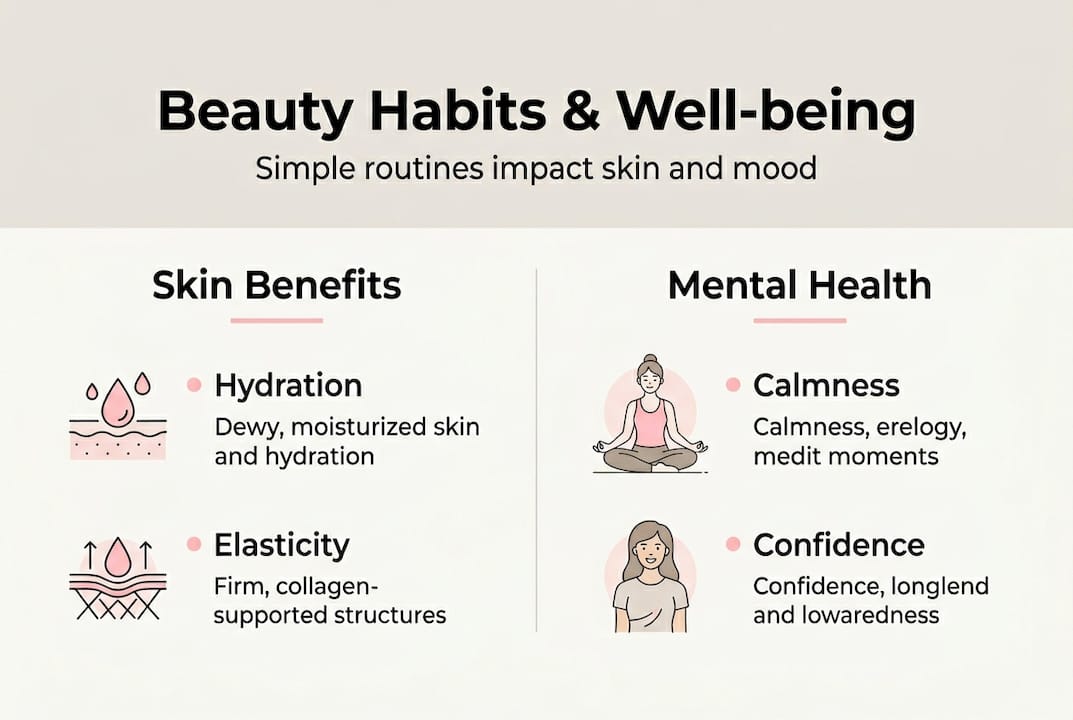
Here is a side-by-side look at how conventional and plant-based routines compare:
| Factor | Conventional beauty routine | Plant-based beauty routine |
|---|---|---|
| Skin hydration | Temporary barrier effect | Sustained, cellular-level improvement |
| Irritation risk | Higher (synthetic fragrance, fillers) | Lower (botanicals, no harsh additives) |
| Mood impact | Minimal or neutral | Positive, via scent and sensory ritual |
| Long-term skin health | Variable | Measurable improvement over 4-12 weeks |
| Suitability for sensitive skin | Often problematic | Designed to support and calm |
The mindful beauty guide approach pairs well with these findings. When you choose products that are both effective and gentle, you remove the mental load of wondering whether your routine is hurting or helping.
Here are the top physiological changes measured in plant-based beauty studies:
- Hydration increases as botanical actives support the skin’s moisture barrier
- Elasticity improves as collagen-supporting plant compounds take effect
- Pigmentation evens out with consistent use of antioxidant-rich formulas
- Psychological well-being rises in parallel with skin improvement, confirming the mind-skin connection
Stress reduction from consistent self-care practices typically shows up within 4 to 12 weeks. That timeline matters because it sets realistic expectations and keeps you from abandoning a routine before it has had a chance to work.
Smart daily rituals: Mindfulness, adaptogens, and personalization
Knowing the evidence is one thing. Building a routine you will actually keep is another. The good news is that the most effective approach for sensitive skin is also the simplest one.
A mindful daily ritual does not need to take an hour. It needs to be intentional. Start with a gentle cleanse, apply a botanical serum or oil with slow, deliberate strokes, and take three deep breaths while the product absorbs. That small pause is not wasted time. It is the moment your nervous system shifts gears.
Topical plant-based adaptogens like ginseng, turmeric, gotu kola, and green tea fortify the skin barrier, reduce inflammation, and protect against UV and environmental stress. These ingredients are particularly valuable for sensitive skin because they calm reactivity at the source rather than masking it.
| Adaptogen | Key benefit for skin | Mental health connection |
|---|---|---|
| Ginseng | Boosts circulation, supports elasticity | Reduces fatigue and brain fog |
| Turmeric | Anti-inflammatory, calms redness | Linked to reduced anxiety markers |
| Gotu kola | Supports collagen, heals barrier | Traditionally used for calm and focus |
| Green tea | Antioxidant protection, soothes irritation | Lowers cortisol response |
For more on building a sustainable approach, the holistic beauty routines guide and minimal routines for sensitive skin resource are worth exploring alongside the mindful makeup guide.
Watch for these signs that your routine has become too complex:
- You feel anxious or overwhelmed before starting it
- Your skin is reacting more, not less
- You skip it often because it feels like too much effort
- You are constantly adding new products without removing old ones
Research on personalized skincare for sensitive skin confirms that overly complex routines worsen stress and irritation. Tailoring your routine to your actual sensitivities is not optional. It is the foundation.
Pro Tip: Introduce one new ingredient at a time and wait two full weeks before adding another. This gives your skin and your nervous system time to respond clearly, so you know exactly what is helping.
Sustaining mental health beauty habits: Progress, pitfalls, and success stories
Starting a ritual is the easy part. Sustaining it through busy weeks, flare-ups, and the occasional bad skin day is where the real work happens. And it is also where the real transformation lives.
Expect 31 to 72% skin improvements in plant-based studies alongside 20 to 25% stress reduction from consistent self-care. These benchmarks matter because they give you something to measure against, and they remind you that progress is happening even when it feels invisible.
Here are four common pitfalls and how to sidestep each one:
- Swapping products too soon. Most plant-based formulas need 4 to 12 weeks to show full results. Give them time before deciding they are not working.
- Over-complicating the routine. More steps do not mean more results. For sensitive skin, a three-step routine done consistently beats a ten-step routine done occasionally.
- Ignoring sensitivities. If something causes redness, tingling, or breakouts, remove it immediately. Your skin’s signals are data, not inconveniences.
- Expecting instant results. Real skin healing is slow and steady. Celebrate small wins: less redness this week, better sleep, a calmer mood after your morning ritual.
Consider someone like Maya, a woman in her late thirties managing eczema and work stress. She simplified her routine to three plant-based steps, added a brief breathing practice during application, and tracked her mood and skin daily. By week eight, her skin was noticeably calmer and she described feeling more grounded each morning. The routine had become an anchor.
Pro Tip: Keep a simple journal where you rate your mood and skin on a scale of one to ten each day. After four weeks, patterns will emerge that show you exactly which habits are working.
“Patience is not passive. It is the most active ingredient in any healing ritual. The skin, like the mind, responds to consistency more than intensity.”
For more guidance, explore beauty habits for sensitive skin and nourishing beauty rituals to keep your practice evolving.
What most beauty guides miss about self-care for sensitive skin
Here is something most beauty content will not tell you: the ingredient list matters less than the ritual itself. We have been trained to chase the next hero ingredient, the newest botanical extract, the most advanced formula. And while ingredient quality absolutely matters, the deeper truth is that mindful repetition is what creates lasting change.
Women with sensitive skin often spend enormous energy researching products and almost no energy on how they apply them. The speed, the pressure, the presence or absence of breath during application. These things shape the outcome as much as what is in the bottle.
Tracking both your emotional state and your skin health together is the practice that most people skip, and it is the one that reveals the most. When you notice that your skin flares on high-stress days, you stop blaming the product and start addressing the root. That is what self-expression in beauty really means: using your routine as a mirror for your whole self, not just your complexion.
Simplicity, consistency, and awareness. That is the formula no bottle can contain.
Start your plant-based ritual for well-being
If you have been waiting for the right moment to build a beauty routine that genuinely supports your skin and your mental health, this is it. Starting simple is not starting small. It is starting smart.
Pure Light Botanical Beauty’s nourishing cosmetics collection was created for exactly this kind of intentional ritual. Every formula is clean, plant-based, and thoughtfully designed for sensitive skin. From the calming botanicals in the Botanical Crème Blush to the deeply conditioning nourishing lipstick, each product is an invitation to slow down and nourish yourself from the outside in. Your ritual does not need to be elaborate. It just needs to be yours.
Frequently asked questions
What is the link between mindful beauty routines and mental health?
Mindful beauty routines engage the senses through touch, scent, and texture, reducing anxiety and depression symptoms. Research shows up to 95% reported improved mood from consistent, sensory-focused skincare practices.
Which plant-based ingredients are best for sensitive skin and mental well-being?
Evidence-backed adaptogens like ginseng, turmeric, gotu kola, and green tea are among the strongest options, fortifying the skin barrier while supporting a calmer stress response.
How soon will I notice mental health or skin improvements?
With a simple, consistent plant-based routine, most people begin to see meaningful changes in 4 to 12 weeks, with 31 to 72% skin improvements documented in clinical studies.
Can routines be too complicated for sensitive skin?
Absolutely. Overly complex routines increase stress and can trigger irritation or flare-ups. A tailored, minimal approach consistently outperforms a crowded shelf for both skin health and emotional well-being.
Recommended
- Why beauty rituals matter for mental health in sensitive skin – Pure Light Botanical Beauty
- Why Beauty Matters for Inner Growth and Healing – Pure Light Botanical Beauty
- Transformational Beauty Habits for Sensitive Skin – Pure Light Botanical Beauty
- Beauty as Healing: Transforming Skin and Soul – Pure Light Botanical Beauty