

Finding gentle beauty solutions can feel like a challenge when your skin reacts to almost everything. Women with sensitive skin or eczema know the sting of conventional products all too well. Embracing plant-based beauty isn’t just about appearance—it’s about genuine wellness through nature’s restorative power. By integrating healing rituals with botanical ingredients, you nourish your skin and support your body’s repair systems. Beauty as healing offers comfort, resilience, and self-care beyond surface-level promises.
Table of Contents
- Defining Beauty as Healing in Nature
- Types of Botanical Healing for Skin
- How Rituals Elevate Self-Care and Wellness
- Linking Beauty, Mental Health, and Confidence
- Healing Sensitive Skin and Eczema Naturally
Key Takeaways
| Point | Details |
|---|---|
| Beauty as Healing | Natural beauty products promote healing by nourishing the skin and supporting its natural repair processes. |
| Rituals Enhance Self-Care | Incorporating mindful beauty rituals can reduce stress and improve emotional well-being. |
| Choose Botanicals Wisely | Selecting the right botanical ingredients based on specific skin needs ensures effective healing, especially for sensitive skin and eczema. |
| Focus on Consistency | Developing a simple, consistent skincare routine with botanical products fosters long-term skin health and stabilizes conditions like eczema. |
Defining Beauty as Healing in Nature
Beauty exists everywhere in nature—in wildflowers, morning light, flowing water. Yet most beauty products promise only surface-level results, ignoring what happens beneath the skin. Beauty as healing reframes this entirely.
Instead of treating makeup and skincare as separate from wellness, this approach recognizes them as tools for restoration. When you use products rooted in botanical ingredients, you’re not just enhancing appearance—you’re nourishing your body’s natural repair systems.
For women with sensitive skin or eczema, this distinction changes everything. Conventional beauty often irritates and inflames. Natural, plant-based beauty works with your skin’s biology rather than against it.
What Makes Beauty Healing?
Healing beauty operates on three interconnected levels:
- Physical healing: Plant compounds reduce inflammation, repair barrier function, and provide nutrients your skin craves
- Emotional healing: Rituals around beauty products slow you down, creating moments of self-care and self-acceptance
- Spiritual healing: Connecting with nature-based ingredients reconnects you to something larger than yourself
Research confirms what intuition has long known: contact with natural beauty lowers stress hormones, improves immune function, and reduces anxiety. When you incorporate this into daily rituals, you’re not indulging—you’re investing in genuine wellness.
Beauty grounded in nature heals because it aligns with how your body actually works, not against it.
The Science Behind Natural Healing
Your skin is your body’s largest organ, absorbing what you apply. Plants contain bioactive compounds—antioxidants, polysaccharides, volatile oils—that directly support skin repair and resilience. Unlike synthetic chemicals designed to create color or texture, these botanicals address root causes of sensitivity and irritation.
When inflammation drops, barrier function strengthens. When barrier function improves, your skin becomes less reactive. This isn’t cosmetic covering; it’s actual transformation.
Why beauty is self-love through holistic healing for sensitive skin reveals how this practice extends beyond skin to emotional recovery and confidence.
The distinction matters: conventional beauty masks problems. Healing beauty solves them.
Beauty as Daily Ritual
Healing happens through repetition and intention. When you apply a nourishing lip oil or botanical crème blush as a mindful moment—not a rushed check-box—it becomes a ritual of self-honor.
This shift transforms how you relate to your appearance. You’re not “fixing” yourself. You’re nurturing yourself. The difference is profound.
Three ways beauty becomes healing ritual:
- Choose products with clean, recognizable ingredients you trust
- Apply them slowly, noticing texture, scent, and sensation
- Observe changes over weeks—calmer skin, steadier confidence, deeper ease
Pro tip: Start with one botanical product and use it for 3-4 weeks before adding others, allowing you to notice how your skin responds and building a true relationship with healing rather than chasing quick fixes.
Types of Botanical Healing for Skin
Not all botanicals work the same way. Different plants offer different healing pathways, and understanding these distinctions helps you choose what your skin actually needs.
Botanicals work through active compounds—antioxidants, anti-inflammatory agents, antimicrobials, and skin-repairing compounds. Each type targets specific skin concerns, from inflammation and barrier damage to sensitivity and irritation.
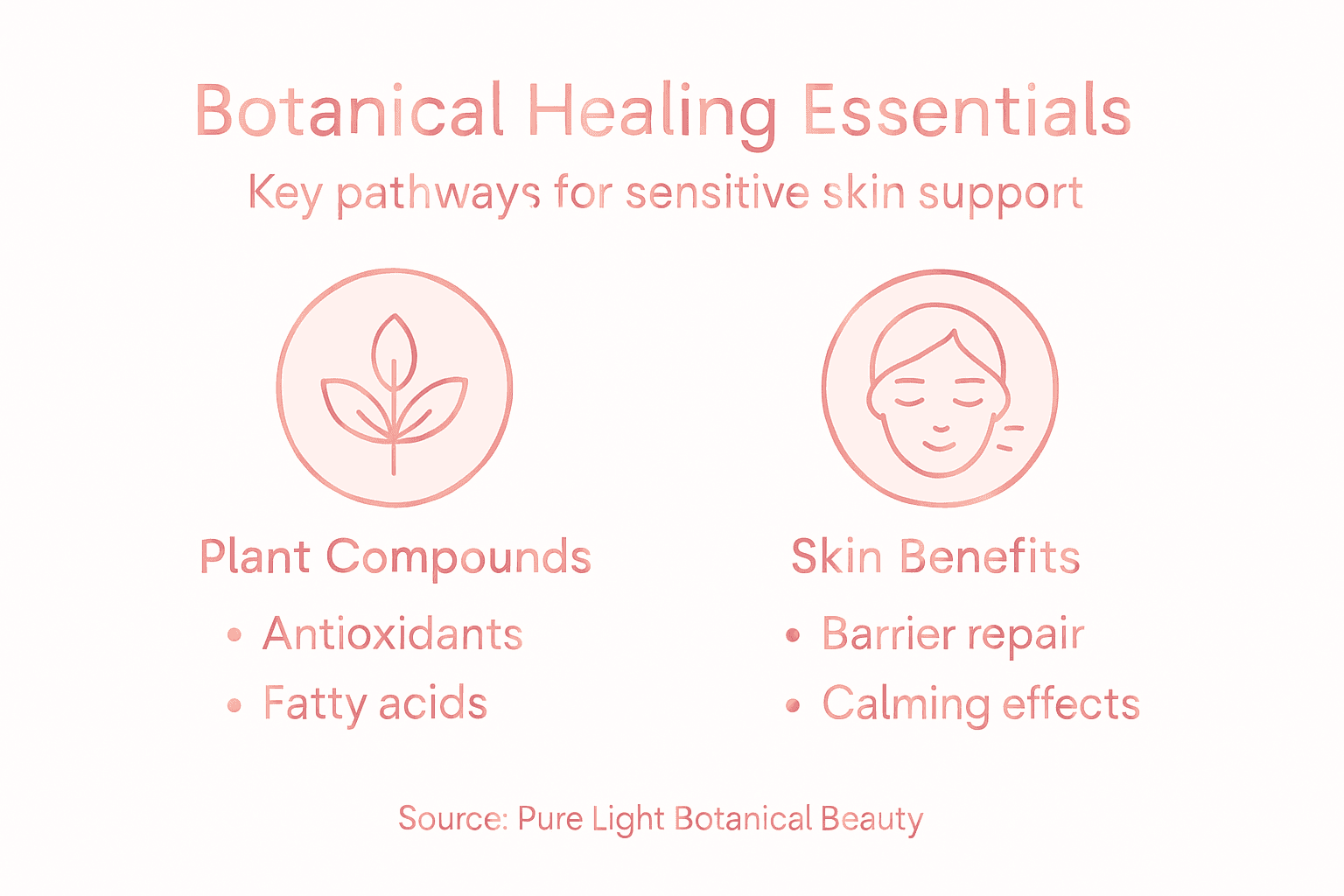
For women with eczema or reactive skin, matching the right botanical to your skin’s actual problem makes the difference between relief and continued frustration.
The Main Categories of Botanical Healing
Botanicals fall into distinct therapeutic categories:
- Antioxidant botanicals: Combat free radical damage and prevent premature aging (examples: green tea, rosehip, vitamin E from plant sources)
- Anti-inflammatory botanicals: Calm redness, swelling, and reactive flare-ups (examples: chamomile, calendula, oat extract)
- Antimicrobial botanicals: Support skin’s natural defense against irritants and bacteria (examples: tea tree, lavender, thyme)
- Barrier-repair botanicals: Restore and strengthen your skin’s protective layer (examples: plant oils, shea butter, plant ceramides)
Each category serves a specific healing function. The most effective skincare combines multiple types to address the whole picture of skin health.
Different botanicals heal different problems—the key is knowing which one addresses your specific skin need.
Oils, Extracts, and Butters
Botanical ingredients appear in different forms, each with distinct benefits. Plant oils contain fatty acids and antioxidants that nourish and seal moisture. Botanical extracts concentrate active compounds like polyphenols and tannins for targeted healing. Plant butters provide intense barrier support and natural emollience.
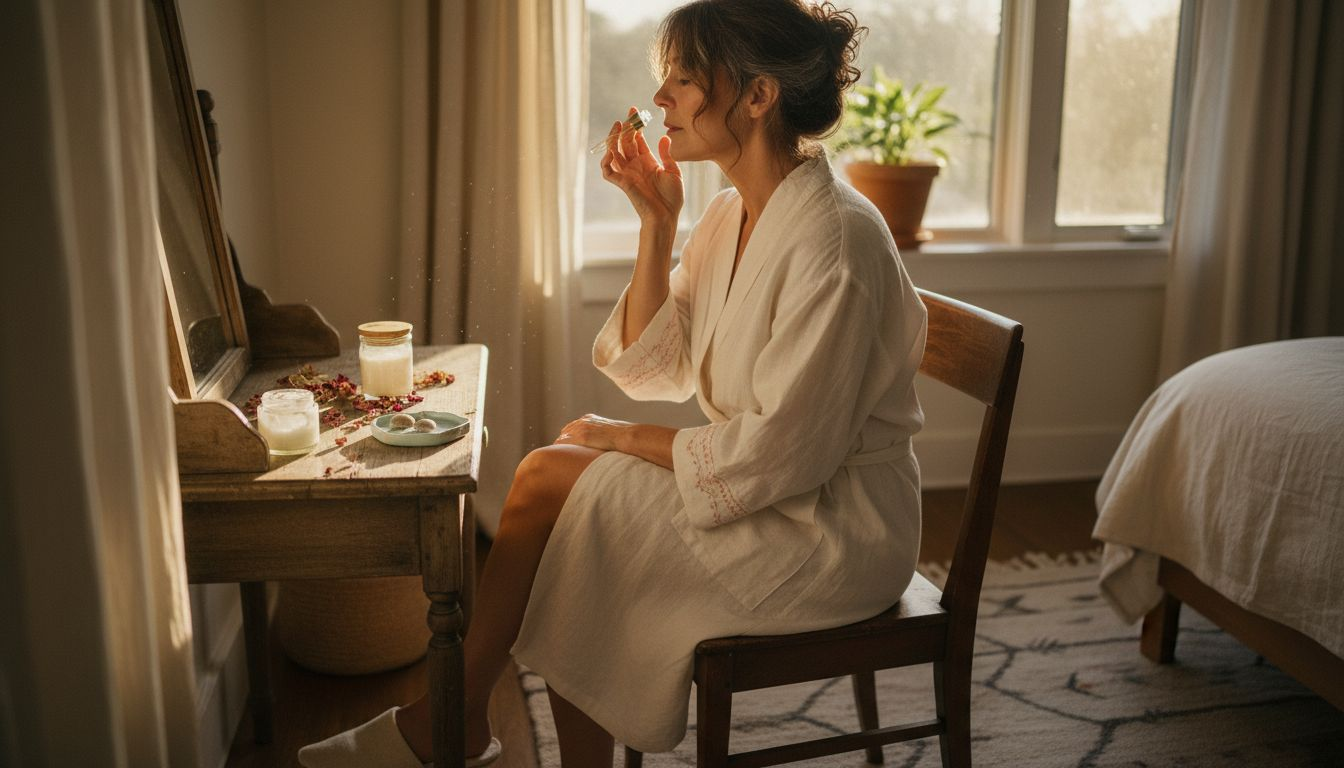
The benefits of botanical ingredients for sensitive skin demonstrate how these different forms work synergistically. A nourishing lip oil might combine calming chamomile extract with barrier-supporting jojoba oil—each component serving the skin’s healing process.
When sensitive skin or eczema flares, you need both immediate comfort and long-term repair. Botanical combinations achieve this naturally.
Building Your Botanical Routine
Healing occurs through consistency, not complexity. You don’t need a complicated regimen—you need the right botanicals working together.
Start with these principles:
- Identify your primary skin concern (inflammation, dryness, reactivity, barrier damage)
- Choose one botanical that addresses that concern
- Use it consistently for 3-4 weeks before adding more
- Observe how your skin responds—calmer, more hydrated, less reactive
- Layer complementary botanicals only after the first becomes routine
This approach prevents overwhelming sensitive skin while allowing you to see what actually works. Eczema-prone skin needs stability, not constant change.
Pro tip: Apply botanical products to damp skin rather than completely dry skin—moisture helps plant compounds penetrate deeply and work more effectively for barrier repair and hydration.
How Rituals Elevate Self-Care and Wellness
A ritual is more than routine. It’s a deliberate, mindful action infused with intention and presence. When you apply a botanical beauty product as part of a ritual rather than a rushed task, everything changes.
Rituals signal to your nervous system that you matter. They create psychological anchors—moments where you pause, breathe, and reconnect with yourself. For women managing eczema or sensitive skin, these moments become medicine.
Research shows that ritualized self-care practices reduce stress hormones, enhance emotional regulation, and strengthen your sense of control over your health. The repetition itself becomes healing.
Why Rituals Work
Your brain responds to patterns. When you repeat an action with intention, your nervous system learns to anticipate safety and care. This isn’t placebo—it’s neurobiology.
Rituals create three specific benefits:
- Stress reduction: Mindful repetition lowers cortisol and activates your parasympathetic nervous system
- Emotional grounding: Rituals anchor you in the present moment, away from anxiety about flare-ups or appearance
- Self-respect signaling: Consistent self-care practices communicate to yourself that you deserve nourishment and healing
When your skin is reactive, your nervous system is often reactive too. Beauty rituals become a tool for calming both simultaneously.
Rituals transform beauty routines from obligation into acts of self-honor that rewire how your body responds to stress.
Beauty as Ritual, Not Task
The difference between skincare and beauty ritual lives in attention. Skincare happens on autopilot. Rituals happen with presence.
Understanding natural beauty rituals for sensitive skin reveals how slowing down during application—noticing texture, scent, sensation—transforms the experience. Your skin absorbs products better when you’re calm. Your mind settles when you’re fully present.
This is why rushed beauty habits don’t heal. You need slowness. You need attention. You need to show up for yourself.
Building Your Healing Ritual
Effective rituals are simple, consistent, and meaningful. Complexity creates resistance; simplicity creates sustainability.
Three steps to ritual:
- Choose one botanical product you genuinely love—the scent, texture, feel matter
- Set a specific time each day (morning or evening, when you can be unhurried)
- Spend 2-3 minutes with full attention: feel the product, notice your skin’s response, breathe
Consistency matters more than duration. A 2-minute daily ritual heals more than a 20-minute weekly one. Your nervous system needs to trust the pattern.
Over weeks, you’ll notice shifts—calmer skin, steadier confidence, easier breathing. This is ritual doing its work.
Pro tip: Perform your beauty ritual at the same time each day, ideally during a naturally calm moment like early morning or evening wind-down, so your body anticipates and deepens into the healing response.
Linking Beauty, Mental Health, and Confidence
Your skin doesn’t exist separate from your mind. When eczema flares, anxiety often rises. When you feel beautiful, your mood shifts. This connection isn’t coincidental—it’s biological and psychological.
Beauty and mental health form a feedback loop. Clearer, calmer skin reduces stress about appearance. Reduced stress allows skin to heal further. Healing skin builds confidence. Confidence changes how you move through the world.
For women with sensitive skin conditions, this loop can work in reverse too. Stress triggers flares. Flares trigger shame or withdrawal. Withdrawal deepens stress. Breaking this cycle requires addressing skin and mind simultaneously.
The Confidence Connection
Confidence isn’t vanity. It’s the belief that you’re worthy of care and capable of healing. When your skin feels reactive and unpredictable, confidence erodes because your body feels unsafe.
Healing your skin through plant-based beauty products rebuilds this safety. As your skin stabilizes, you stop bracing against flare-ups. Your nervous system relaxes. Your sense of self strengthens.
Understanding what confidence in beauty truly means reveals that real confidence emerges from self-acceptance, not perfection. When you choose clean ingredients that honor your skin’s sensitivity, you’re voting for yourself. That’s confidence.
How Beauty Practices Support Mental Health
Daily beauty rituals become mental health interventions:
- Mindfulness anchor: Applying botanical products creates moments of presence, breaking rumination cycles
- Self-compassion practice: Gentle skincare teaches your body that it deserves tenderness, not punishment
- Visible progress: Watching inflamed skin calm over weeks provides tangible evidence of healing and hope
- Nervous system regulation: The sensory experience of botanical textures and scents activates calming responses
When you’re managing eczema or chronic skin stress, these practices become medicine. They’re not luxuries—they’re essential mental health support.
When your skin feels safe and nourished, your mind can relax too. Beauty becomes healing becomes confidence.
From Shame to Self-Honor
Many women with reactive skin internalize shame. They hide, avoid photos, withdraw from social connection. This isolation deepens both skin issues and mental health struggles.
Beauty as healing flips this narrative. Instead of hiding your skin, you honor it. Instead of fighting flares, you respond with nourishment. This shift—from battle to care—transforms your relationship with yourself.
Over time, this translates to genuine confidence. Not confidence that your skin is perfect, but confidence that you’re worthy of consistent, loving care. That matters more than any complexion.
Pro tip: When stress or anxiety spikes, reach for your botanical beauty ritual immediately—the sensory experience and act of self-care will help regulate your nervous system before stress triggers a skin flare.
Healing Sensitive Skin and Eczema Naturally
Sensitive skin and eczema aren’t problems to mask—they’re signals that your skin needs genuine nourishment and barrier repair. Conventional treatments often rely on synthetic ingredients that provide temporary relief while potentially irritating further.
Natural healing addresses root causes. Plant-based emollients restore moisture. Botanical anti-inflammatories calm reactivity. Natural oils strengthen your skin’s protective barrier. These work with your skin’s biology rather than against it.
For eczema specifically, the goal isn’t perfection—it’s stability. Reducing flare frequency, decreasing itching intensity, and rebuilding confidence in your skin’s resilience. This happens through consistent botanical support.
Understanding Eczema at the Root
Eczema occurs when your skin barrier weakens. Moisture escapes. Irritants penetrate. Your immune system overreacts. The cycle perpetuates until the barrier rebuilds.
Skin-soothing beauty tips for sensitive skin address this cycle by focusing on barrier restoration, not symptom suppression. Healing eczema naturally requires patience, but results are sustainable because you’re fixing the underlying dysfunction.
Conventional steroids work quickly but don’t address barrier weakness. Botanicals work slower but teach your skin to heal itself. Many women find combining both with botanical support creates the best outcomes.
Key Botanicals for Sensitive Skin and Eczema
Certain plants excel at eczema relief:
- Chamomile and calendula: Powerful anti-inflammatories that reduce redness and soothe itching without irritation
- Plant oils (jojoba, sunflower, coconut): Provide essential fatty acids and create moisture-sealing barrier protection
- Oat extract: Reduces inflammation and supports skin barrier function through natural compounds called beta-glucans
- Shea butter: Deeply nourishing, rich in fatty acids that repair and strengthen skin’s protective layer
These aren’t trendy—they’re evidence-based. Research confirms their effectiveness for managing eczema symptoms and supporting long-term healing.
Healing eczema naturally means choosing ingredients that repair your barrier, not just mask inflammation temporarily.
Creating Your Natural Healing Protocol
Start simple. Complexity triggers overwhelm and prevents you from identifying what actually works for your specific skin.
- Begin with a single botanical-based cleanser and moisturizer that calm your skin
- Use consistently for 3-4 weeks before adding other products
- Track changes: less itching, reduced redness, improved texture, calmer flares
- Only add a new botanical product after baseline healing stabilizes
- Notice which ingredients your skin gravitates toward—that’s your personalized guide
This methodical approach prevents the common trap of constantly switching products, which irritates sensitive skin further and prevents you from seeing real results.
Pro tip: Apply botanical products immediately after showering while skin is slightly damp, as moisture helps plant compounds penetrate deeply and provides additional hydration that eczema-prone skin desperately needs.
Embrace Beauty as Healing with Pure Light Botanical Beauty
Discover how your skincare and makeup routine can become a transformative ritual of nourishment and confidence. This article highlights the challenge women face with sensitive or eczema-prone skin—dealing not just with surface inflammation but deeper emotional and spiritual healing. At Pure Light Botanical Beauty, we understand that true beauty supports your skin’s natural repair, soothes reactivity, and nurtures your wellbeing from the inside out.
Explore our Nourishing Cosmetics designed with clean, plant-based ingredients that align with the healing concepts in this article. Whether you seek calming botanicals or barrier-repairing oils, our products transform your daily routine into a mindful ritual that supports both your skin and your spirit. Begin your journey toward radiant, resilient skin today at Pure Light Botanical Beauty and see how beauty can truly be healing.
Frequently Asked Questions
What is beauty as healing?
Beauty as healing is an approach that views beauty products, particularly those rooted in natural and botanical ingredients, as tools for nourishing and restoring the skin’s health rather than simply enhancing appearance. It connects skincare with overall wellness.
How can botanical ingredients help sensitive skin?
Botanical ingredients help sensitive skin by providing anti-inflammatory, antimicrobial, and barrier-repair properties. They work with the body’s natural processes to reduce irritation, enhance skin healing, and support its protective barrier.
What steps can I take to create a healing beauty ritual?
To create a healing beauty ritual, choose a botanical product you love, set aside specific time for daily application, and practice mindfulness during the process. Focus on the texture, scent, and sensations of the product as a way to connect with yourself and your skin.
How do I choose the right botanical ingredient for my skin concerns?
Identify your primary skin concern, such as inflammation or dryness, and select a botanical ingredient known to address that issue. For example, chamomile or calendula can soothe irritation, while plant oils can enhance hydration and barrier repair.
Recommended
- Why Beauty Is Self-Love: Holistic Healing for Sensitive Skin – Pure Light Botanical Beauty
- Natural Beauty Transformation: Healing Through Botanicals – Pure Light Botanical Beauty
- Identity in Beauty: Embracing Authentic Self-Care – Pure Light Botanical Beauty
- Why Beauty Inside Out: Complete Guide to Holistic Glow – Pure Light Botanical Beauty