

TL;DR:
- Natural beauty in 2025 emphasizes barrier-first, multifunctional formulas that prioritize ingredient transparency and sustainability. Regulatory measures like California AB 2762 and EU microplastics bans are driving authentic reformulations and ingredient integrity. Consumers now demand traceable, eco-friendly products backed by third-party certifications, shaping the future of clean and natural skincare routines.
Natural beauty trends in 2025 are defined by one governing principle: less product, more intention. The industry has moved decisively away from 10-step routines and toward multifunctional, barrier-supporting formulas built on transparent, science-backed ingredients. 99% of U.S. households purchased at least one natural product in 2025, with nearly 10% growth in dollar sales. That number signals a cultural shift, not a passing trend. Regulatory changes, sustainability demands, and a growing understanding of skin biology are reshaping what “natural beauty” means at every level, from the formula inside the bottle to the packaging it comes in.
1. Natural beauty trends 2025: skinimalism and barrier-first skincare
Skinimalism is the defining framework of natural skincare trends in 2025. It is not simply about owning fewer products. It means choosing formulas that do multiple jobs at once while actively repairing the skin barrier rather than stressing it. 75% of households now purchase three or fewer skincare products, favoring multifunctional routines over layered complexity. That shift reflects a growing awareness that over-formulating a routine is one of the fastest ways to compromise barrier health.
The ingredients leading this movement are ceramides, niacinamide, and peptides. Each one targets barrier function directly: ceramides restore lipid structure, niacinamide reduces inflammation and regulates sebum, and peptides signal the skin to produce more collagen and repair proteins. Brands building around these three ingredients are capturing the most loyal customers in the clean beauty space right now.
Neurocosmetics and microbiome science are also entering the mainstream, with formulas designed to reduce stress-related skin aging by targeting the skin-gut-brain axis. This inside-out approach to beauty, including ingestible collagen, adaptogen supplements, and probiotic skincare, is no longer niche. It is a core pillar of holistic beauty routines in 2025.
- Ceramide-rich moisturizers that mimic the skin’s natural lipid matrix
- Niacinamide serums at 5-10% concentration for barrier repair without irritation
- Peptide-based treatments that support collagen synthesis with minimal actives
- Probiotic and prebiotic formulas that balance the skin microbiome
- Ingestible beauty supplements with collagen, hyaluronic acid, and adaptogens
Pro Tip: If your skin feels tight, reactive, or perpetually dry, try a temporary “active pause.” Drop all exfoliants and retinoids for two to four weeks. Use only a gentle cleanser, a ceramide moisturizer, and SPF. This practitioner-recommended barrier repair approach gives compromised skin the recovery window it needs before reintroducing actives.
2. How regulations are reshaping clean beauty formulations
Regulatory pressure is now one of the most powerful forces driving clean beauty innovations in 2025. California’s Toxic-Free Cosmetics Act (AB 2762) banned 24 chemical groups from cosmetic products as of January 1, 2025. This is not a soft guideline. It is an enforcement standard that affects every brand selling in the U.S. market, including European brands whose EU-compliant formulas may still contain restricted substances under California law.

The EU moved simultaneously on microplastics. As of October 17, 2025, the intentional addition of microplastics in rinse-off cosmetics used for cleansing or exfoliating is banned under Commission Regulation (EU) 2023/2055. Brands reformulating to comply have had to update Cosmetic Product Safety Reports and supplier declarations, treating documentation as a parallel workstream to the reformulation itself. For consumers, this means the texture of some familiar scrubs and cleansers has quietly changed.
The deeper issue is that terms like “natural” and “clean” still lack standardized legal definitions in most markets. A product can be marketed as “clean” while containing ingredients that fall outside the spirit of that claim. Truthful, substantiated ingredient claims backed by documentation are the only real standard. This is why ingredient transparency has become the primary trust signal for informed consumers in 2025.
| Regulation | Scope | Effective date | Key compliance requirement |
|---|---|---|---|
| California AB 2762 | 24 chemical groups banned | January 1, 2025 | Full ingredient audit and reformulation |
| EU Microplastics Ban | Rinse-off exfoliating/cleansing products | October 17, 2025 | Updated safety reports and supplier declarations |
| EU “Natural/Clean” Claims | All cosmetics sold in EU | Ongoing | Truthful, substantiated claims with documentation |
3. Sustainability as a purchase driver, not just a brand value
Sustainability is no longer a differentiator. It is a baseline expectation. Sustainability-marketed products captured over 25% of U.S. CPG market share in 2025 and grew nearly five times faster than conventional products. That growth rate tells you where consumer dollars are moving, and it is not reversing.
The most meaningful sustainable beauty practices in 2025 go beyond recyclable packaging. Refillable compacts, concentrated formulas that reduce water usage, biodegradable ingredient sourcing, and carbon-neutral shipping are now table stakes for brands positioning themselves in the eco-friendly cosmetics space. Consumers are also getting sharper at identifying greenwashing. Vague claims like “eco-conscious” or “planet-friendly” without third-party certification are losing credibility fast.
- Refillable packaging systems that reduce single-use plastic by up to 70%
- Waterless or concentrated formulas that shrink the carbon footprint of shipping
- Certified organic and biodegradable ingredients with traceable sourcing
- Carbon-neutral or carbon-offset production verified by third-party auditors
- Minimal or compostable packaging replacing conventional plastic and foil
Pro Tip: To separate genuine sustainability from marketing language, look for third-party certifications like COSMOS Organic, Leaping Bunny, or B Corp. A brand’s sustainability commitments should be documented and specific, not aspirational and vague. If a brand cannot tell you exactly where its ingredients come from, that is your answer.
4. Emerging product innovations defining 2025 beauty trends
The fastest-growing skincare category in 2025 was SPF. Searches about sun damage increased 66.6% from 2024, reflecting a broader well-aging focus that prioritizes prevention over correction. This is a significant pivot. The beauty consumer of 2025 is less interested in covering signs of aging and more focused on protecting the skin so those signs appear later and more gradually.
K-beauty continues to influence trending organic beauty products globally, particularly through its emphasis on skin texture, layered hydration, and shade-inclusive formulations. The “clean girl” aesthetic, characterized by a luminous, skin-first base with minimal coverage, has pushed makeup brands to reformulate foundations and tints with active skincare ingredients. Products that blur the line between skincare and makeup, such as tinted SPF moisturizers with ceramides or lip oils with peptides, are the clearest expression of this trend.
Gourmand and edible-inspired fragrances are also rising sharply in 2025. Vanilla, caramel, brown sugar, and warm spice profiles are replacing the sharp florals and aquatics that dominated the previous decade. This shift toward sensory comfort in fragrance mirrors the broader wellness turn in beauty: consumers want products that feel nourishing and pleasurable, not just effective.
- Tinted SPF moisturizers with barrier-active ingredients like ceramides and niacinamide
- Peptide-based serums replacing heavy retinol routines for sensitive skin types
- Lip oils with functional botanicals that treat while they tint
- Gourmand fragrance profiles in body care and hair products
- Multifunctional blushes and bronzers with skincare benefits built in
5. How to adapt your holistic beauty routine to 2025 trends
Building a holistic beauty routine aligned with 2025 natural trends does not require a complete overhaul. It requires intentional editing. The goal is a routine where every product earns its place by serving both a cosmetic and a skin health function.
- Audit your current routine. Remove any product you cannot explain the purpose of. If you are using a toner, a serum, an essence, and a moisturizer, ask whether two of those could be replaced by one well-formulated ceramide serum.
- Prioritize barrier ingredients. Build your routine around ceramides, niacinamide, and a broad-spectrum SPF. These three cover the majority of what healthy skin needs daily.
- Check your products against California AB 2762. If a product contains any of the 24 banned chemical groups, replace it with a compliant alternative. The future of clean beauty is built on formulas that meet the highest regulatory standards, not the lowest.
- Choose sustainable packaging where possible. Refillable options exist across every category now, from foundation to moisturizer to fragrance. Making one swap per product cycle adds up significantly over a year.
- Let your makeup do skincare work. Replace heavy-coverage foundations with tinted SPF or skin-tint formulas that contain active ingredients. Your skin will look better and function better simultaneously.
- Add one inside-out element. Whether it is a collagen supplement, a probiotic, or simply more omega-3-rich foods, the connection between gut health and skin clarity is well-documented. Skincare does not stop at the surface.
Key takeaways
Natural beauty in 2025 is defined by barrier-first formulas, regulatory compliance, and sustainability practices that go beyond packaging claims.
| Point | Details |
|---|---|
| Skinimalism drives routines | 75% of households use three or fewer products, favoring multifunctional barrier-repair formulas. |
| Regulation shapes formulation | California AB 2762 and the EU microplastics ban are forcing real ingredient changes, not just marketing shifts. |
| Sustainability is mainstream | Sustainability-marketed products hold over 25% of U.S. CPG market share and grow five times faster than conventional products. |
| SPF leads product innovation | Sun damage searches rose 66.6% in 2025, making SPF the fastest-growing skincare category. |
| Transparency builds loyalty | Consumers now choose products based on ingredient integrity, not brand recognition. |
What I have learned from watching these trends up close
I have been watching the natural beauty space long enough to know when a trend has real roots versus when it is a rebranding exercise. Skinimalism has real roots. The shift toward barrier-first routines is not a marketing invention. It is a correction. Years of aggressive active-ingredient culture, the retinol-at-every-age messaging, the acid-every-other-night routines, left a lot of people with compromised, reactive skin. The move back to gentle, functional formulas is the industry course-correcting.
What I find genuinely exciting about 2025 is that the regulatory environment is finally catching up to consumer expectations. California AB 2762 and the EU microplastics ban are not perfect instruments, but they are forcing brands to make real changes rather than cosmetic ones. Attribute-first loyalty is the most honest description of where consumers are right now. They are not loyal to a logo. They are loyal to an ingredient list that holds up under scrutiny.
My honest advice: do not chase every 2025 beauty trend. Choose two or three that align with your actual skin needs and commit to them for at least three months. Barrier repair takes time. Sustainable habits take time. The brands worth trusting are the ones that say the same thing.
— Kaitlyn
Discover botanical beauty that lives these principles
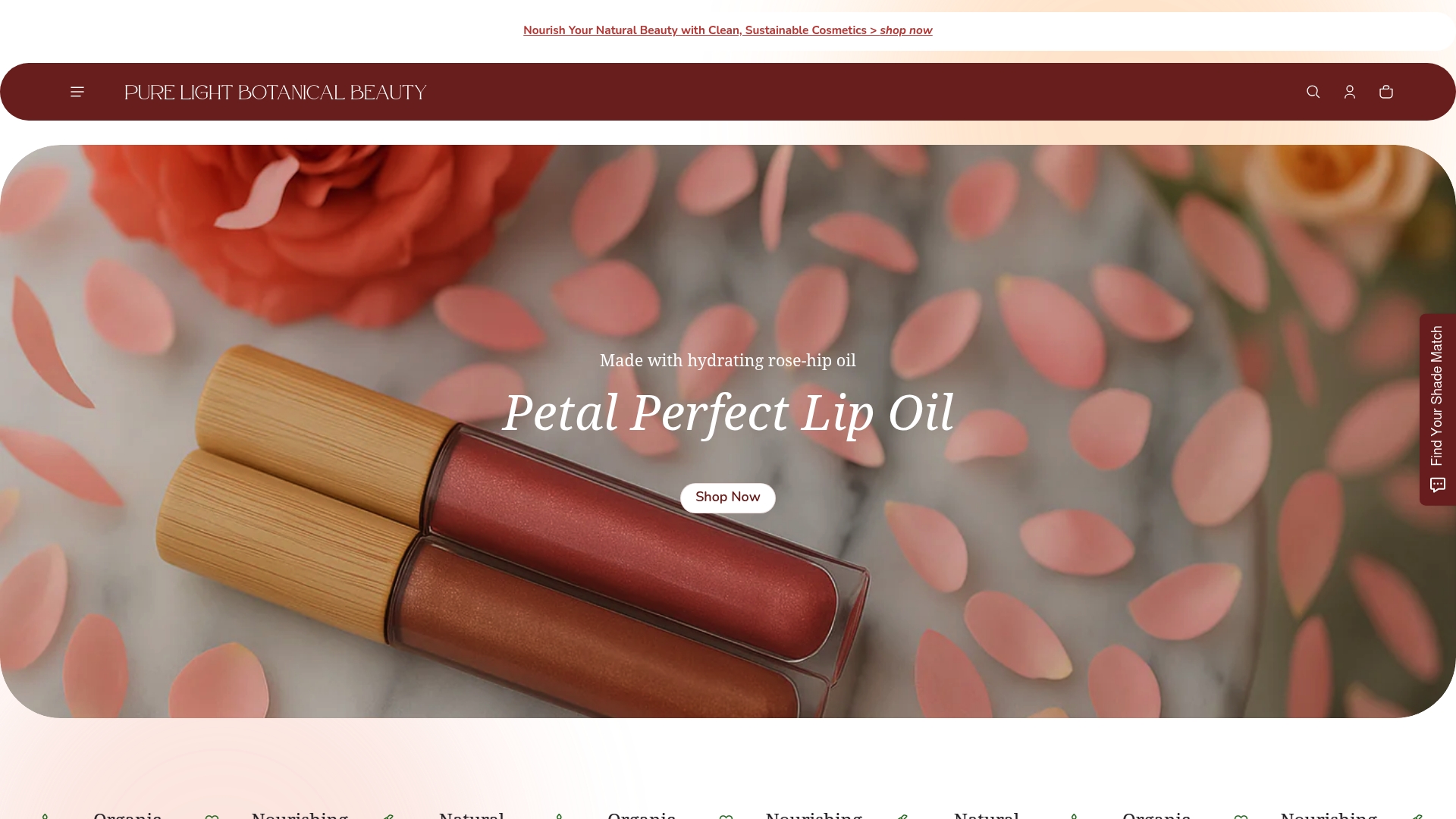
Purelightbotanicalbeauty was built on exactly the principles this article describes: fewer ingredients, higher integrity, and formulas that treat the skin while they beautify it. The Botanical Beauty Balm with Calendula and Rose is a direct expression of the skinimalism trend, a multifunctional, plant-based formula that soothes, protects, and nourishes in one step. Every product in the Purelightbotanicalbeauty line is crafted with full ingredient transparency and designed for skin that deserves both care and color. If you are ready to build a routine that feels as good as it looks, explore the full collection and find the products that belong in your ritual.
FAQ
What is skinimalism in natural beauty?
Skinimalism is the practice of using fewer, multifunctional skincare products that repair the skin barrier rather than layering multiple single-purpose formulas. It prioritizes ingredients like ceramides, niacinamide, and peptides over complex, active-heavy routines.
Which ingredients define natural skincare trends in 2025?
Ceramides, niacinamide, peptides, and SPF are the core ingredients of 2025 natural skincare. These support barrier repair, reduce inflammation, and protect against sun damage, which is now the fastest-growing skincare concern.
How does California AB 2762 affect natural beauty products?
California’s Toxic-Free Cosmetics Act banned 24 chemical groups from cosmetics as of January 1, 2025. Any brand selling in the U.S. must audit and reformulate products containing those substances, regardless of compliance with other international standards.
How can I tell if a beauty product is truly sustainable?
Look for third-party certifications such as COSMOS Organic, Leaping Bunny, or B Corp rather than unsubstantiated marketing claims. Genuine sustainable beauty practices include traceable ingredient sourcing, refillable packaging, and documented carbon commitments.
Are clean beauty and natural beauty the same thing?
No. “Clean beauty” and “natural beauty” are both unregulated terms without standardized legal definitions in most markets. A product can use either label without meeting a consistent ingredient standard, which is why third-party certification and full ingredient disclosure matter more than the label itself.