

TL;DR:
- Authentic beauty involves aligning inner self-acceptance with outward expression without performance, fostering genuine self-awareness and compassion. Building this relationship reduces mental health symptoms and promotes lasting resilience, emphasizing consistent small actions over societal validation. Preparing through mindset shifts, boundary setting, and mindful routines supports authentic aging and natural self-love practices effectively.
Authentic beauty is defined as the alignment between who you are on the inside and how you present yourself to the world, with no performance required. Learning how to embrace authentic beauty is not about abandoning makeup or rejecting self-care. It is about building a relationship with yourself that is honest, compassionate, and grounded in your actual values. When that alignment exists, congruence between inner and outer self reduces mental health symptoms and increases psychological relief. That is the real payoff.
How to embrace authentic beauty: what it actually means
Authentic beauty is not a trend. It is a psychological state defined by three qualities: self-awareness, self-acceptance, and value alignment. When all three are present, you stop measuring your worth against filtered images and start recognizing it from within.
The standard clinical term for this inner work is self-compassion, and research confirms it is a learnable skill. Self-love as an evidence-based skill leads to lower stress, stronger emotional regulation, and greater resilience. That is not motivational language. That is measurable outcome data.
A few common misconceptions are worth clearing up:
- Authentic beauty is not body positivity. Body positivity asks you to feel good about your body every day. Body neutrality, a more grounded practice, asks you to recognize your worth even on days when you do not feel polished or traditionally beautiful. The psychological pressure is significantly lower, and the results are more sustainable.
- It is not anti-beauty. Wearing the Botanical Crème Blush from Purelightbotanicalbeauty or a swipe of Petal Perfect Lip Oil is not inauthentic. Products that nourish while they enhance are expressions of self-care, not masks.
- It is not a fixed destination. Authentic beauty is a practice, not an achievement. You will have days when comparison pulls hard. That is normal.
Social media audits matter here. Auditing your social media feed to follow unfiltered, authentic accounts reduces harmful comparison effects. The accounts you consume daily shape your internal standard of beauty, often without your awareness.
What mindset shifts do you need before you start?
Most people skip the preparation and go straight to affirmations. That rarely works. Real self-acceptance starts with acknowledging the self-doubt that is already there, not bypassing it.
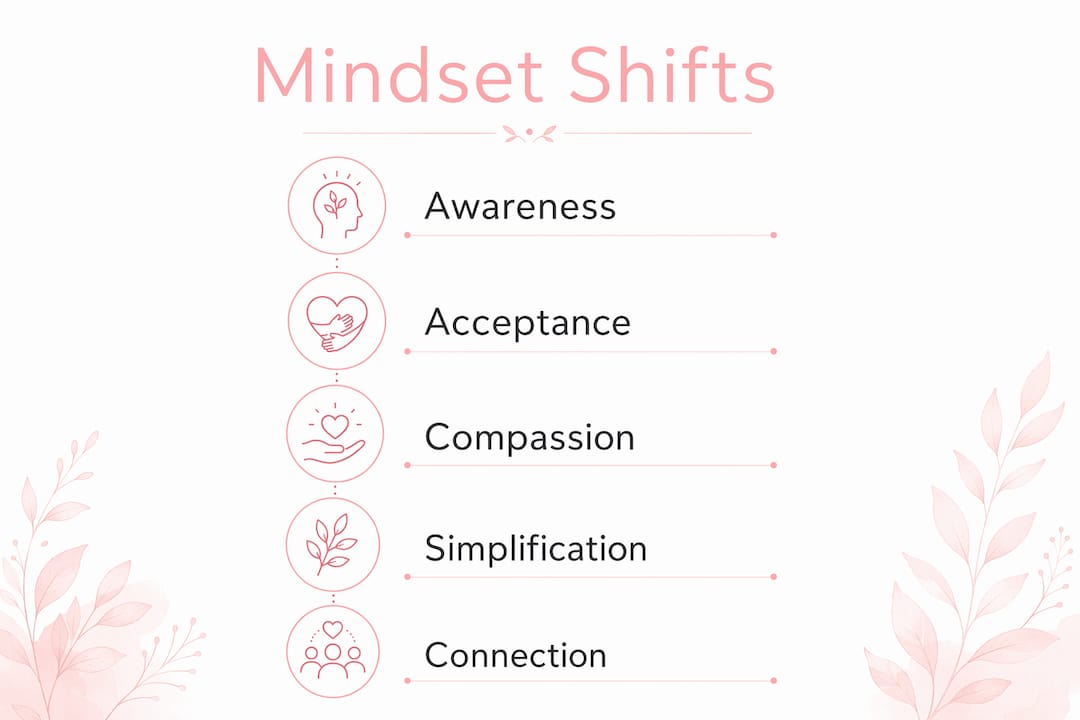
Metacognition is the skill that makes this possible. Thinking about your own thoughts, rather than being swept along by them, is a fundamental skill for reducing self-doubt. Emotional labeling, naming what you feel rather than reacting to it, is the entry point. When you notice “I feel shame about my skin today,” you create distance between the feeling and your identity.
One practical framework worth adopting is the care-less list. Write two columns: what you want to care less about (other people’s opinions of your appearance, social media metrics, whether your skin looks perfect today) and what you want to care more about (how your body feels, your creative expression, your relationships). Externalizing these internal struggles through writing aids boundary setting and clarifies your actual priorities.
Here is a four-step mindset preparation sequence:
- Name your fears. Write down the specific appearance-based judgments you fear most. Vague anxiety is harder to work with than named fears.
- Identify your values. List five qualities you want to embody that have nothing to do with appearance. These become your replacement metrics.
- Practice second-person self-talk. Addressing yourself as “you” rather than “I” creates psychological distance and reduces emotional reactivity. Instead of “I look terrible today,” try “You’re having a hard skin day. That’s okay.”
- Set one media boundary. Unfollow one account this week that consistently triggers comparison. Replace it with one that reflects real, unfiltered beauty.
Pro Tip: Before starting any self-acceptance practice, spend three minutes writing what you genuinely like about yourself, not your appearance. Cognitive research shows that positive self-referential writing activates reward pathways and primes the brain for compassionate self-perception.
Step-by-step practices for real beauty authenticity in daily life
Building self-love through consistent actions rather than sudden insight is the clinical consensus. Micro-decisions, boundary setting, gentle self-talk, and values-aligned choices gradually reshape self-worth over weeks and months. Here is how to structure that process.
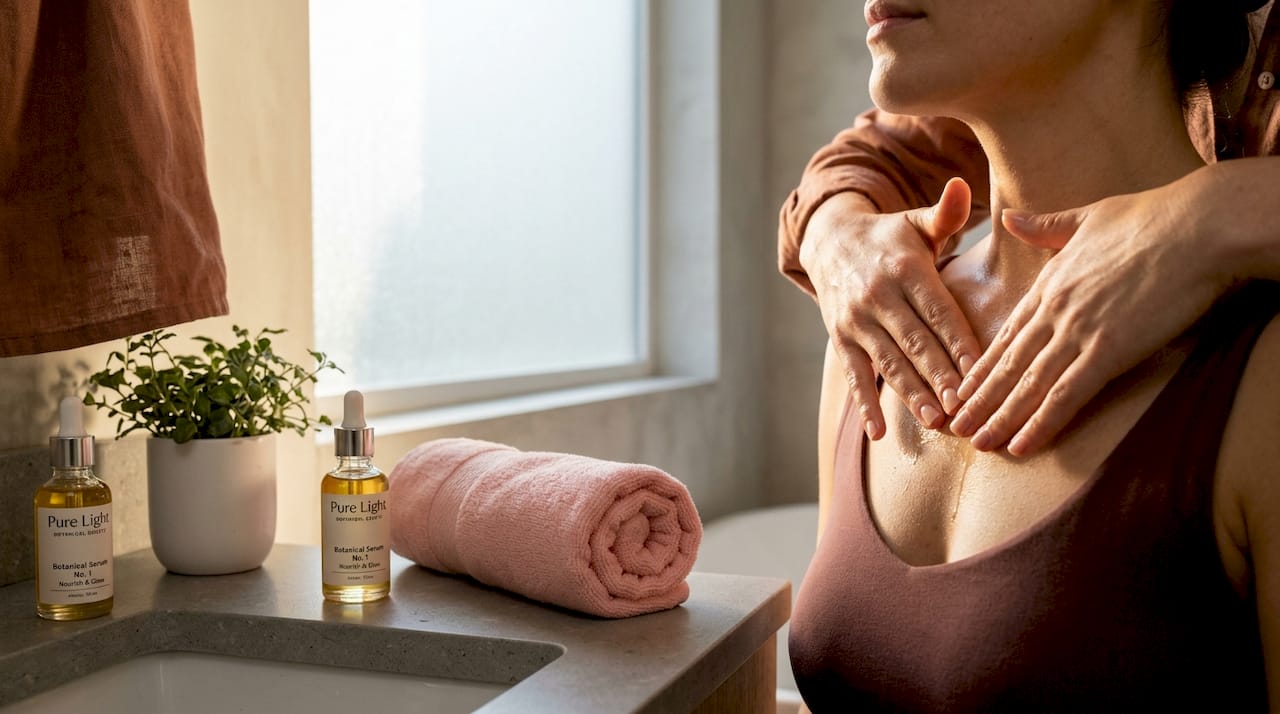
A 10-day reconnection practice
A structured 10-day practice focused on self-compassion and self-connection is one of the most evidence-supported ways to reduce appearance-based monitoring. Each day targets a different dimension: physical awareness, emotional honesty, creative expression, and social connection. The goal is not transformation in 10 days. The goal is building a habit of checking in with yourself beyond the mirror.
Simplify your beauty routine with intention
Simplifying your routine does not mean doing less. It means doing what genuinely serves your skin and your mood, rather than what you feel obligated to do. Purelightbotanicalbeauty’s approach, blending botanical science with clean formulas, reflects this principle. Products like the Nourishing Lipstick are designed to support skin health while you wear them, so the ritual itself becomes an act of care rather than correction.
Pro Tip: Swap one conventional product for a clean botanical alternative this month. Notice whether the ritual feels different when the product is actively nourishing your skin rather than just covering it.
Choose your beauty role models deliberately
The comparison standard you hold yourself to is largely constructed by the media you consume. Women who reject unrealistic youth ideals and share unfiltered images report higher confidence and reduced appearance anxiety. Seek out those voices. Follow the self-awareness in beauty practices that ground you in your own experience rather than someone else’s highlight reel.
Authentic beauty practices: a quick comparison
| Practice | What it builds | Time investment |
|---|---|---|
| Daily affirmations | Positive self-referential thinking | 3 to 5 minutes |
| Unfiltered selfies | Comfort with natural appearance | 2 minutes |
| Media audit | Reduced comparison triggers | 15 minutes weekly |
| Care-less list journaling | Boundary clarity and value alignment | 10 minutes weekly |
| Botanical self-care ritual | Skin health and mindful presence | 5 to 10 minutes daily |
Use self-love affirmations as a daily anchor, not a performance. The goal is repetition over time, not emotional intensity in the moment.
Common challenges when embracing your natural beauty
The path to authentic beauty is not linear. Knowing what obstacles to expect makes them easier to move through rather than around.
- Internalized shame resurfaces. Shame about specific features, skin conditions, or body parts does not disappear because you decide to accept yourself. Clinical self-love requires compassion for wounded parts and the ability to grieve what was missed, including years of harsh self-judgment. This is slower, deeper work than affirmations alone.
- Social pressure is real and persistent. Comments from family, partners, or colleagues about your appearance can undo weeks of internal progress in minutes. Prepare specific responses in advance. “I’m working on accepting my natural appearance” is a complete sentence.
- Comparison spikes during transitions. Major life changes, new jobs, relationships, aging, and health shifts often trigger appearance anxiety. These moments are not failures. They are signals that your self-worth metrics need recalibrating.
- Progress is not always visible. Authentic aging and authentic beauty are both about making personal choices free from societal pressure, not about reaching a specific aesthetic. Some weeks, the win is simply not criticizing yourself in the mirror.
“True self-love requires the courage to feel your own pain without shame or quick self-correction, treating it as a relational skill rather than a project.” — Clinical perspective on self-love
When setbacks feel persistent rather than temporary, professional support is worth considering. Therapists trained in Acceptance and Commitment Therapy (ACT) or Internal Family Systems (IFS) specialize in exactly this kind of inner work. Coaching focused on beauty and mental health habits can also provide structured accountability.
Key takeaways
Authentic beauty is built through self-compassion, value alignment, and consistent small actions, not through appearance-based confidence or social validation.
| Point | Details |
|---|---|
| Define authentic beauty clearly | It is the alignment of inner self-acceptance with outer expression, not the rejection of beauty practices. |
| Self-compassion is a skill | Research confirms it reduces stress and builds emotional resilience when practiced consistently. |
| Mindset preparation matters | Name your fears, identify your values, and audit your media before starting any self-acceptance practice. |
| Small daily rituals build self-worth | Micro-decisions like gentle self-talk, boundary setting, and intentional beauty rituals reshape self-perception over time. |
| Setbacks are part of the process | Internalized shame and social pressure are predictable obstacles, not signs of failure. |
What I’ve learned about authentic beauty that most articles won’t tell you
I spent years thinking authentic beauty was about learning to love what I saw in the mirror. It is not. The mirror is almost irrelevant. What actually shifts is your relationship with the internal voice that narrates what you see.
The most underrated tool I have found is body neutrality. Not body love, not body positivity. Neutrality. On the days when my skin is inflamed or I am exhausted and it shows, I do not need to feel beautiful. I need to feel okay. Body neutrality gives me that. It says: your worth is not contingent on how you look today. That is a quieter message than most beauty content offers, and it is far more durable.
The other thing I would tell you is that the Emotional Maximalism beauty trend, which favors texture, imperfection, and emotional expression over curated perfection, is not just an aesthetic shift. It is a cultural signal that people are exhausted by the performance of flawlessness. You are not alone in that exhaustion.
What I have seen work, consistently, is the combination of honest self-reflection and a beauty ritual that genuinely nourishes. When the products you use are doing something good for your skin, the ritual stops feeling like maintenance and starts feeling like care. That distinction matters more than it sounds.
— Kaitlyn
How Purelightbotanicalbeauty supports your authentic beauty practice
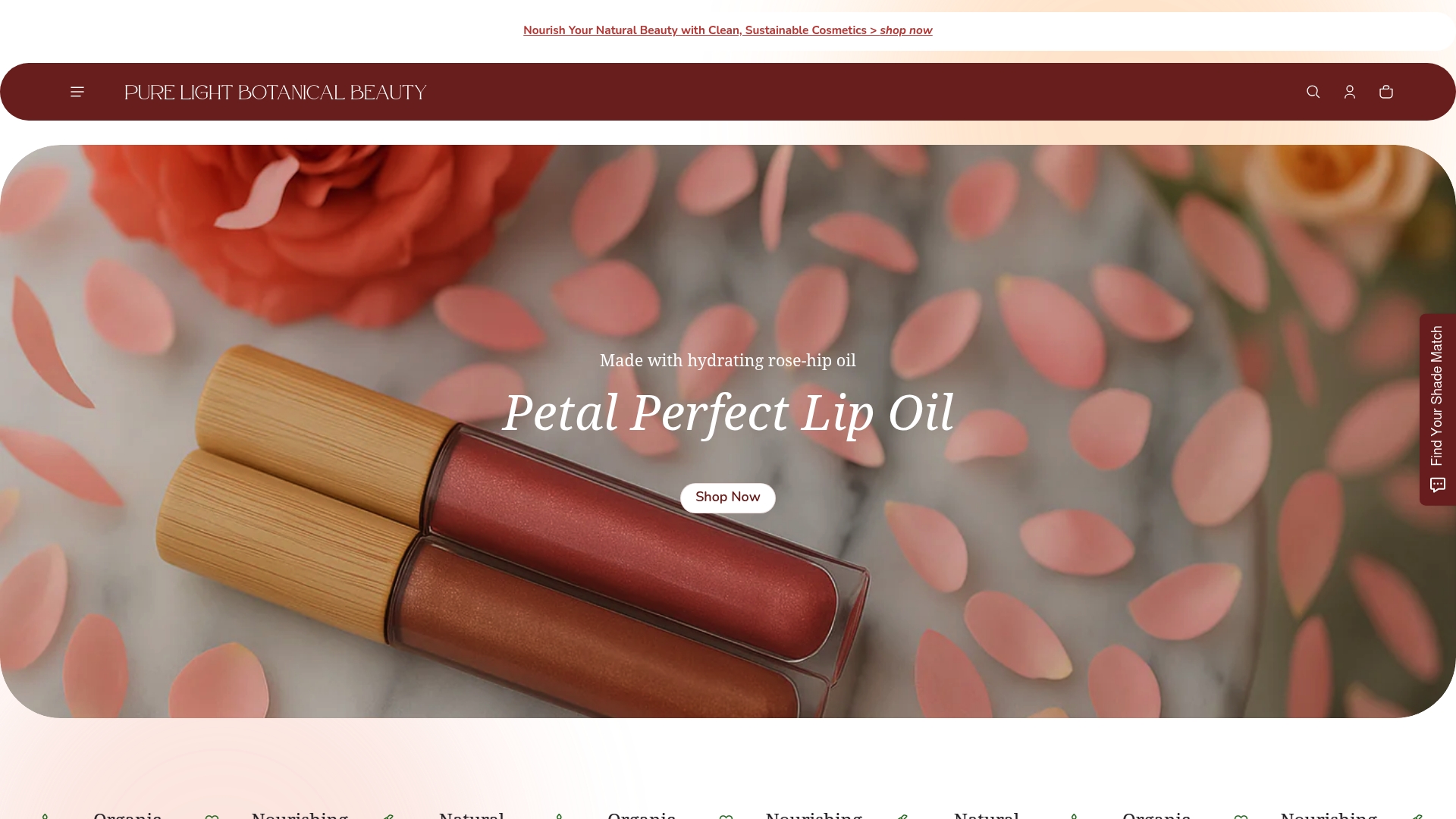
Purelightbotanicalbeauty was built on the belief that beauty and healing come from the same source. Every product in the line, from the Petal Perfect Lip Oil to the Botanical Crème Blush, is formulated with clean, plant-based ingredients that support your skin barrier while you wear them. For anyone navigating sensitive skin or eczema, that matters deeply. The ritual of applying something that actively nourishes changes the emotional quality of the experience. Explore the full natural beauty collection to find products that complement your self-care practice and feel as honest as the beauty you are working to embrace.
FAQ
What is authentic beauty?
Authentic beauty is the alignment between your inner self-acceptance and how you present yourself outwardly, without performance or pretense. It is defined by self-awareness, self-compassion, and living in accordance with your personal values rather than external beauty standards.
How do you start embracing natural beauty?
Start by auditing your media consumption, identifying your personal values, and simplifying your beauty routine to include only what genuinely serves your skin and mood. A structured 10-day reconnection practice focused on self-compassion is one evidence-supported starting point.
Is self-love the same as authentic beauty?
Self-love is the psychological foundation; authentic beauty is one expression of it. Clinical self-love combines self-compassion, emotional responsibility, and realistic self-esteem, and authentic beauty emerges naturally when those qualities are practiced consistently.
How do you handle comparison and social pressure?
Audit your social media feed to reduce harmful comparison triggers, and prepare specific verbal responses to unsolicited comments about your appearance. Comparison spikes during life transitions are normal and signal a need to recalibrate your self-worth metrics, not a failure of your practice.
When should you seek professional support?
Seek support from a therapist trained in ACT or IFS when internalized shame feels persistent rather than situational, or when appearance-based anxiety significantly affects your daily functioning. These are clinical issues, not personal weaknesses, and they respond well to structured therapeutic work.
Recommended
- Identity in Beauty: Embracing Authentic Self-Care – Pure Light Botanical Beauty
- Self-Love Beauty Affirmations for Real Confidence – Pure Light Botanical Beauty
- Beauty authenticity: healing, confidence & clean rituals – Pure Light Botanical Beauty
- Why Beauty Is Self-Love: Holistic Healing for Sensitive Skin – Pure Light Botanical Beauty