

TL;DR:
- Self-love beauty affirmations focus on kindness and self-worth, transforming how individuals relate to themselves beneath surface appearances. Psychological research confirms that consistent daily practice of brief, compassionate statements reduces stress, builds resilience, and improves self-image. To succeed, affirmations must be believable, personalized, and incorporated into existing routines, echoing a gentle process of self-acceptance rather than superficial validation.
Most people assume self-love beauty affirmations are just feel-good phrases you whisper at your reflection. Something like “You look great today” before rushing out the door. But that framing sells them short in a significant way. True self-love beauty affirmations work below the surface, reshaping how you relate to yourself on an emotional level, not just how you judge your appearance. Backed by recent psychological research, these simple daily practices can reduce stress, build resilience, and strengthen your sense of self-worth. This article breaks down exactly how they work and how to make them stick.
Table of Contents
- Key takeaways
- What self-love beauty affirmations actually are
- The real benefits, backed by research
- Why some affirmations backfire and how to fix it
- Building a daily affirmations practice that actually lasts
- My take on affirmations as resilience tools
- Let your beauty ritual become a self-love practice
- FAQ
Key takeaways
| Point | Details |
|---|---|
| Affirmations go beyond appearance | The most effective ones anchor in self-worth and kindness, not how you look. |
| Science backs the practice | Research shows self-compassion affirmations reduce stress and improve emotional resilience measurably. |
| Resistance is normal | If a phrase feels fake, reframe it toward kindness rather than forcing absolute claims. |
| Routine placement matters | Pairing affirmations with existing cues like mirrors or morning wake-up makes them stick. |
| Flexibility keeps them fresh | Switching phrases when motivation dips prevents the practice from feeling like a chore. |
What self-love beauty affirmations actually are
You have probably seen lists of beauty affirmations that read like a highlight reel: “I am radiant,” “I glow with confidence,” “I am effortlessly beautiful.” These sound nice, but they focus almost entirely on evaluating your appearance, which creates a fragile foundation. The moment you have a bad skin day or feel tired, those statements ring hollow.
Self-love beauty affirmations, at their core, are short positive statements designed to reduce negative self-talk and build genuine self-acceptance. The meaningful difference is that the best ones are not about looking beautiful. They are about being kind to yourself and recognizing your worth as something separate from your reflection.
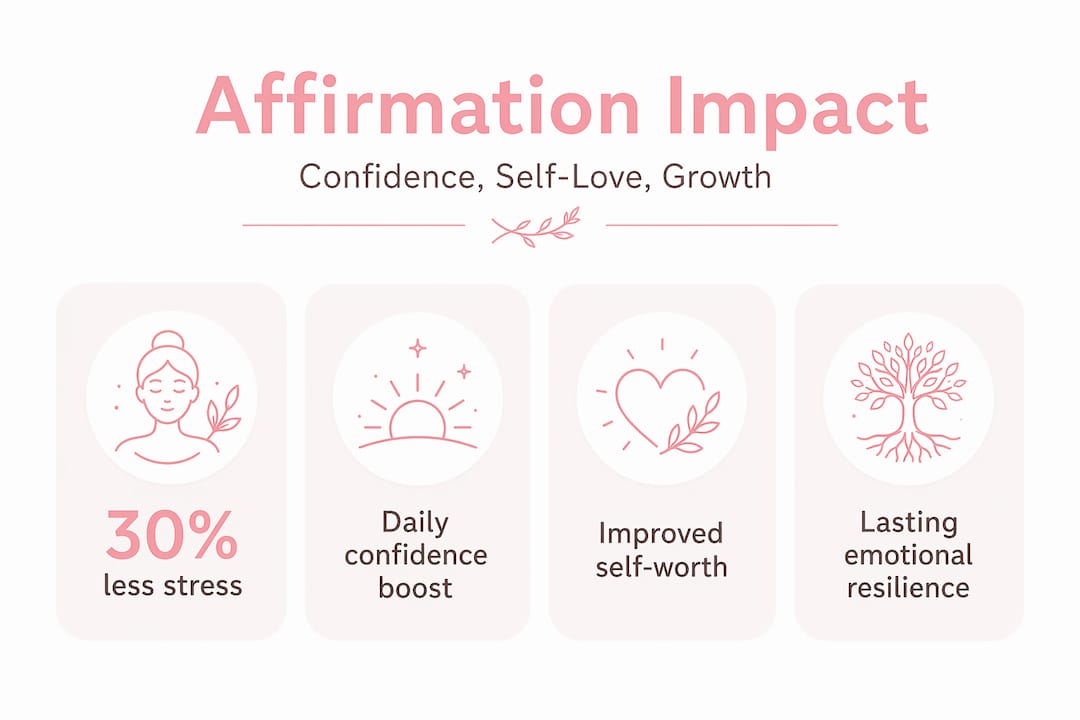
Psychologically, affirmations work by interrupting automatic negative thought patterns. When you repeat a statement consistently, you begin replacing the reflex of self-criticism with something more compassionate. Think of it as retraining a habit, because that is exactly what it is.
The research reinforces this. Studies on self-compassion practices show they operate through two key mechanisms:
- Self-compassion: Treating yourself with the same warmth you would offer a good friend, especially during moments of perceived failure or physical insecurity.
- Resilience: Building an emotional buffer that helps you recover from difficult feelings without spiraling into shame or self-criticism.
Together, these two qualities form the psychological foundation that makes affirmations more than a motivational poster.
“Affirmations work best not as beauty evaluations but as acts of self-kindness. They are less ‘I look perfect’ and more ‘I deserve care and compassion.’”
This shift in framing is where the real work happens. And the good news is that it does not take hours of meditation or years of therapy to begin. A few intentional minutes each day can create real change.
The real benefits, backed by research
The skepticism around affirmations often comes from treating them as wishful thinking. But the evidence tells a different story.
| Benefit | What research shows |
|---|---|
| Reduced stress | A 30-day mindfulness program found self-compassion reduced stress with effect sizes explaining 18 to 32% of variance. |
| Stronger resilience | A clinical trial found self-compassion training significantly increased resilience with lasting effects at p < 0.001. |
| Lower negative affect | Research with 494 adults showed self-compassion mediates the relationship between resilience and emotional distress. |
| Improved self-image | Daily beauty affirmations practiced for 2 to 5 minutes improved self-confidence and self-image noticeably over time. |
What makes these findings stand out is the concept of mediation. Self-compassion does not just make you feel better directly. It acts as a buffer between life’s difficulties and how deeply they affect you. Affirmations, when rooted in self-kindness rather than appearance praise, actively build that buffer.
The practical impact extends beyond emotional well-being too. When you carry more confidence in who you are rather than how you look, it changes how you show up in conversations, relationships, and decisions. You stop seeking external validation to feel okay. That is a profound shift for something that takes less time than a cup of coffee.
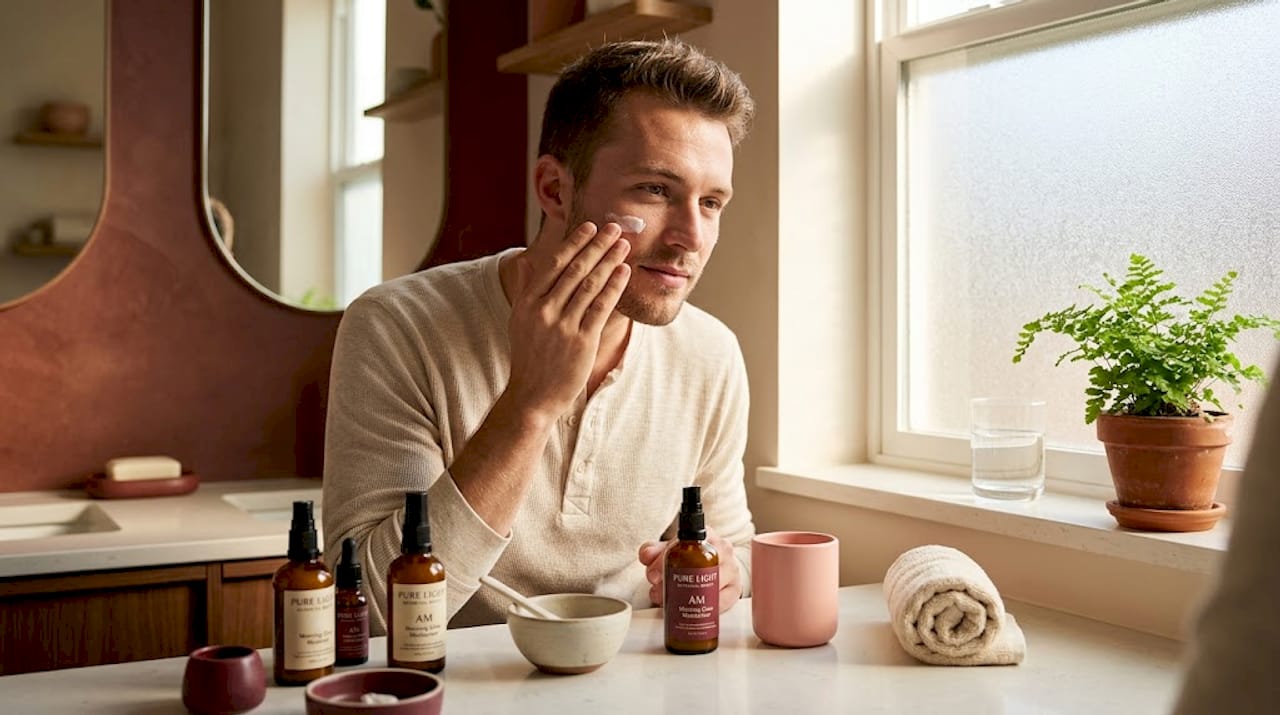
Pro Tip: Pair your affirmations with a physical sensation, such as placing one hand on your heart while you speak them. This grounds the words in your body and signals safety to your nervous system, deepening the emotional effect.
Why some affirmations backfire and how to fix it
Not every affirmation lands. You might try saying “I am beautiful” and immediately feel a flicker of disbelief. That internal pushback is called emotional resistance, and it is one of the most common reasons people give up on the practice entirely.
Here is what is actually happening. When a statement feels too far from your current belief, your brain flags it as false. The gap between where you are and where the affirmation claims you are creates friction, not comfort. Forcing absolute claims like “I am perfectly beautiful” can sometimes make negative self-talk louder, not quieter.
The fix is simpler than you might expect. Shifting from absolute claims to compassionate, relational statements closes that gap without demanding you believe something you are not ready to believe yet. Compare these two phrases:
- “I am perfectly beautiful.” (Absolute, high resistance potential)
- “I can be kind to myself today.” (Relational, low resistance, immediately believable)
The second option does not require you to feel beautiful. It only asks you to choose kindness. From that ground, real growth becomes possible.
A few other pitfalls to watch for:
- Appearance-only framing: Affirmations that only evaluate looks, such as “My body is perfect,” can quietly encourage flaw-checking. Anchor affirmations in self-worth and personal growth instead. This protects your psychology and builds something more durable than temporary confidence boosts.
- Monotony: Repeating the same phrase until it loses meaning is common. Experts suggest switching affirmation phrases when energy diminishes to maintain engagement and motivation.
- Skipping context: Saying affirmations in a rushed, distracted state reduces their effectiveness. A quiet, present moment, even 90 seconds, outperforms five distracted minutes every time.
Pro Tip: When you feel strong resistance to a phrase, that is data, not failure. It tells you exactly where your inner critic is loudest. Use it to rewrite the affirmation more gently rather than abandoning the practice.
Building a daily affirmations practice that actually lasts
The most effective daily beauty affirmations list is not the longest one. It is the one you actually use. Consistency beats comprehensiveness every time. Here is how to build a practice that becomes second nature.
Choose your anchor moments
Building affirmations into existing habits dramatically increases follow-through. Cue-based routines align with how the brain forms habits, making the practice automatic over time. Good anchor moments include:
- Morning wake-up: The brain is especially receptive right after waking. Affirmations said upon waking exploit brain malleability for effective mindset shifts.
- Mirror moments: Standing at the bathroom mirror while brushing your teeth or washing your face creates a natural pause. This is one of the most powerful spots for mirror affirmations because your reflection becomes a cue, not a critic.
- Skincare or makeup ritual: Applying products with intention while repeating affirmations turns a daily routine into a self-care ceremony. This is where beauty and well-being genuinely meet.
- Before sleep: Ending the day with a self-compassion statement helps the nervous system settle. It also counters the tendency to mentally replay the day’s perceived failures.
Pick formats that reduce friction
Affirmations displayed in visible formats increase consistency significantly. Some practical options:
- Sticky notes on your mirror, laptop, or coffee maker
- A phone lock screen with a single phrase
- A small journal where you write three affirmations each morning
- An affirmation jar where you draw a folded paper each day for variety
- A voice memo you record in your own voice and replay during your commute
A starter daily beauty affirmations list
When choosing your affirmations, focus on self-worth and inner beauty rather than appearance metrics. Here are phrases rooted in self-acceptance and empowerment through self-love:
- “I am worthy of care and kindness, starting with my own.”
- “My worth is not determined by how I look today.”
- “I treat my body as something deserving of gentleness.”
- “I am growing into someone I genuinely respect.”
- “I choose to see myself with compassion, not criticism.”
These daily self-love messages work because they are both believable and expandable. You can believe them on a hard day, and on a good day, they feel deeply affirming. That range is what makes them sustainable.
My take on affirmations as resilience tools
I have been writing about self-love, wellness, and beauty for a long time. And the topic I see most misunderstood is affirmations. Not because people are doing them wrong, but because the framing they start with is usually off.
When I first encountered beauty affirmations for confidence, I approached them like a performance. Stand at the mirror, say the words, move on. What changed for me was recognizing that the real point is not the phrase. It is the act of turning toward yourself with kindness, even for a moment. Especially when it feels difficult.
I have noticed that people who stick with affirmation practice long-term are not the ones who found perfect phrases. They are the ones who stayed flexible. They dropped statements that stopped resonating and picked up new ones. They treated the practice the way you tend a garden: with attention, not rigidity.
The uncomfortable truth I have learned is that resistance to an affirmation is more useful than the affirmation itself. That internal “I don’t believe this” is pointing directly at the self-compassion work that needs doing. Once I started treating friction as useful information rather than proof that affirmations “don’t work,” everything shifted.
Affirmations for personal growth are not about becoming someone new. They are about building enough inner softness to let yourself be who you already are without constant self-correction. That, to me, is what self-awareness in beauty truly looks like. Not a fixed image, but an ongoing conversation with yourself rooted in respect.
— Kaitlyn
Let your beauty ritual become a self-love practice
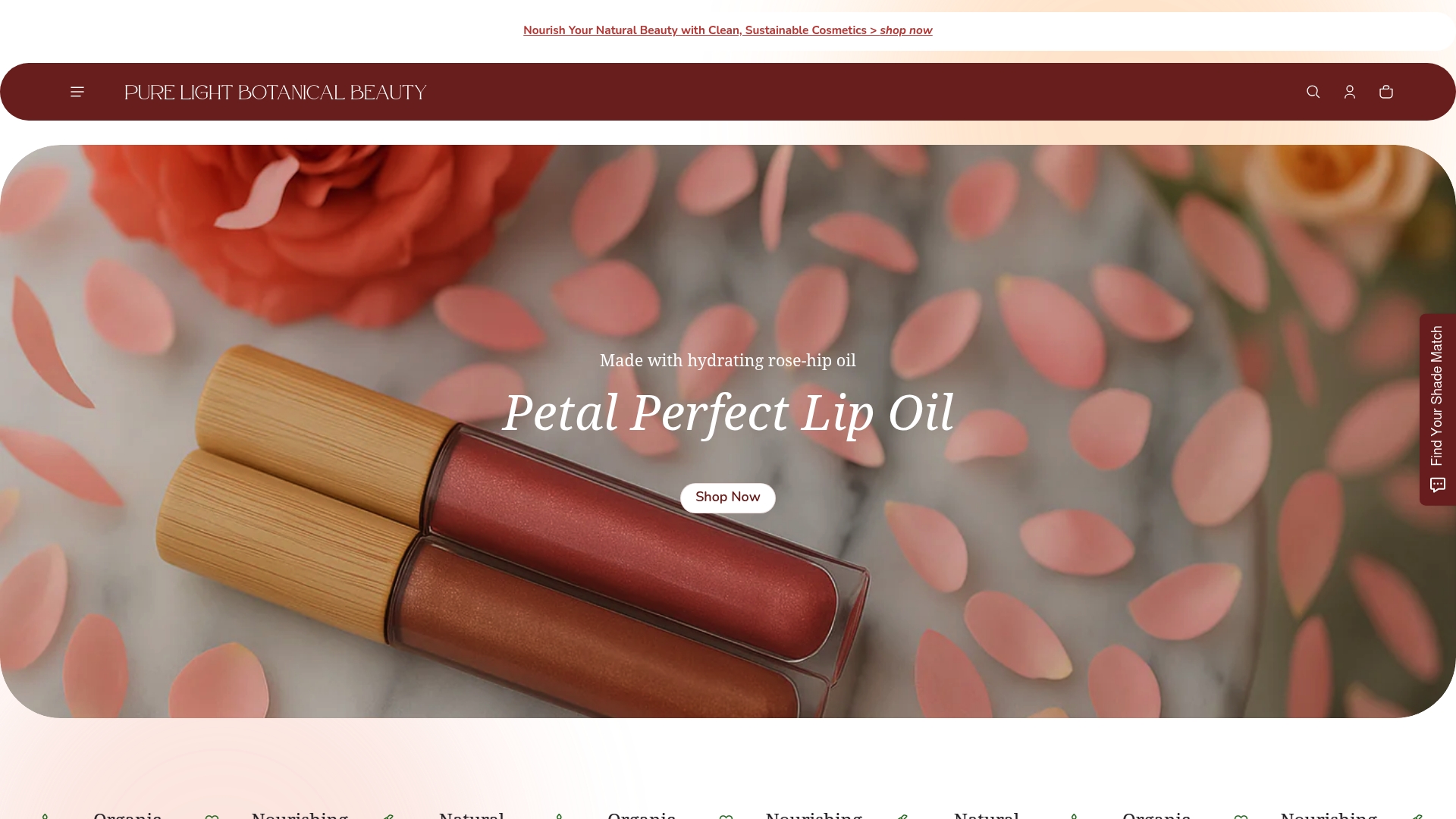
At Purelightbotanicalbeauty, every product is designed with this truth at its center: beauty and healing come from the same place. When you smooth on the Botanical Crème Blush or glide on Petal Perfect Lip Oil, you are not just adding color. You are participating in a ritual that says, “I am worth caring for.” That intention, paired with your affirmation practice, creates something genuinely different from a conventional makeup routine.
The full collection at Purelightbotanicalbeauty is built around plant-based, skin-nourishing formulas that feel as good as they look. Whether you have sensitive skin, eczema-prone skin, or simply want products that align with your self-care values, each offering is crafted to support your skin and your spirit. Explore the collection and let your morning ritual become the most grounding part of your day.
FAQ
What are self-love beauty affirmations?
Self-love beauty affirmations are short, positive statements that build self-acceptance and reduce negative self-talk. They work best when focused on self-worth and inner kindness rather than appearance alone.
How long does it take for affirmations to work?
Research shows that consistent daily practice of just 2 to 5 minutes can produce noticeable improvements in self-image and confidence over time. Sustainable results build gradually, not overnight.
What if affirmations feel fake or forced?
Emotional resistance is common and normal. Try shifting from absolute statements like “I am beautiful” to relational ones like “I can be kind to myself today.” This reduces the gap between belief and statement.
When is the best time to practice beauty affirmations?
Morning is particularly effective because the brain is especially receptive right after waking. Mirror moments during skincare routines and bedtime reflections are also strong options for building a lasting habit.
Do affirmations have real psychological benefits?
Yes. Studies show self-compassion practices reduce perceived stress and improve resilience, with self-compassion identified as a key mediator between emotional difficulty and well-being. Affirmations rooted in kindness activate these same psychological mechanisms.
Recommended
- Self-love in beauty: Build confidence with natural rituals – Pure Light Botanical Beauty
- The Role of Self-Awareness in Beauty and Confidence – Pure Light Botanical Beauty
- Self-Expression in Beauty: Pathway to Healing and Confidence – Pure Light Botanical Beauty
- What Is Confidence in Beauty? Complete Guide – Pure Light Botanical Beauty