

TL;DR:
- Authentic beauty is about intentional self-expression reflecting inner identity and personal values.
- For sensitive skin, clean, plant-based makeup supports skin health and recreates joyful rituals.
- Cultural beauty practices emphasize healing, protection, and wellness beyond aesthetic standards.
Somewhere along the way, beauty culture decided that ‘authentic’ meant bare-faced, unadorned, and untouched. But that definition has never told the full story, especially for women with sensitive skin who know that what you put on your face matters deeply. Over 70% of American adults have sensitive skin, and for many, choosing makeup is not a vanity decision but a wellness one. Real beauty authenticity is about choosing products and rituals that reflect who you truly are, nurture your skin, and support your confidence from the inside out. This guide will help you understand what authenticity actually means, why sensitive skin changes the conversation, and how to build a clean ritual that heals as much as it expresses.
Table of Contents
- What true beauty authenticity means
- How sensitive skin transforms the authenticity conversation
- Cultural and wellness perspectives: Beauty rituals as healing
- Building your authentic clean beauty ritual
- Why true beauty authenticity starts with personal healing, not perfection
- Ready to create your authentic beauty ritual?
- Frequently asked questions
Key Takeaways
| Point | Details |
|---|---|
| Authenticity is personal | Beauty authenticity is about your own self-expression, not someone else’s rules. |
| Clean rituals support wellness | Plant-based, sensitive-skin-safe practices improve both your skin and emotional confidence. |
| Cultural roots matter | Drawing from diverse rituals and history enriches your authentic beauty journey. |
| Consistency builds confidence | Daily, mindful rituals can help regulate your mood, calm your skin, and nurture self-esteem. |
What true beauty authenticity means
For decades, the beauty world has been split into two camps. On one side: makeup as a mask, a performance, something you wear to hide your real face. On the other: makeup as creative expression, a bridge between who you are inside and how you show up in the world. Neither view is entirely wrong, but only one of them is freeing.
True beauty authenticity is not about whether you wear makeup or skip it. It is about why you make the choice you make. Authentic self-expression in beauty is fluid, not bare-faced, and it bridges inner identity with external presentation. That means your most authentic beauty moment might be a bold lip on a Tuesday morning, or it might be a simple tinted balm on a slow Sunday. Both are valid. Both are you.
“Authenticity in beauty is not a look. It is an intention. It is the quiet decision to show up as yourself, whatever that looks like today.”
This matters because the pressure to look ‘natural’ can be just as limiting as the pressure to look ‘done.’ When society tells you that real beauty means no product, it erases the joy, ritual, and self-knowledge that come with intentional makeup use. It also ignores the fact that for many women, especially those with self-expression in beauty as a core value, makeup is not performance. It is language.
Here is what authentic beauty expression actually looks like in practice:
- Choosing products because they reflect your values, not because they follow a trend
- Wearing color that feels energizing to you, not color that earns approval
- Adjusting your ritual based on your mood, your skin’s needs, and your day
- Letting your beauty practice evolve as you grow and change
- Feeling free to wear more on some days and less on others, without guilt
Authenticity is also deeply personal. It shifts with your season of life, your health, your culture, and your confidence. A woman managing an eczema flare-up is being just as authentic when she reaches for a soothing, pigmented balm as she is on a clear-skin day when she goes bare. The ritual itself, chosen with intention and care, is what makes it real.
How sensitive skin transforms the authenticity conversation
When your skin is reactive, the stakes around beauty products change completely. It is not just about color or finish anymore. It is about whether your skin will respond with redness, tightness, or a flare-up by the end of the day.
Over 70% of American adults report having sensitive skin, and for many women in that group, conventional makeup has been a source of frustration rather than joy. Fragrances, synthetic dyes, and harsh preservatives are common triggers. When a product causes irritation, it does not just affect your skin. It chips away at your confidence and makes the act of getting ready feel like a risk rather than a ritual.
This is where clean, plant-based beauty becomes more than a trend. Clean makeup for sensitive skin actively improves skin condition and reduces inflammation, making self-expression feel safe again. When your products are working with your skin instead of against it, you can actually enjoy the ritual. That enjoyment matters. It is part of what makes beauty authentic.
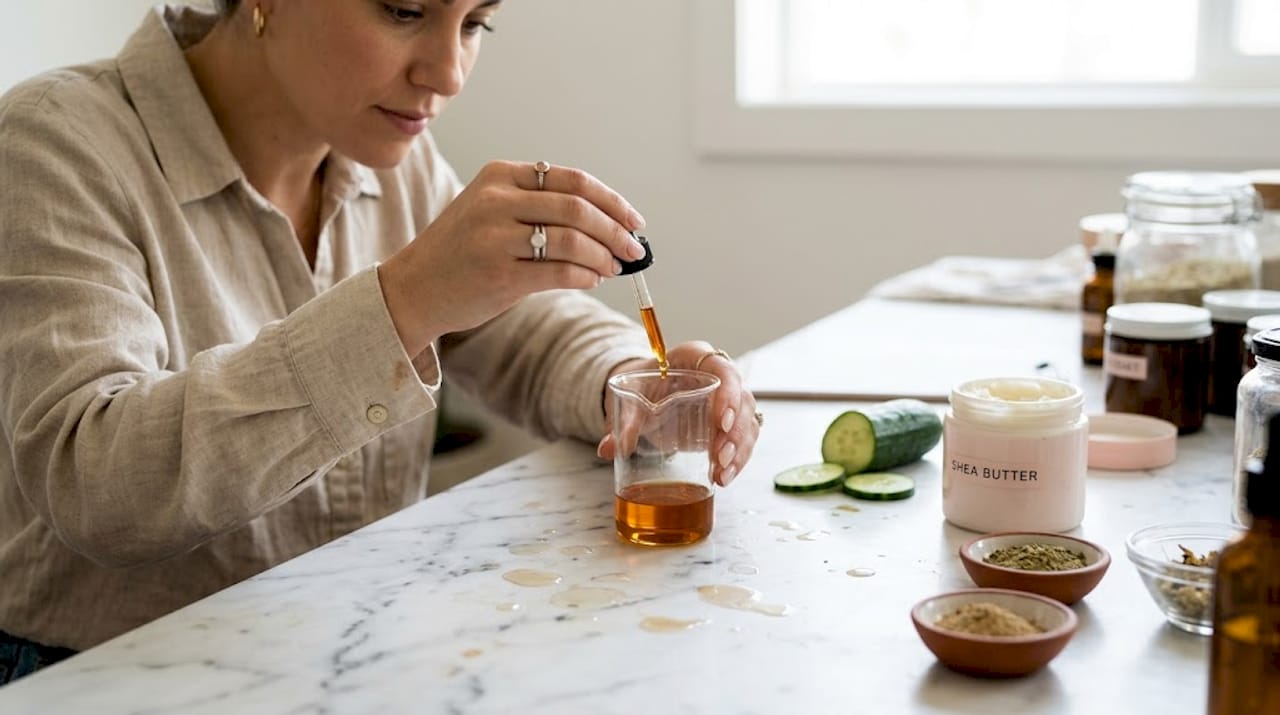
Pro Tip: Before switching your entire routine, patch-test new clean products on your inner wrist for 48 hours. Sensitive skin responds differently to even gentle botanicals, so this small step protects your skin and your confidence.
Building a sensitive-skin-safe clean ritual does not have to be overwhelming. Here is a simple process to get started:
- Audit your current products. Check ingredient lists for fragrance, alcohol, and synthetic dyes. These are the most common irritants for sensitive skin.
- Replace one product at a time. Start with what touches your skin longest, like foundation or lip color.
- Look for plant-based actives. Ingredients like calendula, rosehip, and chamomile soothe while they color.
- Track your skin’s response. Keep a simple note on your phone about how your skin feels after each new product.
- Give products time. Skin often needs two to four weeks to adjust to new formulas before you can judge the result fairly.
When you transition to clean makeup thoughtfully, you are not just changing your products. You are reclaiming your beauty ritual as something that genuinely serves you.
Cultural and wellness perspectives: Beauty rituals as healing
Beauty rituals have never been just about aesthetics. Across cultures and centuries, they have been acts of protection, transformation, and spiritual grounding. Understanding this history reframes what it means to have an authentic practice.
Beauty rituals in BIPOC communities have long used plant-based elements for protection, transformation, and wellness, connecting the physical act of beautifying with something far deeper than appearance. Oiling hair with ancestral blends, applying turmeric to skin before ceremonies, using indigo for both adornment and healing: these are not trends. They are traditions rooted in wisdom that Western beauty culture is only beginning to recognize.
“When beauty is a ritual rather than a performance, it stops being about how others see you and starts being about how you see yourself.”
The danger comes when colonized beauty standards enter the picture. When women feel pressure to erase cultural markers, lighten their skin, or conform to a narrow ideal, beauty becomes a source of shame rather than strength. This is the opposite of authenticity. It is imposter syndrome dressed up as a beauty routine.
The wellness side of beauty rituals is equally powerful. True clean beauty, rooted in small-batch, transparent formulation, heals trauma and boosts wellness rather than simply performing health. This is a critical distinction. A brand can label a product ‘natural’ while still loading it with synthetic fillers. Real clean beauty is about full transparency, intentional sourcing, and a genuine commitment to skin health.
Here is a look at how different cultural approaches to beauty rituals prioritize healing:
| Cultural tradition | Key plant-based elements | Wellness focus |
|---|---|---|
| West African | Shea butter, black soap | Deep moisture, skin protection |
| South Asian | Turmeric, neem, rose water | Anti-inflammatory, brightening |
| Indigenous American | Cedar, sage, sweetgrass | Spiritual protection, grounding |
| East Asian | Green tea, goji, pearl | Antioxidant, anti-aging |
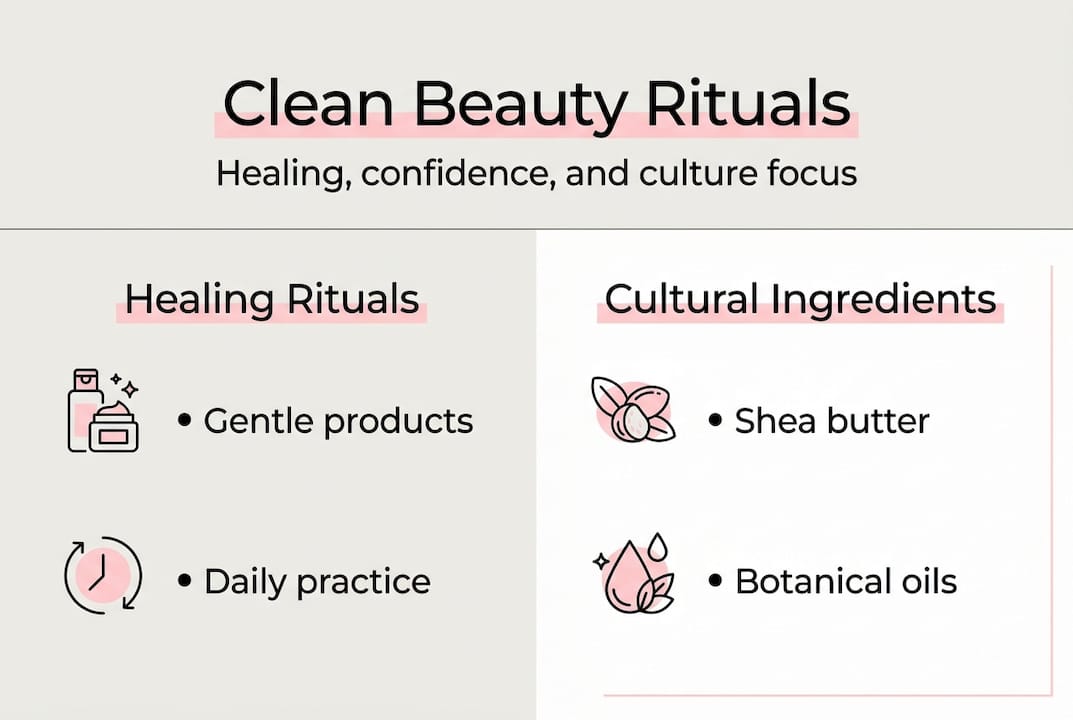
When you understand that beauty rituals carry this kind of depth, your own daily practice takes on new meaning. Choosing a plant-based lip oil or a botanical blush is not just a product choice. It is a small act of alignment with something ancient and healing. You can explore why beauty rituals matter and how they connect to your overall wellness in ways that go far beyond the mirror.
Building your authentic clean beauty ritual
Knowing why rituals matter is one thing. Building one that actually works for your sensitive skin, your values, and your life is another. Here is how to create a practice that is both grounding and genuinely good for your skin.
The foundation of any authentic ritual is intention. Before you reach for a product, ask: does this serve my skin, my mood, and my sense of self today? That question alone shifts beauty from automatic habit to conscious practice.
When choosing clean products, look for these markers of quality:
- Short, readable ingredient lists with plant-based actives you recognize
- No synthetic fragrance (listed as ‘fragrance’ or ‘parfum’ on labels)
- Transparent sourcing from brands that share where ingredients come from
- Formulas designed for sensitive skin, not just marketed to it
- Multi-use products that simplify your routine and reduce total ingredient exposure
Pro Tip: A clean beauty routine does not have to be long to be effective. Three to five intentional products used consistently will do more for your skin and your confidence than a ten-step routine filled with products you are unsure about.
Here is a comparison to help you evaluate what belongs in your ritual:
| Product feature | Conventional makeup | Clean botanical makeup |
|---|---|---|
| Fragrance | Synthetic, common irritant | None or natural essential oil |
| Pigment source | Synthetic dyes | Plant or mineral-based |
| Skin benefit | Color only | Color plus active skin support |
| Sensitive skin safety | Often low | Formulated for reactivity |
| Ingredient transparency | Rarely full | Standard practice |
Once you have your products, design your ritual around a moment, not just a task. Light a candle. Play music that matches your mood. Give yourself five uninterrupted minutes. Clean makeup applied with intention regulates your nervous system and builds self-esteem in ways that rushed routines simply cannot. You can also use a clean makeup checklist to make sure your ritual covers every essential without overwhelm.
The most common pitfall is perfectionism. Authentic rituals are not Instagram-worthy every morning. Some days your skin is flared, your time is short, and your energy is low. On those days, your ritual might be one swipe of a nourishing lip color and a breath of gratitude. That is enough. That is still healing.
Why true beauty authenticity starts with personal healing, not perfection
Here is the perspective that the beauty industry rarely offers: chasing perfection is the single biggest barrier to authentic self-expression. When you are constantly measuring your look against an ideal, you are not expressing yourself. You are auditioning.
For women with sensitive skin, this pressure is especially cruel. Flares happen. Redness shows up uninvited. Eczema does not care about your plans. And when the industry’s answer to that is ‘cover it better,’ it misses the point entirely. The real answer is to heal it, gently and consistently, through rituals that nourish rather than perform.
Rituals that heal trauma and boost wellness over performance are the ones that actually change how you feel about yourself long-term. Not the ones that make you look flawless for a few hours, but the ones that make you feel cared for, seen, and safe in your own skin.
Authenticity grows in that space. When you stop trying to perfect your face and start tending to it with kindness, something shifts. Your path to healing with self-expression becomes less about what you look like and more about how you feel. That is where real confidence lives. Not in a flawless finish, but in the quiet knowing that you showed up for yourself today.
Ready to create your authentic beauty ritual?
If this resonates with you, the next step is simpler than you might think. Start with one clean product that feels aligned with your skin and your values, and build from there.
At Pure Light Botanical Beauty, every formula is crafted with sensitive skin in mind, using plant-based ingredients that color, protect, and heal in the same breath. Whether you are just beginning your clean beauty journey or deepening a ritual you already love, you will find products that feel like they were made for you, because they were. Explore our clean beauty steps to build a ritual that honors your skin, your story, and your light.
Frequently asked questions
Is beauty authenticity about not wearing any makeup?
No, beauty authenticity is about expressing your true self, whether that means wearing makeup or not. It is your choice and intention that matter, not the amount of product you use. Authentic self-expression is fluid and personal, not defined by a bare face.
How does clean beauty support sensitive skin and authenticity?
Clean, plant-based makeup reduces irritation and inflammation, making self-expression feel safe and comfortable. When your products support your skin rather than stress it, clean makeup improves condition and lets you show up confidently.
What’s the link between beauty rituals and emotional wellness?
Intentional beauty rituals help regulate your nervous system and build self-esteem, with research showing a self-esteem correlation of β=0.412. The act of caring for yourself mindfully creates real emotional benefits beyond the mirror.
How can I spot true clean beauty versus greenwashing?
True clean beauty brands are small-batch, fully transparent about ingredients, and focused on healing. Greenwashing vs. true clean is a real problem, so look for brands that share sourcing details and avoid vague claims like ‘natural’ without specifics.
How do cultural traditions influence authentic beauty rituals?
Many cultures use plant-based rituals to protect, strengthen, and express identity across generations. BIPOC beauty traditions show that authenticity is not one-size-fits-all and that healing has always been part of how we adorn ourselves.
Recommended
- Self-Expression in Beauty: Pathway to Healing and Confidence – Pure Light Botanical Beauty
- Beauty as Healing: Transforming Skin and Soul – Pure Light Botanical Beauty
- Why Beauty Matters for Inner Growth and Healing – Pure Light Botanical Beauty
- Self-love in beauty: Build confidence with natural rituals – Pure Light Botanical Beauty