

TL;DR:
- Non-toxic makeup is a marketing term for cosmetics that exclude certain ingredients linked to health risks, but it is not officially regulated. Retailers like Credo Beauty create their own restricted ingredient lists, making product safety depend on transparency and third-party standards. The most reliable approach is to read ingredient lists, verify against trusted restrictions, and look for independent certifications.
Non-toxic makeup is a marketing term for cosmetics formulated to exclude specific ingredients linked to potential health risks, though no regulatory body in North America or the EU legally defines or certifies the label. Retailers like Credo Beauty and The Detox Market have created their own restricted ingredient lists to fill that gap. The result is a category shaped by brand standards and consumer demand rather than government regulation. For people with sensitive skin, eczema, or a commitment to holistic beauty practices, understanding what the label actually means is the first step toward making genuinely informed choices.
What is non-toxic makeup, and what ingredients does it avoid?
Non-toxic makeup, also called clean beauty in the industry, is defined by what it leaves out. Common excluded ingredients include parabens, phthalates, formaldehyde-releasing preservatives, synthetic fragrances, and certain sulfates. Each of these has been linked to health concerns ranging from skin irritation to endocrine disruption.

Parabens are preservatives used to extend shelf life. Researchers have flagged them as potential endocrine disruptors, meaning they may interfere with hormone function at certain exposure levels. Phthalates appear in synthetic fragrances and nail products and carry similar concerns. Formaldehyde releasers, found in some preservative blends, can trigger contact dermatitis in sensitive individuals.
Synthetic fragrances are one of the most common culprits behind skin reactions. A single “fragrance” listing on a label can represent dozens of undisclosed chemicals. Non-toxic formulas typically replace synthetic fragrance with plant-derived essential oils or fragrance-free formulations.
The table below shows common controversial ingredients alongside the alternatives non-toxic brands typically use.
| Ingredient to avoid | Health concern | Common safer substitute |
|---|---|---|
| Parabens | Potential endocrine disruption | Vitamin E, rosemary extract |
| Phthalates | Hormone interference | Plant-based plasticizers |
| Formaldehyde releasers | Skin sensitization, irritation | Phenoxyethanol, benzyl alcohol |
| Synthetic fragrance | Allergic reactions, irritation | Essential oils, fragrance-free |
| Sodium lauryl sulfate | Skin barrier disruption | Coco-glucoside, decyl glucoside |
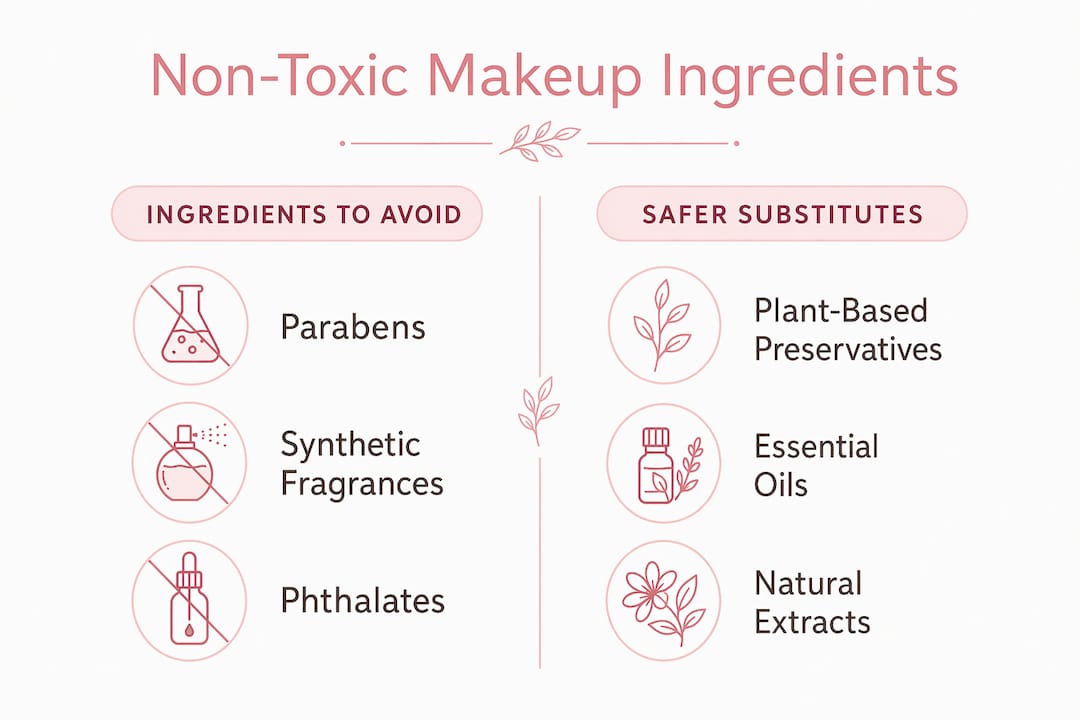
Brand standards vary widely. Credo Beauty’s restricted list bans over 2,700 ingredients. A smaller indie brand may only avoid five or six. Reading the full ingredient list, not just the front-of-pack claim, is the only reliable way to know what you are actually getting.
How does the “non-toxic” label relate to regulations and certifications?
Regulatory agencies in North America and the EU do not recognize “non-toxic” as a formal cosmetic classification. It is a self-policed marketing claim. No required testing, no universal certification, and no government body verifies it before a product hits shelves. That does not mean cosmetics are unregulated. The FDA in the United States and the European Commission both require that all cosmetics be safe for consumers before sale. The difference is that those safety requirements apply to every product, not just ones labeled “non-toxic.”
Because the term is unregulated, it can appear on almost any product. A brand can print “non-toxic” on packaging without removing a single controversial ingredient. This is why third-party retailer standards and ingredient transparency matter far more than a front-of-pack claim. Retailers like Credo Beauty publish their restricted lists publicly, giving shoppers a concrete benchmark.
Certifications worth looking for include Leaping Bunny for cruelty-free status and COSMOS for organic and natural formulations. These are verified by independent bodies, which makes them more meaningful than a self-applied label. The clean beauty certification landscape is still evolving, but third-party verification remains the gold standard.
Pro Tip: When evaluating a non-toxic claim, skip the front of the label and go straight to the INCI ingredient list on the back. Cross-reference it against Credo Beauty’s publicly available restricted ingredient list for a fast, reliable check.
What are the real benefits and limitations of non-toxic makeup?
The clearest benefit of non-toxic cosmetics is reduced exposure to ingredients that may irritate skin or disrupt hormones over time. Choosing non-toxic formulas can lower long-term contact with potential endocrine disruptors and reduce irritation, particularly for people with sensitive skin or conditions like eczema. Many non-toxic products also include antioxidant-rich botanicals, such as rosehip oil, sea buckthorn, and green tea extract, that actively support skin health rather than just sitting on the surface.
The benefits are real, but the limitations matter just as much.
- No allergy guarantee. The non-toxic label does not mean a product is allergy-free or universally safe. Plant-based and natural ingredients can still trigger reactions in sensitive individuals.
- Dose still matters. Safety depends on dosage, duration, and route of exposure. Even water and natural oils can be harmful at high doses. The “non-toxic” label does not change this principle.
- Variable standards. Because no universal definition exists, two products both labeled “non-toxic” can have very different ingredient profiles.
- Natural does not equal gentle. Essential oils, nut extracts, and botanical actives are common allergens. A product free of parabens can still cause a reaction if it contains lavender oil or almond extract.
Non-toxic makeup is especially beneficial in specific contexts: daily wear for people with reactive or eczema-prone skin, makeup used near the eyes or lips where absorption is higher, and products applied to children or during pregnancy when precautionary ingredient avoidance makes practical sense. For sensitive skin relief, the category offers genuinely useful options when you read past the label.
How to choose non-toxic makeup for sensitive skin and holistic routines
Choosing the right non-toxic product starts with the ingredient list, not the marketing copy. The steps below give you a practical framework for evaluating and transitioning to cleaner cosmetics.
- Read the full INCI list. Every cosmetic sold in the US must list ingredients in descending order of concentration. Start there, not with the brand’s claims.
- Cross-reference a restricted list. Use a publicly available standard like Credo Beauty’s restricted ingredient list or the Environmental Working Group’s Skin Deep database to flag concerning ingredients.
- Patch test every new product. Apply a small amount to your inner arm or behind your ear and wait 24–48 hours before full use. This applies even to products marketed as gentle or natural.
- Prioritize ingredient transparency. Brands that publish their full formulas and explain their ingredient choices are more trustworthy than those relying on vague “clean” claims. Ingredient transparency is a stronger safety signal than any label.
- Look for verified certifications. Leaping Bunny, COSMOS, and retailer-curated clean standards add a layer of accountability that self-applied labels cannot.
- Transition gradually. Switching to non-toxic makeup takes time. Replace products one category at a time, starting with items that stay on skin longest, like foundation or lip color, since those have the highest absorption potential.
- Monitor your skin’s response. Even after a careful transition, track how your skin reacts over two to four weeks. Some plant-based ingredients cause sensitization with repeated use.
Integrating non-toxic cosmetics into a holistic health routine means treating makeup as part of your overall wellness practice, not just a cosmetic choice. The products you apply daily accumulate over time. Choosing formulas that nourish rather than burden your skin is a meaningful, low-effort way to support your body’s health.
Pro Tip: Start your non-toxic transition with lip products. Lips absorb more than skin does, and the average person ingests a small amount of lip product daily. Swapping to a clean lip oil or nourishing lipstick is a high-impact, low-cost first step.
Key Takeaways
Non-toxic makeup is a self-policed marketing term, not a regulated category, making ingredient transparency and third-party standards the most reliable tools for evaluating product safety.
| Point | Details |
|---|---|
| No legal definition exists | “Non-toxic” is a marketing claim with no required testing or government certification in the US or EU. |
| Ingredients drive the distinction | Parabens, phthalates, synthetic fragrance, and formaldehyde releasers are the most commonly excluded ingredients. |
| Natural does not mean safe for all | Plant-based ingredients can still cause allergic reactions; patch testing is always necessary. |
| Transparency beats labels | Full INCI disclosure and adherence to retailer restricted lists are stronger safety indicators than front-of-pack claims. |
| Transition gradually | Replace products one category at a time and monitor skin response over several weeks for best results. |
Why I think “non-toxic” is the wrong question to ask
After years of watching the clean beauty space grow, I’ve come to believe that asking “is this makeup non-toxic?” is the least useful question a shopper can ask. The term is so loosely defined that it tells you almost nothing on its own. The better question is: “What is actually in this product, and how does my skin respond to it?”
The precautionary principle that drives the non-toxic movement is genuinely sound. Avoiding ingredients suspected of harm before science reaches a definitive verdict is a reasonable, risk-aware approach. I respect that instinct. But the marketing machine has co-opted it, and now “non-toxic” appears on products that would make a cosmetic chemist wince.
What I’ve found actually works is treating your skin as the final authority. Read the ingredient list. Patch test. Pay attention to how your skin feels after two weeks of consistent use. A product with a modest, transparent ingredient list from a brand that publishes its sourcing will serve you better than one with a bold “non-toxic” claim and a paragraph of fine print.
The brands doing this right are the ones that show their work. They list every ingredient, explain why it’s there, and stand behind their formulas with third-party verification. That kind of accountability is what the non-toxic label was always supposed to signal. Hold brands to that standard, and you’ll spend less time decoding marketing and more time actually enjoying your routine.
— Kaitlyn
Clean beauty that actually nourishes your skin
Purelightbotanicalbeauty was built on the belief that makeup and skin healing should come from the same place: nature. Every formula in the line, from the Petal Perfect Lip Oil to the Botanical Crème Blush and Nourishing Lipstick, is crafted with plant-based ingredients chosen for both performance and skin health. The brand publishes its ingredient philosophy openly and formulates specifically for sensitive and eczema-prone skin.
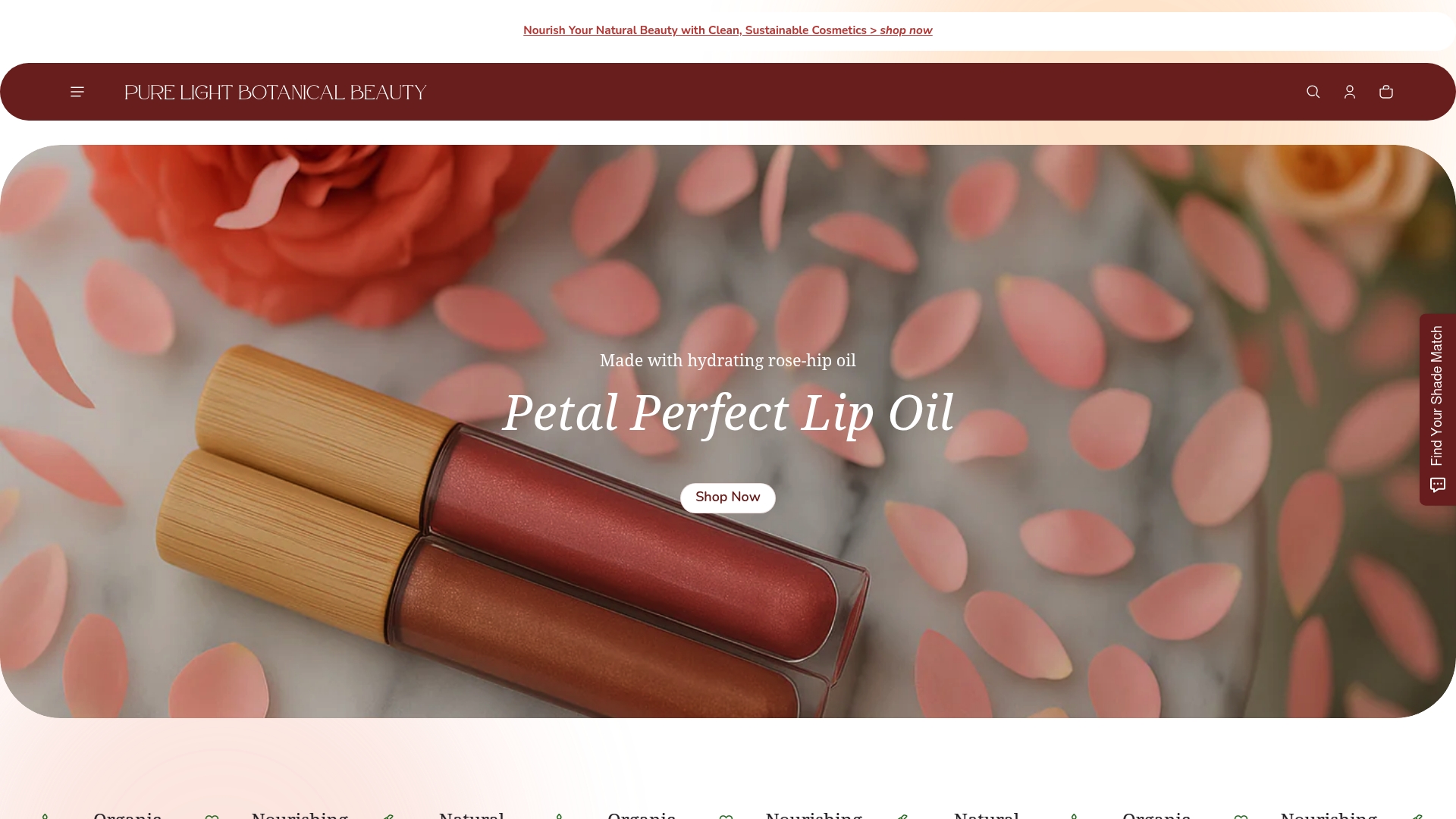
If you’ve been searching for non-toxic beauty products that go beyond the label and actually deliver on their promise, Purelightbotanicalbeauty is worth exploring. The full product range is designed for people who want their beauty routine to feel like self-care, not a compromise.
FAQ
What does non-toxic makeup actually mean?
Non-toxic makeup refers to cosmetics formulated to exclude specific ingredients linked to health concerns, such as parabens, phthalates, and synthetic fragrances. The term is a marketing claim with no legal definition or required certification in the US or EU.
Is all makeup non-toxic?
Not all makeup avoids the ingredients associated with non-toxic claims. Conventional cosmetics may contain parabens, synthetic fragrances, or formaldehyde releasers that non-toxic brands specifically exclude.
Can non-toxic makeup still cause skin reactions?
Yes. The non-toxic label does not guarantee a product is allergy-free. Plant-based and natural ingredients, including essential oils and botanical extracts, can still trigger reactions in sensitive individuals.
What are the best non-toxic makeup brands to look for?
Retailers like Credo Beauty and The Detox Market curate products against strict restricted ingredient lists, making them reliable starting points. Brands that publish full INCI ingredient lists and hold third-party certifications like Leaping Bunny offer the strongest safety accountability.
How do I know if a non-toxic claim is trustworthy?
Skip the front-of-pack claim and read the full ingredient list. Cross-reference it against a published restricted list, such as Credo Beauty’s, and look for independent certifications. Full ingredient disclosure is a more reliable indicator than any self-applied label.
Recommended
- Why Choose Natural Makeup: Complete Guide – Pure Light Botanical Beauty
- What Is Eczema-Safe Makeup? True Comfort For Skin – Pure Light Botanical Beauty
- Complete Guide to Non-Toxic Beauty Essentials – Pure Light Botanical Beauty
- Talc Free Makeup: Nurturing Sensitive, Beautiful Skin – Pure Light Botanical Beauty