

Finding makeup that feels comfortable on eczema-prone skin is often a daily struggle, especially when every new product promises to be gentle but leaves your skin red or irritated. Many women in North America and Europe quickly learn that marketing terms like ‘eczema-safe’ or ‘hypoallergenic’ are unregulated and can be misleading. With so many formulas containing hidden triggers, understanding what truly makes makeup safe empowers you to prioritize both your appearance and your skin’s health. Ingredient awareness—not just a marketing claim—makes all the difference for sensitive skin.
Table of Contents
- Eczema-Safe Makeup: Core Meaning And Myths
- How Eczema Impacts Makeup Choices
- Essential Ingredients And Formulas To Seek
- Botanical And Natural Alternatives For Healing
- Risks, Mistakes, And How To Apply Safely
Key Takeaways
| Point | Details |
|---|---|
| Eczema-Safe Makeup Definition | Eczema-safe makeup is formulated to minimize irritation for individuals with atopic dermatitis, but it is not a regulated term; ingredient choices matter more. |
| Common Myths Debunked | Many believe all makeup triggers flare-ups, but individual tolerance varies; hypoallergenic labels do not guarantee safety for eczema-prone skin. |
| Ingredient Focus | Look for hydrating ingredients like Glycerin, Ceramides, and Hyaluronic Acid that support barrier function while avoiding potential irritants like synthetic fragrances. |
| Application Techniques | Proper application is crucial; always moisturize beforehand and use gentle methods to minimize irritation while applying makeup. |
Eczema-Safe Makeup: Core Meaning And Myths
Eczema-safe makeup sounds straightforward, but the reality is more nuanced than marketing labels suggest. It refers to cosmetics specifically formulated to minimize irritation for people with atopic dermatitis or eczema-prone skin. The key distinction: it’s not a regulated term, so understanding what actually makes makeup safe requires looking beyond packaging claims.
Many people assume that all makeup damages eczema skin. That’s not accurate. Makeup itself is neutral; specific ingredient choices determine safety. Your broken skin barrier becomes hypersensitive to certain components, not all products universally.
What Truly Makes Makeup Eczema-Safe
Eczema-safe products share these core characteristics:
- Avoid common triggers like synthetic fragrances, essential oils, and certain preservatives that inflame sensitive skin
- Support barrier function with nourishing botanicals and minimal formula complexity
- Exclude high-allergen ingredients that frequently cause flare-ups in eczema sufferers
- Prioritize gentle formulation over performance tricks that require harsh chemicals
True eczema-safe makeup works with your skin barrier, not against it.
The “hypoallergenic” label creates confusion. This term lacks legal definition and doesn’t guarantee safety for eczema. A product labeled hypoallergenic might still contain fragrance or preservatives that trigger your individual flare-ups. Your skin’s response matters more than marketing claims.
Common Myths Worth Dispelling
Myth one: All makeup causes eczema flare-ups. Reality: Knowledge of ingredients and patch testing reveal which products your skin tolerates. Many people with eczema safely wear makeup when they choose thoughtfully.
Myth two: “Hypoallergenic” means safe for eczema. Reality: This unregulated label tells you nothing about individual sensitivity triggers. Two people with eczema react differently to the same product.
Myth three: Natural ingredients are always gentler. Reality: Botanical oils and essential oils, while natural, frequently trigger eczema flare-ups in sensitive individuals. Gentleness comes from formula design, not ingredient origin.
When exploring options, understanding how minimalism in makeup approaches sensitive skin can help you identify which products truly serve your skin health rather than complicate it.
Pro tip: Patch test new products on your inner arm or behind your ear for 48 hours before applying to your face—this single step reveals whether your individual skin tolerates an ingredient.
How Eczema Impacts Makeup Choices
Eczema changes everything about how you approach makeup. Your damaged skin barrier becomes hypersensitive, reacting to ingredients that wouldn’t bother unaffected skin. This vulnerability doesn’t mean you can’t wear makeup—it means you need to choose differently.
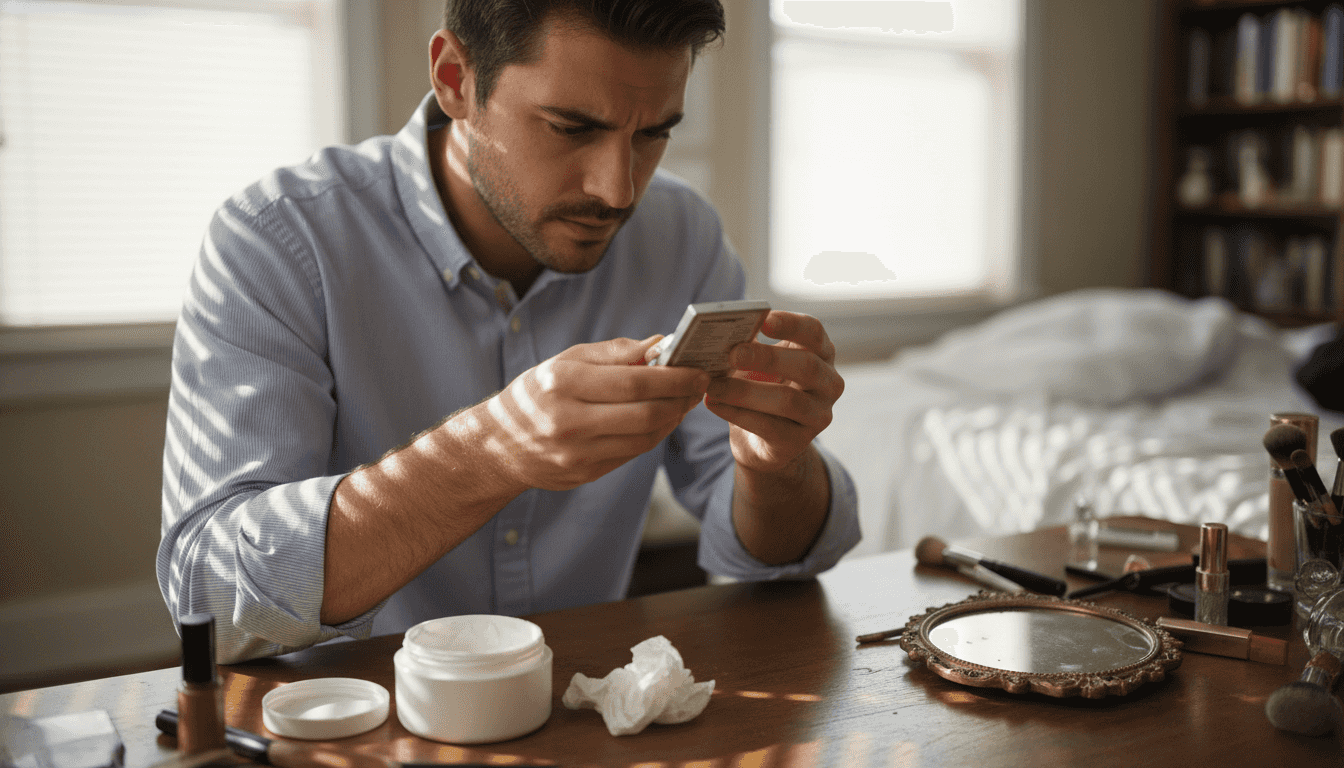
Your skin loses its natural protective function when eczema flares. The barrier that normally shields against irritants weakens, making even gentle products feel like sandpaper on your face. Flakiness, dryness, and inflammation create a texture that makeup clings to unevenly, sometimes emphasizing the very areas you’d prefer to camouflage.
The Real Impact on Product Selection
Eczema forces you to eliminate entire product categories that others never think twice about:
- Fragrance-heavy products trigger inflammation and burning sensations within minutes
- Alcohol-based primers and sprays strip remaining moisture from compromised skin
- Harsh preservatives like parabens and formaldehyde releasers cause delayed flare-ups
- Heavy foundations sit on flaky patches, making application frustrating
- Matte finishes emphasize dry areas and often contain mattifying agents that irritate
Eczema doesn’t eliminate makeup choices—it clarifies them. You need products designed for sensitive skin, not simply labeled as gentle.
During active flare-ups, dermatologists often recommend avoiding makeup entirely. Applying products over inflamed, broken skin can trap bacteria and worsen symptoms. If you must wear makeup during a flare, minimalism becomes non-negotiable.
Texture and Application Challenges
Eczema skin behaves unpredictably. One day your skin might tolerate foundation; the next, even lightweight products feel heavy. Uneven texture makes seamless application nearly impossible, and traditional makeup techniques often backfire.
Flaky patches catch product unevenly, creating patchy coverage no matter your application skill. You learn to prioritize hydration over coverage, adjusting your entire approach to how you apply color and shimmer products.
Building a skincare routine that addresses clean makeup practices alongside nourishing self-care helps stabilize your skin enough to wear makeup comfortably when you choose to.
Pro tip: On days when eczema feels manageable, prep skin with a hydrating botanical oil before makeup to create a smoother canvas and reduce product clinging to dry patches.
Essential Ingredients And Formulas To Seek
Not all ingredients are created equal when eczema is in the picture. Your safest choices actively support skin barrier function rather than just avoiding harm. Understanding what to look for transforms your makeup shopping from guesswork into informed decision-making.
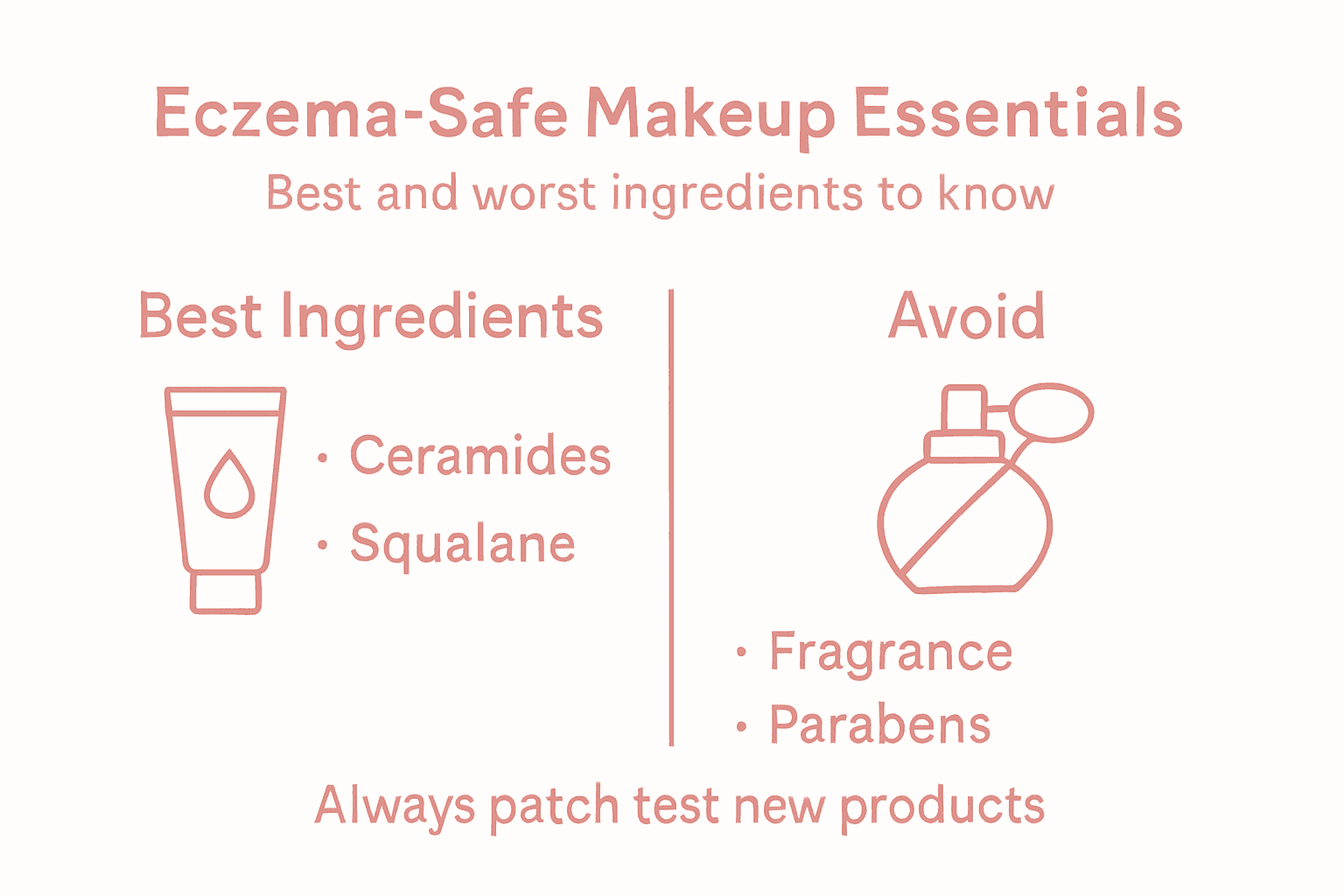
Hydrating ingredients form the foundation of eczema-safe makeup. These compounds draw moisture into your skin and help it stay there, counteracting the dryness that plagues eczema-prone complexions.
Ingredients That Heal Your Skin
Seek products containing these proven barrier-supporting ingredients:
- Glycerin pulls water into skin and holds it there, reducing tightness and flaking
- Hyaluronic acid acts like a moisture magnet, plumping skin and smoothing texture
- Ceramides rebuild your broken skin barrier by filling gaps between skin cells
- Niacinamide (vitamin B3) calms inflammation and strengthens barrier function simultaneously
- Shea butter and squalene provide rich hydration without greasy buildup
- Botanical extracts like chamomile and calendula soothe irritation naturally
The best eczema-safe makeup does double duty: it beautifies and it heals.
These ingredients aren’t just nice-to-haves. They actively repair the damage eczema causes, making your skin more resilient over time. When you wear makeup containing barrier-supporting ingredients, you’re not just covering skin—you’re nourishing it.
Formula Types Matter More Than You Think
Texture dramatically affects how your skin responds. Creams and mousse formulations preserve moisture, while powders can emphasize dryness and trigger irritation during flare-ups. Liquid foundations with hydrating bases work better than matte finishes that feel chalky on compromised skin.
Why? Powders can settle into flaky patches and absorb the little moisture your skin retains. Creamy formulas cling to hydrated skin more smoothly, creating seamless coverage without emphasizing texture.
Here’s how different makeup formulas impact eczema-prone skin:
| Formula Type | Hydration Provided | Irritation Risk | Best For |
|---|---|---|---|
| Cream/Mousse | High moisture retention | Low | Flaky, dry areas |
| Liquid (Hydrating) | Moderate hydration | Medium | Daily foundation |
| Powder | Minimal to none | High | Rare use only |
| Matte Finish | May dry skin further | High | Avoid if sensitive |
Ingredients to Avoid Completely
These common makeup staples trigger eczema flare-ups in most people:
- Synthetic fragrances and essential oils
- Parabens and formaldehyde releasers
- Alcohol denat and glycolic acid
- Salicylic acid and retinol
- Harsh silicones that trap bacteria
Understanding why botanical ingredients matter for sensitive skin helps you recognize which plant-based options truly support healing versus which ones sound natural but cause irritation.
Pro tip: Check ingredient lists for glycerin, ceramides, and niacinamide within the first five ingredients—their position reveals how concentrated they actually are in the formula.
Use this reference chart to quickly identify helpful versus harmful makeup ingredients for eczema:
| Ingredient Category | Safe Example | Harmful Example |
|---|---|---|
| Humectants | Glycerin, hyaluronic acid | Alcohol denat |
| Barrier Builders | Ceramides, squalene | Harsh silicones |
| Soothing Botanicals | Chamomile, calendula | Essential oils |
| Preservatives | Vitamin E, rosemary extract | Parabens, formaldehyde |
Botanical And Natural Alternatives For Healing
Nature offers powerful healing agents that work with your eczema skin rather than against it. Botanical ingredients provide gentleness without sacrificing effectiveness, making them ideal for makeup designed specifically for sensitive complexions.
Plant-based alternatives replace problematic conventional ingredients while actively supporting skin recovery. The shift from synthetic to natural formulations transforms makeup from a potential irritant into a healing ritual.
Botanical Ingredients That Soothe And Restore
These plant-derived components heal eczema skin while providing color and coverage:
- Chamomile and calendula extracts calm inflammation and reduce redness naturally
- Neem oil provides antimicrobial protection without the irritation of synthetic preservatives
- Plant-based oils like jojoba and rosehip mimic your skin’s natural lipids for seamless hydration
- Aloe vera soothes irritation and supports barrier repair through its healing compounds
- Green tea extract offers antioxidant protection and gentle soothing action
- Botanical ceramides from plant sources rebuild skin barrier function identically to synthetic versions
Botanical ingredients work because they align with your skin’s chemistry, not against it.
These ingredients aren’t simply “natural”—they’re scientifically proven to address eczema’s root causes. Chamomile reduces inflammation within hours. Neem oil fights bacteria without harsh preservatives. Plant-based ceramides restore barrier function just as effectively as lab-created versions.
Why Natural Preservatives Matter
Conventional preservatives like parabens trigger delayed flare-ups in many eczema sufferers. Natural alternatives provide the same protection without inflammation. Neem oil, rosemary extract, and plant-derived vitamin E prevent bacterial growth while remaining gentle on compromised skin.
The difference matters long-term. Products preserved with botanical ingredients may cost slightly more, but they won’t cause the cumulative irritation that builds with repeated exposure to synthetic preservatives.
Plant Oils: Hydration From Nature
Plant-derived emollients create a protective layer without the heaviness of conventional moisturizers. Squalene derived from plants, jojoba oil, and sunflower seed oil absorb into skin efficiently, mimicking the lipids your barrier naturally produces.
These oils work because they’re biocompatible with human skin. Your skin recognizes them as similar to its own protective compounds, integrating them seamlessly rather than treating them as foreign substances.
Exploring the benefits of botanical ingredients for sensitive skin reveals how plant science addresses eczema at a deeper level than conventional cosmetic chemistry alone.
Pro tip: Look for botanical ingredients listed within the first ten ingredients on product labels—their position indicates concentration levels strong enough to deliver actual healing benefits.
Risks, Mistakes, And How To Apply Safely
Good intentions don’t prevent eczema flare-ups. Even with eczema-safe products, application technique and timing matter enormously. One careless decision can undo weeks of skin healing.
The biggest risk? Applying makeup during active flare-ups. When your skin is inflamed and broken, adding any product—even gentle ones—traps bacteria and moisture in ways that worsen symptoms. This simple mistake causes more problems than the products themselves.
Common Application Mistakes
These errors sabotage your eczema skin even when using the right products:
- Applying makeup on active flare-ups prevents healing and deepens inflammation
- Skipping moisturizer beforehand leaves your barrier unprotected under makeup
- Using rubbing motions instead of patting irritates sensitive skin mechanically
- Applying with fingers or rough brushes causes micro-tears in compromised skin
- Layering heavy coverage traps sweat and bacteria throughout the day
- Sleeping in makeup allows irritants to work overnight on vulnerable skin
Your application technique determines whether makeup helps or harms your skin.
The physical action of applying makeup matters as much as the formula. Rough rubbing, dragging, or aggressive blending creates friction that inflames eczema. Your skin interprets these motions as injury, triggering inflammatory responses that feel like flare-ups.
Safe Application Steps
Following this sequence protects your skin while achieving the coverage you want:
- Cleanse gently with fragrance-free, non-stripping cleanser using cool water and light patting motions
- Wait five minutes to let skin fully dry—damp skin becomes irritated under makeup
- Apply hydrating moisturizer designed for eczema, letting it absorb completely
- Use a light primer specifically formulated for sensitive skin to create a smooth base
- Pat makeup on gently using a clean sponge or soft brush with light pressing motions
- Set carefully with minimal powder only where needed to prevent caking
Remove makeup with equal gentleness. Use a botanical oil or micellar water formulated for sensitive skin, applying with soft circular motions rather than rubbing. Never use makeup remover wipes that contain fragrance or alcohol.
When To Skip Makeup Entirely
Some days, your skin needs rest more than coverage. During active flare-ups, skip makeup completely. This isn’t failure—it’s skin wisdom. Your barrier needs uninterrupted healing time to rebuild.
If you must wear makeup during mild inflammation, use only the bare minimum and remove it immediately after work or events.
Pro tip: Set a phone reminder to remove makeup at a consistent time each evening—consistency prevents the cumulative irritation that builds when makeup sits on skin for extended periods.
Discover True Comfort With Eczema-Safe Natural Makeup
Living with eczema means navigating the challenge of finding makeup that truly supports your skin without triggering flare-ups. This article highlights key pain points like irritation from harsh ingredients and the difficulty of applying makeup on sensitive, flaky skin. At Pure Light Botanical Beauty, we understand how important it is to nourish your skin while enhancing your natural radiance. Our products are thoughtfully crafted with clean, plant-based ingredients like ceramides, niacinamide, and soothing botanicals that help rebuild your skin barrier and calm inflammation.
Explore how gentle formulas and botanical healing can transform your makeup routine into a ritual of self-care. Feel confident in the knowledge that every texture and ingredient is selected with eczema-prone skin in mind. Start your journey toward skin-loving beauty today at Pure Light Botanical Beauty and learn more about embracing minimalism in makeup for sensitive skin at Minimalism in Makeup for Sensitive Skin. For deeper insight into the power of natural ingredients, visit Why Botanical Ingredients Matter. Your skin deserves a makeup routine that heals and enhances without compromise—find that balance now.
Frequently Asked Questions
What is eczema-safe makeup?
Eczema-safe makeup refers to cosmetics specifically formulated to minimize irritation for individuals with atopic dermatitis or eczema-prone skin. It focuses on avoiding common irritants rather than being a regulated term.
How can I determine if a makeup product is safe for my eczema-prone skin?
To find eczema-safe makeup, look for products that avoid synthetic fragrances, essential oils, and high-allergen ingredients. Opt for items with nourishing ingredients that support barrier function, such as glycerin and ceramides.
Does all makeup cause flare-ups for people with eczema?
No, not all makeup causes flare-ups. Understanding your skin’s sensitivity and knowing which ingredients to avoid can help you select products that work well for your skin without causing irritation.
What application techniques should I use when applying makeup on eczema-prone skin?
Use gentle application techniques like patting with a clean sponge or soft brush instead of rubbing. Always apply a hydrating moisturizer before makeup, and avoid applying any makeup over active flare-ups to prevent further irritation.
Recommended
- 7 Essential Tips for Choosing Gluten Free Makeup Safely – Pure Light Botanical Beauty
- Bio-Based Makeup: Nature’s Solution for Sensitive Skin – Pure Light Botanical Beauty
- Minimalism in Makeup: Healing Beauty for Sensitive Skin – Pure Light Botanical Beauty
- Natural Makeup: Healing Sensitive Skin Through Beauty – Pure Light Botanical Beauty