

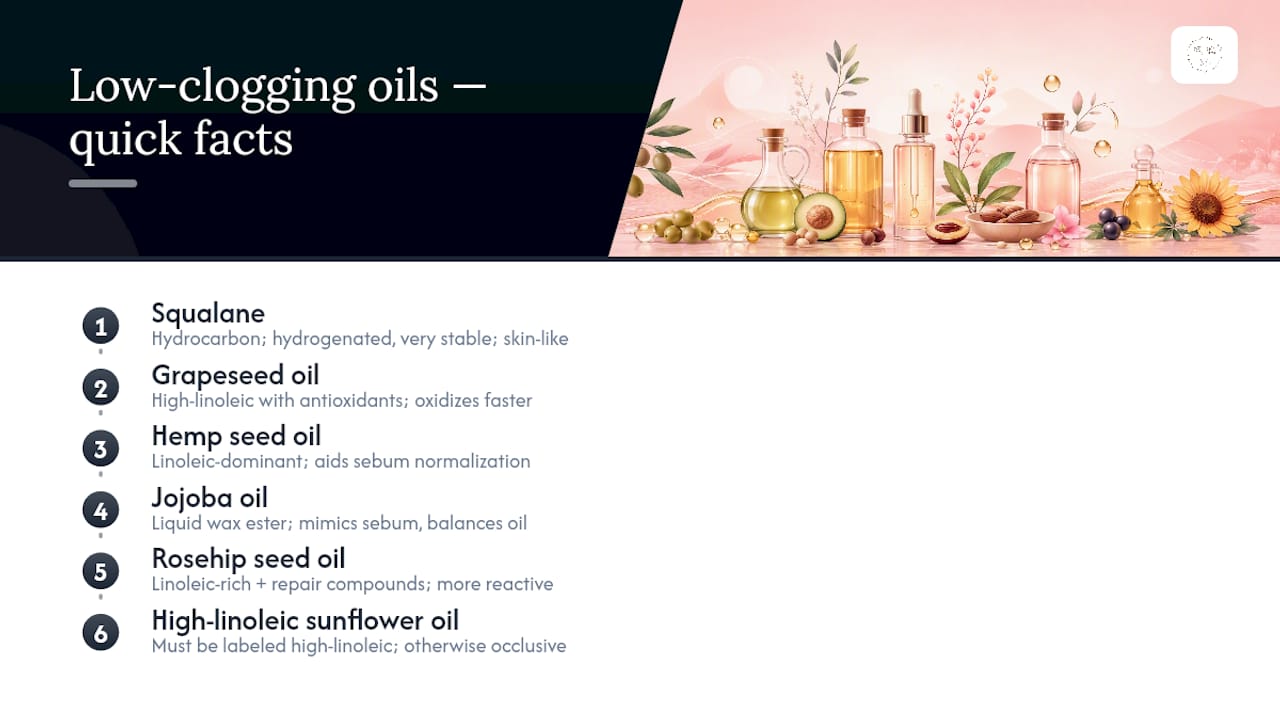
Squalane, grapeseed, hemp seed, jojoba, rosehip seed, and high-linoleic sunflower oil are the least likely to clog pores. Each one shares two traits that keep skin clear: a lightweight molecular structure and a fatty-acid profile close to what your own sebum already produces, so skin absorbs it rather than trapping it on the surface.
That said, no oil earns a universal pass. Comedogenic ratings come from decades-old rabbit-ear studies, not human trials. How your skin actually responds still matters more than any chart.
- Squalane — sebum-mimicking, shelf-stable, well tolerated by most skin types
- Grapeseed — high in linoleic acid, antioxidant-rich
- Hemp seed — linoleic-dominant, favored for acne-prone skin
- Jojoba — a wax ester, not a true oil, closely resembles sebum
- Rosehip seed — linoleic-rich with repair-supportive compounds
- High-linoleic sunflower — lightweight, but check the label
Pro Tip: Patch test any new oil on your inner forearm for a few weeks before applying it to your face. Facial skin reacts faster than arm skin, but arm testing keeps a bad reaction off your face while you wait it out.
Key Takeaways
Non-comedogenic oils like squalane, jojoba, and hemp seed lower breakout risk because their lightweight, linoleic-rich structure absorbs into skin instead of sitting on it.
| Point | Details |
|---|---|
| Start with squalane or jojoba | Both mimic natural sebum and carry the lowest reported reaction rates among facial oils. |
| Favor linoleic over oleic | Linoleic-rich oils like grapeseed and rosehip suit acne-prone skin better than oleic-heavy ones. |
| Patch test for two to three weeks | Document day 0 and day 7 with photos to catch delayed reactions before applying to your face. |
| Avoid heavy, saturated oils | Coconut, cocoa butter, wheat germ, and palm oil are the most commonly cited pore-cloggers. |
| Store oils properly | Oxidized, rancid oil can irritate skin and raise breakout risk even in low-comedogenic formulas. |
| Choose formulas built for sensitive skin | Purelightbotanicalbeauty’s Petal Perfect Lip Oil™ uses lightweight botanical oils aligned with these same low-occlusivity principles. |
This article is general information, not a substitute for advice from a qualified doctor. Consult a qualified healthcare professional about your own circumstances before acting on anything here.
Table of Contents
- What Oil Does Not Clog Pores: The Short List Explained
- Why Some Oils Clog Pores and Others Don’t
- How to Introduce a New Facial Oil Without Wrecking Your Skin
- When a Reaction Means It’s Time to See a Dermatologist
- The Botanical Standard Behind Every Purelightbotanicalbeauty Formula
- What the Research Actually Supports, and Where Advice Falls Short
- Where to Start If You’re Ready to Simplify Your Routine
What Oil Does Not Clog Pores: The Short List Explained
If you’re standing in front of a shelf of amber bottles trying to figure out what oil does not clog pores, the answer comes down to two variables: molecular weight and fatty-acid composition. Lighter oils sit on the skin’s surface without pooling in the follicle. Oils rich in linoleic acid tend to be thinner and less occlusive than oils dominated by oleic acid, which is one reason dermatology researchers keep circling back to the linoleic-to-oleic ratio when they evaluate a facial oil’s risk profile.
Squalane sits at the top of most low-risk lists for a reason. It’s a hydrocarbon, not technically an oil, and it happens to resemble the squalene your skin already produces. The catch is spelling: squalane is the hydrogenated, stable version; squalene oxidizes fast and turns rancid on the shelf. When you’re shopping, confirm the label says squalane, not squalene, especially if the product has been open for months.

Grapeseed oil is another high-linoleic option, and it carries a decent antioxidant load, which helps it resist rancidity. It’s not indestructible, though. Grapeseed oil oxidizes faster than squalane, so buy it in small bottles, keep it away from heat and sunlight, and toss it if it starts smelling sharp or crayon-like.
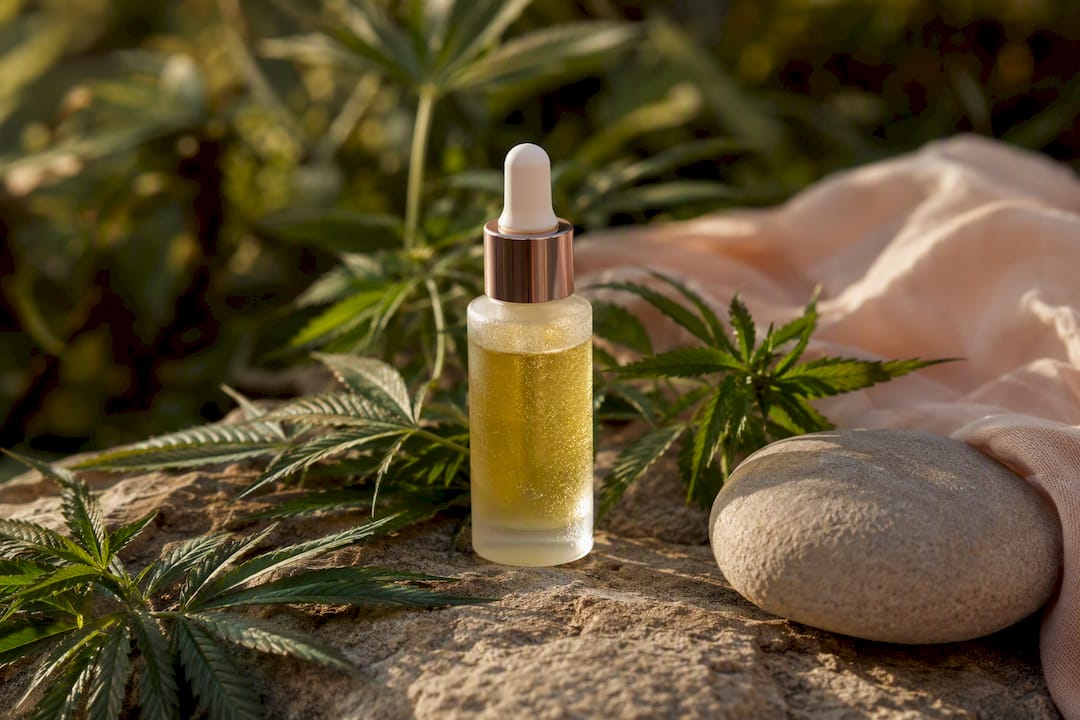
Hemp seed oil shows up on nearly every acne-safe recommendation list, and the fatty-acid math explains why. It’s linoleic-dominant, which research on topical lipids ties to better sebum normalization in people whose skin already runs low on linoleic acid relative to oleic acid. That’s a mouthful, but the practical takeaway is simple: skin prone to breakouts often benefits from oils that lean linoleic rather than oleic.
Jojoba oil works differently. It’s technically a liquid wax ester, and its structure closely mirrors human sebum. That similarity is why it’s often recommended for oily and combination skin: it can help balance oil production rather than adding a heavy, foreign lipid on top of what your skin already makes.
Rosehip seed oil brings a solid linoleic acid content plus compounds associated with skin repair, which makes it popular in scar and texture routines. The caveat: rosehip oil is more fragrant and reactive than squalane or jojoba, so people with reactive or eczema-prone skin should patch test longer, closer to the full two to three week window, before committing.
High-linoleic sunflower oil deserves its own callout because of a labeling trap. Standard “sunflower oil” sold in stores is often the high-oleic variety, bred for cooking stability, and it behaves more like an occlusive oil on skin. The version worth buying for your face is specifically labeled high-linoleic; if the bottle doesn’t say it, assume it’s the wrong kind.
A few less common oils, like prickly pear seed oil and raspberry seed oil, also test low on comedogenicity, but they’re conditional recommendations rather than universal ones. Prickly pear is pricey and often diluted, and raspberry seed oil’s fatty-acid profile varies more by source than the oils above, so treat both as secondary options rather than starting points.
Why Some Oils Clog Pores and Others Don’t
The comedogenic scale most articles quote traces back to rabbit-ear assays from decades ago, and rabbit follicles don’t behave exactly like human ones. That’s why a source can carry a “low” rating on paper and still break someone out, or carry a “moderate” rating and sit fine on someone else’s skin. The scale is a starting filter, not a guarantee.
The linoleic versus oleic acid split does the heavier lifting scientifically. Research on fatty acids and skin function has found that acne-prone skin often runs lower in linoleic acid relative to oleic acid than clear skin does, and topical linoleic acid appears to help normalize sebum composition and reduce surface buildup. Oleic-dominant oils, by contrast, tend to be thicker and more likely to sit on the skin rather than absorb.
Concentration and formulation change the equation, too. A small percentage of a “riskier” oil blended into a well-formulated serum behaves differently than that same oil applied straight and undiluted. Fragrance, added essential oils, and oxidation status all shift real-world risk in ways a static comedogenic number can’t capture.
Oils that have gone rancid, even naturally low-risk ones, can irritate skin and raise breakout risk. If a facial oil smells sour, sharp, or like old crayons, it has likely oxidized and stopped being the gentle option you bought it for.
How to Introduce a New Facial Oil Without Wrecking Your Skin
- Patch test first. Apply a small amount to your inner forearm or behind your ear. Photograph the spot initially and after about a week, and jot down anything you notice: redness, texture change, new bumps.
- Wait the full window. Give it several weeks before declaring it safe. Delayed contact reactions and slow-building comedones don’t always show up quickly.
- Apply to damp skin. A few drops on slightly damp skin, pressed in rather than rubbed, helps the oil spread thin and absorb instead of pooling.
- Start small and infrequent. A pea-size amount, two to three nights a week, is plenty at first. You can build frequency once your skin proves it tolerates the oil.
- Mind your actives. If you use retinoids, benzoyl peroxide, or acids, apply the oil after those actives have absorbed, not before, and consider oil-free nights if your skin feels irritated already.
- Store it right. Keep oils in dark bottles, away from heat and direct light, and check for a rancid smell before each use. Oxidized oil undoes the benefit of choosing a low-risk one in the first place.
- Watch for the pattern. If new breakouts cluster where you apply the oil and appear within days of starting it, stop use and reassess before trying a different product.
Pro Tip: Keep a simple running note on your phone: oil name, date started, and any skin changes. Two weeks from now, you won’t remember whether that new bump showed up before or after you started the rosehip oil, and that timeline is exactly what tells you whether it’s the cause.
Our guide to using facial oils safely for sensitive skin walks through this process in more depth if you’re managing eczema alongside acne concerns, where the margin for trial and error is thinner.
When a Reaction Means It’s Time to See a Dermatologist
Most oil-related flare-ups resolve once you stop using the product. Some signs mean it’s time to stop guessing and get a professional opinion instead.
- Lesions that look infected: swollen, warm, filled with pus, or spreading
- A sudden, widespread inflammatory flare rather than a few new bumps
- Signs of allergic contact dermatitis: intense itching, hives, or swelling near the application site
- No improvement after two to three weeks of stopping the oil entirely
Bring your dermatologist a simple record: the product list, when you started each one, and dated photos showing how your skin changed. If you’re already on prescription acne therapy, mention every oil you’re adding, since even low-risk ones can interact with topical retinoids or antibiotics in ways worth flagging before you layer them in.
The Botanical Standard Behind Every Purelightbotanicalbeauty Formula
Purelightbotanicalbeauty builds every formula around the same low-occlusivity logic this article walks through. We favor lightweight, plant-based oils over heavy, saturated ones, and we keep fragrance and unnecessary additives out of products meant for sensitive and eczema-prone skin.
- Ingredient selection prioritizes low occlusivity and minimal fragrance load
- Formulas are evaluated for shelf stability to reduce oxidation risk over time
- Every product is designed with sensitive and eczema-prone skin as the baseline, not an afterthought
The Petal Perfect Lip Oil™ reflects that same approach: a lightweight botanical oil blend built for the same skin-first standards outlined above, without the heavy or occlusive oils that tend to cause trouble around the delicate skin near the lips.
What the Research Actually Supports, and Where Advice Falls Short
Most articles on this topic hand you a comedogenic rating chart and call it a day. That chart deserves less authority than it gets. It comes from rabbit-ear testing that never accounted for human variability, product concentration, or formulation context, and treating it as gospel leads people to reject genuinely helpful oils out of an abundance of caution, or worse, trust a “low” rating on a product that’s gone rancid in their cabinet.
What the evidence actually supports is narrower and more useful: linoleic-rich oils tend to suit acne-prone skin better than oleic-heavy ones, individual response varies enough that patch testing isn’t optional, and oxidation quietly undoes the safety profile of even the gentlest oil. The reader’s job isn’t memorizing a rating system. It’s picking a linoleic-forward oil, testing it properly, storing it correctly, and paying attention to their own skin over the exact timeline that matters, which is weeks, not days.
If there’s one habit worth prioritizing above the rest, it’s the patch test most people skip because they’re impatient to see results. That two-week window is the difference between a genuine skin reaction and coincidence.
— Kaitlyn
Where to Start If You’re Ready to Simplify Your Routine
If sorting through comedogenic charts and ingredient labels feels like more work than your skin routine should require, Purelightbotanicalbeauty formulates with that exact frustration in mind. Every product draws from the same linoleic-forward, low-occlusivity ingredient logic covered in this article, so you’re not left cross-referencing oil names against a rabbit-ear study before you trust what’s on your face.
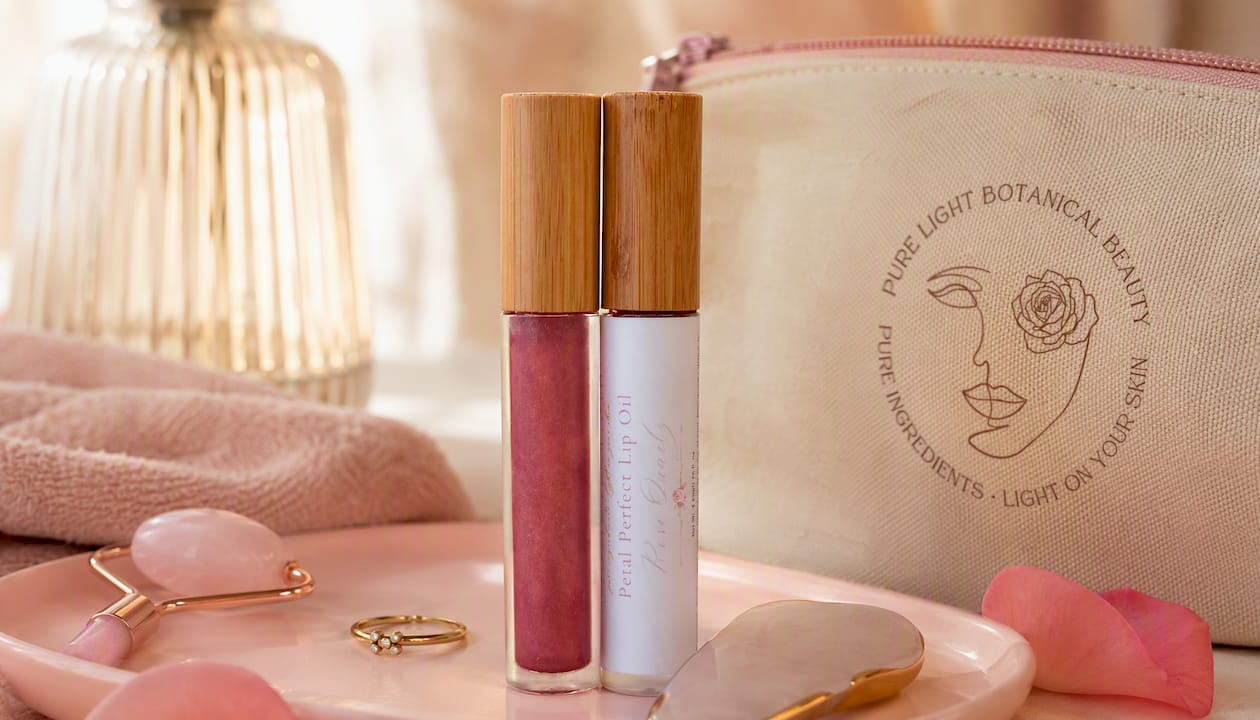
This approach suits you specifically if you’ve been burned before by a “clean” product that still triggered a flare, or if eczema-prone patches make you cautious about anything with a long ingredient list. Our formulas skip the heavy, occlusive oils covered earlier in favor of the lightweight, plant-based ones your skin is more likely to tolerate. Start with the Petal Perfect Lip Oil™ to feel the difference in texture and absorption for yourself, and see how a formula built around your skin’s actual chemistry holds up over the following weeks.
Recommended
- Non-Comedogenic Makeup: What It Means for Your Skin – Pure Light Botanical Beauty
- Role of Oils in Skin Health – Nature’s Nourishing Solution – Pure Light Botanical Beauty
- How to use facial oils safely for sensitive skin – Pure Light Botanical Beauty
- Use Face Oil Before Makeup: 40% Fewer Flare-Ups 2026 – Pure Light Botanical Beauty