

Non-comedogenic makeup is makeup formulated with ingredients that are less likely to block your pores. The word itself tells you everything: comedo is the clinical term for a clogged pore (the root of blackheads and whiteheads), and genic means “to produce.” So non-comedogenic, quite literally, means “not pore-clogging.” If you have oily, acne-prone, or combination skin, choosing products with this designation is one of the most thoughtful steps you can take for your skin’s long-term health. That said, the label has real limits, and understanding those limits is just as important as knowing what it means.
Here is what you need to know right now:
- Non-comedogenic products reduce the risk of makeup-induced pore blockages. They do not treat active acne.
- The term is unregulated. No government body mandates testing before a brand can print it on a label.
- Individual skin chemistry varies. A product that works beautifully for one person may still trigger breakouts for another.
- Your best first step: choose one lightweight, non-comedogenic base product and patch-test it for two to four weeks before adding anything new.
Key Takeaways
Non-comedogenic makeup reduces the risk of pore blockages caused by product ingredients, but it is not a treatment for active acne and the label carries no regulatory guarantee.
| Point | Details |
|---|---|
| What the term means | Non-comedogenic means formulated to be less likely to clog pores; “comedo” is the clinical word for a clogged pore. |
| Who benefits most | Oily, acne-prone, and combination skin types gain the most from prioritizing this label when choosing makeup. |
| Label limits | No government body regulates the term; manufacturers self-apply it, so patch-testing remains your most reliable verification. |
| Ingredients to avoid | Cocoa butter, lanolin, coconut oil, and wheat germ oil are among the more commonly comedogenic ingredients in makeup. |
| Purelightbotanicalbeauty | The Botanical Beauty Balm™ ~ Calendula & Rose uses a short, plant-forward ingredient list designed with pore-friendly formulation in mind. |
Table of Contents
- What is non-comedogenic makeup, and how does it work?
- Who benefits most from non-comedogenic makeup?
- How can you tell whether a product is truly non-comedogenic?
- Which ingredients are more likely to clog pores?
- Which ingredients are commonly found in non-comedogenic makeup?
- Everyday routine tips to reduce pore-clogging risk
- What can non-comedogenic products actually do for acne?
- How botanical formulations can be made non-comedogenic
- A perspective worth sitting with
- Gentle, plant-based beauty your skin can trust
- Useful sources and further reading
What is non-comedogenic makeup, and how does it work?
To understand why formulation matters, you need a quick look at how pores clog in the first place. Your skin continuously produces sebum, a natural oil that keeps the surface supple. When sebum mixes with dead skin cells and gets trapped inside a follicle, it forms a comedone. An open comedone oxidizes and turns dark, giving you a blackhead. A closed one stays beneath the surface as a whitehead.
Certain makeup ingredients accelerate that process. Heavy, occlusive substances sit on top of the skin and physically prevent the follicle from clearing itself. Others dissolve into sebum and thicken it, making the plug more stubborn. Non-comedogenic formulations are built around ingredients that either absorb quickly, stay on the skin’s surface without sealing the pore, or have a molecular structure too large to penetrate the follicle opening.
Texture and concentration both matter here. This is why the same ingredient can appear on both a “safe” and a “avoid” list depending on the product type.
Pro Tip: When you introduce a new product, add it alone. Keep everything else in your routine identical for at least two weeks. If new comedones appear, you can attribute them with confidence rather than guessing which of three new purchases is the culprit.
Who benefits most from non-comedogenic makeup?
Not every skin type needs to prioritize this label equally, but for certain people, it is genuinely worth making it a non-negotiable filter when shopping.
Those who benefit most:
- Oily skin: Excess sebum already creates a higher baseline risk for clogged pores. Adding occlusive makeup compounds that risk.
- Acne-prone skin: Even mild comedogenic ingredients can tip already-congested skin toward new breakouts.
- Combination skin: The T-zone tends to behave like oily skin, so non-comedogenic products protect those areas while still working on drier cheeks.
- Recurring blackheads or whiteheads: If non-inflammatory comedones are your primary concern, product formulation is one of the most direct levers you have.
Secondary audiences who often find the label helpful include people with sensitive skin who wear makeup for long hours, and anyone recovering from a skin barrier disruption. If you are navigating eczema alongside acne concerns, the makeup for eczema guide from Purelightbotanicalbeauty walks through how these designations overlap.
Pro Tip: Non-comedogenic is not the only label worth reading. For sensitive or reactive skin, pair it with “oil-free,” “fragrance-free,” and “dermatologist-tested” for the most complete picture. No single label covers everything.
How can you tell whether a product is truly non-comedogenic?
Here is the honest answer: you cannot know with certainty from the label alone. No government agency, in the United States or most other markets, requires brands to complete standardized comedogenicity testing before using the term. Manufacturers self-apply it, which makes it a helpful signal rather than a guarantee.
That does not mean you are without tools. A practical evaluation checklist:
- Look for supporting labels. “Oil-free,” “dermatologist-tested,” and “non-acnegenic” alongside “non-comedogenic” suggest the brand has put more thought into formulation for breakout-prone skin.
- Read the ingredient list, not just the front of the package. Ingredients are listed in descending order of concentration. A potentially comedogenic ingredient appearing near the end of a long list is present in a very low amount and is far less likely to cause problems than the same ingredient listed in the first five.
- Patch-test before full use. Apply a small amount to your inner arm or jaw for several days. Then, if no reaction appears, use it in a limited area of your face for two to four weeks, which is long enough for new comedones to form if the product is problematic.
- Keep a simple record. Take a photo of your skin before starting a new product and again at two and four weeks. Note the date and product name. This makes it far easier to connect a new breakout to a specific addition.
Ingredient list literacy is genuinely one of the most useful skills you can build for choosing natural makeup for sensitive skin.
Which ingredients are more likely to clog pores?
Some of the most beloved, richest-feeling ingredients in beauty are also among the most comedogenic. That is not a coincidence: the same heaviness that makes a product feel luxurious is often what makes it occlusive.
Watch for these on labels if your skin is breakout-prone:
- Cocoa butter: Dense and highly occlusive; wonderful for very dry skin, problematic for oily or acne-prone types.
- Lanolin: A waxy emollient derived from wool that sits heavily on the skin.
- Coconut oil: Popular in natural beauty, but its fatty acid profile makes it one of the more comedogenic plant oils for many people.
- Wheat germ oil: High in oleic acid, which tends to thicken sebum rather than balance it.
Comedogenicity is not binary. An ingredient’s real-world effect depends on its concentration in the formula, the product type it appears in, and your individual skin chemistry. Coconut oil in a lip balm is a very different risk than coconut oil as the base of a full-coverage foundation. Read the whole label, not just the ingredient name.
Concentration placement in the ingredient list is your most practical guide. An ingredient beyond the first five is usually present at a low enough level that its comedogenic potential is significantly reduced.
Which ingredients are commonly found in non-comedogenic makeup?
The good news is that many effective, skin-supportive ingredients are also pore-friendly. These tend to appear in well-formulated non-comedogenic products:
- Glycerin: A humectant that draws moisture to the skin without occluding the follicle. Water-soluble and widely tolerated.
- Hyaluronic acid: Hydrates at the surface level; its large molecular size means it does not penetrate deeply enough to interfere with pore function.
- Niacinamide: Supports the skin barrier, helps regulate sebum production, and has a strong track record with acne-prone skin.
- Dimethicone: A silicone that creates a smooth, breathable film on the skin. It provides slip and a soft-focus finish without the pore-sealing behavior of heavy waxes or oils.
- Jojoba oil and squalane: Often compatible with acne-prone skin despite being oils. Jojoba’s structure closely resembles human sebum, and squalane is lightweight and non-greasy. Neither is universally safe for every person, but both appear far more frequently on “low-comedogenic” lists than coconut or wheat germ oil.
One distinction worth making: “non-comedogenic” and “oil-free” are not synonyms. A product can be oil-free and still contain pore-clogging waxes. Conversely, a product containing certain plant oils can be genuinely non-comedogenic if those oils are well-chosen and properly concentrated. Water-based serums and primers are generally the safest texture choice for oily or acne-prone skin.
Everyday routine tips to reduce pore-clogging risk
Even the most carefully chosen non-comedogenic products can contribute to congestion if your application and removal habits are not equally thoughtful. These steps make a real difference:
- Start with clean skin. Applying makeup over residual sunscreen, sweat, or yesterday’s products creates a layered environment where pores are more likely to become blocked.
- Apply lightest to heaviest. Serums and water-based primers go on first. Heavier formulas like foundations and concealers follow. This order prevents lighter products from being trapped under occlusive layers.
- Avoid heavy layering in congested zones. If your T-zone is oily and prone to blackheads, use the minimum coverage needed in that area rather than building up multiple layers.
- Choose oil-absorbing primers or setting powders for oily areas. These reduce the amount of sebum that mixes with your makeup throughout the day.
- Remove makeup thoroughly every night. A gentle double-cleanse (micellar water or cleansing oil first, then a water-based cleanser) removes both oil-based and water-based residue without stripping the barrier.
- Clean your brushes and sponges weekly. Applicators accumulate bacteria, old product, and skin cells. Using a dirty brush introduces all of that back onto freshly cleansed skin.
Pro Tip: Layer products in order of water content: the most water-rich goes on first, the most emollient goes on last. This keeps lighter actives in contact with the skin rather than sitting on top of a heavier base.
For a complete clean makeup checklist tailored to sensitive skin, Purelightbotanicalbeauty has put together a practical resource worth bookmarking.
What can non-comedogenic products actually do for acne?
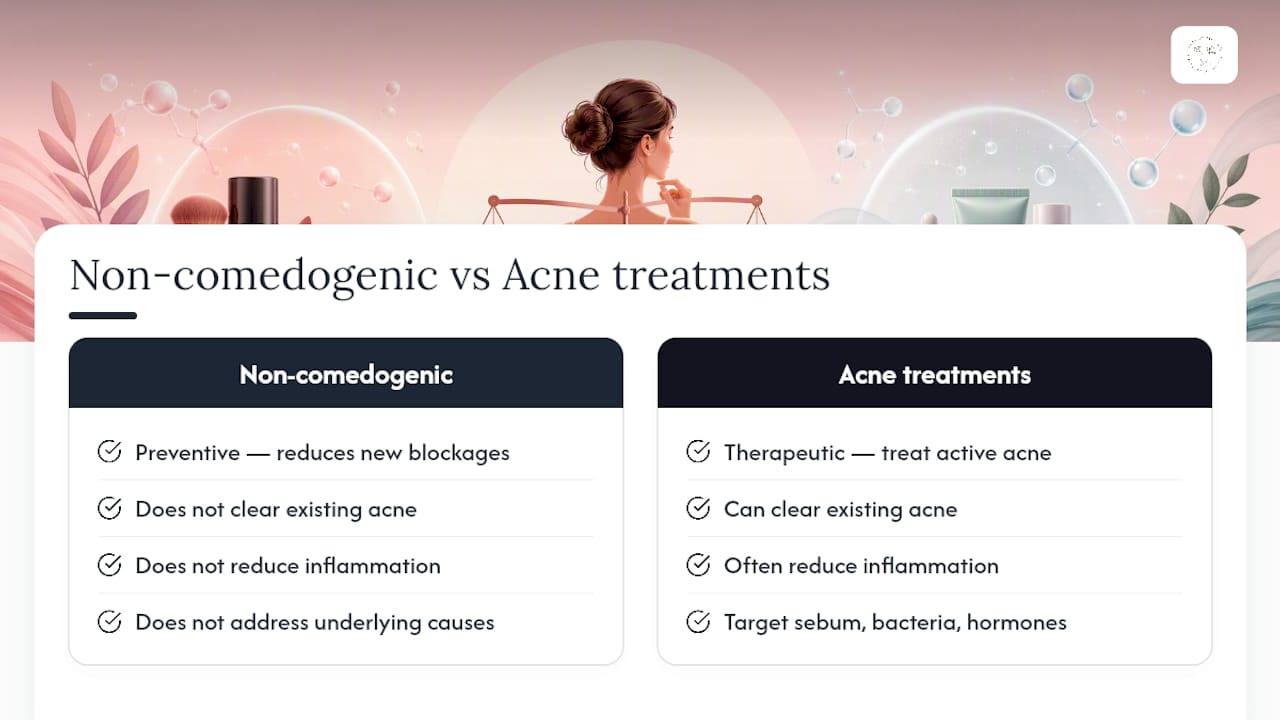
This is where realistic expectations matter most. Non-comedogenic makeup reduces the chance that your products are creating new blockages. It does not clear existing acne, reduce inflammation, or address the underlying drivers of breakouts.
The American Academy of Dermatology identifies acne as a condition with multiple contributing factors: sebum overproduction, the presence of Cutibacterium acnes bacteria, inflammation, hormonal fluctuations, and in some cases diet. A pore-friendly foundation addresses exactly one corner of that picture.
Non-comedogenic products are preventive, not curative. If you are managing active acne, targeted treatments containing ingredients like benzoyl peroxide, salicylic acid, or adapalene work on the biological causes of breakouts. Makeup formulation alone cannot replicate that effect. For persistent or severe acne, a dermatologist’s guidance is the most direct path to real improvement.
This distinction matters because many people switch to non-comedogenic makeup expecting their acne to clear, then feel discouraged when it does not. The right framing: non-comedogenic makeup removes one potential trigger. It creates a cleaner environment for your skin to respond to whatever treatment you are using.
How botanical formulations can be made non-comedogenic
Plant-based beauty has a reputation for being gentle, but not every botanical ingredient is automatically pore-friendly. Formulation craft is what separates a nourishing botanical product from one that inadvertently clogs pores.
The key principles in botanical non-comedogenic formulation:
- Esterified plant oils have been chemically modified to reduce their comedogenic potential while preserving their skin-conditioning benefits.
- Concentration control is everything. A botanical extract that would be problematic at high concentration can be genuinely beneficial at a lower, purposeful dose.
- Short, purposeful ingredient lists reduce the cumulative risk of multiple borderline ingredients interacting. Fewer ingredients also make patch-testing more informative.
Here is how the main emollient categories compare for acne-prone skin:
| Emollient Type | Pore-Clogging Risk | Skin Feel | Notes for Acne-Prone Skin |
|---|---|---|---|
| Heavy botanical oils (coconut, wheat germ) | Higher | Rich, occlusive | Best avoided as primary base ingredients |
| Lightweight plant oils (jojoba, squalane) | Lower | Dry, absorbing | Often well-tolerated; patch-test individually |
| Synthetic emollients (isopropyl myristate) | Moderate to higher | Silky | Can be comedogenic; check concentration |
| Silicones (dimethicone, cyclopentasiloxane) | Low for most | Smooth, breathable | Widely used in non-comedogenic formulas |
Pro Tip: When reading a botanical product’s ingredient list, look for the emollient or oil in the first five ingredients. If it is a heavier oil like coconut or cocoa butter, that product is likely not the best choice for oily or acne-prone skin, regardless of what the front label says.
Purelightbotanicalbeauty builds its formulations around plant-forward ingredients chosen for both their skin-nourishing properties and their low irritant profile, with short ingredient lists that make label-reading straightforward rather than overwhelming.
A perspective worth sitting with
What strikes me most about the non-comedogenic conversation is how much it asks of us as consumers. We are expected to decode unregulated labels, memorize ingredient hierarchies, and run our own patch-testing protocols because the industry has not standardized the very term it prints on millions of products. That is a real burden, and it is worth naming.
At the same time, the tools are genuinely there. Reading ingredient lists, testing one product at a time, and consulting a dermatologist for persistent concerns are not complicated steps. They are slow, deliberate ones. And that slowness, that willingness to pay attention to what your skin is actually telling you, is itself a form of self-care that most beauty marketing never mentions.
The label “non-comedogenic” is a starting point, not a destination. Your skin’s response is the only data that truly counts.
Gentle, plant-based beauty your skin can trust
If you have been searching for a base product that takes pore health seriously without sacrificing the nourishing, botanical experience your skin deserves, the Botanical Beauty Balm™ ~ Calendula & Rose from Purelightbotanicalbeauty is worth exploring. Formulated with purposefully chosen plant extracts and a short, transparent ingredient list, it reflects the brand’s commitment to beauty that genuinely supports skin health rather than simply covering it.
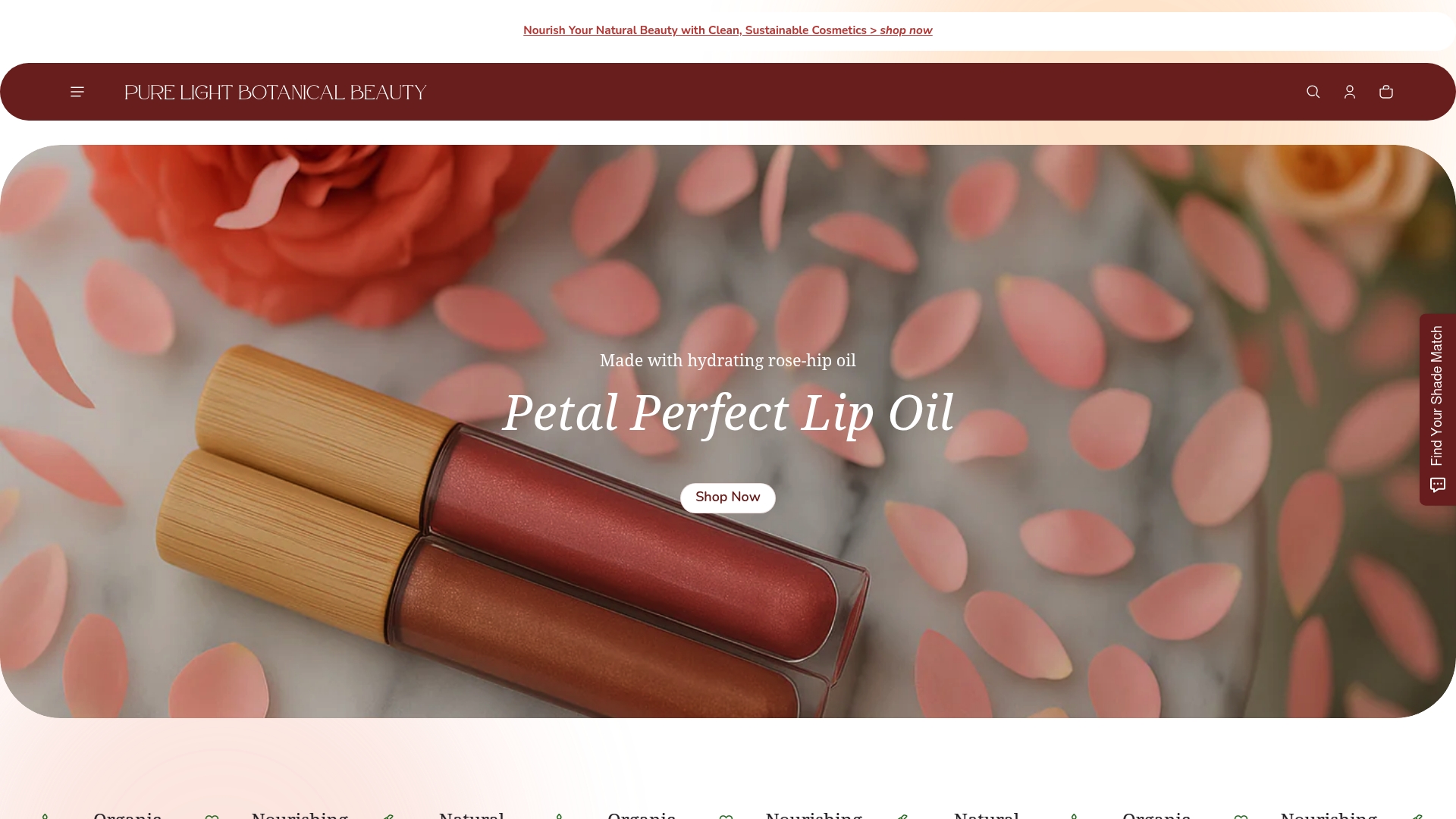
Purelightbotanicalbeauty’s full range is built on the same philosophy: clean, plant-based formulations with low-irritant botanicals, designed for people who want their makeup to feel as good as it looks. Visit Pure Light Botanical Beauty to explore the complete collection. As always, patch-test any new product and consult a dermatologist if you are managing active acne or a skin condition.
Useful sources and further reading
These are the primary sources that informed this article. Each covers a distinct angle of the non-comedogenic topic:
- American Academy of Dermatology (AAD): — Authoritative overview of acne causes, including the role of sebum, bacteria, hormones, and inflammation. The most reliable starting point for understanding why pore-friendly makeup is only one piece of the acne picture.
- Healthline: — Clear explanation of why “non-comedogenic” is an unregulated term and what that means practically for consumers evaluating product labels.
- Medical News Today: — Ingredient-level breakdown of commonly comedogenic substances (cocoa butter, lanolin, coconut oil) and commonly non-comedogenic ones (glycerin, niacinamide, dimethicone).
- InStyle (skin experts): — Expert commentary on how to combine non-comedogenic with other label designations like oil-free and hypoallergenic for sensitive, acne-prone skin.
- Acibadem Hospitals Group: — Clinical perspective on individual skin variability and why a product labeled non-comedogenic can still trigger reactions in some people, reinforcing the case for patch-testing.
- PubMed / NCBI: — For readers who want to go deeper into the peer-reviewed science of comedogenicity testing, sebum biology, and acne pathophysiology, the indexed literature here is the most rigorous resource available.
For clinical questions about persistent or severe acne, a board-certified dermatologist remains the most direct and reliable source of guidance.
Recommended
- What Is Non-Comedogenic Makeup? A Guide for Sensitive Skin – Pure Light Botanical Beauty
- What Is Non-Toxic Makeup? Benefits, Ingredients, and More – Pure Light Botanical Beauty
- What Is Eczema-Safe Makeup? True Comfort For Skin – Pure Light Botanical Beauty
- Skin-Friendly Makeup Tips: Complete Expert Guide – Pure Light Botanical Beauty