

Ceramides, panthenol, colloidal oatmeal, centella asiatica, niacinamide, and allantoin form the core of any calming skin care ingredients list that dermatologists actually recommend. Each one calms a different piece of the irritation puzzle, from barrier repair to itch relief. Patch test any new formula for 48 hours, and if you’re managing eczema or rosacea, loop in a dermatologist before layering actives. A plant-forward option like our Botanical Beauty Balm™ ~ Calendula & Rose can round out that routine without adding fragrance-driven risk.
TL;DR:
- Using ceramides, panthenol, and colloidal oatmeal together effectively rebuilds the skin barrier and reduces inflammation in sensitive skin conditions.
- Patch testing new products for 48 hours and introducing actives one at a time helps prevent reactions on reactive or eczema-prone skin.
- Significant improvements in symptoms typically appear within two to four weeks of consistent use, with barrier repair indicators like reduced TEWL and increased hydration.
- Combining barrier lipids with anti-inflammatory ingredients is essential, as anti-inflammatories alone rarely resolve chronic sensitivity.
- Botanical ingredients like centella asiatica and calendula are beneficial when well-formulated and used with standardized, low-allergen concentrations.
Table of Contents
- Calming Skin Care Ingredients Organized by What They Actually Do
- How Calming Ingredients Work on Irritated Skin
- How to Introduce Calming Ingredients Without Triggering a Reaction
- How Long Calming Ingredients Take to Show Results
- The Expertise Behind This Guide
- Natural vs. Synthetic Calming Ingredients: Does It Matter?
- Side Effects and Allergies to Watch For
- Do Calming Ingredients Work the Same on Every Skin Type?
- Why We Build Formulas Around the Skin Barrier First
- Why Botanical Beauty Balm™ Belongs in Your Calming Routine
- Sources Referenced in This Guide
Calming Skin Care Ingredients Organized by What They Actually Do
Not every soothing ingredient does the same job. Some rebuild your skin’s outer wall. Some pull in water and hold it there. Others calm the inflammatory signals that make skin flush, sting, or itch. Understanding which category an ingredient belongs to helps you build a routine instead of just stacking products that sound gentle.
Barrier-repair lipids come first, because a compromised barrier is often the root cause of ongoing sensitivity, not just a symptom of it.
- Ceramides are structural lipids that make up roughly half of the skin’s outer layer. When ceramide levels drop, from over-exfoliation, harsh cleansers, or conditions like eczema, water escapes faster and irritants get in easier. Look for “ceramide NP” or a multi-ceramide blend in a cream or lotion base, and pair it with cholesterol and fatty acids for the most complete repair effect.
- Squalane is a lightweight emollient derived from plants like olives or sugarcane that mimics the skin’s own sebum, sealing in moisture without feeling greasy. It layers well under heavier creams for dry, reactive skin.
Humectants and hydration support work by drawing water into the skin and holding it there, which softens the sting of an already-inflamed complexion.
- Panthenol (provitamin B5) hydrates while supporting the skin’s natural repair process. It shows up in concentrations from 1% to 5% in most calming formulas and pairs naturally with ceramides.
- Hyaluronic acid holds up to a thousand times its weight in water. On compromised skin, apply it to damp skin and seal it immediately with an emollient, or it can pull moisture out of the skin instead of into it.
Anti-inflammatory actives target redness, itch, and the visible flare itself.
- Niacinamide reduces redness and reinforces the barrier at concentrations of roughly 2% to 5%. Above that, it can paradoxically cause flushing in reactive skin, so start low.
- Colloidal oatmeal contains avenanthramides and polysaccharides that calm itch and irritation directly. It carries recognized status as an over-the-counter skin protectant in some regions, which is part of why it shows up in so many eczema-focused formulas.
- Allantoin works at concentrations as low as 0.2%, promoting cell turnover while softening rough, irritated texture. It also acts as a buffer, helping skin tolerate stronger actives like retinoids when it’s included alongside them.
- Bisabolol, derived from chamomile, is well tolerated even on reactive, flush-prone skin and adds a light anti-inflammatory effect without much sensitization risk.
- Ectoin is a newer addition to calming formulas, shown in topical concentrations around 5.5% to 7% to reduce water loss and ease dryness and itch associated with dermatitis.
- Centella asiatica (also called cica or gotu kola) delivers some of the strongest clinical backing of any botanical soother, particularly when combined with ceramides and panthenol.
Common botanical soothers like aloe vera, chamomile, and green tea extract show real anti-inflammatory activity in lab studies, but they carry allergen caveats worth knowing. Chamomile is related to ragweed, and people with plant allergies can react to it. Aloe, in high concentrations or unrefined forms, can occasionally sensitize rather than soothe.
Pro Tip: If you’re new to calming actives, introduce one at a time and give it a full week before adding the next. Layering five “soothing” ingredients at once makes it impossible to know which one is actually helping, or which one is quietly causing a new reaction.
How Calming Ingredients Work on Irritated Skin
Two measurements matter more than marketing claims: transepidermal water loss (TEWL), which tracks how much moisture escapes through your skin, and stratum corneum hydration (SCH), which measures how much water your outer layer is actually holding. High TEWL and low SCH describe skin that’s compromised at the barrier level, not just reactive on the surface.
Barrier repair is foundational because inflammation and water loss feed each other in a loop. Fix the barrier and inflammation often eases on its own.
- Ceramides rebuild the physical lipid structure, directly lowering TEWL.
- Panthenol hydrates while supporting the skin’s own repair signaling.
- Colloidal oatmeal interrupts the itch-scratch cycle that keeps reopening barrier damage.
- Centella asiatica calms inflammatory pathways while barrier lipids do their structural work.
Anti-inflammatory actives alone rarely solve chronic sensitivity. A serum that calms redness for an afternoon without restoring barrier lipids just resets the same cycle the next day. That’s why expert guidance consistently points toward pairing anti-inflammatory ingredients with barrier-first actives like ceramides and panthenol before reaching for stronger treatments.
How to Introduce Calming Ingredients Without Triggering a Reaction
Adding new products to already-reactive skin is where most irritation actually starts, not where it ends. A methodical approach protects you from turning a mild issue into a bigger one.
- Patch test first. Apply a small amount to the inner forearm or behind the ear, and wait 48 hours before using it on your face. Any redness, itching, or bumps means skip it.
- Start low and slow. Introduce one new active every 7 to 10 days, not several at once. This is the only way to know what’s actually working.
- Respect concentration ranges. Panthenol works well around 3% to 5%; niacinamide should stay in the 2% to 5% range for sensitive skin; colloidal oatmeal is safest at whatever percentage the product is formulated for, since DIY oat pastes vary wildly in strength.
- Layer correctly. Apply humectants like hyaluronic acid to damp skin, then seal with an emollient or ceramide cream within a minute or two, or the humectant can backfire and dry you out.
- Avoid known irritant triggers. Steer clear of added fragrance, high-percentage alcohol (denatured or SD alcohol high on an ingredient list), undiluted essential oils, and aggressive daily exfoliation while your skin is reactive.
Pro Tip: Keep a simple log of what you introduced and when. Sensitive skin reactions can show up two or three days later, and without a log, it’s almost impossible to trace the cause.
How Long Calming Ingredients Take to Show Results
Symptom relief and actual barrier repair happen on two different clocks, and confusing the two leads people to give up on good ingredients too early.
Comfort, less stinging, less visible flush, can show up within hours to a few days of consistent use. Real barrier repair, the kind that shows up in lower TEWL and improved hydration measurements, takes longer.
A prospective study on a formula combining centella asiatica, ceramide NP, and panthenol found significant reductions in sensitive-skin symptom scores at two and four weeks, alongside measurable drops in transepidermal water loss and gains in skin hydration. That timeline, meaningful improvement by two weeks and stronger results by four, is a realistic benchmark for any calming routine built the same way.
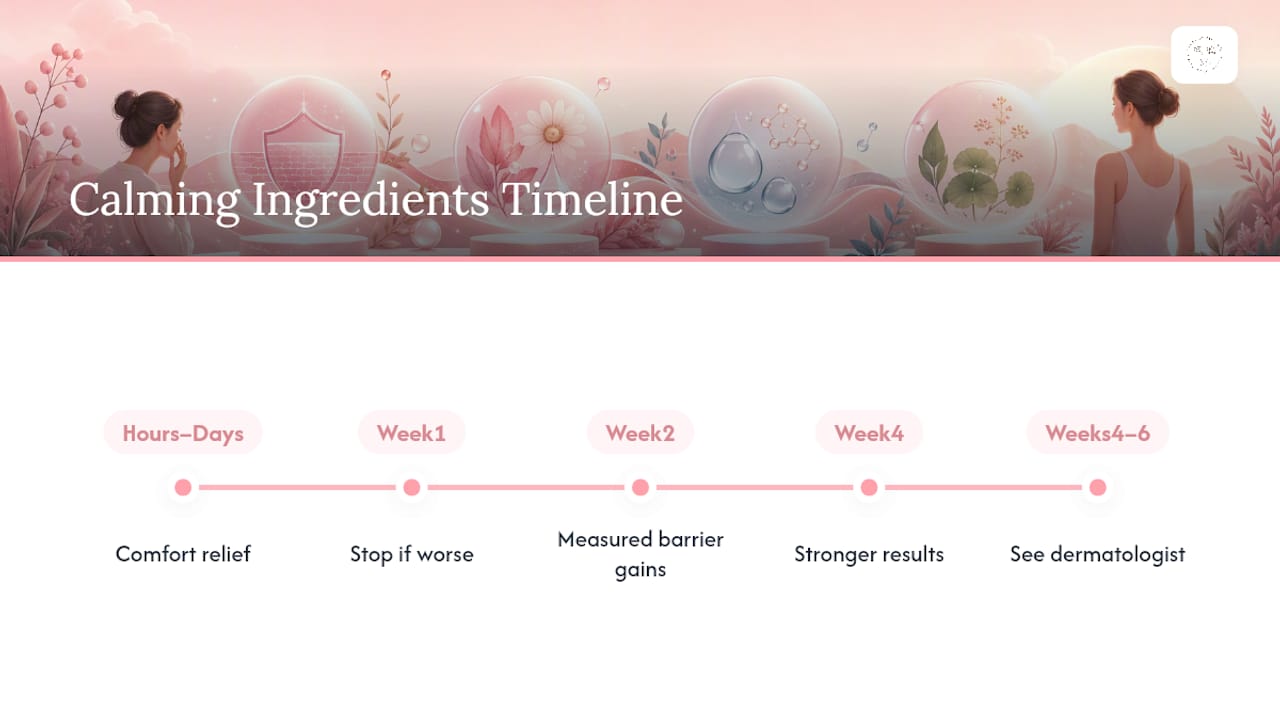
If a product causes worsening redness, swelling, or persistent burning within the first week, stop using it. If symptoms haven’t improved at all after four to six weeks of consistent, correct use, that’s the point to consult a dermatologist rather than keep guessing.
The Expertise Behind This Guide
This guide is written under the editorial direction of Caitlin Grey, whose work focuses on natural formulation and the science of skin barrier health, with particular attention to how plant-based actives perform on eczema-prone and reactive skin.
Purelightbotanicalbeauty formulates around this same barrier-first philosophy, prioritizing clean, plant-based ingredients that support skin health rather than mask irritation. Our best calming skincare ingredients guide expands on how we select actives for eczema-prone formulas.
Natural vs. Synthetic Calming Ingredients: Does It Matter?

The natural-versus-synthetic debate misses the real question, which is whether an ingredient is well tolerated at an effective concentration, not where it was sourced from.
Synthetic or lab-standardized ingredients like niacinamide, panthenol, and allantoin (allantoin also occurs naturally in comfrey root) benefit from consistent purity and dosing. You know exactly what percentage you’re getting, batch after batch, which matters when you’re trying to track what’s working.
Botanical extracts like centella asiatica, chamomile, and witch hazel bring a wider spectrum of compounds, sometimes offering broader antioxidant benefits, but with more variability. Extraction method, concentration, and what else is in the formula all affect whether a plant-derived ingredient soothes or sensitizes. A poorly extracted or over-concentrated botanical can irritate the exact skin it’s meant to calm.
The most reliable calming formulas usually blend both worlds: a lab-standardized barrier ingredient like ceramide NP or panthenol, paired with a well-formulated botanical like centella asiatica or calendula. Neither category is inherently superior. What matters is formulation quality and appropriate concentration, not a “natural” or “synthetic” label on the front of the bottle.
Side Effects and Allergies to Watch For
Even ingredients marketed as calming can cause reactions, and the irritation those reactions cause is often assumed to be part of the skin condition rather than the product’s own fault.
Botanical allergens are the most overlooked risk. Chamomile and its derivative bisabolol belong to the ragweed family, and people with pollen or plant allergies can develop contact dermatitis from them. Aloe vera, particularly unrefined or high-concentration forms, occasionally causes contact reactions despite its soothing reputation.
Niacinamide flushing happens in a small subset of users, usually at concentrations above 5%, or when layered with certain acids. It typically resolves by lowering concentration or spacing out use.
Fragrance, even “natural” fragrance, from essential oils remains one of the most common causes of allergic contact dermatitis in skin care overall. If a product markets itself as calming but lists lavender oil or citrus oil high on the ingredient list, that’s worth questioning.
Preservative sensitivities can also masquerade as an ingredient reaction. If your skin reacts to a formula, don’t assume the headline calming ingredient is the culprit before checking the full list.
The safest approach: patch test every new product regardless of how gentle its marketing sounds, and if you have known plant allergies, read full ingredient lists rather than trusting front-of-package claims.
Do Calming Ingredients Work the Same on Every Skin Type?
Sensitive, dry, and oily skin all respond to calming ingredients differently, and using the wrong form for your type is a common reason results feel underwhelming.
Dry, sensitive skin benefits most from richer, lipid-forward formulas: ceramides, squalane, and panthenol in cream bases. These skin types need both hydration and a physical barrier layer, since dryness itself is often what’s triggering the sensitivity in the first place.
Oily or combination skin can still be reactive, but heavy emollient creams may feel occlusive or contribute to congestion. Niacinamide is particularly well suited here, since it calms redness while also helping regulate oil production. Lightweight gel formulas with hyaluronic acid and colloidal oatmeal deliver calming benefits without the heavy feel.
Eczema-prone or barrier-compromised skin typically needs the strongest concentration of repair lipids, ceramides paired with cholesterol and fatty acids, plus allantoin or colloidal oatmeal for itch control. This skin type usually has the least tolerance for fragrance or botanical variability, making standardized, low-allergen formulas the safer starting point.
Matching the ingredient to your specific skin behavior, not just to “sensitive” as a catch-all label, is what separates a routine that genuinely improves your skin from one that just doesn’t make things worse.
Why We Build Formulas Around the Skin Barrier First
We favor barrier-first, plant-forward formulations because comfort that doesn’t last isn’t real comfort. Botanicals soothe beautifully, but they have limits, and persistent redness, swelling, or diagnosed conditions deserve a clinician’s input, not just a gentler serum. What actually changes reactive skin over time is consistency: the same gentle ritual, repeated, not a new product every week.
— Caitlin Grey
Why Botanical Beauty Balm™ Belongs in Your Calming Routine
If you’ve read this far, you already know that calendula and rose aren’t just pretty label ingredients, they’re calming botanicals with real anti-inflammatory tradition behind them. Our Botanical Beauty Balm™ ~ Calendula & Rose was built as a plant-forward answer to the barrier-first approach this whole guide is built around: calendula to calm visible irritation, rose to condition and soften, in a base designed to seal moisture in rather than sit on top of it.
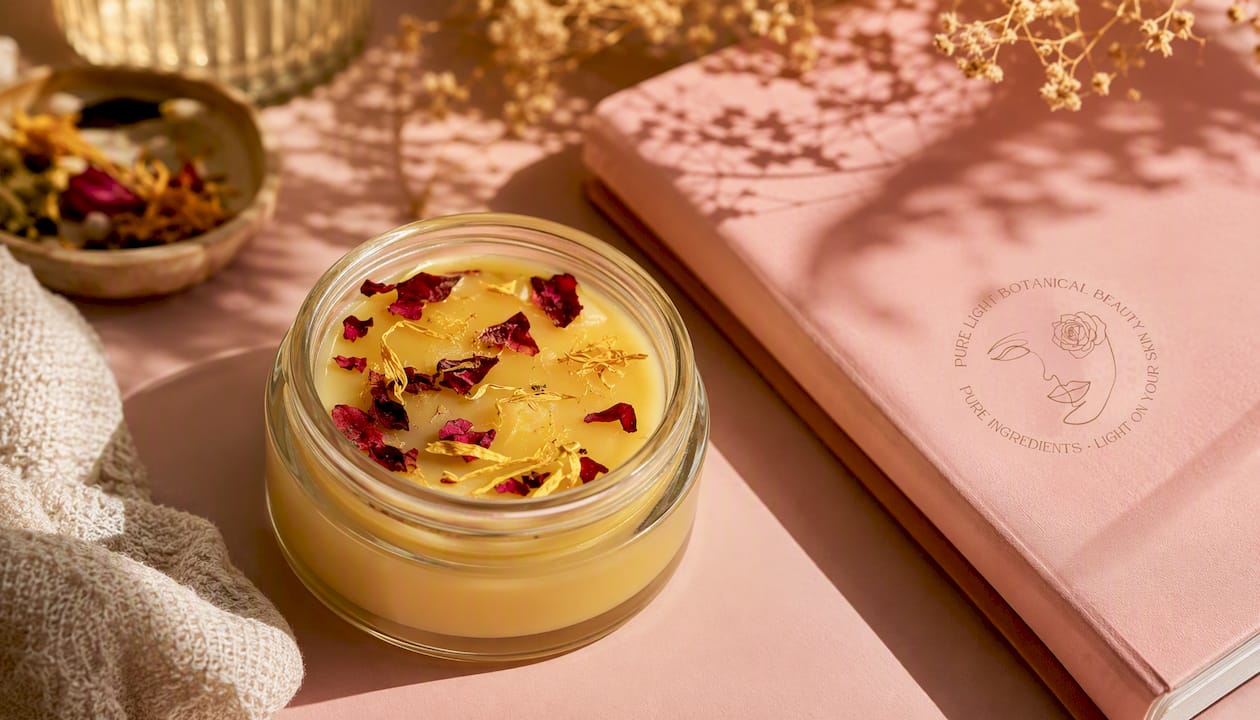
Use it as a spot treatment on flare-prone areas, an overnight balm to seal in your evening routine, or a final step to lock hydrating serums beneath a protective layer. It’s especially suited to eczema-prone and reactive skin that needs comfort without added fragrance risk. If your current routine covers barrier repair but you’re missing that final calming, occlusive step, this balm is where to start. Visit the product page to check ingredients and place an order.
Sources Referenced in This Guide
- The Effectiveness and Safety of a Skin Care Product With Centella asiatica Leaf Extract, Ceramide NP, and Panthenol in Subjects With Sensitive Skin: A Prospective, Observational Study
- Allantoin dermatological review
- American Academy of Dermatology, rosacea overview
- Witch hazel-based formula studies (journal article summary)