

TL;DR:
- Layering botanical products in a precise order enhances absorption, protects the skin barrier, and prevents irritation. Applying water-soluble ingredients before oils follows a scientific viscosity ladder, ensuring optimal efficacy and minimizing pilling. Introducing each product gradually through the slow-drip method promotes skin responsiveness and reduces sensitivities.
Layering botanical products means applying plant-based skincare in a deliberate sequence based on texture, solubility, and absorption timing to maximize each ingredient’s benefit and protect your skin barrier. This practice, often called botanical layering or phyto-sequencing in professional formulation circles, is the difference between a routine that works and one that wastes your most potent ingredients. Get the order right, and your skin absorbs more, reacts less, and holds moisture longer. Get it wrong, and even the finest rosehip oil or vitamin C serum can underperform or cause irritation. This guide walks you through every step of an effective botanical skincare routine with the science to back it up.
How to layer botanical products: why order changes everything
The sequence you apply botanical products is not a preference. It is a scientific principle. Layering thinnest to thickest ensures water-soluble nutrients penetrate the skin before oil-based occlusives form a protective seal over the surface. This is the viscosity ladder, and it governs every effective botanical routine.
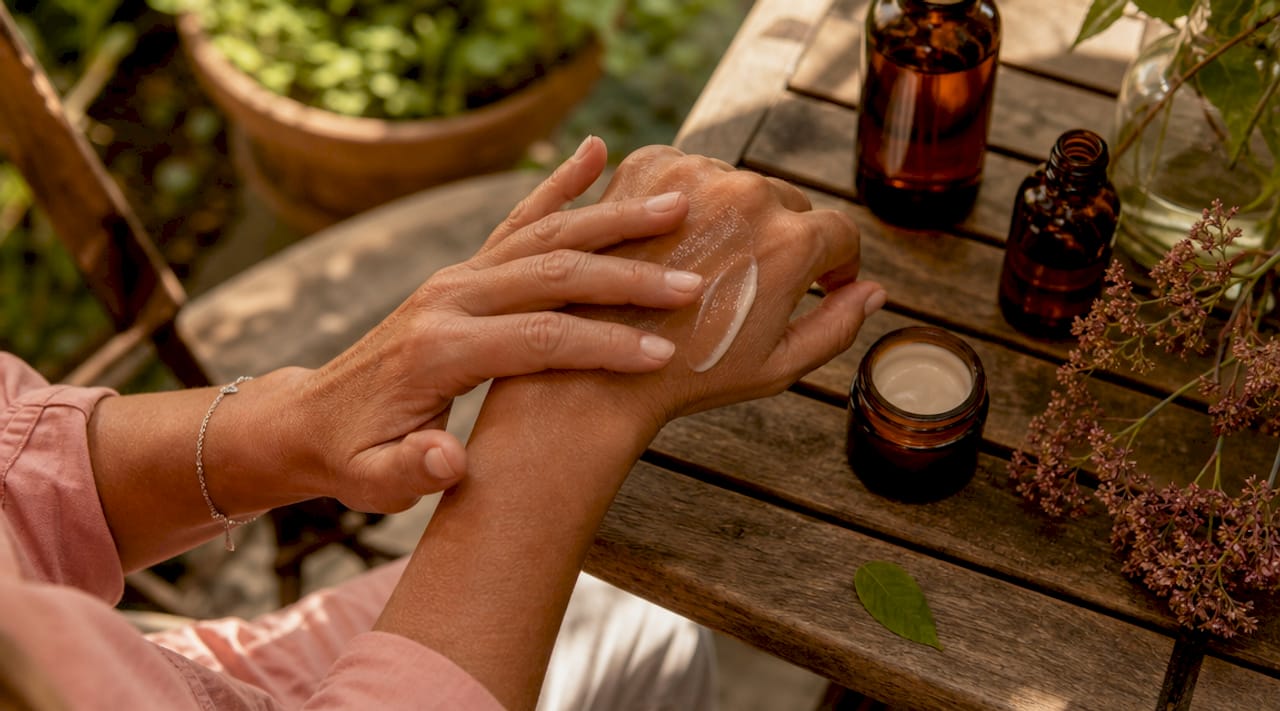
Water-soluble ingredients like floral hydrosols, niacinamide serums, and vitamin C actives need direct contact with skin cells to work. Oil-soluble ingredients like rosehip, marula, and sea buckthorn oil are occlusives. Oils applied too early prevent serums and hydrosols from penetrating at all, effectively locking beneficial actives out of the skin rather than in.
The skin’s microbiome and barrier function also respond to layering order. Applying a botanical cleanser that preserves your lipid barrier, then following with a pH-balancing toner, keeps your skin’s acid mantle intact before you introduce any actives. Disrupting this sequence stresses the barrier and increases sensitivity over time.
Common layering mistakes include:
- Applying facial oils before water-based serums
- Skipping set time between layers, which causes pilling and reduces absorption
- Using exfoliating botanicals like willow bark or papaya enzyme daily, which thins the barrier
- Mixing oil-phase and water-phase products in the palm before application, which destabilizes both
Pro Tip: If you use a clinical active like a retinol or AHA alongside botanicals, the “sandwich” method works well. Apply a botanical serum first, then the active, then a botanical moisturizer on top. This reduces skin irritation by up to 40% by buffering pH and protecting the barrier.
What are the steps for a botanical layering routine?
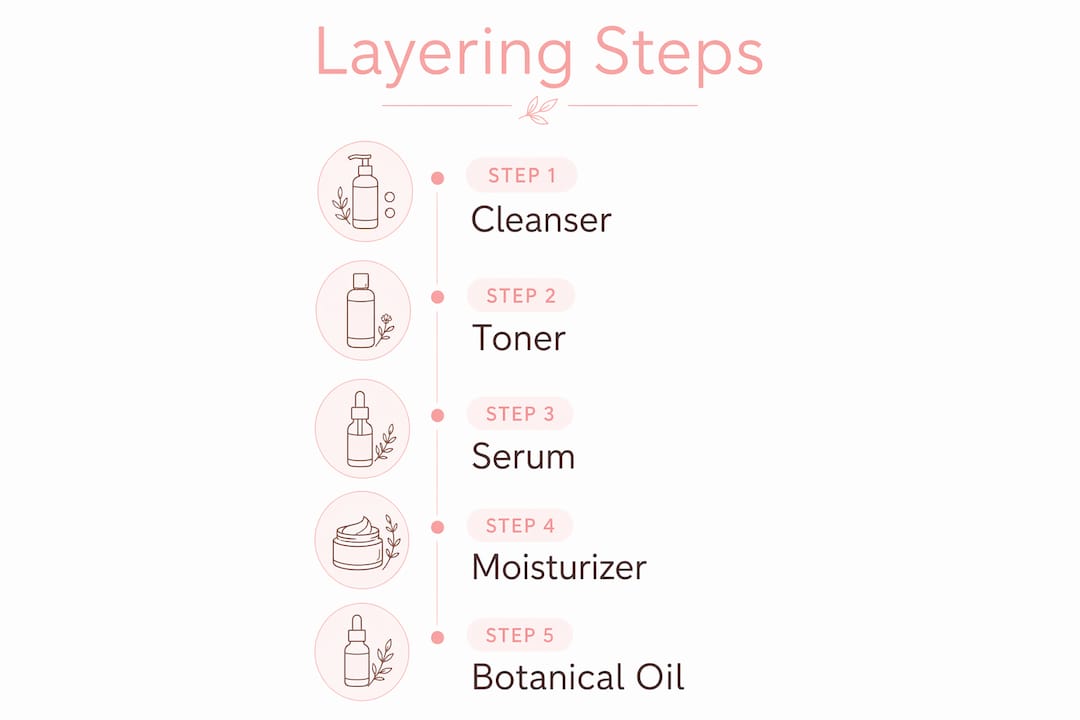
A foundational botanical routine runs 3 to 5 steps: gentle cleansing, hydrating toner, targeted serum, plant-based moisturizer, and SPF for daytime. Each step has a specific role, and the timing between them matters as much as the products themselves.
-
Cleanse with a gentle botanical cleanser. Choose a formula with calendula, chamomile, or oat extract that removes impurities without stripping lipids. Harsh cleansers disrupt the acid mantle and make every subsequent layer less effective. Massage in for 60 seconds, then rinse with lukewarm water.
-
Apply a floral hydrosol or pH-balancing toner while skin is still damp. Rose water, neroli hydrosol, and witch hazel toners prep the skin’s surface and slightly lower pH, which improves absorption of the serum that follows. Apply by pressing gently into skin with clean hands rather than a cotton pad, which absorbs product and creates friction.
-
Layer a lightweight water-based serum on damp skin. Vitamin C serums, niacinamide, and hyaluronic acid all belong here. Damp skin absorbs water-soluble actives faster and more evenly. Wait 60 to 90 seconds before the next step.
-
Apply a plant-based moisturizer. Shea butter, aloe vera gel, and bakuchiol creams all work at this stage. This layer seals in the serum and begins to create a soft occlusive film. Wait another 60 to 90 seconds.
-
Seal with a botanical oil. Rosehip, jojoba, and squalane are excellent finishing oils. Layering botanical oils last locks in all previous layers and prevents transepidermal water loss without blocking the actives underneath.
-
Finish with SPF in the morning. Mineral sunscreens with zinc oxide sit cleanly over botanical oils and do not destabilize plant-based formulas the way some chemical filters can.
Pro Tip: Exfoliate with botanical enzymes or willow bark extract no more than 1 to 3 times per week. Over-exfoliation thins the skin barrier and makes every layer of your routine more likely to cause redness or sensitivity.
Here is a quick reference for timing and texture order:
| Step | Product type | Set time before next layer |
|---|---|---|
| 1 | Botanical cleanser | Rinse immediately |
| 2 | Hydrosol or toner | 30 seconds |
| 3 | Water-based serum | 60 to 90 seconds |
| 4 | Plant moisturizer | 60 to 90 seconds |
| 5 | Botanical oil | 2 minutes |
| 6 | SPF (AM only) | Apply last |
How to use botanical extracts in your routine
Botanical extracts are not all the same, and their placement in your routine depends entirely on their solvent base. Proper solvent selection is the deciding factor in whether an extract maintains its potency or breaks down in your formula.
CO2 extracts, such as sea buckthorn CO2 and calendula CO2, are oil-phase ingredients. They belong in your facial oil or balm step, not in a water-based serum. Glycerites, which are plant extracts preserved in vegetable glycerin, are water-phase ingredients. They blend into toners, hydrating serums, and gel moisturizers without issue. Tinctures, which use alcohol as a solvent, also sit in the water phase but can be drying if overused, so they work best in small amounts within a toner or mist.
Recommended usage rates for botanical extracts in cosmetics range from 0.5% to 5%, depending on solubility and the product type. Water-soluble extracts typically land at 1% to 2% in rinse-off products like cleansers, while oil-soluble extracts can go up to 5% in carrier oils and balms. This matters because exceeding these ranges does not improve results. It often causes irritation or formula instability.
| Extract type | Solvent base | Best phase | Example ingredients |
|---|---|---|---|
| CO2 extract | Supercritical CO2 | Oil phase | Sea buckthorn, calendula CO2 |
| Glycerite | Vegetable glycerin | Water phase | Chamomile glycerite, elderflower glycerite |
| Tincture | Alcohol or water/alcohol | Water phase | Echinacea tincture, green tea tincture |
| Infused oil | Carrier oil | Oil phase | Lavender-infused jojoba, rose-infused argan |
When testing a new extract in your sensitive skin routine, patch test on the inner arm for 48 hours before applying to your face. Even gentle botanicals like chamomile can trigger reactions in individuals with ragweed allergies, since the two plants share similar compounds.
What causes pilling and how do you fix it?
Pilling is one of the most common complaints in botanical layering, and it is almost never a product quality issue. Pilling happens when layers are applied too quickly or in too much volume, preventing proper absorption before the next product is added. The result is a tacky, balled-up film on the skin’s surface.
The fix is straightforward. Allow 1 to 2 minutes between each layer. Use less product than you think you need. A pea-sized amount of serum covers the full face. Press products into skin with your palms rather than rubbing them in. Rubbing creates friction that disrupts the film of the previous layer and causes both pilling and barrier stress.
Climate also changes how you layer. In humid conditions, your skin holds moisture more easily, so you can skip the heavier moisturizer and go straight from serum to a light botanical oil. In dry or cold weather, add a hydrating glycerite serum between your toner and your main serum to build extra moisture reserves before sealing with oil.
Botanical skincare works best when it supports your skin’s natural processes rather than overriding them. Consistency and patience deliver more than adding more products.
For reactive or eczema-prone skin, the slow-drip method is the safest way to build a layering routine. Add one new product at a time, waiting 5 to 7 days before introducing the next. This approach lets you identify exactly which ingredient caused a reaction rather than guessing across a full routine change.
Pro Tip: If your skin is particularly reactive, start your botanical routine with just two steps: a gentle cleanser and a single hydrosol. Hold that for one week before adding a serum. Slow is not cautious. It is the most efficient path to a routine that actually works for your skin.
Key takeaways
Effective botanical layering follows the viscosity ladder: thinnest water-based products first, botanical oils last, with 60 to 90 seconds of set time between each step.
| Point | Details |
|---|---|
| Follow the viscosity ladder | Apply products from thinnest to thickest to maximize absorption and prevent pilling. |
| Oils always go last | Botanical oils are occlusives; applying them early blocks water-based serums from penetrating. |
| Match extracts to their phase | CO2 extracts belong in oil-phase products; glycerites and tinctures belong in water-phase formulas. |
| Use the slow-drip method | Introduce one new botanical product every 5 to 7 days to identify sensitivities without guessing. |
| Timing between layers matters | Allow 60 to 90 seconds between each step to prevent pilling and support full absorption. |
What I’ve learned from years of botanical layering
I used to think more products meant better skin. I layered five serums before my moisturizer, added two oils on top, and wondered why my skin looked congested and felt tight by noon. The turning point was stripping everything back to three steps and actually watching what my skin did.
What I know now is that botanical skincare rewards consistency over complexity. One well-chosen vitamin C serum applied on damp skin after a rose hydrosol will outperform three competing antioxidant serums layered without timing or intention. The skin is not a sponge that absorbs everything you put on it. It has a capacity, and exceeding that capacity does not accelerate results. It creates noise.
The part most guides skip is the emotional side of this practice. When you slow down between layers, when you press a warm palm against your face and wait, you are not just letting product absorb. You are building a relationship with your skin. You start to notice what it needs on a given day rather than following a fixed script. That responsiveness is what separates a routine that transforms skin from one that just maintains it.
My honest recommendation: choose botanicals with clear phase compatibility, give each layer time to settle, and build your routine slowly. The skin responds to care that is thoughtful, not aggressive.
— Kaitlyn
Discover Purelightbotanicalbeauty’s botanical lineup
Purelightbotanicalbeauty formulates every product with layering compatibility in mind, so each step in your routine works with the next rather than against it. The Botanical Beauty Balm in Calendula and Rose is a perfect final-layer seal, rich in skin-calming calendula and hydrating rose, designed to lock in everything beneath it without clogging pores. Whether you are building your first plant-based routine or refining one you have had for years, Purelightbotanicalbeauty offers clean, thoughtfully sourced botanicals that perform at every step of the viscosity ladder.
FAQ
What is the correct order for layering botanical skincare?
Apply products from thinnest to thickest: hydrosol or toner, water-based serum, plant moisturizer, then botanical oil as the final step. In the morning, mineral SPF goes on last.
Why do botanical oils cause pilling when layered?
Pilling occurs when oils are applied before water-based products have fully absorbed, or when layers are added too quickly. Allow 60 to 90 seconds between each step and press products in rather than rubbing them.
How do you use botanical extracts in a skincare routine?
Match the extract to its phase: CO2 extracts go into oil-phase products like facial oils and balms, while glycerites and tinctures blend into water-based serums and toners. Usage rates typically range from 0.5% to 5% depending on the formula.
How often should you exfoliate when using botanical products?
Exfoliate with botanical enzymes or acids no more than 1 to 3 times per week. More frequent use thins the skin barrier and increases sensitivity to every other product in your routine.
How do you introduce new botanical products without irritating your skin?
Use the slow-drip method: add one new product at a time and wait 5 to 7 days before introducing the next. This lets you pinpoint any reaction to a specific ingredient rather than disrupting your entire routine at once.
Recommended
- How to Layer Skincare Products Naturally for Radiant Skin – Pure Light Botanical Beauty
- Glowing Skin Steps for a Radiant Complexion Routine – Pure Light Botanical Beauty
- Natural Beauty Routine Steps for Radiant, Healed Skin – Pure Light Botanical Beauty
- Glowing Skin Secrets: Reveal Radiance Naturally Every Day – Pure Light Botanical Beauty