

TL;DR:
- A consistent, personalized skincare ritual focusing on cleansing, protecting, and repairing yields better skin health than using numerous products. Matching routines to your skin type, patch testing new products, and maintaining proper timing and frequency are essential for optimal results. Building a simple, stable foundation fosters long-term skin improvement and makes skincare a nourishing daily habit.
A skincare ritual is a structured daily practice of cleansing, treating, moisturizing, and protecting your skin, designed to support long-term skin health and radiance. Unlike a haphazard collection of products on your bathroom shelf, a true skincare regimen is intentional. It matches your skin type, respects your schedule, and builds on itself over time. Learning how to build a skincare ritual that actually works means starting with the right foundation, not the most products. Cleveland Clinic dermatologist Dr. Shilpi Khetarpal confirms that personalized routines aligned with your skin goals are simpler and more effective than generic ones.
How to build a skincare ritual: the core steps
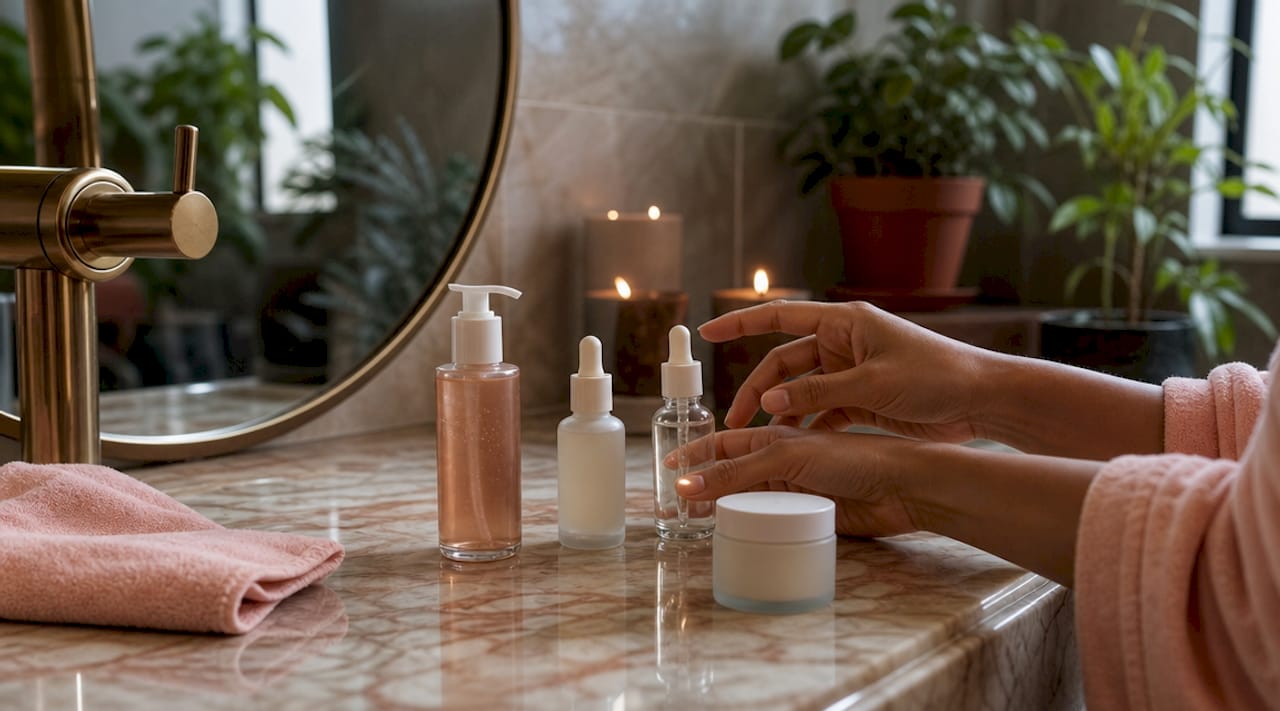
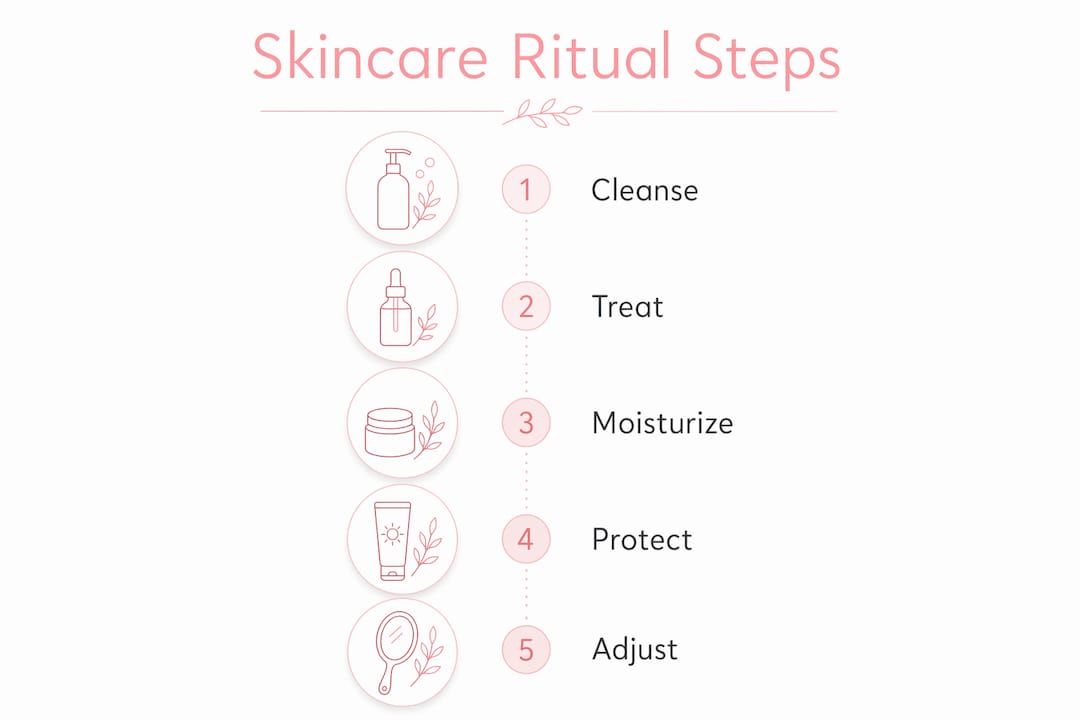
Every effective skincare ritual follows the same underlying logic: cleanse, protect, and repair. The sequence changes depending on the time of day, but the principle stays constant. Morning is for protection. Night is for repair.
Morning routine steps:
- Cleanser. Start with a gentle, water-based cleanser to remove overnight oil and residue without stripping your skin barrier.
- Antioxidant serum or cream. Apply a product containing vitamin C and E antioxidants to shield skin from environmental free radicals and support collagen production. This step is your daily defense against pollution and UV-related oxidative stress.
- Moisturizer. Lock in hydration immediately after cleansing. Applying moisturizer within 3 minutes after washing is the most effective way to prevent water loss and support your skin barrier.
- Sunscreen SPF 30+. This is non-negotiable. Use a standalone sunscreen with at least SPF 30, preferably with physical blockers like zinc oxide or titanium dioxide. Relying on SPF in your moisturizer or foundation alone is not sufficient protection, because most people do not apply enough product to reach the labeled SPF level.
Nighttime routine steps:
- Remove makeup thoroughly before cleansing. A micellar water or cleansing balm works well for this.
- Cleanse gently to remove the day’s buildup.
- Apply a toner if your skin benefits from one. This step is optional and depends on your skin type and goals.
- Use treatment serums targeting your specific concerns, such as retinol for aging or niacinamide for uneven tone.
- Seal everything with a moisturizer suited to your skin type.
Pro Tip: If you are new to skincare, skip the toner and serums entirely for the first two weeks. Master the three-step core of cleanse, moisturize, and protect before adding anything else. This gives your skin time to stabilize and makes it far easier to identify what is and is not working.
The order of application matters because thinner, water-based products absorb faster and should go on before thicker, oil-based ones. For a deeper look at sequencing, the guide on layering skincare products from Purelightbotanicalbeauty covers the exact logic behind product order for maximum benefit.
How to tailor your ritual to your skin type and goals
Skin type is the single biggest variable in building a daily skincare ritual guide that holds up over time. A routine designed for oily skin will actively worsen dry skin, and vice versa. Knowing your type before choosing products saves you months of frustration.
Here is how to match your routine to your skin:
- Oily or acne-prone skin. Look for salicylic acid cleansers, which dissolve oil inside pores. Niacinamide serums reduce sebum production and calm redness. Avoid heavy, occlusive moisturizers. Gel-based formulas hydrate without adding shine.
- Dry or dehydrated skin. Ceramides, hyaluronic acid, and squalane are your core ingredients. Ceramides rebuild the lipid barrier that holds moisture in. Avoid foaming cleansers, which strip natural oils. Cream moisturizers work better than gels for this type.
- Sensitive or reactive skin. Fragrance is the most common contact irritant in skincare. Fragrance-free, gentle formulas reduce the risk of contact dermatitis and dryness. Avoid physical exfoliants with rough particles. Opt for calming ingredients like centella asiatica, oat extract, and allantoin. Purelightbotanicalbeauty’s guide on skin-nourishing rituals for sensitive skin goes deeper on barrier-supportive practices.
- Combination skin. Treat zones separately if needed. A lightweight gel moisturizer on the T-zone and a richer cream on dry cheeks is a practical approach.
- Aging or mature skin. Retinol is the most studied ingredient for reducing fine lines and increasing cell turnover. Start with a low concentration (0.025% to 0.05%) two nights per week, then build frequency slowly. Glycolic acid exfoliates the surface and brightens tone but should not be used on the same nights as retinol.
The principle behind all of this is the same: introduce products one at a time, monitor your skin’s response, and build from a stable base. Stacking multiple new actives at once makes it impossible to know which product is helping or causing a reaction.
What is patch testing and why does it matter for your ritual?
Patch testing is the practice of applying a small amount of a new product to a limited skin area before using it on your face, to detect potential allergic or irritant reactions before they spread. Skipping this step is one of the most common mistakes beginners make when building a skincare regimen.
Here is how to perform a proper patch test:
- Choose a test site. The inner forearm or behind the ear are both reliable locations because the skin there is sensitive enough to react but easy to monitor.
- Apply a small amount of the product once daily for 7 to 10 days.
- Observe for redness, itching, swelling, or breakouts throughout the full testing period.
- If no reaction occurs after the full period, the product is likely safe to introduce to your face.
- If a reaction appears at any point, discontinue use and note the ingredient list. This helps you identify the specific irritant for future reference.
“Patch testing duration is necessary to catch slower immune-related reactions. A 24-hour test is not sufficient for detecting delayed hypersensitivity.” — Healthline
The reason a 7 to 10 day patch test matters is that delayed hypersensitivity reactions, the kind triggered by the immune system rather than direct chemical irritation, can take several days to appear. A 24-hour test catches only immediate reactions, which represent a fraction of potential sensitivities. For persistent skin issues or known allergies, a board-certified dermatologist can perform clinical patch testing with a standardized panel of common allergens.
What are practical tips to maintain your daily skincare ritual?
Building a self-care skincare workflow that you actually stick to comes down to a few non-negotiable habits. The biggest predictor of results is not the products you use. It is consistency.
- Apply moisturizer within three minutes of washing. This is one of the most practical timing rules in skincare. Water evaporates from skin quickly after cleansing, and moisturizer applied in that window seals hydration in rather than sitting on top of dry skin.
- Do not change products too frequently. Most active ingredients like retinol and vitamin C require at least four to six weeks of consistent use before visible results appear. Switching products every two weeks prevents you from ever seeing what works.
- Sunscreen reapplication is part of the ritual. Sunscreen should be reapplied every two hours when you are outdoors, and expiration dates matter. Expired sunscreen loses its protective efficacy even if it looks and smells fine.
- Avoid over-exfoliating. Exfoliating more than two to three times per week disrupts the skin barrier and causes the redness and sensitivity that many people mistakenly attribute to other products.
- Layer in the correct order. Thinnest to thickest: toner, essence, serum, moisturizer, oil, sunscreen. Applying a thick cream before a serum blocks absorption entirely.
Pro Tip: Write down the date you open each new product and note any skin changes in a simple notes app. This creates a personal skin log that makes it much easier to connect reactions to specific products or environmental changes.
The clean beauty checklist from Purelightbotanicalbeauty offers a practical framework for building these daily skincare practices from scratch, with a focus on clean, plant-based ingredients that support rather than stress the skin.
Key takeaways
A personalized skincare ritual built on cleansing, protecting, and repairing with the right ingredients for your skin type produces better results than any expensive product used inconsistently.
| Point | Details |
|---|---|
| Start with three core steps | Cleanse, moisturize, and protect with SPF 30+ before adding any treatments. |
| Match products to your skin type | Use ceramides for dry skin, salicylic acid for acne-prone, and fragrance-free formulas for sensitive skin. |
| Patch test every new product | Test for 7 to 10 days on the inner forearm to catch delayed hypersensitivity reactions. |
| Timing affects results | Apply moisturizer within 3 minutes of washing to lock in hydration effectively. |
| Consistency beats complexity | Four to six weeks of daily use reveals whether a product is working. Frequent switching prevents results. |
What I have learned from years of watching skin transform
I spent a long time believing that better skin required more products. More serums, more steps, more spending. What I actually found, both personally and in watching others build their routines, is the opposite. The people whose skin improves most dramatically are almost always the ones who simplify.
The most common mistake I see is treating a skincare ritual like a shopping list rather than a practice. Someone reads about retinol, niacinamide, glycolic acid, and vitamin C in the same week and adds all four to their routine at once. Two weeks later, their skin is red and irritated, and they blame the products. The products are not the problem. The pacing is.
What actually works is boring in the best possible way: a gentle cleanser, a moisturizer that your skin loves, and sunscreen every single morning. That foundation, held consistently for six weeks, does more for most skin than a cabinet full of actives ever will. Once the barrier is stable and you know what your skin looks like at its baseline, adding one treatment at a time becomes genuinely useful.
I also think there is something worth saying about the emotional side of this. A skincare ritual is not just maintenance. It is a few minutes each day that belong entirely to you. When you approach it that way, the consistency comes naturally. You are not doing it because you have to. You are doing it because it feels like care.
— Kaitlyn
Discover how Purelightbotanicalbeauty supports your ritual
Building a skincare ritual is deeply personal, and the products you choose should feel like they belong in it. Purelightbotanicalbeauty was created for exactly this kind of intentional, nourishing approach to skin health.
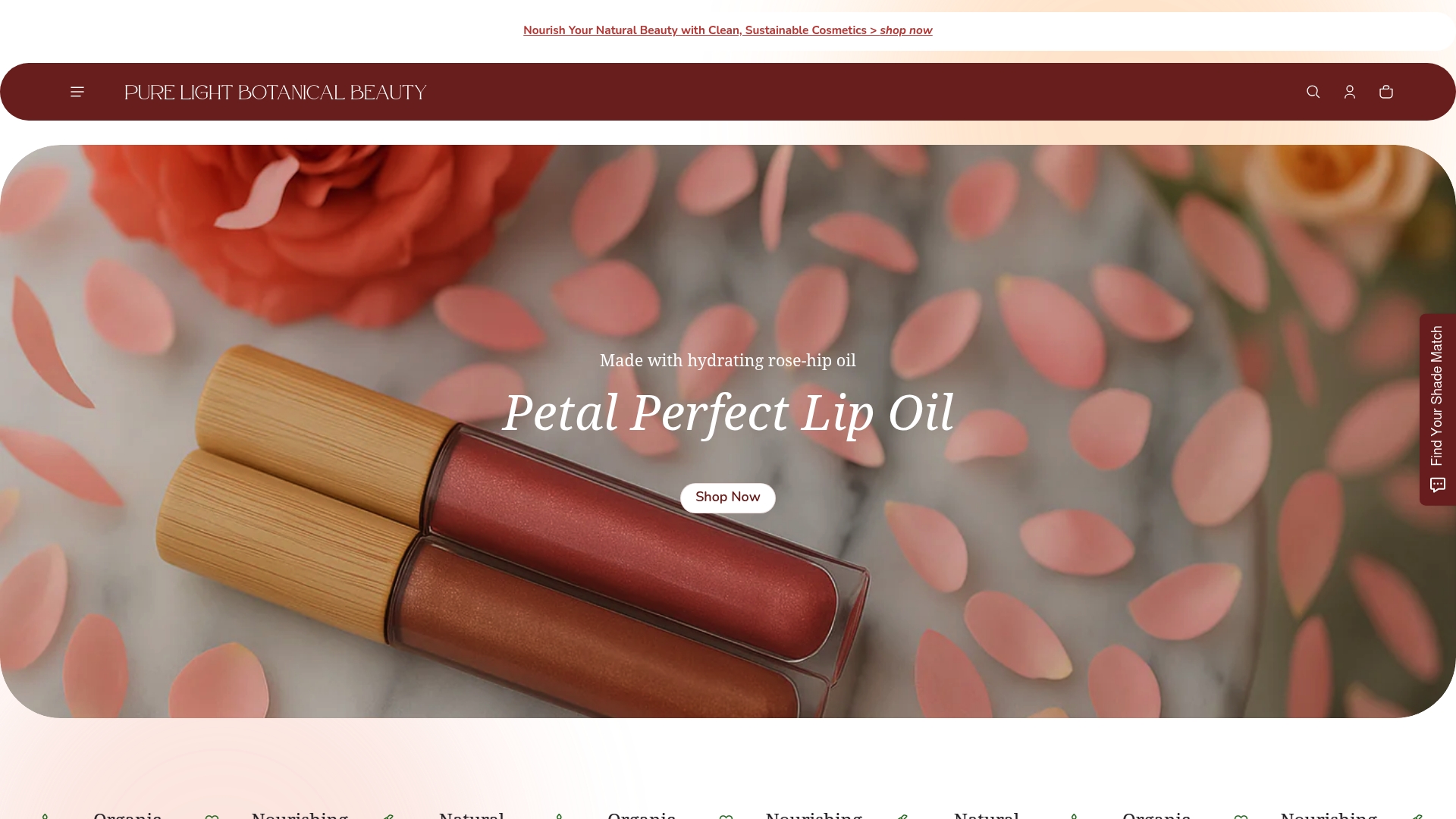
Every formula in the Purelightbotanicalbeauty line is crafted with clean, plant-based ingredients designed to support the skin barrier without irritation, making them especially suited for sensitive skin and conditions like eczema. From the Petal Perfect Lip Oil to the Botanical Crème Blush, each product is built to nourish as it performs. Explore the full collection at Pure Light Botanical Beauty to find the pieces that fit your ritual, and visit the brand’s impact page to learn about the values behind every product.
FAQ
What are the basic steps for a skincare routine?
The core steps are cleanse, moisturize, and apply SPF 30+ sunscreen in the morning, and cleanse, treat, and moisturize at night. Dermatologists recommend establishing these basics before adding serums or actives.
How long does it take to see results from a new skincare ritual?
Most active ingredients require four to six weeks of consistent daily use before visible changes appear. Switching products before that window closes prevents accurate evaluation.
How do I choose skincare products for sensitive skin?
Select fragrance-free, gentle cleansers and moisturizers with calming ingredients like ceramides, oat extract, or centella asiatica. Always patch test new products for 7 to 10 days before applying them to your full face.
Do I really need sunscreen every day?
Yes. Daily SPF 30+ sunscreen is the single most effective anti-aging and skin-protective step in any routine. Sunscreen should be reapplied every two hours during outdoor exposure, and expired products should be replaced.
Can I use retinol and vitamin C in the same routine?
These two actives are best used at different times of day. Vitamin C works well in the morning alongside sunscreen. Retinol is most effective at night and should be introduced slowly, starting two nights per week to minimize irritation.
Recommended
- How to Build Skin-Nourishing Rituals for Sensitive Skin – Pure Light Botanical Beauty
- How to build a soulful skincare routine for sensitive skin – Pure Light Botanical Beauty
- How to create a holistic beauty ritual for sensitive skin – Pure Light Botanical Beauty
- How to Layer Skincare Products Naturally for Radiant Skin – Pure Light Botanical Beauty