

TL;DR:
- Building a consistent, gentle skincare ritual tailored to sensitive skin strengthens the skin barrier and reduces irritation. Focusing on simple steps like lukewarm cleansing, immediate moisturization, and daily sun protection supports healing and emotional wellbeing. Avoid overloading products, hot water, and fragrances to prevent flares and promote resilient, healthier skin.
You wake up, reach for a cleanser that worked beautifully on your friend’s skin, and within minutes your face is flushed, tight, and itching. Sound familiar? For those living with sensitive skin or eczema, the beauty aisle can feel less like a sanctuary and more like a minefield. The truth is, most mainstream routines are simply not designed with your skin in mind. But here’s the good news: a thoughtfully built, repeatable ritual using gentle, evidence-based steps can transform your skin experience from one of constant frustration into something that actually feels like care.
Table of Contents
- Why rituals matter for sensitive skin
- Essential steps for a skin-nourishing ritual
- Common mistakes and what to avoid
- Adapting rituals for eczema flares and sensitive days
- What most beauty routines miss about true skin nourishment
- Bring your ritual to life with Pure Light Botanical Beauty
- Frequently asked questions
Key Takeaways
| Point | Details |
|---|---|
| Gentle steps are critical | Simple, non-irritating routines protect and nourish sensitive skin best. |
| Moisturize immediately | Lock in hydration by applying moisturizer while your skin is still damp after bathing. |
| Avoid common triggers | Steer clear of fragrances, alcohol, and over-cleansing to prevent irritation and flares. |
| Adapt in response to flares | During a flare, simplify your ritual and consult a clinician if needed. |
| Consistency builds resilience | Repeating your ritual daily strengthens your skin’s barrier and soothes sensitivity. |
Why rituals matter for sensitive skin
Sensitive and eczema-prone skin operates on a completely different playing field than typical skin. Its protective barrier, the outermost layer that keeps moisture in and irritants out, is structurally compromised. This means that even small disruptions, like switching a product, changing water temperature, or skipping moisturizer one night, can set off a cascade of redness, itching, and inflammation. Consistency is not just a preference here. It is a genuine medical need.
When you build a ritual around your skin’s specific needs, something remarkable happens. Your skin begins to trust the process. Barrier repair happens gradually, and with each consistent, gentle session, your skin grows more resilient. Equally important, the act of caring for yourself in a steady, intentional way supports your emotional wellbeing too. Research consistently shows that self-care routines reduce cortisol levels, and lower stress is directly linked to fewer eczema flares.
Consider what daily beauty rituals for sensitive skin can look like when you strip away the noise and focus on what your skin actually responds to. It does not have to be elaborate. In fact, the simpler, the better.
Here is what a nourishing ritual for sensitive skin should include:
- Lukewarm water for cleansing (never hot)
- Fragrance-free, minimal-ingredient products
- Immediate moisturizing after washing
- Sun protection as a daily non-negotiable
- Gentle, patting motions instead of rubbing
“Gentle, consistent skin rituals with fragrance-free moisturizer and short, lukewarm cleansing can reduce irritation and support a stronger barrier.”
The ritual is not just about the products you use. It is about the intention behind each step. When you approach your skin with patience and care rather than impatience and experimentation, you give it the environment it needs to heal.
Essential steps for a skin-nourishing ritual
Now that you know why rituals matter, here is a step-by-step process for building your own skin-nourishing routine. The sequence matters just as much as the products you choose. Applying things in the wrong order can lock out moisture or introduce irritants before your barrier has a chance to absorb what it needs.
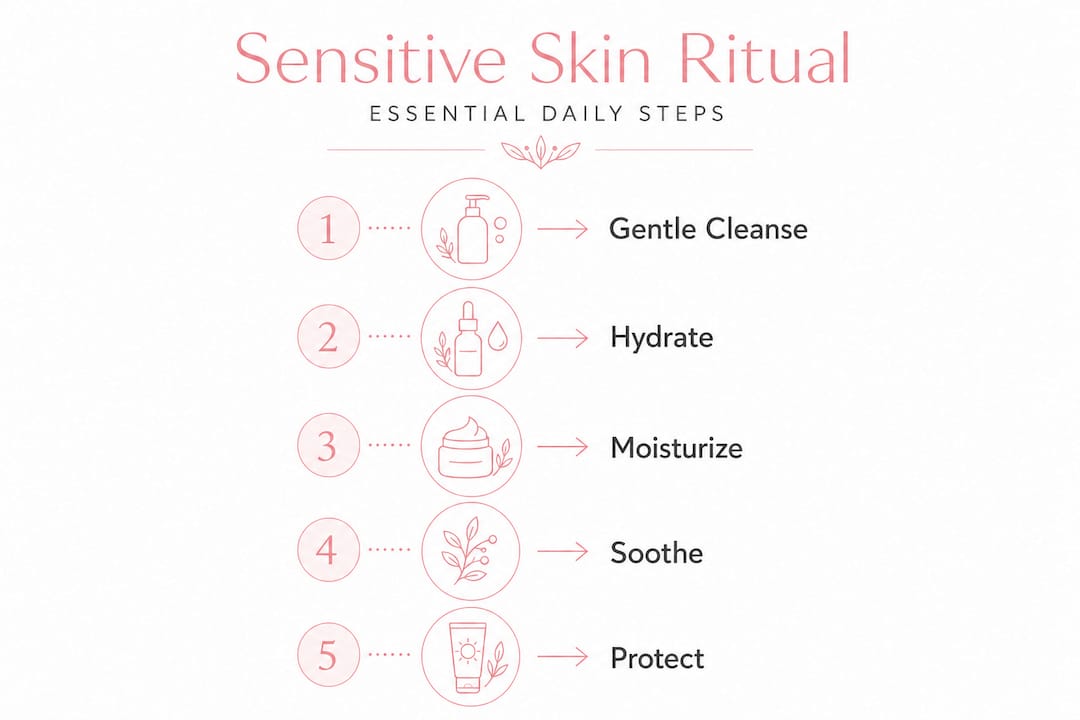
The recommended sequence follows a simple logic: gentle cleanse, hydrate, moisturize, protect. Each step builds on the one before it.
-
Cleanse gently. Use a fragrance-free, sulfate-free cleanser with lukewarm water. Spend no more than 60 seconds washing your face. Rinse thoroughly and avoid anything with a strong lather, as heavy surfactants strip your natural oils.
-
Hydrate on damp skin. While your skin is still slightly damp, apply a hydrating mist or a water-based serum. Damp skin absorbs active ingredients more efficiently, and this step creates the foundation for a plump, healthy-feeling surface.
-
Moisturize immediately. Within three minutes of cleansing, apply your moisturizer. This is your barrier-sealing step. Look for ingredients like ceramides, colloidal oatmeal, shea butter, or jojoba oil. These ingredients are known to mimic or restore the skin’s natural lipid layer.
-
Protect with mineral sunscreen (morning only). Zinc oxide and titanium dioxide are the gold standard for sensitive skin because they sit on top of the skin rather than absorbing into it. Many chemical sunscreen filters are known triggers for sensitive and eczema-prone individuals.
Pro Tip: Apply your moisturizer in downward strokes, following the direction of hair follicles. This small adjustment reduces the chance of follicular irritation, especially if your skin is prone to redness.
Here is a quick-reference overview for each step:
| Step | When | Key ingredient to look for | What to avoid |
|---|---|---|---|
| Gentle cleanse | Morning and evening | Ceramides, glycerin | Sulfates, fragrance, high-pH formulas |
| Hydrate | After cleansing, on damp skin | Hyaluronic acid, aloe vera | Alcohol, synthetic fragrance |
| Moisturize | Within 3 minutes of cleansing | Colloidal oatmeal, shea butter, jojoba | Parabens, synthetic dye |
| Sunscreen | Morning only | Zinc oxide, titanium dioxide | Oxybenzone, chemical filters |
Pairing these steps with the right clean beauty routine steps creates a complete framework you can rely on every single day. Once this becomes second nature, you will spend less time troubleshooting and more time actually enjoying your skin.
Common mistakes and what to avoid
With your core steps outlined, it is crucial to know what to avoid so your new ritual does more good than harm. Many people with sensitive skin unknowingly make choices that consistently undermine their progress, and the frustrating part is that most of these mistakes are easy to fix once you know what to look for.
The biggest pitfall? Doing too much. In a world flooded with new launches, trending serums, and multi-step routines, it is tempting to layer product after product in hopes of faster results. But for sensitive skin, more is almost always less. Too many products mean too many potential irritants, and an overloaded skin barrier simply cannot cope.
Here are the most common mistakes to stop immediately:
- Using hot water. Hot water strips natural oils and dilates blood vessels, worsening redness and sensitivity.
- Overwashing. Cleansing more than twice a day disrupts the microbiome and weakens the barrier. Stick to morning and evening.
- Using rough towels or washcloths. Pat skin dry with a soft, clean towel. Never rub.
- Skipping moisturizer when skin feels oily. Even oily eczema-prone skin needs moisture. Skipping this step causes the skin to overproduce oil as compensation.
- Trusting “natural” fragrance labels. Natural fragrance is still fragrance. Essential oils, citrus extracts, and botanical perfume blends can all trigger reactions in sensitive skin.
“Avoiding fragrances, irritants, and unnecessary chemicals can prevent future flares.”
This is worth repeating because it surprises so many people: a product can be entirely plant-based and still be deeply irritating. Rose water, tea tree oil, and lavender are among the most common botanical triggers. When building your ritual, focus on function over fragrance. Your skin does not need to smell beautiful to be healthy.
Take time to learn about holistic beauty rituals for sensitive skin and the skin-soothing beauty tips that actually make a difference without adding unnecessary complexity to your routine.
Pro Tip: When testing any new product, apply a small amount to the inner arm for three to five days before using it on your face. This patch-testing approach saves you from full-face reactions and helps you identify your personal triggers over time.
Adapting rituals for eczema flares and sensitive days
Sensitive skin can change daily, and let’s talk about how to navigate rituals when flares or heightened sensitivity arise. What works beautifully on a calm skin day may feel unbearable during a flare. The key is learning to read your skin and respond with compassion rather than frustration.
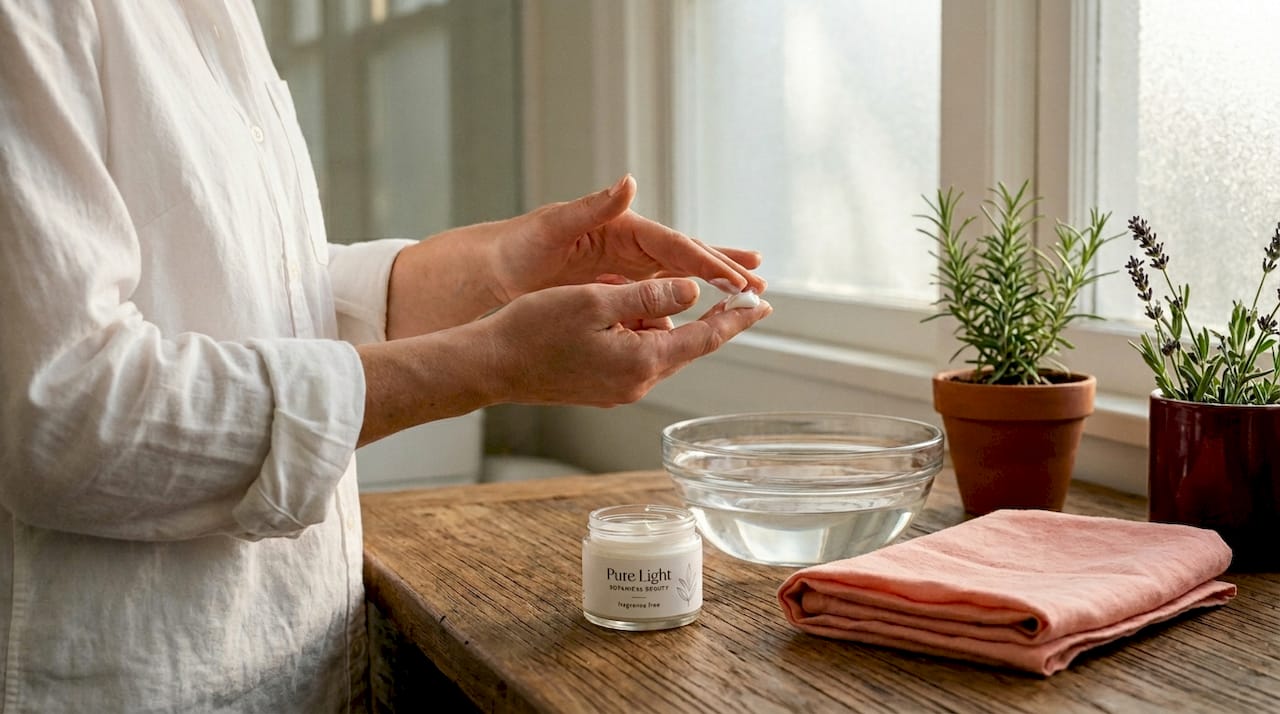
During a flare, your number one priority is to simplify. Strip your routine back to only the most essential steps: a gentle rinse (or even just lukewarm water without cleanser), followed immediately by a thick, fragrance-free moisturizer. Anything beyond that is optional and potentially harmful during an active flare.
Here is a simple comparison to guide you:
| Skin status | Cleanser | Serum or mist | Moisturizer | Extras |
|---|---|---|---|---|
| Calm day | Gentle, fragrance-free cleanser | Hydrating mist or serum | Ceramide or oat-based moisturizer | Mineral sunscreen, tinted balm |
| Flare day | Lukewarm water rinse only | Skip | Thick barrier cream or ointment | Nothing new, nothing scented |
This table might look simple, but the discipline it takes to follow it during a flare is real. When skin is inflamed, the instinct is often to throw every soothing product you own at it. Resist that urge. Simplify your routine and avoid anything new or harsh until your skin calms down.
“During flares, simplify routines further and consider proactive maintenance therapy if advised by a dermatologist.”
Some individuals with moderate to severe eczema benefit from what dermatologists call proactive maintenance therapy, where a low-dose treatment is applied to previously affected areas even on clear days. This approach is not for everyone, but it has a strong evidence base for preventing recurrence. If your skin cycles through frequent flares, exploring holistic routines for sensitive skin and consulting a clinician about your options is a genuinely worthwhile step.
Flare days are also a reminder that skin health is not linear. Progress does not look like a straight upward line. It looks like mostly good days punctuated by setbacks, and that is completely normal. Meeting your skin with patience on those harder days is part of the ritual too.
What most beauty routines miss about true skin nourishment
Here is the part most beauty content glosses over: the beauty industry is built on selling complexity. More steps, more products, more innovation. But for women with sensitive or eczema-prone skin, complexity is often the enemy. Trendy ten-step routines, viral ingredients, and limited-edition formulas are not designed with your skin’s healing journey in mind. They are designed to generate excitement and drive sales.
What we have observed through years of working with sensitive-skin communities is this: the women who see the most consistent improvement in their skin are not the ones using the most sophisticated products. They are the ones who have learned to listen deeply to their skin and commit to a small number of genuinely supportive steps.
There is something quietly radical about choosing simple over trendy. It requires trusting that a ceramide moisturizer you have used for six months is doing more for your skin than any serum with a 47-ingredient list. It means saying no to the new and yes to the consistent. That is genuinely hard in a culture that rewards novelty.
Plant-based ingredients, when chosen carefully and minimally, are extraordinarily effective. Colloidal oatmeal has been studied for decades and reliably reduces itch and inflammation in eczema-prone skin. Jojoba oil closely resembles the skin’s own sebum, making it one of the least reactive natural oils available. These are not new discoveries. They are time-tested, clinician-acknowledged ingredients that work precisely because of their simplicity.
The deeper lesson here is that true skin nourishment is not about accumulation. It is about alignment. Aligning your products with your skin’s actual biology, your routine with your lifestyle, and your expectations with the reality that healing takes time. When you approach your skincare from that place of alignment, the ritual stops feeling like a chore and starts feeling like an act of love.
Bring your ritual to life with Pure Light Botanical Beauty
You have done the learning. Now it is time to bring it all to life with products that were made for exactly this kind of intentional, gentle care.
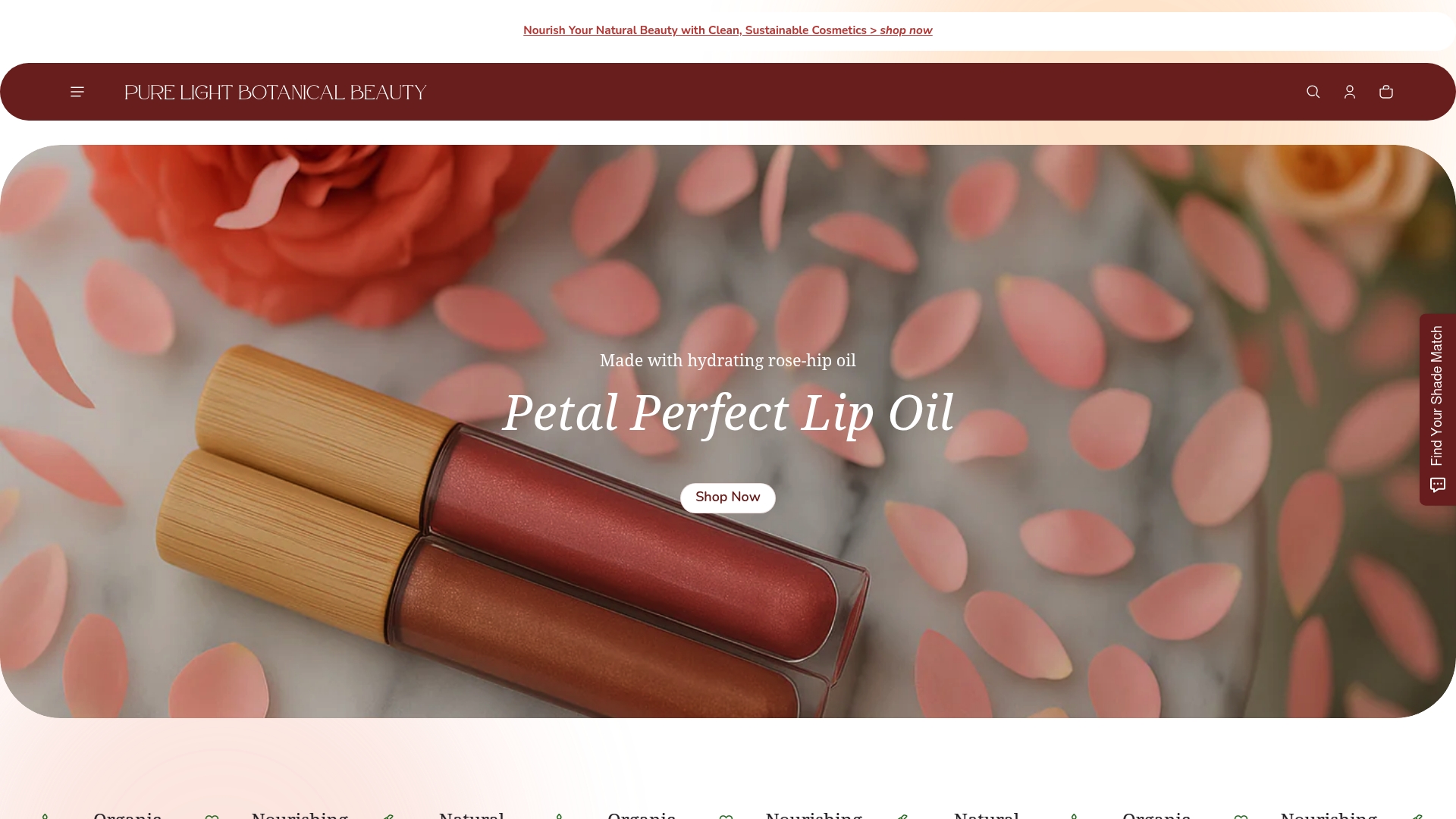
At Pure Light Botanical Beauty, every formula is built around the belief that healing and beauty belong together. From the Petal Perfect Lip Oil to the Botanical Crème Blush, each product is crafted with clean, plant-based ingredients that respect sensitive and eczema-prone skin rather than challenge it. There is no compromise between how a product performs and how it feels on your most delicate days. If you are ready to build a ritual that truly supports your skin, start with our glowing skin routine guide for a personalized, step-by-step approach to gentle beauty. Your skin deserves this kind of care.
Frequently asked questions
How often should I perform a skin-nourishing ritual for sensitive skin?
Twice daily, once in the morning and once in the evening, is the ideal frequency. Daily moisturizing right after bathing is specifically recommended for eczema-prone and sensitive skin to maintain barrier strength.
What ingredients should I definitely avoid with eczema?
Steer clear of fragrance, alcohol, harsh surfactants, and products with long, unrecognizable chemical lists. Fragrances and irritants are among the most common triggers for eczema flares, even when labeled as natural.
Can I use plant-based oils on sensitive skin?
Many plant-based oils, particularly jojoba, sunflower, and rosehip, are safe and genuinely soothing for sensitive skin. Always patch test first and choose pure, minimally processed options free from added fragrance or preservatives.
When should I consider seeing a clinician about my skin ritual?
If your eczema persists, keeps coming back, or significantly impacts your quality of life, clinician input is important. A dermatologist can identify your personal triggers and help you develop a maintenance plan that goes beyond what over-the-counter products can offer.
Should I change my ritual during an eczema flare?
Absolutely yes. During a flare, simplify your routine down to a gentle rinse and a thick, barrier-supporting moisturizer. Avoid introducing anything new until your skin has fully calmed, usually at least three to five days after the flare subsides.
Recommended
- How to create holistic beauty rituals for sensitive skin – Pure Light Botanical Beauty
- How to create a holistic beauty ritual for sensitive skin – Pure Light Botanical Beauty
- Nourishing daily beauty rituals for sensitive skin – Pure Light Botanical Beauty
- Understanding Natural Beauty Rituals for Sensitive Skin – Pure Light Botanical Beauty