

TL;DR:
- Holistic, plant-powered rituals reduce stress, inflammation, and promote lasting skin health.
- Consistency and mindfulness are more effective than quick-fix trends for sensitive skin.
- Simple, gentle routines paired with emotional self-care improve skin and overall well-being.
Sensitive skin and stress make a complicated pair. When your skin reacts to nearly everything and your nervous system is already stretched thin, a conventional beauty routine can feel less like self-care and more like a minefield. The right ritual changes that entirely. A thoughtful, plant-powered approach treats your skin as the living, feeling organ it is, working with your body’s natural rhythms instead of against them. This guide walks you through every step of building a holistic beauty ritual that protects your skin, calms your mind, and builds lasting confidence from the inside out.
Table of Contents
- Why your beauty ritual matters: Skin and emotional wellness
- What you need: Tools, botanicals, and mind-body supports
- Step-by-step: Creating your beauty ritual
- Troubleshooting and personalizing: Flares, minimalism, and emotional triggers
- Verifying results: Signs your ritual works
- A holistic ritual is more than skin deep: Our take
- Empower your beauty ritual with Pure Light Botanical Beauty
- Frequently asked questions
Key Takeaways
| Point | Details |
|---|---|
| Holistic rituals matter | Integrating plant-based routines helps sensitive skin and emotional well-being. |
| Minimalism protects skin | Using fewer, gentle products reduces irritation and supports skin barrier health. |
| Track both skin and mood | Monitor hydration and emotional well-being to verify progress from your ritual. |
| Empowerment starts with care | Daily mindful rituals build confidence and calm, especially for women with sensitive skin. |
Why your beauty ritual matters: Skin and emotional wellness
Beauty rituals are not just about what ends up on your face. They are about how they make you feel before, during, and after. When you slow down each morning or evening to care for yourself intentionally, something shifts beneath the surface.
Research confirms this. Emotional benefits via reduced cortisol are measurable when people use plant-derived botanical formulas consistently, which means the calming effect of your ritual is not just in your head. It is biochemical. Lower cortisol levels translate directly into reduced skin inflammation, fewer breakouts, and less reactive skin overall.
The link between emotional health and your skin goes even deeper. Emotional-skin connection via stress is well-documented: when you experience anxiety, grief, or chronic pressure, your skin often mirrors those internal signals through redness, dryness, or flares. Addressing stress is not optional for sensitive skin. It is essential.
This is why beauty rituals and well-being are so deeply intertwined. A consistent ritual, even a simple five-minute one, sends a signal to your nervous system that you are safe, cared for, and worthy of attention. Over time, that signal becomes part of your identity.
Here is what a meaningful ritual actually does for you:
- Reduces cortisol and inflammatory markers in the skin
- Creates a dependable anchor point in an unpredictable day
- Builds confidence through visible, gradual skin improvement
- Offers a moment of mindfulness that carries into the rest of your day
- Reinforces a sense of self-love through rituals that strengthens over time
“A ritual is not a routine. A routine is automatic. A ritual is intentional. When you bring intention to your skincare, you are practicing self-respect.”
Consistency matters more than perfection here. You do not need a 12-step routine. You need one that you actually show up for, every day, with presence and care.
What you need: Tools, botanicals, and mind-body supports
Now that we see how rituals matter, let us prepare the right materials and supports for a safe, effective routine.
The foundation of any sensitive skin ritual is trust. You need to trust that what you are putting on your skin will not trigger a reaction, worsen a flare, or add unnecessary chemical burden to an already sensitive system. This is where plant-based, minimalist formulas shine.
Studies show that plant-derived materials are safe with no irritation responses across 50 tested samples. These are not small numbers in the world of sensitive skin research. That kind of safety record is exactly why botanical formulas have become the gold standard for reactive, delicate, or eczema-prone skin.
Supplements and topical botanicals have also been shown to improve skin hydration by 31%, which matters deeply when your skin barrier is compromised and prone to moisture loss. Hydrated skin is calmer, more resilient, and less likely to react to environmental triggers.
A simplified approach is almost always better for sensitive skin. Less product reduces irritation risk and makes it easier to identify what your skin truly loves versus what it merely tolerates. Dermatologists consistently recommend a cleanse, treat, protect framework instead of layering five or more products.
Here is a simple breakdown of what your toolkit should include:
| Category | Recommended options | What to avoid |
|---|---|---|
| Cleanser | Gentle, fragrance-free botanical gel or milk | Foaming sulfate cleansers |
| Treatment | Aloe vera, chamomile, rosehip oil | Harsh acids, synthetic retinoids |
| Moisturizer | Plant-based barrier cream with ceramides | Petrolatum-heavy formulas |
| Color cosmetics | Botanical ingredient benefits driven makeup | Synthetic fragrance, FD&C dyes |
| Mindset tools | Affirmations, breathwork, journaling | Rushed, distracted application |
Beyond topical products, your mind-body toolkit matters enormously. Prioritize eight hours of sleep, which is when your skin regenerates most actively. Keep your nutrition rich in antioxidants from berries, leafy greens, and healthy fats like avocado and flaxseed. And do not underestimate stress management: even five minutes of deep breathing before applying your products can shift your nervous system into a more receptive, healing state.
Pro Tip: Before adding any new botanical product to your routine, apply a small amount to the inside of your wrist for 24 hours. This is your first line of defense, and it can save your face a lot of unnecessary distress.
For deeper guidance on choosing the right formulas, explore the science of botanical benefits for sensitive skin to understand which plant actives work best for your skin type.
Step-by-step: Creating your beauty ritual
With your tools ready, here is how to build your ritual step-by-step for skin health and emotional balance.
The structure of a holistic ritual for sensitive skin follows a clear and repeatable sequence. Think of it as a three-act practice: cleanse, treat, and protect, with moments of intentional self-care woven in between each step.
-
Set the space. Before touching your face, take three slow breaths. Dim harsh lighting if possible. Play soft music or keep things quiet. This is not extra. It signals to your body that this is a healing moment, not a task to rush through.
-
Cleanse gently. Use lukewarm water, never hot. Apply your cleanser with clean fingertips using soft, circular movements. Rinse thoroughly and pat dry with a soft cotton cloth. Cleanse-treat-protect sequencing is the foundation dermatologists recommend for every skin type, but it is especially non-negotiable for sensitive skin.
-
Treat with botanicals. While skin is still slightly damp, apply your serum or treatment. Look for formulas featuring aloe vera for its anti-inflammatory properties, chamomile for its skin-calming flavonoids, or rosehip oil for its vitamin A content. These botanicals work synergistically with your skin barrier rather than disrupting it.
-
Protect and seal. Lock in all that goodness with a gentle moisturizer. In the morning, follow with a mineral SPF to protect against UV-triggered inflammation. In the evening, let a richer botanical balm work overnight while you sleep.
-
Add a self-care moment. Speak a brief affirmation as you apply your moisturizer. Something as simple as “I nourish myself with care and intention” can shift the emotional quality of the ritual entirely. This is not performative. Affirmation practice has measurable effects on self-worth and stress response.
Here is a quick comparison to help you see the difference between a rushed routine and a holistic ritual:
| Rushed routine | Holistic ritual |
|---|---|
| Applied in under 60 seconds | 5 to 10 minutes of intentional care |
| Products chosen for trend | Products chosen for skin health |
| No emotional component | Affirmations and breathwork included |
| Random product layering | Cleanse, treat, protect sequence |
| Reactive and inconsistent | Consistent and adaptive |
Research shows that elasticity improves by 18% with regular botanical supplement and topical use, alongside the hydration and cortisol benefits mentioned earlier. That kind of measurable change takes time and consistency, but it is absolutely achievable when your ritual is aligned with your skin’s actual needs.
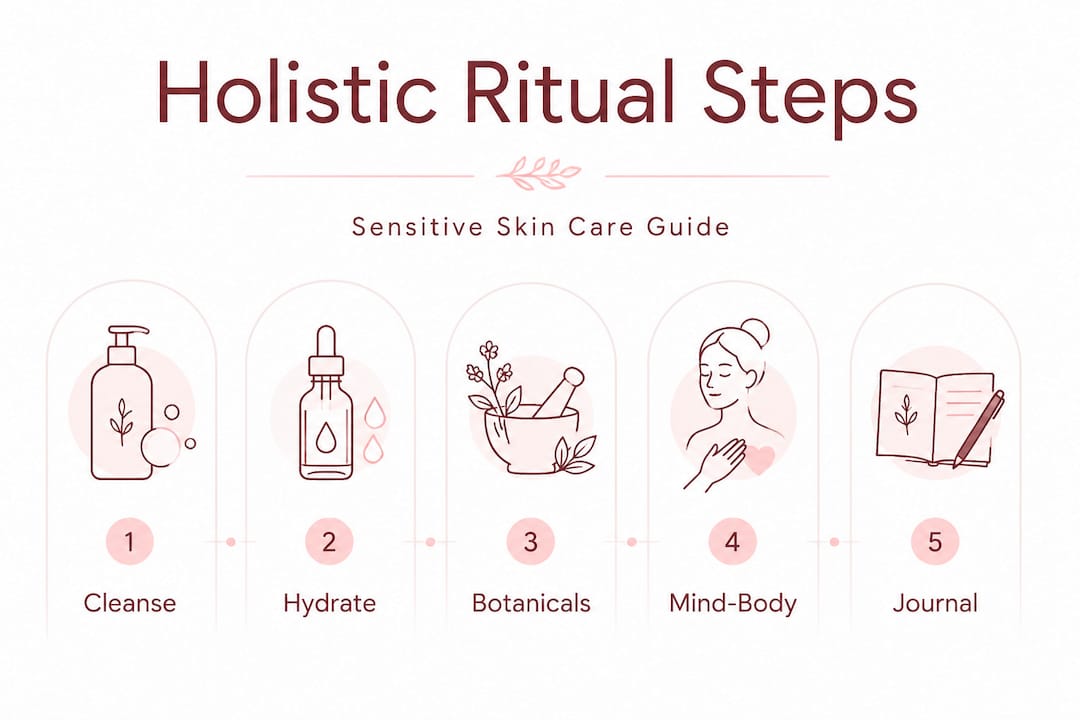
Pro Tip: Journal for two minutes after your evening ritual. Note how your skin looks, how you feel emotionally, and what you used. This creates a personal data record that helps you refine your routine over time.
Explore additional plant-powered beauty tips to expand your ritual as your skin grows stronger.
Troubleshooting and personalizing: Flares, minimalism, and emotional triggers
Once you have your ritual routine, it is vital to know how to adapt and troubleshoot for your unique skin and emotional needs.
Sensitive skin does not follow a perfectly linear path. Some weeks your skin will glow. Others, a stress spike, a hormonal shift, or a new product will send everything sideways. That is normal. The goal is not to eliminate all variability, but to have a clear plan when variability hits.
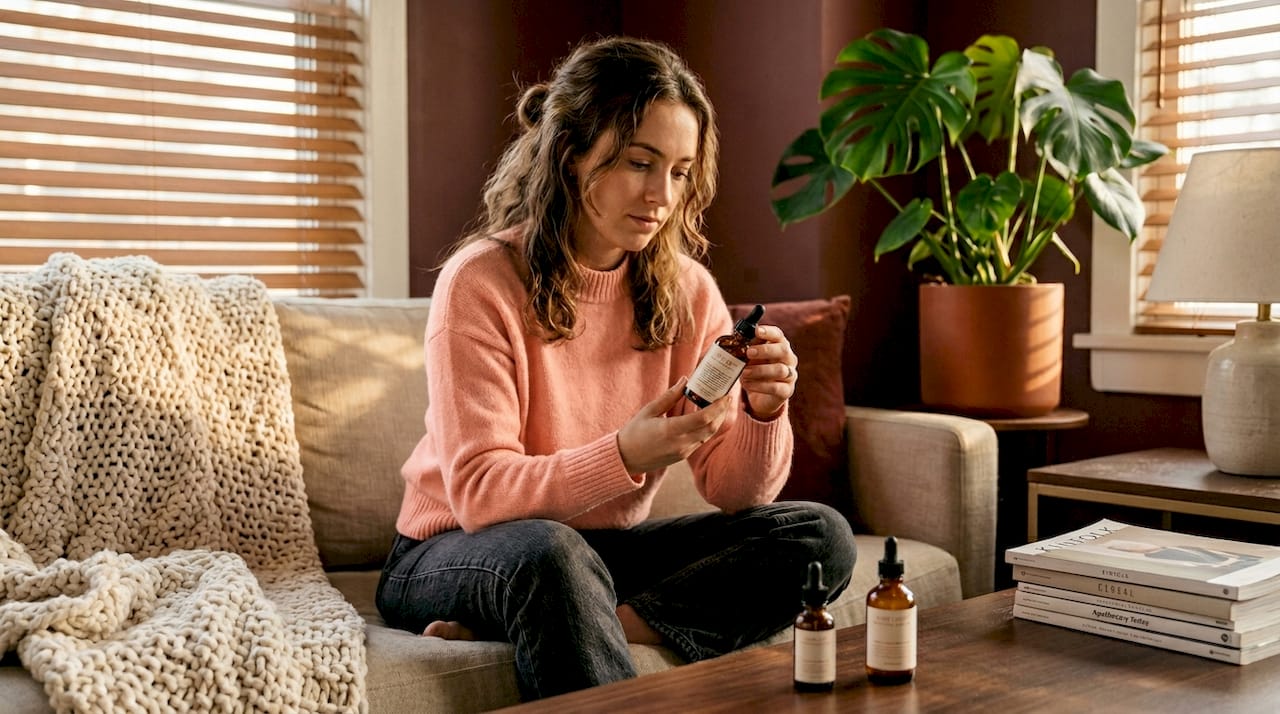
During flare-ups, the most important thing you can do is strip back. Minimal products during flares dramatically reduces the risk of compounding the reaction. Use only your gentlest cleanser and a single fragrance-free moisturizer. Save the serums, actives, and color cosmetics for when your skin has calmed down.
During a flare, reach for these gentle supports:
- Aloe vera gel (pure, no added fragrance) to reduce inflammation and soothe redness
- Colloidal oatmeal to calm itching and reinforce a compromised barrier
- Cold water compresses to bring down heat and puffiness
- Chamomile tea bags (cooled) applied gently to reactive areas
- A commitment to rituals for sensitive skin wellness that honor your skin’s current state rather than push through it
Emotional triggers deserve just as much attention as topical ones. Stress worsens skin via the HPA axis, the body’s central stress response system, triggering a cascade of hormones that inflame skin and disrupt barrier function. This is why a skin flare during a stressful week is not a coincidence. It is your body asking for extra support.
“Your skin is not being difficult. It is communicating. When you learn its language, everything becomes easier.”
Build emotional regulation tools directly into your ritual. Practice box breathing before cleansing. Use a grounding mantra during moisturizing. Keep a symptom diary that tracks both skin changes and emotional patterns. Understanding why your skin behaves the way it does is one of the most empowering moves you can make.
The importance of botanical ingredients becomes especially clear during these challenging periods, when your skin needs the gentlest, most nurturing support possible.
Verifying results: Signs your ritual works
Finally, it is crucial to verify that your ritual delivers real improvements in both skin and self-esteem.
Progress in skincare is subtle at first. Dramatic overnight transformations are mostly marketing. Real, lasting skin health builds quietly over weeks and months. Knowing what to look for keeps you encouraged and on track.
Here is a simple tracking table to monitor your progress:
| Metric | Week 1 baseline | Week 4 check-in | Week 8 check-in |
|---|---|---|---|
| Skin hydration (tightness level) | High tightness | Moderate tightness | Low tightness |
| Redness or reactivity | Frequent | Occasional | Rare |
| Skin texture | Rough or uneven | Smoother | Consistently smooth |
| Emotional mood score (1 to 10) | Note your number | Note your number | Note your number |
| Confidence level | Note your number | Note your number | Note your number |
Clinical data shows that consistent use of plant-derived materials and supplements leads to hydration increases of 31% and elasticity improvements of 18%, with parallel emotional benefits through reduced cortisol. These are real, documented outcomes, not promises.
Watch for these positive signs that your ritual is working:
- Your skin feels plumper and less tight after cleansing
- Redness takes longer to appear and fades more quickly
- You reach for your products because you want to, not because you feel obligated
- You feel a quiet sense of calm during your ritual
- Small stressors affect your skin less dramatically than they used to
For detailed guidance on tracking your skin progress, explore our resources on building a long-term, adaptive practice.
A holistic ritual is more than skin deep: Our take
Here is where we want to be honest with you, as people who care deeply about both skin health and emotional wellness.
Most “quick-fix” beauty trends are not designed for your skin. They are designed for a marketing cycle. A new active ingredient, a viral routine, a 10-day transformation promise. For women with sensitive skin, chasing those trends is not just ineffective. It is often harmful. Each experimental product layered onto reactive skin is another variable, another potential trigger, another disruption to a barrier that is already working hard to protect you.
Our honest take is this: slowness is a strategy. A consistent, minimal, plant-powered ritual practiced over months will outperform any aggressive routine promising overnight results. The evidence supports this. The women who see the most lasting change are not the ones with the most products. They are the ones who show up consistently, listen to their skin, and treat the ritual as a non-negotiable act of self-respect.
The emotional component is not optional, either. We have seen too many women dismiss the affirmation, skip the breathing exercise, and rush through the application because it feels indulgent or unnecessary. But plant-powered beauty is only fully powerful when it is paired with inner care. The botanical actives work harder when your cortisol is lower. Your skin absorbs more when your nervous system is calm. This is not poetic license. It is physiology.
Empowerment in beauty does not come from following the crowd. It comes from tuning in, slowing down, and building something that is entirely, authentically yours.
Empower your beauty ritual with Pure Light Botanical Beauty
You have done the reading. You understand the why and the how. Now it is time to find the products that honor everything you have learned about your skin and your needs.
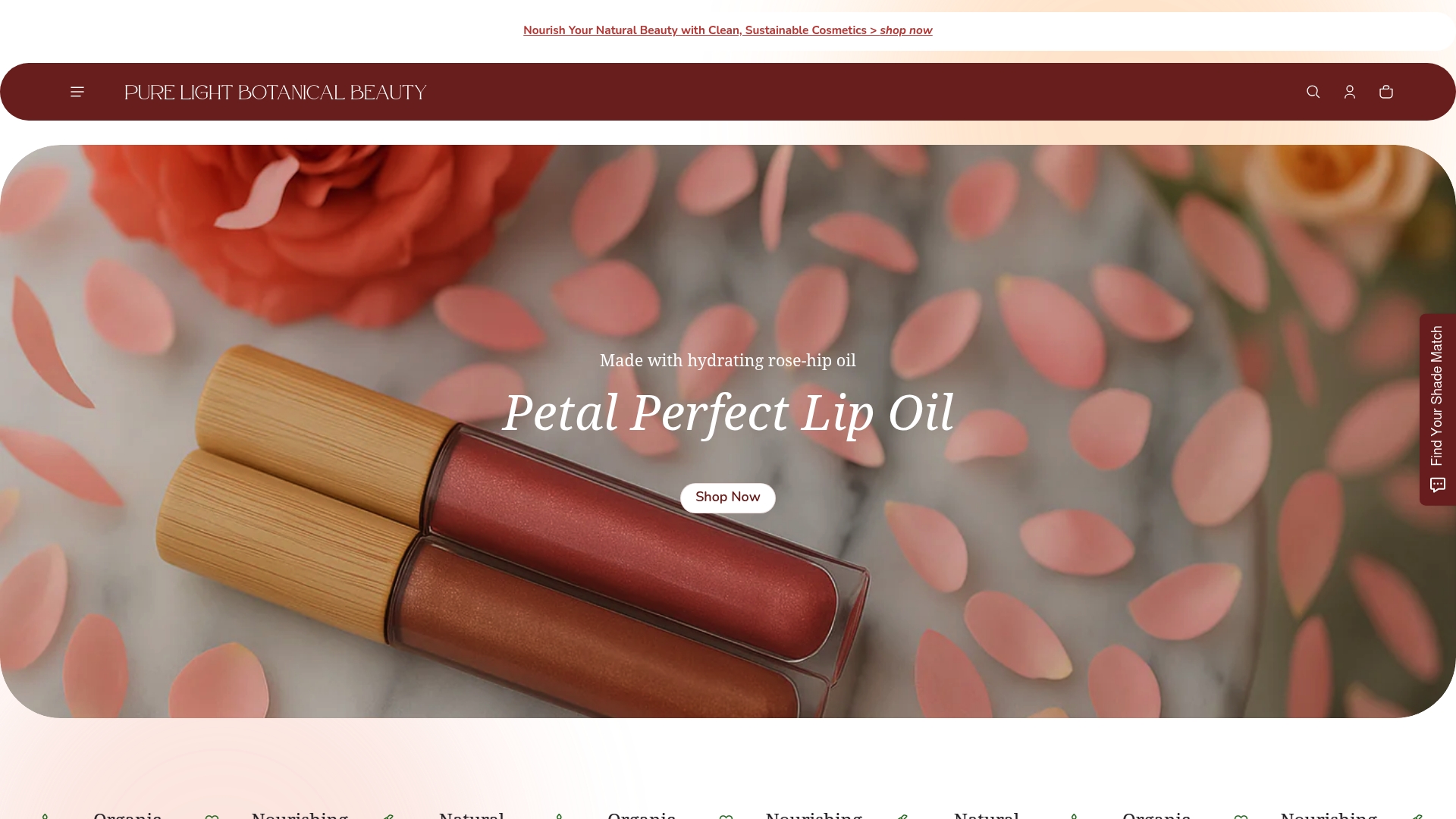
At Pure Light Botanical Beauty, every product is formulated with sensitive skin in mind, blending clean, plant-based ingredients with real performance. From the Petal Perfect Lip Oil to the Botanical Crème Blush and Nourishing Lipstick, each formula is designed to nourish while it beautifies. Whether you are building your first holistic ritual or refining one you have practiced for years, you will find thoughtfully crafted tools that meet your skin exactly where it is. Because beauty should feel like healing, and you deserve both.
Frequently asked questions
How often should I perform my beauty ritual for best results?
Consistency is key, and daily routines yield the best outcomes, though you should adjust the intensity of your ritual seasonally or when your lifestyle changes significantly.
What ingredients should women with sensitive skin avoid?
Avoid synthetic fragrances, harsh chemical preservatives, and untested actives. Plant-derived formulas tested safe across 50 samples remain the most reliable choice for reactive skin.
Can beauty rituals improve my emotional well-being?
Yes. Research shows rituals that use botanical products lead to reduced cortisol and inflammation, which directly improves mood, confidence, and stress resilience.
What should I do during a skin flare-up?
Strip your routine back to the bare minimum, lean on gentle botanicals during flares like aloe and chamomile, and consult a dermatologist if the reaction is severe or persistent.
Recommended
- How to create holistic beauty rituals for sensitive skin – Pure Light Botanical Beauty
- Step-by-step holistic beauty guide for sensitive skin – Pure Light Botanical Beauty
- 7 Holistic Beauty Routines for Sensitive Skin Wellness – Pure Light Botanical Beauty
- Nourishing daily beauty rituals for sensitive skin – Pure Light Botanical Beauty