

TL;DR:
- Most beauty advice often overlooks the fragility of sensitive skin, risking irritation despite natural claims.
- A holistic routine prioritizes barrier repair, hydration, minimal ingredients, and plant-based healing to rebuild resilience.
Most beauty advice was not written with your skin in mind. The recommendations that work beautifully for others can leave sensitive skin red, tight, or burning, and that experience is more common than the beauty industry likes to admit. If you have been searching for routines that heal rather than aggravate, you are in the right place. This article walks you through the essential criteria, a practical seven-step ritual list, and an honest comparison of minimalist versus multi-step approaches so you can build a plant-based beauty practice that truly works for your unique skin.
Table of Contents
- Key criteria for holistic rituals for sensitive skin
- Holistic beauty rituals list: 7 nourishing routines
- How to patch test new holistic products safely
- Comparison: Minimalist vs. multi-step rituals
- A holistic beauty truth most guides miss
- Naturally nurture your skin with Pure Light Botanical Beauty
- Frequently asked questions
Key Takeaways
| Point | Details |
|---|---|
| Barrier repair first | Focus on restoring your skin’s natural barrier with gentle, plant-based products before adding anything new. |
| Less is more | Sensitive skin thrives with minimal, high-quality steps rather than complicated rituals. |
| Always patch test | Test any new product, even natural ones, before using fully to avoid irritation or flare-ups. |
| Personalize your routine | No single ritual suits everyone—listen to your own skin and adapt as needed. |
| Consistency matters | Gentle, repeated care helps sensitive skin heal and glow over time. |
Key criteria for holistic rituals for sensitive skin
Before diving into the step-by-step rituals themselves, let’s clarify what makes a beauty ritual truly holistic and safe for sensitive skin. Not every “natural” label means safe for your barrier, and not every elaborate ritual means effective. Four core principles define a ritual worth building your practice around.
Barrier repair comes first. Your skin barrier is a thin but powerful shield made up of lipids, proteins, and water. When it is intact, it keeps irritants out and moisture in. When it is compromised, even gentle products can sting. A barrier-focused ritual built around barrier repair, hydration, and minimal ingredients is the foundation of any holistic approach worth trusting.
Hydration is non-negotiable. Plant-derived humectants like aloe vera, hyaluronic acid from cassava root, and glycerin pulled from vegetable oils draw water into the skin. Emollients like shea butter and jojoba oil seal that moisture in. Together, they create a moisture sandwich your skin can actually use. Dehydrated sensitive skin becomes reactive skin, so keeping your ritual drenched in plant-sourced hydration is not optional.
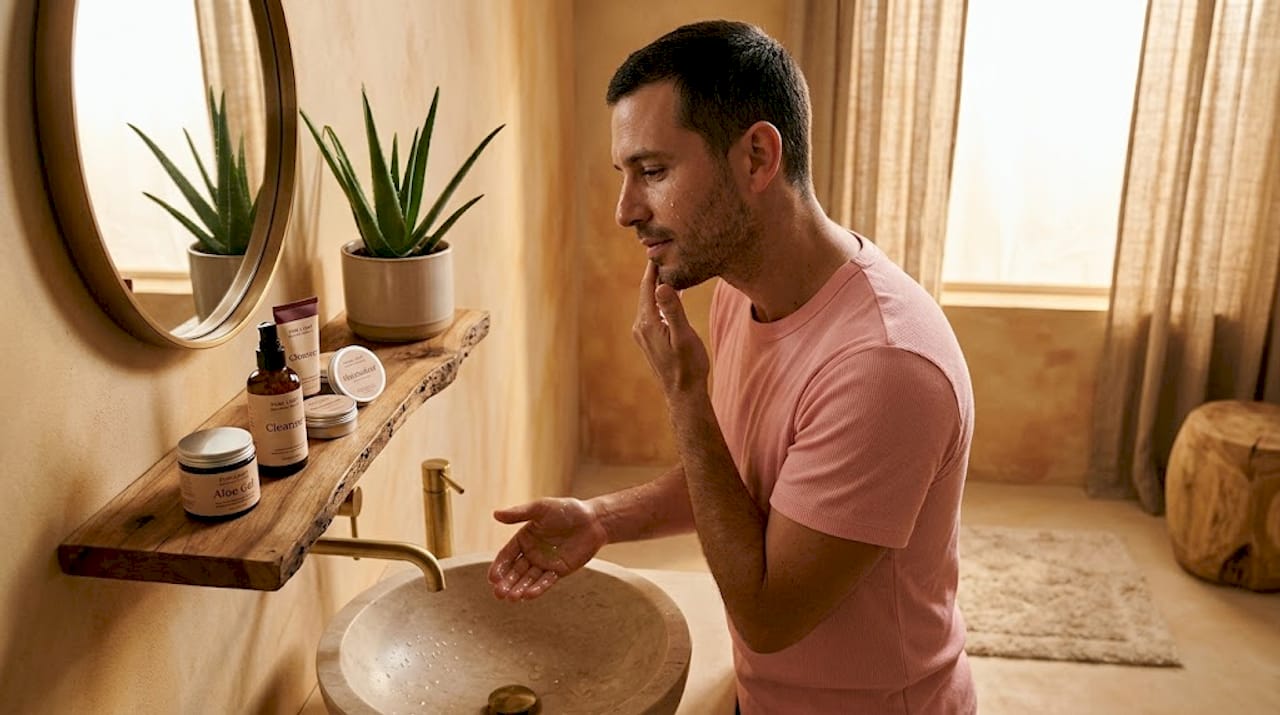
Minimalism protects you. The more ingredients in a product, the higher your odds of encountering one that triggers a response. Creating holistic beauty rituals that rely on fewer, higher-quality botanicals is the smarter path. Think five ingredients you recognize over fifteen you cannot pronounce.
Plant-based focus heals. Botanicals like oat extract, calendula, centella asiatica, and chamomile carry documented anti-inflammatory and skin-restoring properties. Choosing clean, plant-sourced formulas removes the synthetic preservatives, artificial dyes, and petrochemical fillers that frequently hide behind ingredient lists and quietly disrupt sensitive skin over time.
- Prioritize ceramide-supporting ingredients like sunflower seed oil and rosehip oil.
- Avoid anything with synthetic fragrance, even in small amounts.
- Choose formulas with a pH between 4.5 and 5.5 to match your skin’s natural environment.
- Read full ingredient lists, not just front-of-label claims.
Experts advise building your ritual slowly, introducing products one at a time, and monitoring your skin’s real-time response before adding anything new. This approach protects you from guessing games when a reaction shows up.
Pro Tip: Keep a simple skin journal. Note what you applied, in what order, and how your skin felt the next morning. Even three days of notes can reveal patterns that would otherwise take months to spot.
Holistic beauty rituals list: 7 nourishing routines
With these criteria in mind, explore evidence-backed holistic rituals designed to soothe, nourish, and restore sensitive skin. These seven rituals are ordered intentionally, flowing from morning through evening, each one building on the last.
-
Gentle botanical cleanse. Begin with a sulfate-free cleanser formulated with botanical oils or plant milks. Micellar water infused with rose water, or a creamy oat milk cleanser, removes impurities without stripping your acid mantle. Use lukewarm water, never hot, and press your skin dry with a soft cloth rather than rubbing. The core essentials are always cleanse, hydrate, treat gently, and protect.
-
Hydrating facial mist ritual. After cleansing, while your skin is still slightly damp, layer a botanical facial mist. Ingredients like cucumber water, green tea extract, or neroli hydrosol deliver immediate relief and prep the skin to absorb your serum more efficiently. Hold the bottle 8 to 10 inches from your face and let the mist settle rather than rubbing it in.
-
Plant-based serum for targeted nourishment. A serum is your ritual’s workhorse. For sensitive skin, look for serums with centella asiatica (also called cica), niacinamide sourced from niacin, or sea buckthorn oil. These ingredients support barrier recovery, calm visible redness, and slowly rebuild resilience. Apply with clean fingertips using a gentle press-and-release motion rather than dragging the product across your face. Explore daily nourishing rituals that layer these ingredients thoughtfully.
-
Colloidal oat or aloe masking session (2 to 3 times per week). Colloidal oats are among the most well-researched ingredients for sensitive and eczema-prone skin. They contain avenanthramides, plant compounds with potent anti-inflammatory action that directly calm histamine-driven flares. Apply a thin layer of an oat-based or pure aloe gel mask, leave it on for 10 to 15 minutes, and rinse with cool water. This ritual is also a moment to breathe, put your phone down, and simply rest.
-
Herbal steam or warm compress. Once a week, fill a bowl with warm (not boiling) water and add dried chamomile flowers or a bag of green tea. Drape a clean towel over your head and breathe gently over the steam for 5 minutes. This softens skin, supports gentle circulation, and gives botanical actives a chance to reach deeper layers without any mechanical exfoliation. If your skin is very reactive, skip the steam and apply a warm chamomile-soaked compress instead. Discover more healing beauty habits that layer ritual with recovery.
-
Mindful facial massage with botanical oil. Choose a facial oil rich in linoleic acid, like rosehip seed, sea buckthorn, or hemp seed oil. High-linoleic oils are gentler for sensitive and acne-prone skin than oleic-dominant oils. Use your ring fingers (they apply the least pressure naturally) to massage in small circles along your jaw, up your cheekbones, and across your forehead. This practice boosts lymphatic drainage, improves product absorption, and creates a moment of genuine self-connection that the wellness research community increasingly recognizes as relevant to skin health.
-
Nightly self-compassion ritual. Finish your evening practice with something that feels small but matters more than most guides acknowledge: gratitude, stillness, or a few deep breaths. Chronic stress elevates cortisol, which directly disrupts the skin barrier and amplifies inflammatory responses. A nightly ritual of emotional release is not soft wellness talk; it is skin science. Even three minutes of calm breathing before sleep tells your nervous system it is safe to repair.
Pro Tip: Apply your facial oil over a damp face, not dry skin. The oil seals in the water beneath it, doubling the moisturizing effect and reducing the amount of product you actually need.
How to patch test new holistic products safely
Since even natural ingredients can occasionally irritate, let’s look at a safe approach for introducing any new holistic ritual. Patch testing is the most reliable way to reduce the risk of an allergic or irritant reaction when you introduce a new product, and it applies to every formula, regardless of how clean the label reads.
Here is a clear, step-by-step approach:
- Choose a small, discreet area of skin. The inner forearm or behind the ear are ideal. Avoid applying near your eyes or on actively broken skin.
- Apply a small amount of the product, about the size of a pea, to the chosen area.
- Leave it unwashed for 24 hours. Note any redness, itching, swelling, or unusual sensation in the first hour and again at the 24-hour mark.
- Continue monitoring for 7 to 10 days after the initial test, since delayed hypersensitivity reactions can appear days after first contact.
- If no reaction occurs, proceed carefully with facial use, starting once every other day before building to daily application.
“Even plant-derived ingredients can trigger allergic contact dermatitis in sensitive individuals. Patch testing is your safest first move with any new product, natural or otherwise.”
If you experience persistent reactions, professional patch testing with a dermatologist or allergist is a wise next step. They can identify specific botanical allergens using standardized test panels, giving you a clear picture of what your skin chemistry responds to. This is especially valuable if you have conditions like eczema or rosacea that blur the line between irritant and allergic responses. Review how minimalist routines and patch testing work together to keep your barrier protected long-term.
Pro Tip: Test products at night rather than in the morning. That way you have full daylight the next morning to observe any subtle changes on the test site, and you avoid applying anything unknown before a big day.
Comparison: Minimalist vs. multi-step rituals
Different holistic approaches abound, so next, see how minimalist and multi-step routines stack up for sensitive skin wellness. Choosing the right framework can make the difference between a ritual that heals and one that quietly overwhelms your barrier.
| Feature | Minimalist ritual | Multi-step ritual |
|---|---|---|
| Number of products | 3 to 5 | 6 or more |
| Irritation risk | Lower | Higher |
| Ease of troubleshooting | Simple | Complex |
| Barrier repair focus | High | Variable |
| Cost and time | Lower | Higher |
| Layering benefits | Limited | Potentially deeper |
| Best for | Reactive, eczema-prone skin | Stable, resilient skin |
The core goal is always simplification: introduce products slowly and monitor your skin rather than stacking multiple actives at once. This matters even more when you are working with otherwise clean, botanical formulas.
What both approaches share is this: barrier repair and irritant reduction are the universal goals for sensitive skin, regardless of how many steps your ritual includes. A multi-step routine built on gentle, compatible botanicals can work beautifully for someone whose barrier has stabilized. But if you are starting from a place of reactivity, starting with three products and mastering them is always the wiser move.
- A minimalist ritual is easier to diagnose if something goes wrong.
- Multi-step routines offer more opportunities for targeted treatment but require patience and careful sequencing.
- Both approaches benefit from the same core commitment: consistency over novelty.
Understanding why rituals matter beyond just ingredients can shift how you relate to your practice, and exploring soul-nurturing routines helps you see beauty care as a form of daily self-respect rather than a problem to solve.
A holistic beauty truth most guides miss
Now that you have seen the options side by side, here is a perspective informed by both research and experience. The holistic beauty space is genuinely full of good intentions, but it has a quiet problem: it can hype botanical complexity just as much as conventional beauty hypes synthetic innovation. Ten-step rituals featuring twenty-two plant extracts are still ten-step rituals. Your barrier does not distinguish between stressors based on whether they come from a lab or a meadow.
The common denominator that actually predicts good results is tolerability and evidence-based barrier support, not the number of botanical ingredients you can layer. We have seen this truth play out repeatedly: the woman who commits to a simple three-product routine, patch tests faithfully, and learns to listen to her skin will almost always see better outcomes than the one chasing the newest adaptogen serum.
Personalization is the deepest form of holistic care. What soothes one person can inflame another, even using identical ingredients. Chamomile calms most people but triggers reactions in those with ragweed allergies. Rosehip is a favorite, but high-vitamin A content can sensitize some skin types to light exposure. No article, including this one, can replace the specific wisdom of your own skin’s feedback.
Consistency and restraint are where the real healing lives. One gentle ritual done daily for 90 days will outperform any elaborate routine done irregularly. Your barrier rebuilds in cycles, and the slowest, quietest routines win every time. Explore the full holistic beauty guide for a deeper look at how patience becomes your most powerful skincare tool.
Naturally nurture your skin with Pure Light Botanical Beauty
If you are ready to experience gentle yet transformative plant-based routines, the products you choose matter as much as the ritual itself. At Pure Light Botanical Beauty, every formula is crafted from the ground up with sensitive skin in mind. From the Petal Perfect Lip Oil to the Botanical Crème Blush, each product is built on clean, plant-sourced ingredients that nourish your skin while you wear them.
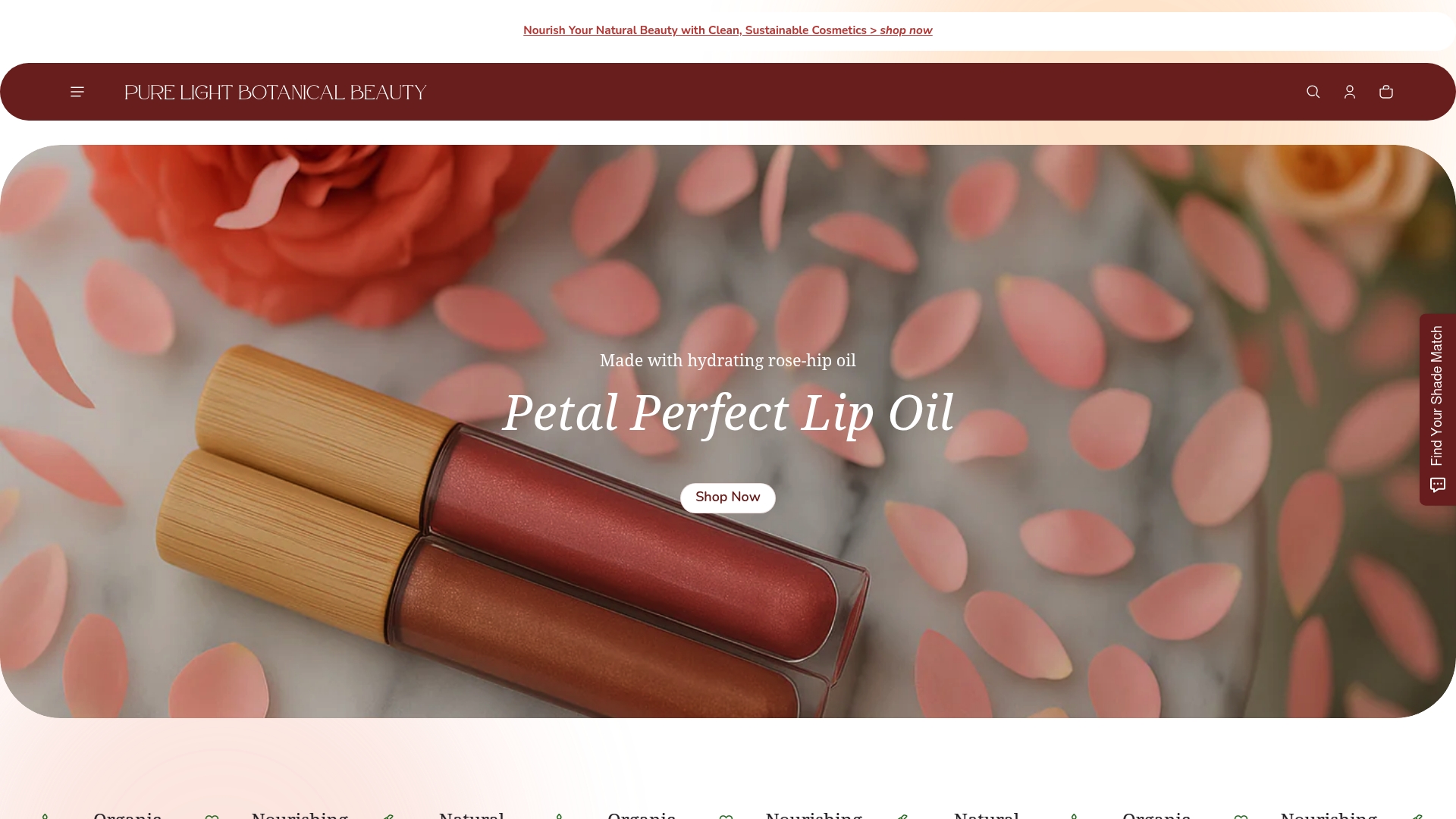
This is beauty as healing, not just color. The brand’s commitment to clean impact means full transparency about every ingredient, every choice, and every value that shapes the formulas you put on your skin. If you have been looking for a beauty practice that feels like a ritual of self-care rather than a routine of compromise, this is where that journey begins.
Frequently asked questions
What ingredients should I avoid in holistic rituals for sensitive skin?
Skip fragrances, essential oils in high concentrations, alcohol-based formulas, and strong acids, even if plant-derived, as these can disrupt your barrier and trigger reactions. Barrier repair and irritant reduction are the priority, regardless of whether an ingredient is natural or synthetic.
How often should I update or adjust my holistic skin ritual?
Introduce one new product or step at a time and monitor for at least a week before making further changes. Experts advise building slowly and minimizing product changes so you can identify what is genuinely working for your skin.
Is patch testing really needed with natural and organic products?
Yes, because even the cleanest plant-based formulas can cause allergic reactions in some individuals. Patch testing every new product before full facial use is the safest, most reliable way to protect sensitive skin.
Do holistic rituals really help long-term healing for sensitive skin?
Routines focused on barrier repair, hydration, and minimal steps are among the most evidence-supported approaches for building lasting skin resilience and reducing sensitivity over time.
Should I consult a dermatologist before starting a holistic ritual?
If you have a history of severe reactions or your skin does not respond to holistic care within a few weeks, consulting a dermatologist is a smart step. Professional patch testing can identify specific allergens and give you a clearer, safer path forward.
Recommended
- Nourishing daily beauty rituals for sensitive skin – Pure Light Botanical Beauty
- How to create holistic beauty rituals for sensitive skin – Pure Light Botanical Beauty
- How to Embrace Natural Beauty Naturally for Sensitive Skin – Pure Light Botanical Beauty
- Step-by-step holistic beauty guide for sensitive skin – Pure Light Botanical Beauty