

TL;DR:
- Self-worth in beauty is an internal, unconditional sense of value that guides your beauty choices and self-perception. Research shows low self-esteem often drives cosmetic procedures, while higher self-worth reduces the desire for surgical interventions. Cultivating intrinsic self-worth and shifting language from correction to nourishment can foster healthier beauty practices and stronger self-esteem.
Self-worth in beauty is the recognition of your inherent value as a person, completely independent of how your skin looks, how symmetrical your features are, or how closely you match any external standard. This internal foundation shapes every beauty choice you make, from the products you reach for each morning to whether you feel the pull toward cosmetic procedures. Psychologists distinguish self-worth, which is unconditional and intrinsic, from self-esteem, which often depends on external markers like appearance, achievement, or approval. Understanding this distinction is not just reassuring. It is the first step toward building a beauty practice that genuinely serves you.
What is self-worth in beauty, and how does it shape your choices?

Self-worth in beauty is the degree to which you believe your value as a person exists separately from your physical appearance. When that belief is strong, beauty becomes a form of self-expression. When it is fragile, beauty becomes a form of self-correction, and the two experiences feel completely different from the inside.
Research published in 2026 confirms the psychological weight of this distinction. Low self-esteem prevalence sits at 26% among individuals seeking cosmetic dermatology services, and participants without prior cosmetic procedures were 1.72 times more likely to have low self-esteem. That figure tells you something important: the decision to pursue a treatment is rarely just aesthetic. It is often emotional.
Conversely, higher self-esteem functions as a psychological buffer. Studies show that self-esteem inversely relates to cosmetic surgery acceptance, with a statistically significant relationship (β = -0.1942, p = 0.018). People who feel genuinely good about themselves are less likely to seek surgical change. This does not mean cosmetic procedures are wrong. It means the motivation behind them matters enormously for long-term well-being.
The importance of self-worth in personal appearance extends beyond cosmetic decisions. It shapes how you talk to yourself in the mirror, whether you feel worthy of care, and whether your beauty routine feels like a gift or an obligation.
| Study finding | What it means |
|---|---|
| 26% low self-esteem prevalence in cosmetic-seeking groups | More than 1 in 4 people pursuing treatments are driven by self-esteem concerns, not purely aesthetic goals |
| 1.72x higher odds of low self-esteem without prior procedures | First-time seekers carry the heaviest psychological burden |
| β = -0.1942 inverse relationship with surgery acceptance | Higher self-worth measurably reduces the desire for surgical intervention |
Pro Tip: Before booking any beauty treatment, ask yourself honestly: “Am I doing this because it excites me, or because I feel like something is wrong with me?” The answer reveals more about your self-worth than any mirror can.
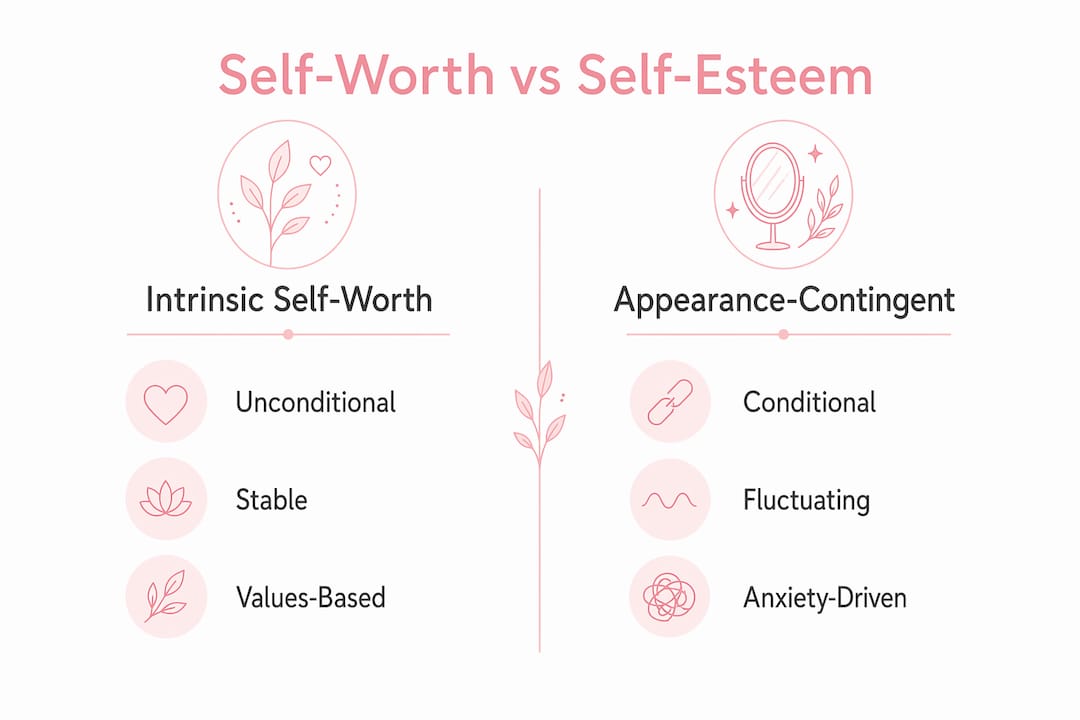
How intrinsic self-worth differs from appearance-contingent self-esteem
Intrinsic self-worth is unconditional. It does not rise when you have a good skin day and fall when you break out. Appearance-contingent self-esteem, by contrast, ties your sense of value directly to how you look, making your emotional state hostage to your reflection.
Psychologists Jennifer Crocker and Lora Park identified this pattern clearly. When self-worth is contingent on appearance, perceived inadequacies become identity threats, not just inconveniences. A blemish stops being a blemish. It becomes evidence that you are not enough. This is the psychological mechanism behind compulsive beauty routines, excessive mirror-checking, and the feeling that no product ever quite fixes the problem.
Language plays a surprisingly powerful role here. The words used in beauty marketing and in your own inner dialogue either reinforce or disrupt appearance-contingent thinking. Phrases like “fix your pores,” “correct your skin tone,” or “hide your flaws” frame your natural face as a problem to be solved. Neutral, nourishing language like “age-supportive,” “hydrating,” or “skin-loving” decouples your identity from the anxiety of correction. The shift sounds small. The psychological effect is not.
The comparison below illustrates the practical difference between these two orientations in everyday beauty life.
| Healthy beauty practice | Anxiety-driven beauty practice |
|---|---|
| Skincare routine feels calming and enjoyable | Routine feels compulsive; skipping it causes distress |
| Products chosen for nourishment and sensory pleasure | Products chosen to “fix” perceived flaws |
| Flexible; adapts to mood and time available | Rigid; escalates when results feel insufficient |
| Motivated by self-care | Motivated by relief from appearance anxiety |
| Completion feels satisfying | Completion never feels like enough |
Pro Tip: Audit the language on your beauty shelf. If most of your products promise to “correct,” “minimize,” or “hide,” consider whether your routine is rooted in care or criticism. Swapping even one product for something framed around nourishment can shift your mindset over time.
How does social media affect self-worth and natural beauty perception?
Digital culture has made appearance-contingent self-esteem far easier to develop and far harder to escape. Social media platforms serve a near-constant stream of filtered, edited, and AI-enhanced images, and the psychological cost is measurable.
A 2025 study found that 72.3% of female students use AI-driven beauty filters regularly, and 20.1% reported being influenced to consider cosmetic procedures as a result. Frequent filter use reduces satisfaction with natural features, creating a gap between the filtered self and the real self that can feel impossible to close. That gap is where self-worth erodes.
The self-awareness in beauty connection matters here. When you understand what affects your self-esteem in beauty, you can make deliberate choices about your digital environment. Several patterns are worth recognizing:
- Comparing your unfiltered face to someone else’s filtered image is not a fair comparison. It is a comparison between reality and fiction.
- The more time spent viewing heavily edited images, the more the edited standard begins to feel normal, raising the bar for what “good enough” looks like.
- Appearance-contingent self-worth amplifies in digital spaces because feedback (likes, comments, views) is immediate, public, and quantified.
- Disentangling your identity from your digital image requires deliberate practice, not just willpower.
Reducing filter use, curating your feed toward unedited content, and spending time in your own skin without documentation are not small acts. They are direct investments in your self-worth.
How to boost self-worth in beauty through values-based practices
Authentic self-worth in beauty grows when your relationship with your appearance is grounded in personal values rather than external validation. Acceptance and Commitment Therapy (ACT) principles offer a practical framework here: instead of trying to feel better about how you look, you shift focus to what your body allows you to do and who you want to be.
Confidence and emotional ease come from internal foundations, not procedures. Cosmetic treatments can address aesthetic goals, but they do not resolve the underlying emotional distress that comes from low self-worth. Patients with internalized self-worth are measurably less likely to rely on repeated cosmetic interventions. The psychological work and the beauty work are not separate conversations.
The psychological relationship with beauty routines, not their duration or complexity, determines whether they reflect genuine self-care or distress. A five-minute routine done with presence and pleasure serves your self-worth better than a forty-five-minute routine driven by anxiety. That reframe alone changes everything.
Here are the most effective strategies for building self-worth that supports a healthy beauty practice:
- Anchor your identity in values, not appearance. Write down three qualities you value in yourself that have nothing to do with how you look. Return to this list when your reflection feels like a problem.
- Reframe your beauty language. Replace “I need to fix my skin” with “I want to care for my skin.” The goal stays the same. The emotional charge shifts completely.
- Choose intrinsically motivated rituals. Engage with mindful beauty rituals because they feel good, not because you fear what happens if you skip them.
- Notice the emotional quality of your routine. If getting ready consistently feels stressful or never feels finished, that is a signal worth paying attention to.
- Seek integrated support when needed. Mental health in beauty is a real and growing field. Therapists who understand body image can help you address the roots of appearance anxiety, not just the symptoms.
- Curate your digital environment. Unfollow accounts that consistently make you feel inadequate. Follow creators who show unedited skin, diverse features, and beauty as pleasure rather than performance.
Key takeaways
Self-worth in beauty is an internal, unconditional sense of value that shapes every beauty decision you make, and building it requires shifting from appearance-based validation to values-based self-care.
| Point | Details |
|---|---|
| Self-worth vs. self-esteem | Self-worth is unconditional; self-esteem fluctuates with external feedback like appearance or approval. |
| Research-backed impact | 26% of cosmetic-seekers show low self-esteem; higher self-worth measurably reduces surgical interest. |
| Language shapes mindset | Replacing “fix” and “correct” with “nourish” and “support” disrupts appearance-contingent thinking. |
| Digital culture erodes self-worth | 72.3% of female students use beauty filters; 20.1% reported influence toward cosmetic procedures. |
| Intrinsic motivation is the marker | Beauty routines driven by pleasure and care signal healthy self-worth; those driven by anxiety do not. |
What I’ve learned about self-worth and beauty that most articles won’t tell you
I used to think the goal was to feel good about how I looked. What I’ve come to understand is that this framing is the trap itself. Feeling good about how you look is a moving target, because your skin changes, your body changes, and the cultural standard of beauty changes faster than any of us can keep up with. The women I’ve seen genuinely thrive in their relationship with beauty are not the ones who finally achieved the “right” look. They are the ones who stopped making their worth conditional on achieving it.
The most honest thing I can say is this: appearance-contingent self-worth does not announce itself. It shows up quietly, in the way you feel when you leave the house without makeup, in the way a bad skin day can derail your entire mood, in the way you scroll past your own photos looking for the one where you look “acceptable.” These are not vanity. They are signs that your sense of self has become too tightly wound around your reflection.
What actually shifts things is not a better skincare routine or a more flattering product. It is the slow, patient work of building an identity that does not depend on your appearance for its stability. Beauty then becomes what it was always meant to be: a form of self-expression, a small daily ritual of care, a way of honoring the body you live in. Not a performance. Not a correction. Just a quiet, genuine act of love toward yourself.
— Kaitlyn
Nourish your skin and your sense of self with Purelightbotanicalbeauty
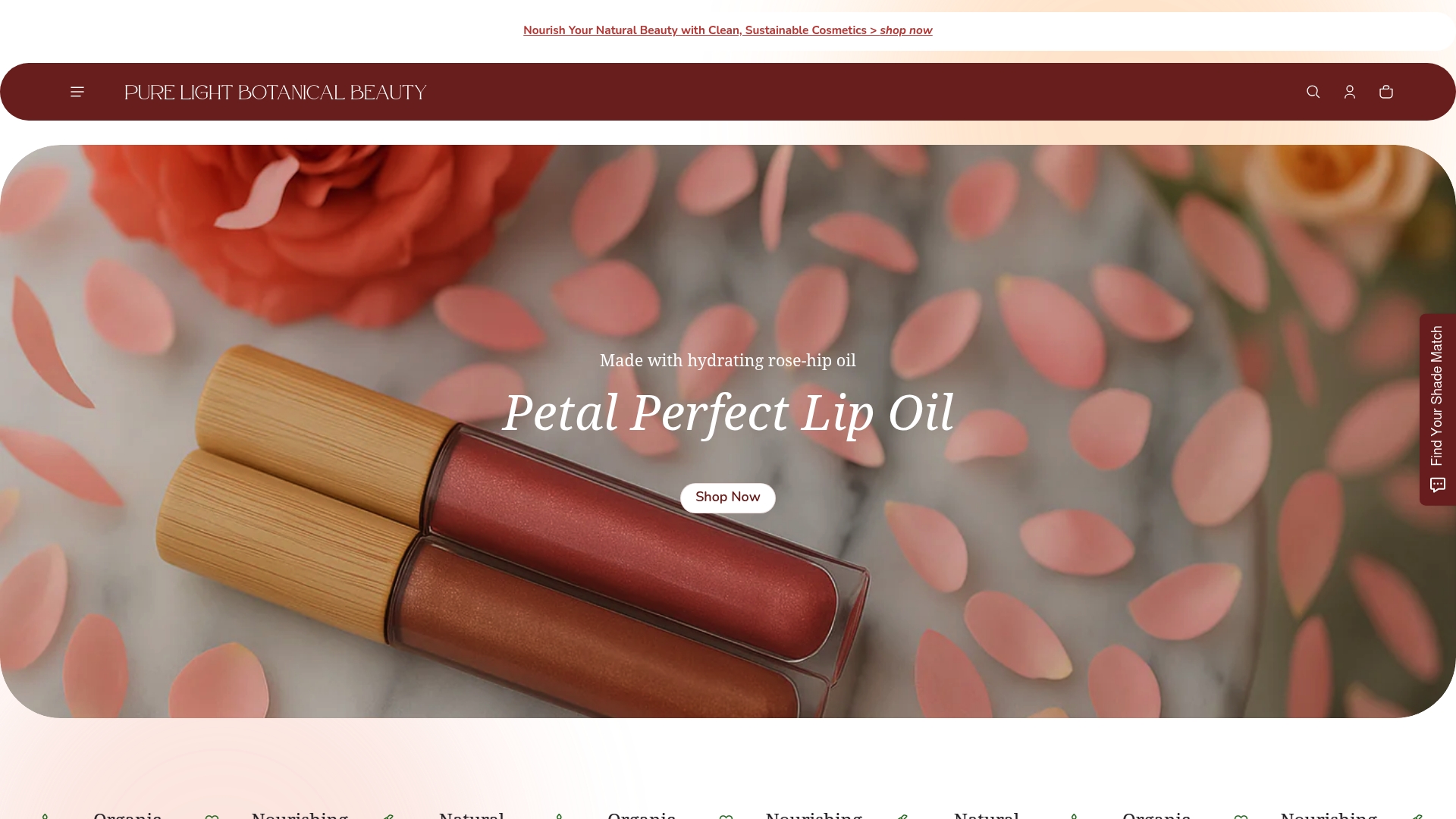
At Purelightbotanicalbeauty, every product is created with the belief that beauty and healing come from the same source. The Petal Perfect Lip Oil, Botanical Crème Blush, and Nourishing Lipstick are formulated with clean, plant-based ingredients that support skin health rather than mask it. These are not products designed to fix you. They are rituals designed to nourish you. If you are ready to explore a beauty practice rooted in self-worth rather than self-criticism, visit Pure Light Botanical Beauty and discover a line built for women who are learning to let their natural light shine through.
FAQ
What is the difference between self-worth and self-esteem in beauty?
Self-worth is your unconditional sense of inherent value as a person, while self-esteem in beauty often fluctuates based on external feedback like appearance, compliments, or social media response. Building self-worth means your confidence does not collapse on a bad skin day.
Can low self-esteem actually drive cosmetic procedure decisions?
Yes. Research shows that low self-esteem is present in 26% of cosmetic-seeking individuals, and those without prior procedures are 1.72 times more likely to have low self-esteem. Cosmetic procedures address aesthetic goals but do not resolve the underlying emotional distress from low self-worth.
How does social media use affect self-worth and beauty perception?
Frequent use of AI beauty filters reduces satisfaction with natural features. Studies found that 20.1% of filter users reported being influenced to consider cosmetic procedures, making digital habits a direct factor in how self-worth and beauty standards interact.
What are the signs that a beauty routine reflects anxiety rather than self-care?
Appearance anxiety shows up as rigid, escalating routines motivated by relief rather than enjoyment, a feeling that the routine is never quite finished, and significant distress when it is skipped. The emotional quality of your routine is the clearest signal of your self-worth health.
How can I start building self-worth that is not tied to my appearance?
Anchor your identity in personal values unrelated to looks, reframe beauty language from correction to nourishment, and build self-worth through intrinsically motivated rituals that feel genuinely pleasurable rather than compulsive.
Recommended
- The Role of Self-Awareness in Beauty and Confidence – Pure Light Botanical Beauty
- Why Beauty Matters for Inner Growth and Healing – Pure Light Botanical Beauty
- Self-Love Beauty Affirmations for Real Confidence – Pure Light Botanical Beauty
- Identity in Beauty: Embracing Authentic Self-Care – Pure Light Botanical Beauty