

TL;DR:
- Mental health deeply influences sensitive skin by disrupting the skin barrier and increasing inflammation through stress hormones.
- Effective beauty routines that prioritize self-care and mindfulness can soothe the nervous system, supporting both skin health and mental well-being.
Your skin does not lie. The role of mental health in beauty runs deeper than most people realize, and for women with sensitive skin, it is not a side note — it is the whole story. Chronic stress does not just make you feel worn down; it biologically changes how your skin looks, heals, and reacts. Understanding this connection shifts beauty from a surface-level practice into something genuinely transformative. When you approach your skincare and makeup rituals with your mental well-being in mind, everything changes: your skin calms, your routine becomes grounding, and beauty becomes an act of care rather than correction.
Table of Contents
- How mental health biologically impacts sensitive skin
- The bidirectional link between skin conditions and mental health challenges
- How beauty routines serve as neuro-soothing rituals to benefit mind and skin
- Practical natural self-care tips for sensitive skin that nurture mental well-being
- The impact of social media and comparison on body image and mental health in beauty
- Rethinking beauty: why mental health must come first for truly radiant skin
- Discover Pure Light Botanical Beauty for sensitive skin and mental wellness
- Frequently asked questions
Key Takeaways
| Point | Details |
|---|---|
| Mental health and skin are connected | Stress affects skin biology, causing sensitivity and visible irritation, especially in sensitive skin. |
| Skin and mind influence each other | Skin conditions can worsen mental health, and anxiety can, in turn, intensify skin issues. |
| Beauty routines can soothe mind and skin | Mindful, gentle rituals help regulate nerves, reducing stress and supporting skin barrier health. |
| Practice simple, natural self-care | Use gentle, fragrance-free products in short, consistent routines that include mindfulness. |
| Be aware of social media impacts | Limiting social comparison on social media protects mental well-being and body confidence. |
How mental health biologically impacts sensitive skin
Stress does not stay in your head. When your body perceives emotional or psychological pressure, it activates the hypothalamic-pituitary-adrenal (HPA) axis, a chain reaction that floods your bloodstream with cortisol. Think of cortisol as your body’s alarm system — helpful in short bursts, damaging when it never switches off.
For your skin, elevated cortisol disrupts the lipid barrier that keeps moisture in and irritants out. When that barrier weakens, sensitive skin becomes even more reactive to everyday triggers like temperature, water, and the ingredients in your products. You may notice more redness, tightness, or itching on days when you are emotionally overwhelmed, and that is not coincidence.
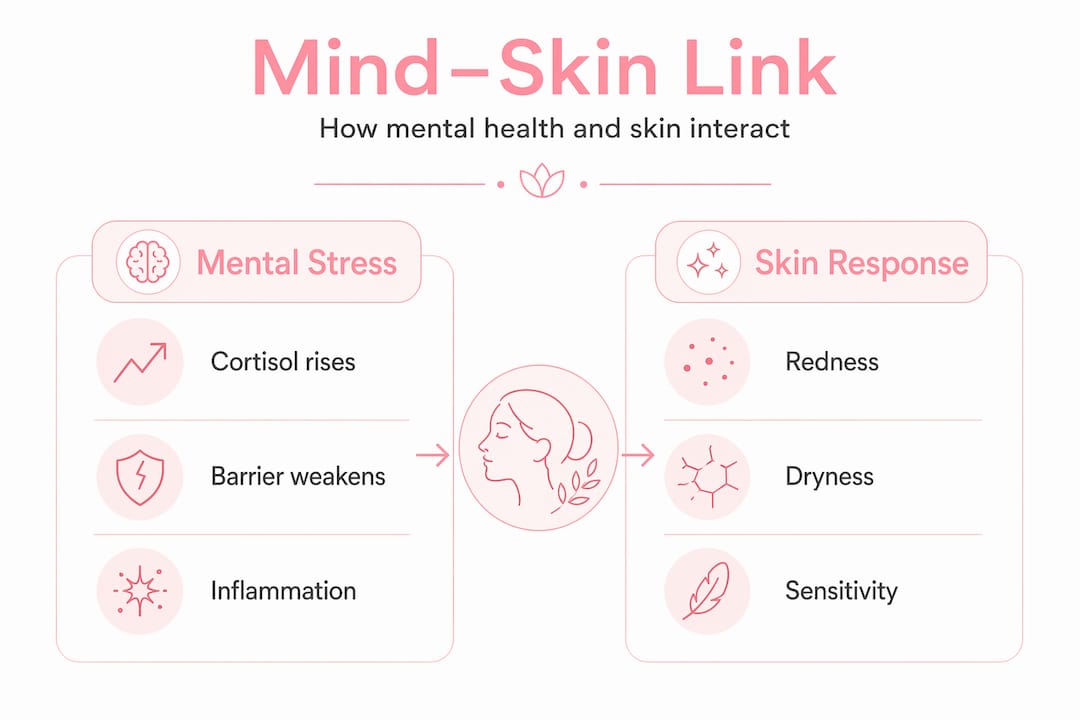
There is also a neurological layer. Stress triggers the release of neuropeptides, small signaling molecules that generate neurogenic inflammation in the skin. This shows up as flushing, itching, and flares that look a lot like allergic reactions but are actually your nervous system speaking through your skin. For women managing conditions like atopic dermatitis or eczema, this pathway is especially disruptive.
The biological cycle looks like this:
- Psychological stress activates the HPA axis, raising cortisol
- Cortisol weakens skin barrier lipids and reduces hydration
- Neuropeptides trigger neurogenic inflammation, causing redness and itch
- Barrier breakdown allows more irritants in, worsening skin symptoms
- Worsening skin symptoms increase psychological distress, restarting the cycle
Knowing this cycle is the first step to breaking it. Exploring beauty rituals for sensitive skin well-being with this biology in mind gives your routine real purpose.
The bidirectional link between skin conditions and mental health challenges
The relationship between skin health and mental health runs in both directions. It is not just that stress causes flares. It is that flares cause stress, which causes more flares. This feedback loop is one of the most important things to understand if you have sensitive skin.

Research on adolescents with atopic dermatitis confirms increased risk of anxiety, depression, and sleep disturbances, showing a clear bidirectional relationship between mental health and skin severity. Adults experience the same pattern. Visible inflammation on the face or body affects self-image, social confidence, and the ability to sleep, all of which feed back into more inflammation.
Sleep is a particularly underestimated factor. When skin conditions disrupt sleep, cortisol levels rise the following day, barrier function declines overnight rather than repairing, and the inflammatory response intensifies. Interrupted sleep is not just exhausting. It is physically harmful to sensitive skin.
| Factor | Impact on skin | Impact on mental health |
|---|---|---|
| Chronic stress | Weakens barrier, raises inflammation | Increases anxiety and emotional fatigue |
| Visible skin flares | Slows healing, triggers more sensitivity | Lowers self-confidence and social ease |
| Poor sleep | Reduces barrier repair, heightens reactivity | Worsens mood, memory, and stress tolerance |
| Emotional distress | Elevates neuropeptide activity | Deepens feelings of helplessness about skin |
This is why treating sensitive skin with products alone often falls short. Without addressing the mental health piece, you are working against your own biology. Healing beauty routines for sensitive skin need to account for both dimensions to actually work.
How beauty routines serve as neuro-soothing rituals to benefit mind and skin
Here is something the beauty industry rarely says out loud: your routine does not just treat your skin. It regulates your nervous system. When you move through a consistent, gentle sequence of steps, you create a predictable sensory environment that signals safety to your brain.
Mindful beauty routines provide structure, nervous system regulation, and build self-confidence, reducing anxious rumination and supporting the skin barrier through consistent care. This is the science behind why rituals feel calming. It is not just habit. It is neurobiology.
Touch matters here in ways that go beyond skincare mechanics. Gentle self-massage and deliberate tactile contact with your skin activate pressure receptors that slow the heart rate and dampen the cortisol response. Scent plays a role too. Certain botanicals like lavender and chamomile engage the limbic system, the emotional processing center of the brain, creating a real physiological shift toward calm.
For sensitive skin specifically, the way you apply products matters as much as what you apply. Harsh rubbing, over-massaging, and too many steps in quick succession all introduce micro-stress signals to reactive skin. A slower, intentional approach does the opposite.
What a neuro-soothing beauty ritual looks like in practice:
- Begin with a slow, deliberate breath before you start
- Use light, upward strokes rather than pressure or friction
- Choose products with grounding, natural botanicals your skin already tolerates
- Keep the routine to five steps or fewer so it feels like rest, not work
- End with a moment of stillness, noticing how your skin feels rather than judging how it looks
Pro Tip: Place your moisturizer in a cool area before use. The gentle temperature shift on contact adds a sensory signal that calms the nervous system, especially helpful during high-stress periods when skin is most reactive.
Building a holistic beauty ritual around these principles takes the guesswork out and replaces it with something that genuinely supports you.
Practical natural self-care tips for sensitive skin that nurture mental well-being
The good news: you do not need a complicated routine to see results. In fact, simplicity is the most protective thing you can do for sensitive skin under stress. Stress-aware beauty practice centers short, repetitive routines with gentle cleansing, hydrating moisturizers, SPF, and minimal sensory input to protect the skin barrier.
Here is how to build that practice:
- Cleanse once, gently. Use a fragrance-free, low-foam cleanser in the evening only if your skin is not exposed to heavy pollutants. Over-cleansing strips barrier lipids, especially when skin is already stressed.
- Moisturize within two minutes of cleansing. This is the window when skin is most absorbent. Choose ingredients like oat extract, ceramides, or shea butter — each one reinforces the lipid barrier rather than sitting on top of it.
- Apply broad-spectrum SPF every morning. UV exposure worsens inflammation in reactive skin and delays healing. Sun protection is not optional when your skin barrier is compromised.
- Add one mindful moment. While applying your moisturizer, take three slow breaths. This is not a luxury addition. It actively lowers cortisol at the moment of application and reinforces the ritual as something restorative.
- Journal for two minutes after your routine. Writing one sentence about how your skin feels and one sentence about how you feel builds self-awareness that guides future product choices and catches stress patterns before they escalate.
Pro Tip: Swap your usual morning scroll for your skincare ritual. Checking your phone first thing raises cortisol before you have even gotten out of bed. Starting with a two-minute skin ritual instead creates a calmer baseline for the rest of your day.
| Practice | Sensitive skin benefit | Mental health benefit |
|---|---|---|
| Fragrance-free products | Reduces irritation and allergic response | Removes a common trigger of sensory overload |
| Daily SPF | Protects compromised barrier from UV damage | Reduces worry about visible sun-triggered flares |
| Mindful breathing during application | Lowers stress hormones at point of contact | Grounds attention in the present moment |
| Short, consistent routine | Prevents over-stimulation of reactive skin | Builds a sense of control and predictability |
Find more natural beauty tips for calm skin and explore the deeper meaning of self-care in beauty as a daily practice.
The impact of social media and comparison on body image and mental health in beauty
Even the most grounded beauty ritual can be undone by five minutes of scrolling. The importance of mental wellbeing in aesthetics cannot be fully addressed without talking honestly about what social media does to the way women see themselves.
Appearance-focused social media causes measurable psychological impact, with upward comparison — comparing yourself to someone you perceive as more attractive or flawless — significantly increasing body dissatisfaction in women. Nearly 59% of women report appearance-related dissatisfaction linked to their social media use. That number is not abstract. It shows up as anxiety before applying makeup, self-critical thoughts during skincare routines, and the quiet exhaustion of feeling like you are always behind some standard you cannot reach.
For women with sensitive skin, this pressure is sharper. Skin that flushes, breaks out under stress, or reacts visibly to environmental triggers does not look like the skin in heavily filtered photos. The gap between what you see on screen and what you see in the mirror can feel unbearable on a bad skin day.
What you can do to protect your mental health in a comparison-heavy environment:
- Set a daily time limit on appearance-focused platforms
- Curate your feed to include real skin, unfiltered faces, and diverse expressions of beauty
- Follow creators who talk honestly about skin conditions, not just perfect results
- Notice when scrolling shifts your mood and treat that as useful data, not weakness
- Use your beauty ritual as a moment of self-focus rather than comparison, what feels good for you, not what someone else’s skin looks like
Beauty should be an act of self-love through natural rituals, not a performance for external approval.
Rethinking beauty: why mental health must come first for truly radiant skin
Most beauty advice gets the order wrong. It tells you to fix the skin, then you will feel better. But the evidence points in a different direction. Mental well-being is not a byproduct of good skin. It is a prerequisite for it.
The brain-gut-skin axis research makes clear that bidirectionality is the most important concept in skin health: stress worsens skin biologically, and visible symptoms increase psychological distress, creating a reinforcing loop. That loop cannot be broken by adding another serum. It requires addressing both ends simultaneously.
Here is what years of observing the mental health beauty habits of women with sensitive skin reveals: the women who see the most consistent improvement are not the ones with the most elaborate routines. They are the ones who treat their routine as a non-negotiable act of self-respect, who have reduced their product count, slowed down their pace, and started paying attention to how their skin responds to their emotional state.
The beauty industry has a complicated relationship with mental health. On one hand, it is beginning to embrace wellness language. On the other, it still profits from insecurity, selling solutions to problems it quietly helps create. As a consumer with sensitive skin, that tension is worth holding consciously. Products should support your barrier, calm your senses, and reinforce your confidence — not fill a gap in your self-worth.
Beauty routines, done right, are a legitimate adjunct to mental well-being. But they are not a replacement for therapy, community, rest, or professional support when those things are needed. The most powerful thing you can do for your skin is care for your mind with the same gentleness you bring to your morning ritual. Explore how beauty habits and mental health work together to create that kind of lasting change.
Discover Pure Light Botanical Beauty for sensitive skin and mental wellness
At Pure Light Botanical Beauty, every product starts with the same belief: that healing and beauty come from the same place. For women navigating the connection between mental well-being and sensitive skin, that belief is not just philosophy — it is the entire formulation approach.
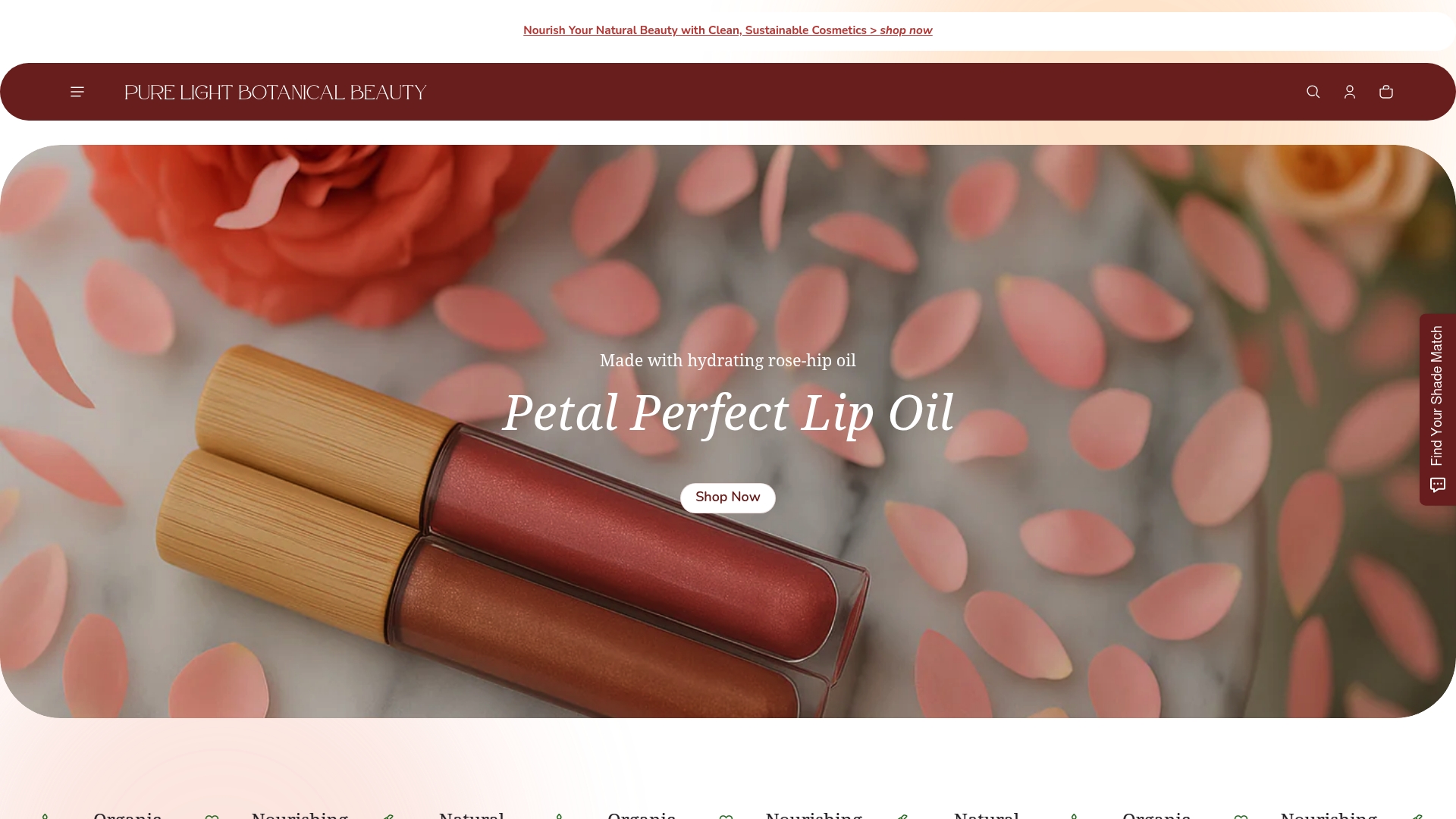
Our botanical formulas are crafted specifically for reactive, sensitive skin, using clean, plant-based ingredients that support barrier function without overwhelming the senses. From the Petal Perfect Lip Oil to the Botanical Crème Blush, each product is designed to feel like an act of care rather than just a cosmetic step. Applied mindfully, they become part of the kind of ritual your nervous system actually responds to. Visit Pure Light Botanical Beauty to explore natural healing beauty products, and read more about building beauty routines for skin and well-being that truly honor both your skin and your mind.
Frequently asked questions
How does mental health affect the appearance of sensitive skin?
Mental health impacts skin by triggering stress hormones that impair the skin barrier and increase inflammation, leading to redness, irritation, and slower healing in sensitive skin. Chronic psychological stress is a direct biological driver of visible skin changes, not just an emotional experience.
Can beauty routines actually improve mental well-being?
Yes, mindful beauty routines act as grounding rituals that reduce anxiety and build self-confidence, supporting mental well-being alongside skin health. Structured routines provide the nervous system with predictability and calm, which directly lowers anxious rumination over time.
What are effective self-care tips for women with sensitive skin to support mental health?
Use gentle, fragrance-free products in a short, consistent ritual that includes mindful breathing or journaling to nurture both skin barrier health and mental relaxation. Gentle cleansing, hydrating moisturizers, and SPF with minimal sensory overload are the foundation of stress-aware care for sensitive skin.
How does social media impact body image related to beauty routines?
Appearance-focused social media increases body dissatisfaction, especially through upward comparison, making mindful media use and self-love rituals essential for healthy beauty mindsets. Frequent upward comparison on social platforms is directly associated with higher body dissatisfaction in women, which can make beauty feel more like a burden than a joy.
Recommended
- Why beauty rituals matter for mental health in sensitive skin – Pure Light Botanical Beauty
- Mental health beauty tips: calm skin and mind naturally – Pure Light Botanical Beauty
- Why beauty is self-care for sensitive skin naturally – Pure Light Botanical Beauty
- How beauty habits transform skin and mental health – Pure Light Botanical Beauty