

TL;DR:
- Plant-based beauty routines can measurably improve skin health and emotional well-being.
- Mindful application of routines reduces stress hormones and supports skin barrier repair.
- Consistency, ingredient purity, and intentional attention are essential for true skin healing.
Most people think of a beauty routine as something you do before walking out the door. You cleanse, maybe apply a little color, and move on. But what if that two-minute ritual actually held the power to calm inflammation, lower stress hormones, and rebuild a damaged skin barrier? New clinical research is proving exactly that. For women with sensitive skin or conditions like eczema, a thoughtfully designed, plant-based beauty routine is not just cosmetic. It is a form of care that works on you at every level, physically, emotionally, and even neurologically.
Table of Contents
- The science behind healing beauty routines
- Emotional well-being: How mindful routines calm the mind
- What makes a routine truly healing?
- Practical guide: Building your healing beauty ritual
- Our take: Why healing must reach beneath the surface
- Experience pure healing with plant-powered beauty
- Frequently asked questions
Key Takeaways
| Point | Details |
|---|---|
| Science backs healing | Empirical studies show beauty routines can repair sensitive skin and support emotional wellness. |
| Mindfulness matters | Regular, mindful beauty rituals lower stress and create real, lasting benefits. |
| Ingredient purity is vital | Clean, plant-based cosmetics are both gentler for sensitive skin and boost overall healing. |
| Consistency is key | Routines work best when gentle, regular, and personally tailored. |
The science behind healing beauty routines
Let’s look at why the science now supports what so many have felt intuitively.
For years, the idea that beauty routines could “heal” you was dismissed as feel-good marketing. The science tells a very different story. Researchers studying plant-powered beauty for sensitive skin have documented measurable changes in skin health and quality of life when clean, botanical ingredients are used consistently.
One of the most important findings centers on specific plant-derived compounds. Plant-derived materials safe in clinical tests include ALA-DAG oil, which actively improves skin hydration and reduces allergic symptoms, and isorhamnetin, a flavonoid that regulates sebum production and restores lipid balance in the skin barrier. These are not vague wellness claims. These are measurable outcomes documented in peer-reviewed research.
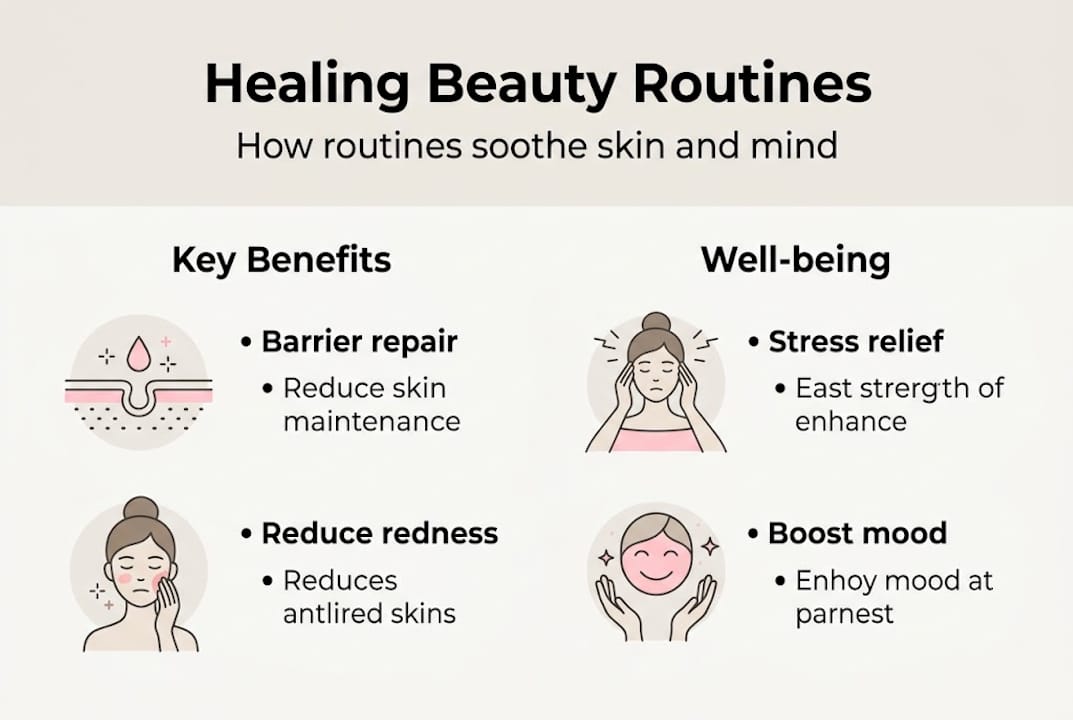
Why does the skin barrier matter so much? Think of your skin barrier as a brick wall. Sensitive skin often has microscopic gaps in that wall, allowing moisture to escape and irritants to enter. This is why people with eczema experience redness, itching, and flare-ups. Ingredients like ALA-DAG oil literally help patch those gaps. When the barrier is intact, skin looks calmer, feels softer, and responds better to everything you put on it.
“The use of plant-derived actives in cosmetic formulations has moved from traditional knowledge to evidence-based practice, with clinical outcomes supporting their role in barrier repair and anti-inflammatory support.”
RCTs support plant-based healing routines across multiple skin conditions, and the results are striking. DLQI scores, which measure how much a skin condition disrupts daily life, show minimal impact after consistent routine adoption. Redness and itch reduced within weeks. Cortisol levels, a key stress hormone, dropped with touch-based application steps. These are not anecdotal. They are outcomes tracked in randomized controlled trials.
| Ingredient | Clinical benefit | Skin type suited for |
|---|---|---|
| ALA-DAG oil | Improves hydration, reduces allergic response | Sensitive, eczema-prone |
| Isorhamnetin | Regulates sebum, restores lipids | Oily-sensitive, reactive |
| Aloe vera extract | Soothes inflammation, supports healing | All sensitive skin types |
| Chamomile extract | Reduces redness, calms nerve endings | Rosacea-prone, dry sensitive |
What’s particularly encouraging for anyone managing sensitive skin is that these ingredients work gently. They don’t force the skin into rapid change. They support its own natural processes, which is exactly the kind of care reactive skin needs to respond well.
Emotional well-being: How mindful routines calm the mind
With the scientific foundation explored, now discover how healing goes far deeper into emotional territory.
Skin and stress are deeply connected, more than most people realize. When you are under chronic stress, your body releases cortisol. That cortisol increases skin inflammation, disrupts the skin barrier, and can directly trigger eczema and sensitivity flares. This is why so many people notice that their skin gets worse during difficult periods in life. It is not a coincidence. It is biology.

The good news is that this relationship works in both directions. Stress, mindfulness, and sensitive skin outcomes research shows that structured beauty routines practiced with mindfulness can reduce cortisol by up to 40%. That is a significant hormonal shift achieved simply by adding intentional awareness to something you already do every day.
Here is what that looks like in practice. Instead of rushing through your routine while mentally rehearsing your to-do list, you slow down. You notice the texture of your botanical cleanser. You breathe in the natural scent of your lip oil. You apply your blush with deliberate, gentle strokes. This kind of presence activates the parasympathetic nervous system, the part that controls rest and recovery, and physically reduces the stress response in your body.
Touch matters enormously here. Gentle, deliberate touch during application sends calming signals to the brain, which is part of why mindfulness in beauty routines is now being studied alongside traditional dermatological care.
Key emotional benefits of a mindful beauty routine include:
- Reduced anxiety: Repetitive, gentle rituals signal safety to the nervous system
- Increased self-worth: Taking deliberate care of yourself reinforces the belief that you are worth caring for
- Emotional regulation: The sensory focus of a routine anchors you in the present moment, reducing rumination
- Improved resilience: A consistent daily ritual provides structure, which supports mental stability during stressful periods
- Better skin-body connection: Noticing how your skin feels each day builds awareness and compassion toward yourself
The flip side is equally important. Inconsistent routines, or routines built around harsh, synthetic ingredients, can worsen both your skin and your mental state. The irritation caused by sensitizing chemicals creates a feedback loop: discomfort increases stress, stress worsens skin, worsening skin increases distress. Understanding the benefits of mindful beauty means recognizing that what you put on your skin and how you apply it are equally powerful choices.
Pro Tip: Set a phone-free, two-minute timer before beginning your routine. Use that window to take three slow breaths and arrive in your body before you start. This small act is enough to shift your nervous system into a calmer state and amplify everything your routine delivers.
What makes a routine truly healing?
Knowing the why, let’s uncover what separates an average routine from a truly healing one.
Not every routine heals. Some routines simply maintain. And some, unfortunately, do more harm than good. The difference lies in three core pillars: ingredient purity, consistency, and the quality of attention you bring.
Clinical tests and trials of plant-based routines confirm that barrier repair happens most reliably when formulas are free of synthetic fragrance, alcohol, and known irritants. For sensitive skin, every ingredient either contributes to healing or creates a small obstacle to it. There is rarely neutral ground.
Consistency is equally critical. Your skin barrier does not rebuild overnight. It needs repeated, gentle support to restore itself. Missing days, switching products constantly, or using different formulas each week disrupts the process. Think of it like physical therapy: one session won’t rebuild strength, but showing up regularly and gently does.
Research on stress, mindfulness, and skin outcomes also reinforces that inconsistent use or harsh products worsen outcomes across both skin health and emotional well-being. This is not a small footnote. It’s a foundational truth.
Here’s how healing and standard routines compare:
| Element | Standard routine | Healing routine |
|---|---|---|
| Ingredients | Mixed synthetic and natural | Clean, plant-based only |
| Frequency | Irregular | Consistent, daily |
| Attention | Rushed, automatic | Mindful, intentional |
| Product selection | Trend-based | Skin-barrier focused |
| Emotional approach | Task-oriented | Self-care ritual |
To build something genuinely healing, follow these steps:
- Audit your current products for synthetic fragrance, alcohol, and sulfates, common triggers for sensitive skin
- Replace one product at a time with a clean, plant-based alternative to track what your skin responds to best
- Set a consistent time for your routine, morning and evening, so your nervous system begins to associate that time with calm
- Choose textures and scents intentionally because sensory experience is part of what makes a ritual healing
- Use gentle, upward application techniques to stimulate circulation and encourage the mindful touch that supports cortisol reduction
Finding plant-powered beauty tips designed specifically for reactive skin helps you make better choices without guessing. Similarly, exploring plant-based beauty tips for sensitive skin growth gives you a broader framework for long-term skin health rather than short-term fixes.
Pro Tip: Patch test every new product on the inside of your wrist for 48 hours before applying it to your face. Sensitive skin needs this step every single time, even with clean, botanical formulas.
Practical guide: Building your healing beauty ritual
Armed with knowledge and clarity, you can now craft your own healing beauty protocol.
Building a healing routine does not require a complete overhaul of your life or bathroom cabinet. It requires intention, patience, and a willingness to treat your skincare as something that matters to your whole self, not just your reflection. The healing beauty and skin connection is built one small, consistent step at a time.
Here is a practical framework to get started:
- Start with a clean foundation. Choose one gentle, plant-based cleanser as your baseline. Look for ingredients like aloe vera, oat extract, or chamomile. Introduce it for two weeks before adding anything else.
- Patch test before you commit. Apply every new product to a small area and wait 48 hours. This is especially important for anyone managing eczema or reactive skin.
- Add a targeted treatment. Once your skin has adjusted to the cleanser, introduce a serum or oil containing clinically supported ingredients like isorhamnetin or ALA-DAG oil. Apply with slow, deliberate strokes.
- Incorporate a mindful moment. Take three full breaths before starting your routine. During application, focus entirely on sensation. Notice warmth, texture, and any changes in how your skin feels day to day.
- Close the ritual intentionally. Whether it’s a botanical blush or a nourishing lip oil, finish your routine with something that brings you joy. That positive sensory experience reinforces the emotional healing component.
- Track your progress weekly. Note changes in redness, itch, hydration, and how you feel mentally after your routine.
RCTs support plant-based healing routines confirm that visible improvements like reduced redness and decreased itching appear within a few weeks of starting a consistent, mindful protocol. This means you don’t have to wait months to feel results. Your skin can begin communicating back to you relatively quickly when it’s receiving the right care.
Helpful habits to build alongside your routine:
- Drink water consistently throughout the day, as hydration supports what your botanical products do from the outside
- Prioritize sleep because the skin barrier repairs itself during deep sleep cycles
- Manage stress actively through movement, journaling, or breathing practices that complement the calming effect of your routine
- Wash pillowcases frequently to reduce contact irritants on already reactive skin
- Avoid touching your face unnecessarily outside of your intentional routine moments
Adopting transformative beauty habits that address both your skin and mental state creates a compounding effect. Each good day builds on the last. Each consistent choice tells your skin and your nervous system that safety and care are available.
Our take: Why healing must reach beneath the surface
After practical steps, it’s vital to recognize what most guides miss about healing rituals.
Here is what we genuinely believe, and what most beauty content refuses to say plainly: you can follow every evidence-based tip and still not experience true healing if your routine is performed without self-respect.
Conventional beauty culture has trained us to treat skincare as damage control. You cover the redness. You manage the flare. You work around the sensitivity. What that framing misses entirely is that healing isn’t something you do to your skin. It’s something you practice with your whole self.
When you approach your routine as a moment of genuine care rather than a checklist, the experience changes. Research on the importance of beauty rituals for mental health supports this clearly. Intention shapes outcome. A routine built on compassion and consistency creates measurable results that a rushed, obligation-driven routine cannot replicate, even with identical products.
The most powerful shift you can make is choosing to believe that your skin deserves patience. That you deserve patience. That showing up for yourself every single day, gently and with pure ingredients, is not indulgence. It is medicine.
Experience pure healing with plant-powered beauty
Ready to embrace the healing power of plant-based beauty?
At Pure Light Botanical Beauty, every product is crafted with exactly the kind of clean, plant-powered intention this article describes. From the Petal Perfect Lip Oil to the Botanical Crème Blush, each formula is designed to nourish sensitive skin while honoring the ritual of self-care. These are not just cosmetics. They are tools for daily healing, made from ingredients that clinical research supports and your skin can trust.
If you are ready to move from managing your skin to truly healing it, explore the full collection. Let your beauty routine become the most nourishing part of your day.
Frequently asked questions
Do beauty routines really heal sensitive skin?
Yes, clinical research confirms that structured routines using plant-derived materials can repair skin barriers and meaningfully reduce irritation over time.
How do beauty rituals impact emotional well-being?
Mindful beauty rituals have been shown to reduce cortisol by 40% and contribute to improved mood by activating the body’s rest-and-recovery response.
What ingredients are best for healing routines?
Clean, plant-based ingredients such as ALA-DAG oil and isorhamnetin are both clinically safe and effective for improving hydration and restoring barrier function in sensitive skin.
Can inconsistent routines make sensitive skin worse?
Yes, inconsistent use or harsh products can worsen sensitive skin symptoms by disrupting barrier recovery and increasing stress-driven inflammation.
How soon can I expect results from a healing routine?
Studies show visible improvements such as reduced redness and itch within a few weeks of beginning a consistent, plant-based, mindful beauty routine.
Recommended
- Why beauty is self-care for sensitive skin naturally – Pure Light Botanical Beauty
- Nourishing daily beauty rituals for sensitive skin – Pure Light Botanical Beauty
- How beauty habits transform skin and mental health – Pure Light Botanical Beauty
- 7 Holistic Beauty Routines for Sensitive Skin Wellness – Pure Light Botanical Beauty