

TL;DR:
- A soulful skincare routine for sensitive skin emphasizes gentle, minimal, and repeatable steps that nurture emotionally and protect physically. Consistency, mindful pauses, and careful ingredient choices support barrier health without reliance on trend-driven products. Building trust through routine fosters healing, while tracking skin and mood helps verify meaningful progress over time.
If your skin has ever flared, itched, or burned after trying a routine that worked beautifully for someone else, you already know how personal sensitive skin care really is. Conventional beauty routines are often layered with fragrance, harsh actives, and trend-driven ingredients that leave eczema-prone skin angrier than before. What your skin craves instead is something different: a routine grounded in clinical safety, built with gentle plant-based ingredients, and approached with the kind of intentional care that makes it feel less like a chore and more like a small act of healing.
Table of Contents
- What makes a routine ‘soulful’ and safe for sensitive skin
- What you need: Tools, ingredients, and preparation
- Step-by-step: Building your soulful skincare ritual
- Choosing and integrating natural ingredients mindfully
- How to verify results: Tracking both skin and soul
- Our perspective: Why consistency and mechanics outperform trends in soulful skincare
- Ready to nurture your skin and self?
- Frequently asked questions
Key Takeaways
| Point | Details |
|---|---|
| Simple is soulful | A repeatable, minimalist approach is safer and more nurturing for sensitive skin. |
| Timing matters most | Apply moisturizer immediately after bathing to lock in hydration and protect your barrier. |
| Mindfulness elevates results | Incorporate intentional pauses and emotional check-ins for holistic benefits. |
| Not all naturals are safe | Patch-test new botanicals and introduce them slowly; natural does not mean non-irritating. |
| Track your progress | Monitor both skin changes and your mood to refine your soulful skincare routine. |
What makes a routine ‘soulful’ and safe for sensitive skin
The word “soulful” gets tossed around a lot in wellness spaces, but for women with sensitive or eczema-prone skin, it carries real meaning. A soulful routine is one that nourishes you emotionally while protecting your skin physically. It is slow, intentional, and repeatable. It does not require fifteen products or a forty-minute morning commitment.
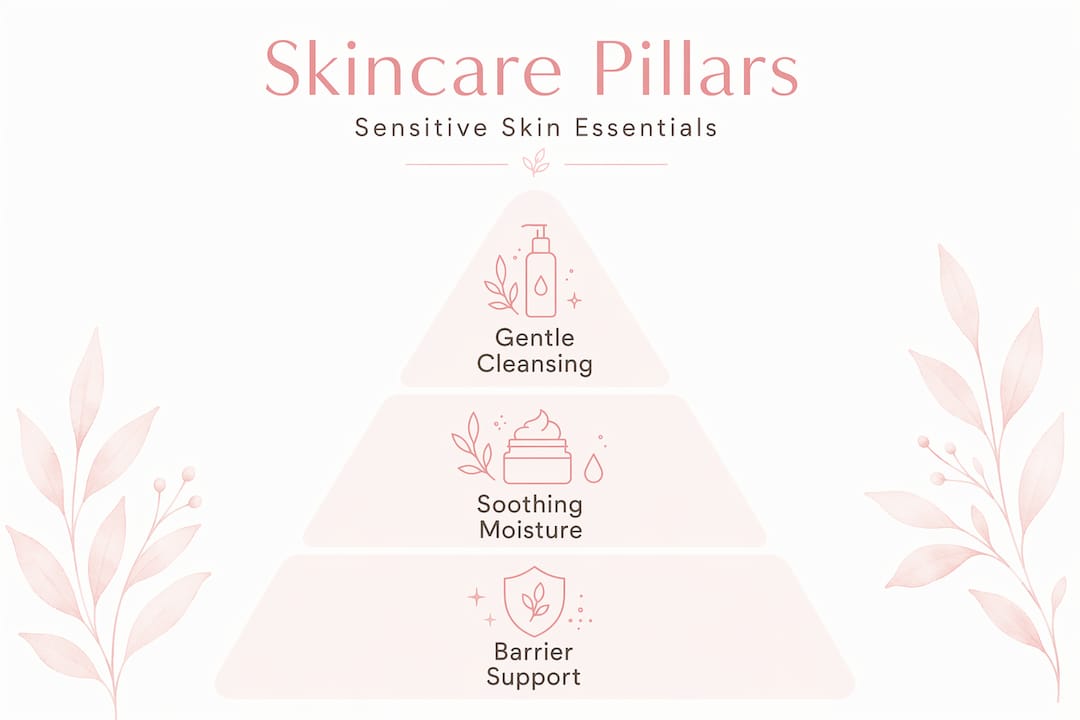
From a clinical standpoint, a safe, evidence-based routine for sensitive and eczema-prone skin rests on three pillars: gentle cleansing, frequent moisturization using a soak-and-seal method, and barrier-protecting avoidance of irritants. These three actions alone, done consistently, do more for reactive skin than any trending serum.
The good news is that soulful rituals layer beautifully on top of these mechanics. A mindful breath before applying moisturizer, a moment of gratitude as you pat your skin dry, or soft music in the background while you cleanse costs nothing and changes the emotional texture of your morning. As we explore in our soul-nurturing skincare overview, the ritual aspect does not interfere with the clinical steps. It simply makes them something you actually want to do every single day.
What makes this work for sensitive skin specifically is the emphasis on minimal, repeatable steps. You can integrate holistic self-care without changing the underlying skin mechanics at all. The soul lives in how you do the routine, not in adding more products to it.
Key characteristics of a safe, soulful routine:
- Fragrance-free and hypoallergenic formulas only
- Lukewarm water, never hot
- Soft, non-abrasive cloths and tools
- Three core steps maximum for reactive skin
- Mindful pauses woven between each physical action
Pro Tip: Think of your routine as a ritual rather than a task. Light a candle, put your phone away, and give yourself five uninterrupted minutes. That small shift in attention makes consistency easier and makes your skin feel like it is being cared for, not just managed.
What you need: Tools, ingredients, and preparation
A soulful routine starts before you touch your face. Your environment, your tools, and your product choices all set the stage for either irritation or healing.
Harvard Health emphasizes moisturizing frequently using thick creams or ointments and applying them immediately after bathing while skin is still slightly damp. They also strongly recommend avoiding hot showers and choosing fragrance-free, hypoallergenic products to reduce flares. These are not optional suggestions. For eczema-prone skin, they are the foundation.
Here is a practical overview of what to gather before you begin building your routine:
| Category | What to look for | What to avoid |
|---|---|---|
| Cleanser | Fragrance-free, gentle, cream or gel formula | Foaming cleansers with sulfates |
| Moisturizer | Thick cream or ointment, ceramides, no fragrance | Lotions with alcohol or parfum |
| Botanical oil (optional) | Cold-pressed, single-ingredient, patch-tested | Blended essential oil mixes |
| Applicator | Soft cotton cloth or clean fingertips | Loofahs, rough exfoliating tools |
| Water temperature | Lukewarm | Hot or very cold water |
Your space matters just as much as your products. A clean, calm environment reduces cortisol, and since stress is a known eczema trigger, setting the scene is genuinely therapeutic. Dim the lights, remove clutter from your bathroom counter, and prepare everything you need before you start so you are not hunting for products mid-routine.

Explore our guide on natural skincare routine essentials for a deeper look at ingredient-by-ingredient guidance. When it comes to botanicals, the benefits of botanical ingredients are real, but only when they are chosen carefully and introduced one at a time.
Pro Tip: When adding any new product, introduce it alone and wait at least five days before adding anything else. This makes it easy to identify what caused a reaction if your skin responds poorly.
Step-by-step: Building your soulful skincare ritual
Once your essentials are in hand, the routine itself becomes a living, breathing practice. Below is a step-by-step walkthrough that blends clinical timing with mindful self-care pauses.
- Prepare your space. Dim the lights or open a window. Take three slow breaths before you begin. This is not decorative. It actually shifts your nervous system into a calmer state, which benefits skin function.
- Gentle cleanse. Use lukewarm water and a small amount of your fragrance-free cleanser. Apply with clean fingertips using soft, circular motions. No scrubbing. Rinse thoroughly and pat (never rub) your skin dry with a soft cloth.
- Mindful pause. Look at your skin in the mirror without judgment. Notice how it feels. This moment of observation builds self-awareness about what your skin needs from day to day.
- Moisturizer application. Apply your thick, fragrance-free cream or ointment while your skin is still slightly damp from cleansing. This is the soak-and-seal method in action, and timing matters deeply here. As eczema care research confirms, moisturizing soon after bathing while skin is slightly damp is one of the most effective strategies for supporting barrier function.
- Intentional application. Press the moisturizer gently into your skin with both palms. Breathe. Notice the texture. Think of this as giving your skin what it needs, not rushing through a chore.
- Optional botanical layer. If you choose to add a patch-tested botanical oil, apply a small amount on top of your moisturizer as a finishing layer. Keep this step optional until your skin is stable.
- Closing reflection. End with a moment of gratitude. One sentence, said silently or aloud, is enough. “My skin is healing and I am giving it care” is a simple example that many women find genuinely grounding.
A holistic-ritual framework follows the same repeatable sequence of cleanse, treat, and protect, with mindful moments woven between the physical steps. The key word is repeatable. Your skin responds to consistency more than to any single ingredient.
Here is a side-by-side comparison of a standard routine versus a soulful one:
| Step | Standard approach | Soulful approach |
|---|---|---|
| Cleanse | Wash quickly, move on | Slow circles, breathe, pat dry with intention |
| Moisturize | Apply and go | Press in mindfully, feel the texture, pause |
| Treatment layer | Add serums for trend | Add only what is needed, patch-tested |
| End of routine | Done, walk away | Brief reflection or one grateful thought |
“Applying moisturizer while your skin is still slightly damp after cleansing seals in hydration and actively supports your skin barrier. This single timing shift can make a measurable difference for eczema-prone skin.”
Use our detailed step-by-step glow guide if you want to go deeper on application techniques. And if you are building a self-care practice around your skincare, the self-care skincare workflow guide walks you through integrating this routine into a broader wellness rhythm.
Choosing and integrating natural ingredients mindfully
Natural ingredients can be a meaningful addition to a soulful skincare practice. But “natural” does not automatically mean “safe,” and this is a distinction that matters especially for eczema-prone skin.
A randomized controlled trial on mānuka oil found that botanical evidence is mixed for eczema, and ingredient standardization matters enormously. One formulation of an ingredient may behave very differently from another. This is why choosing single-ingredient, cold-pressed oils from reputable sources matters so much.
A systematic review of herbal therapies for atopic dermatitis found that some specific topical herbs show promise in included trials, but results are not uniformly positive and the overall quality of evidence remains a key limitation. This does not mean you should avoid botanicals entirely. It means you should approach them with curiosity and caution in equal measure.
Botanicals that show some clinical promise for sensitive or eczema-prone skin include:
- Colloidal oatmeal: One of the most well-studied, with anti-inflammatory and barrier-supporting properties
- Sunflower seed oil: Shown to support skin barrier without significant irritation risk in many people
- Aloe vera: Soothing and hydrating, but the preservatives in commercial gels can sometimes irritate reactive skin
- Calendula extract: Used traditionally for inflamed skin, with some early clinical support
- Mānuka oil: Emerging evidence, but individual responses vary significantly
Even with this list, individual reactions are possible with any botanical or oil. Patch testing is not optional when you have eczema-prone skin. Apply a small amount to the inside of your wrist or elbow and wait 24 to 48 hours before using it on your face.
Learn more about botanical ingredient evidence and how to apply botanicals gently with our guide on using botanical oils safely.
Pro Tip: Keep your botanical additions to a maximum of one new ingredient at a time. Your skin cannot give you clear feedback if you introduce three new things in a week.
How to verify results: Tracking both skin and soul
Building a soulful skincare routine is only half the work. Understanding whether it is actually helping requires paying attention, and that attention is a form of self-care in itself.
A simple journal practice, even just five minutes every few days, gives you feedback that no mirror can. As our holistic beauty ritual guide notes, tracking both skin and mood to verify progress is a core part of the holistic approach. The ritual is working on your emotions as well as your skin, and both deserve documentation.
What to track in your skin and mood journal:
- Skin hydration: Does your skin feel tight, balanced, or soft after your routine?
- Redness and irritation: Are flares becoming less frequent or less intense over time?
- Itch levels: Rate your itch on a simple scale of one to five each day
- Emotional state: How do you feel before, during, and after your routine?
- Product changes: Note every new product introduced and the date you started
- Sleep and stress: These directly affect eczema, so log major stressors
Signs that your routine is working include less redness within the first two to three weeks, fewer flares during stress periods, skin that holds moisture longer after moisturizer application, and a general sense of calm around your skincare practice rather than dread or anxiety.
If irritation increases or a new ingredient causes a reaction, stop immediately. Return to your core three-step routine and let your skin settle for at least a week before trying anything new. If symptoms persist or worsen, a dermatologist visit is absolutely the right next step. No routine, no matter how carefully built, replaces professional medical guidance for serious eczema flares.
Use our glowing skin routine guide for more ideas on monitoring and adjusting your practice as your skin evolves.
Our perspective: Why consistency and mechanics outperform trends in soulful skincare
Here is the uncomfortable truth about soulful skincare: most of the magic is boring.
The beauty industry constantly tells you that the next ingredient, the next serum, the next ritual tool is the thing that will finally heal your skin. For women with sensitive or eczema-prone skin, that message is not just unhelpful. It is actively harmful. Every new product is a potential irritant. Every elaborate new step is another variable your already-reactive skin has to process.
The most genuinely soulful thing you can do for your skin is also the least exciting: do the same gentle thing, correctly, every single day. Moisturizing timing and irritant avoidance are what actually reduce dryness and itch and support barrier function over time. Not the trending botanical everyone is talking about this month.
This is where we push back against the wellness trend cycle. True soulfulness is not about variety. It is about presence. A routine you have done three hundred times, done with full attention and gentleness, is infinitely more healing than a complicated ten-step ritual you picked up from a post and abandoned after a week because your skin rebelled.
There is also a deeper truth here. Women with eczema often carry a quiet grief about their skin. The red patches, the disrupted sleep from itching, the anxiety before trying something new. A consistent, gentle routine is an act of trust toward your own body. You are saying: I will show up for you, the same way, every day. That is the real soul of soulful skincare.
Our plant-based sensitive skin wisdom blog digs into this philosophy further if you want to explore what sustainable, plant-forward routines really look like in practice.
Ready to nurture your skin and self?
If this article has given you a clearer, calmer sense of where to start, you are already one step closer to a routine that truly supports you. Pure Light Botanical Beauty was built specifically for women whose skin needs more than what conventional beauty offers.
Every product in our collection is formulated with clean, plant-based ingredients chosen with sensitive and eczema-prone skin in mind. No harsh fragrance. No unnecessary actives. Just thoughtfully crafted botanicals that work in harmony with your skin barrier. Visit Pure Light Botanical Beauty to explore products designed to feel as good as they look. And if you are looking for your next read, our plant-based beauty tips guide is a gentle, practical place to continue your journey.
Frequently asked questions
Can I use essential oils in a soulful skincare routine if I have eczema?
Use with extreme caution and always patch test first, introducing only one oil at a time, because even natural oils can trigger reactions in eczema-prone skin.
How often should I change my skincare products for sensitive skin?
Change products only when absolutely necessary, because consistency is protective for reactive skin. Fewer product changes and careful tracking of responses is the most useful form of customization for sensitive skin.
What if natural ingredients irritate my skin?
Stop use immediately, return to your simple core routine, and give your skin at least a week to settle before trying anything new. Remember that clinical evidence is mixed for botanical ingredients, even those widely considered gentle.
How can I make my skincare routine feel more soulful?
Add intentional pauses, a breath of gratitude, or a brief journaling moment between steps, because a holistic-ritual framework places the mindful moments between physical steps, not in adding more products.
Recommended
- Soul-Nurturing Skincare: Healing Sensitive Skin Holistically – Pure Light Botanical Beauty
- Build a Self-Care Skincare Workflow for Sensitive Skin – Pure Light Botanical Beauty
- 7 Holistic Beauty Routines for Sensitive Skin Wellness – Pure Light Botanical Beauty
- Glowing Skin Routine Guide for Sensitive Skin Relief – Pure Light Botanical Beauty