

Finding relief for sensitive skin can feel like an endless search when every new product promises soothing results but often triggers more discomfort. For women living with eczema and ongoing sensitivity, embracing skin nourishment rooted in plant-based care offers a gentle path to healing and resilience. Scientific research highlights ingredients like oat extract, niacinamide, and probiotics proven to strengthen the skin barrier and calm inflammation. This article reveals how a holistic approach to nourishment can transform routines and promote lasting well-being.
Table of Contents
- Defining Skin Nourishment And Common Myths
- Types Of Nourishing Ingredients For Sensitive Skin
- How Botanical Nutrition Supports Skin Health
- Eczema And Skin Healing With Plant-Based Care
- Risks, Allergies, And Choosing The Best Formulas
Key Takeaways
| Point | Details |
|---|---|
| Skin Nourishment is Holistic | Effective skin nourishment supports the skin’s natural repair processes through targeted nutrients rather than just cosmetic treatments. |
| Individual Needs Matter | Recognizing unique skin needs and selecting scientifically proven ingredients is crucial for effective skincare, especially for sensitive skin. |
| Botanical Nutrition Benefits | Using plant-derived nutrients enhances skin health by supporting cellular repair and addressing issues from within the body. |
| Safety in Natural Skincare | Careful assessment of ingredient safety is essential to avoid allergens and irritants when choosing skincare products, especially for sensitive skin. |
Defining Skin Nourishment and Common Myths
Skin nourishment represents a holistic approach to maintaining skin health that goes beyond surface-level treatments. At its core, skin nourishment involves supporting the skin’s natural ability to repair, protect, and regenerate through targeted nutrients and care strategies. Scientific research reveals that effective nourishment addresses both intrinsic aging processes driven by genetics and extrinsic factors influenced by environmental exposures like UV radiation and pollution.
Contrary to popular belief, nourishing skin requires understanding complex biological mechanisms. Many people mistakenly assume that skincare is purely cosmetic, but scientific studies on skin health demonstrate that proper nutrition and ingredient selection can profoundly impact cellular repair and skin barrier function. Common myths often mislead individuals into ineffective skincare practices, such as believing oily skin doesn’t need moisturization or that natural ingredients are automatically beneficial.
The key to effective skin nourishment lies in recognizing individual skin needs and selecting ingredients scientifically proven to support cellular health. Key components include antioxidants that combat oxidative stress, hydrating elements that maintain skin barrier integrity, and nutrients that promote collagen production. Understanding these nuanced requirements helps women with sensitive skin develop more targeted, holistic approaches to skincare that address root causes rather than merely treating surface symptoms.
Pro tip: Conduct a patch test with new natural ingredients and observe how your unique skin responds, as individual reactions can vary significantly despite general recommendations.
Types of Nourishing Ingredients for Sensitive Skin
Sensitive skin requires specialized care that addresses its unique vulnerabilities through carefully selected nourishing ingredients. The most effective approaches focus on supporting the skin’s microbiome and strengthening its natural protective barriers. Botanical ingredients matter significantly for women seeking gentle yet powerful skincare solutions that calm and repair delicate skin systems.
Scientific research highlights several key ingredients that provide targeted support for sensitive skin. Niacinamide emerges as a powerhouse ingredient, strengthening skin barriers and reducing inflammation. Natural extracts like Avena sativa (oat extract) offer remarkable soothing properties, while compounds such as allantoin promote wound healing and cellular recovery. Glycyrrhetinic acid provides potent anti-inflammatory effects, helping to calm reactive skin responses and reduce redness.
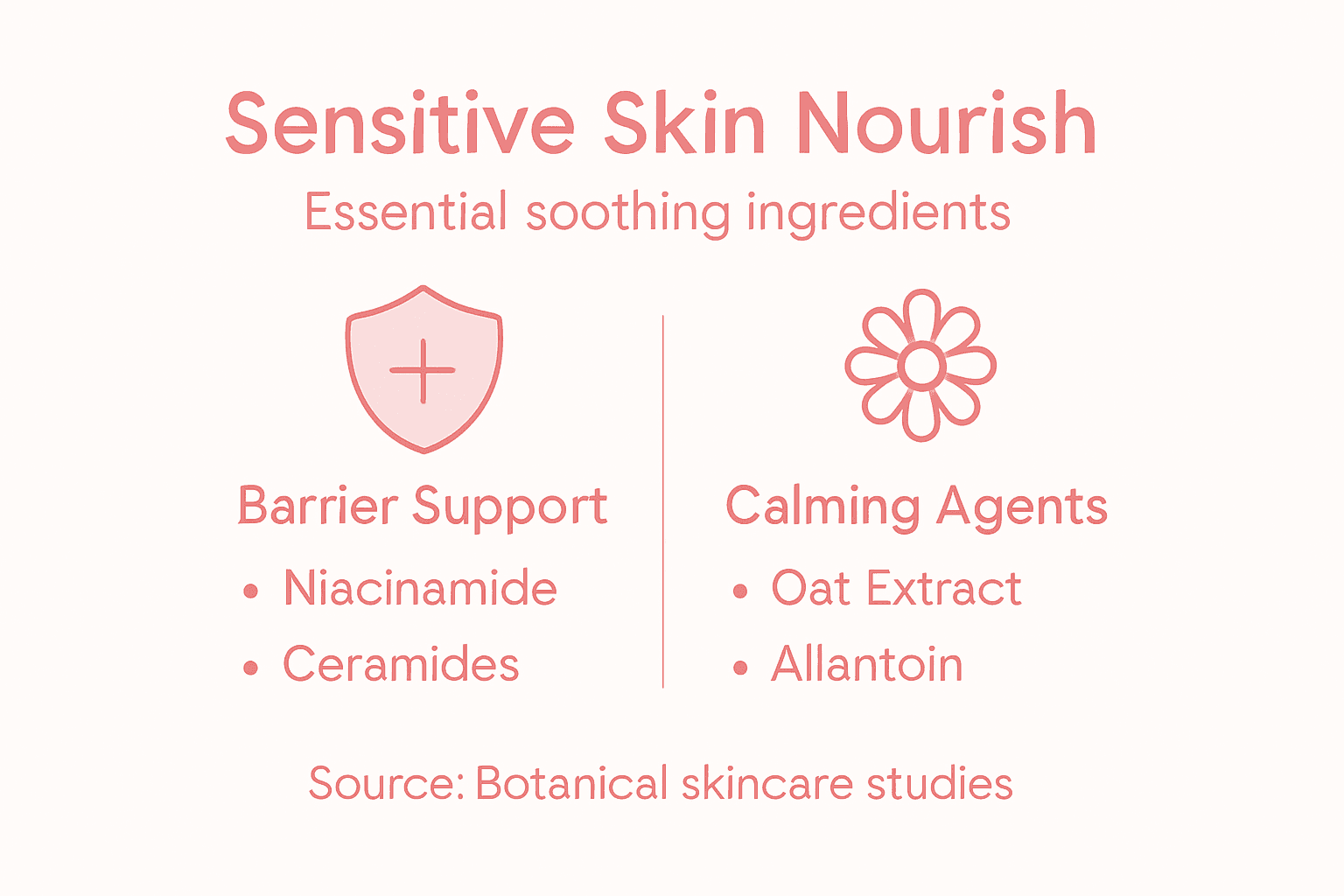
Microbiome-focused ingredients represent another critical avenue for skin nourishment. Prebiotics like glucans and inulin help feed beneficial bacteria, while probiotics such as Lactobacillus work to restore microbial balance. These sophisticated ingredients go beyond surface-level treatment, addressing the underlying biological mechanisms that contribute to skin sensitivity. By supporting the skin’s natural defense systems, these components help transform sensitive skin from reactive to resilient.
Here’s a summary of key nourishing ingredients for sensitive skin and their primary benefits:
| Ingredient | Main Benefit | Common Source |
|---|---|---|
| Niacinamide | Strengthens skin barrier | Vitamin B3 serums |
| Avena sativa extract | Soothes and calms irritation | Oat-based lotions |
| Allantoin | Promotes skin healing | Herbal creams |
| Glycyrrhetinic acid | Reduces inflammation/redness | Licorice root |
| Probiotics | Restores microbiome balance | Yogurt-based care |
| Prebiotics | Supports beneficial bacteria | Inulin-rich gels |
Pro tip: Introduce new nourishing ingredients gradually and patch test each one separately to understand how your unique skin microbiome responds to specific botanical compounds.
How Botanical Nutrition Supports Skin Health
Botanical nutrition represents a holistic approach to skin health that transcends traditional topical treatments, focusing on nourishing the body from within. Understanding the benefits of botanical skincare reveals how plant-based nutrients interact with our body’s complex biological systems to promote dermal wellness. The intricate connection between diet, nutrition, and skin health demonstrates that true radiance begins at the cellular level.

Plant-derived phytochemicals play a crucial role in supporting skin health through multiple powerful mechanisms. Carotenoids, essential fatty acids, and phenolic compounds work synergistically to combat oxidative stress, reduce inflammation, and protect skin structure. These bioactive nutrients help maintain skin elasticity, prevent hyperpigmentation, and shield against UV damage. Scientific research shows that a well-balanced plant-based diet provides anti-inflammatory and antioxidant benefits that directly impact skin barrier integrity and cellular repair processes.
The gut-skin connection further emphasizes the importance of botanical nutrition. Dietary phytochemicals support the microbiome, modulate inflammatory pathways, and improve glycemic control, which directly influences skin health. By providing essential vitamins, minerals, and compounds that support cellular regeneration, botanical nutrition addresses skin concerns at their root, transforming skin from the inside out. This approach goes beyond surface-level treatment, offering a comprehensive strategy for achieving lasting skin vitality and resilience.
Compare how botanical and synthetic approaches impact skin nourishment:
| Aspect | Botanical Nutrition | Synthetic Ingredients |
|---|---|---|
| Targeted Action | Addresses root skin imbalances | Often treats surface issues |
| Long-term Results | Supports repair and resilience | May offer temporary relief |
| Biocompatibility | Works with body’s biology | Can disrupt microbiome |
| Environmental Impact | Typically eco-friendly | Greater risk of pollutants |
Pro tip: Incorporate a diverse range of colorful plant-based foods into your diet to maximize the variety of skin-supporting phytonutrients and antioxidants.
Eczema and Skin Healing With Plant-Based Care
Eczema represents a complex skin condition characterized by profound barrier dysfunction and persistent inflammation. Plant-based beauty strategies for sensitive skin offer a holistic approach to managing this challenging dermatological condition by addressing root causes rather than merely treating surface symptoms. Understanding the intricate relationship between botanical compounds and skin healing becomes crucial for individuals seeking natural, sustainable relief.
Scientific research demonstrates remarkable potential in plant-derived treatments for eczema management. Phytochemical compounds from botanical sources can clinically improve SCORAD scores, reduce epidermal thickness, and alleviate persistent itching. Specific plant extracts like Aloe vera, neem, and turmeric exhibit powerful anti-inflammatory and antioxidant properties that modulate inflammatory cytokines such as TSLP, IgE, and interleukins. These natural ingredients work synergistically to upregulate filaggrin gene expression, facilitating critical skin barrier repair and reducing inflammatory responses.
The healing mechanism of plant-based care extends beyond symptomatic relief, targeting the fundamental immunological and genetic factors underlying eczema. By supporting skin hydration, reducing inflammation, and promoting cellular regeneration, botanical treatments offer a comprehensive approach to skin wellness. These natural interventions help restore the skin’s microbiome, strengthen protective barriers, and provide gentle yet effective relief for individuals struggling with persistent skin sensitivity and inflammatory conditions.
Pro tip: Maintain a consistent plant-based skincare routine and keep a detailed journal tracking your skin’s response to different botanical ingredients to identify your most effective healing combinations.
Risks, Allergies, and Choosing the Best Formulas
Navigating the complex landscape of natural skincare requires a nuanced understanding of potential risks and individual sensitivities. How to choose natural makeup for sensitive skin becomes crucial when managing allergies and potential ingredient reactions. Natural cosmetic ingredients, while beneficial, can carry inherent risks including potential contaminants like bacteria, heavy metals, and unexpected allergens that demand careful evaluation.
Ingredient safety involves comprehensive assessment beyond surface-level claims. Regulatory frameworks emphasize thorough hazard analysis, focusing on local skin sensitization, irritation potential, and systemic toxicity. For individuals with sensitive skin or conditions like eczema, choosing skincare products requires meticulous consideration of ingredient origin, concentration, purity, and potential interaction with individual skin microbiomes. Critical factors include avoiding common allergens like synthetic fragrances, preservatives, and understanding how different botanical compounds might trigger inflammatory responses.
Effective product selection demands a holistic approach that balances scientific rigor with individual skin needs. This means not just reading ingredient lists, but understanding how different compounds interact with your unique skin biochemistry. For those with sensitive skin, prioritizing hypoallergenic formulations, conducting patch tests, and gradually introducing new products can minimize potential adverse reactions while supporting skin health and resilience.
Pro tip: Create a detailed skin reaction journal documenting each new product’s ingredients, application date, and your skin’s response to build a personalized understanding of your skin’s specific sensitivities.
Embrace Skin Nourishment That Heals From Within
The article highlights the profound role of nourishment in soothing sensitive skin and healing conditions like eczema by addressing root causes with botanical ingredients such as niacinamide, probiotics, and plant extracts. It reveals the challenges of managing inflammation, restoring the skin barrier, and combating oxidative stress with natural, effective solutions. If you seek a skincare ritual that transforms sensitivity into resilience through science-backed, plant-based care, you are invited to explore a new path.
At Pure Light Botanical Beauty, we understand how crucial it is to nurture your skin with gentle yet powerful formulas. Our clean, botanical products harness the very ingredients described in this study to support your skin’s microbiome, reduce redness, and promote healing. Whether you are calming eczema flare-ups or simply longing for skin that radiates health and confidence, our collection is designed as an act of nourishing self-love.
Discover how our Petal Perfect Lip Oil, Botanical Crème Blush, and Nourishing Lipstick integrate wellness and beauty into a soulful daily ritual.
Experience the seamless fusion of care and artistry by visiting Pure Light Botanical Beauty today.
Restore your skin’s natural harmony now.
Start your journey with nature’s healing touch.
Explore more about the plant-based beauty approach for sensitive skin and learn how to choose natural makeup for sensitive skin.
Frequently Asked Questions
What is skin nourishment and why is it important?
Skin nourishment involves supporting the skin’s natural ability to repair, protect, and regenerate. It is essential because it addresses both genetic aging and environmental factors, helping maintain overall skin health and resilience.
What are the best ingredients for sensitive skin nourishment?
Key ingredients for sensitive skin include niacinamide for strengthening the barrier, oat extract for soothing, allantoin for healing, and probiotics for restoring balance. These ingredients help address unique vulnerabilities and promote healthier skin.
How does botanical nutrition benefit skin health?
Botanical nutrition provides essential phytochemicals that combat oxidative stress and inflammation, promote cellular repair, and enhance skin elasticity. A diet rich in plant-based foods supports the overall microbiome and contributes to glowing, healthy skin.
What should I look for in skincare products to avoid allergies?
When selecting skincare products, prioritize hypoallergenic formulations, avoid synthetic fragrances and preservatives, and carefully read ingredient labels. Conduct patch tests before fully incorporating new products to identify any potential allergic reactions.
Recommended
- What Is Beauty From Within? Complete Guide – Pure Light Botanical Beauty
- Understanding the Benefits of Botanical Skincare – Pure Light Botanical Beauty
- Understanding Nourishing Makeup Ingredients for Sensitive Skin – Pure Light Botanical Beauty
- Understanding Natural Beauty Rituals for Sensitive Skin – Pure Light Botanical Beauty
- 2025 Natural Hair Treatment for Damaged Hair Guide | MyHair