

TL;DR:
- Finding a blush that genuinely cares for sensitive skin remains challenging due to common irritants in conventional formulas. Organic blushes, with their natural pigments and soothing botanicals, offer a safer, nourishing alternative suitable for reactive skin types. Carefully reading ingredient labels and choosing products backed by certifications ensures both skin health and beautiful, trustworthy color.
Finding a blush that actually loves your skin back feels harder than it should. Sensitive skin reacts quickly, redness flares, and the wrong formula can turn a five-minute routine into a day of discomfort. Yet most mainstream blushes are loaded with synthetic fragrances, artificial dyes, and preservatives that sensitive skin simply does not need. The good news is that organic blush formulas have grown remarkably sophisticated, offering real pigment, real longevity, and real skin care in one step. This guide walks you through how to choose wisely, what to look for on an ingredient label, and which formulas are genuinely worth your trust.
Table of Contents
- How to choose the best organic blush for sensitive skin
- Top organic blush options for sensitive skin
- Side-by-side: Comparing organic blush formulas
- Which blush formula is right for you?
- Why clean ingredients matter most for sensitive skin blush
- Discover gentle, botanical blushes for your sensitive skin
- Frequently asked questions
Key Takeaways
| Point | Details |
|---|---|
| Powder vs. cream | Powder blushes best suit oily skin while cream formulas are great for dry or mature skin. |
| Ingredient importance | Fragrance-free, plant-based ingredients minimize irritation for sensitive skin. |
| Comparison helps | Comparing finish, texture, and formula can guide you to your ideal organic blush. |
| Personalization matters | The right blush depends on your unique skin needs, type, and wellness values. |
How to choose the best organic blush for sensitive skin
With the challenge of irritation and chemical sensitivity in mind, let’s break down exactly how to pick a truly gentle and effective organic blush.
Choosing an organic blush is not just about color payoff. It is about what that formula does to your skin barrier over time, especially if your skin is prone to redness, eczema flares, or reactive episodes. The first and most important step is learning to read an ingredient list with intention. Start by scanning for common offenders: synthetic fragrance (often listed simply as “fragrance”), parabens, bismuth oxychloride, and talc. These ingredients are found in many conventional blushes and are among the top triggers for sensitive skin reactions.
Once you know what to avoid, you can focus on what you want to find. Exploring natural makeup types helps you understand the broader landscape of clean formulas before you narrow your choice. Here is a clear framework for evaluating any organic blush you consider:
- Check the fragrance status. Fragrance is the number one skin sensitizer in cosmetics. Look specifically for “fragrance-free,” not just “unscented,” because unscented products can still contain masking fragrances.
- Identify the base ingredient. Rice powder, kaolin clay, and arrowroot starch are gentle, oil-absorbing bases that work beautifully for oily and combination skin. Mango butter, jojoba oil, and castor oil are nourishing bases that support dry or mature skin.
- Look for botanical actives. Chamomile extract, calendula, and green tea are known for their calming, anti-inflammatory properties. These ingredients actively soothe while your blush provides color.
- Verify the colorant sources. Organic blushes should use mineral pigments or plant-derived dyes. Avoid FD&C and D&C synthetic colorants, which are petroleum-derived and can be reactive.
- Match formula type to your skin type. Powder formulas suit oily and combination skin for their oil-absorbing finish, while cream formulas deliver hydration and a natural glow to dry or mature skin.
- Prioritize hypoallergenic certifications. Third-party certifications from organizations like EWG Verified or COSMOS Organic confirm that a product meets independent safety standards.
“The most powerful thing you can do for sensitive skin is simplify. Every ingredient on that label should earn its place, and if it doesn’t serve your skin, it shouldn’t be there.”
Pro Tip: Before committing to any new blush, apply a small amount to the inside of your wrist and wait 24 hours. This simple patch test can save your face from a full-blown reaction.
Understanding the specific botanical blush benefits also helps you move beyond just avoiding harm toward actively choosing products that heal and nourish. Botanical blushes are not a compromise. They are an upgrade.
Top organic blush options for sensitive skin
Now that you know what to look for, let’s explore the best organic blushes available for sensitive skin.
The organic beauty market has genuinely stepped up its game. Gone are the days when “natural” meant chalky, patchy color that faded within the hour. Today’s clean blush formulas rival their conventional counterparts in pigment, texture, and wearability. Here are four standout options worth considering, each suited to a different skin need.
Cherry Quartz Botanical Crème Blush
The Cherry Quartz blush delivers a warm, rosy flush that reads as natural and youthful on most skin tones. This cream formula blends effortlessly with fingertips, building from sheer to medium coverage. Its botanical base conditions the skin as you wear it, making application feel like a moment of self-care rather than just makeup.
- Finish: Dewy, skin-like glow
- Best for: Dry, normal, and sensitive skin types
- Key ingredient benefit: Nourishing plant butters soften and support the skin barrier
- Tone family: Warm berry-pink
Rose Quartz Botanical Crème Blush
The Rose Quartz blush is a softer, cooler-toned option that suits fair to medium skin tones beautifully. It layers well with powder formulas for those who want extended wear.
- Finish: Soft, luminous glow
- Best for: Fair to medium skin tones, sensitive and dry skin
- Key ingredient benefit: Hydrating base ingredients prevent the dryness that some traditional powder blushes cause
- Tone family: Cool pink-rose
Rhodonite Botanical Crème Blush
The Rhodonite blush sits in a warm mauve-pink territory, making it incredibly flattering for medium to deep skin tones. It has a buildable formula that stays comfortable even on reactive skin through a full day of wear.
- Finish: Natural, semi-dewy
- Best for: Medium to deep skin tones, combination and sensitive skin
- Key ingredient benefit: Botanical extracts calm redness while the pigment adds warmth
- Tone family: Warm mauve-pink
Carnelian Botanical Crème Blush
The Carnelian blush is a richer, terracotta-inspired tone that adds a sun-kissed warmth to deeper complexions. It is ideal for those who want their blush to double as a light bronzer effect.
- Finish: Radiant, warm glow
- Best for: Medium to deep skin tones, dry and normal skin
- Key ingredient benefit: Rich botanical base delivers lasting moisture alongside color
- Tone family: Warm terracotta-coral
“Cream blush formulas with mango butter or castor oil hydrate dry and mature skin for a dewy glow, while powder formulas made from rice powder and botanical extracts provide a matte finish and oil absorption for oily and combination skin.”
Pro Tip: Cream blushes blend most naturally when your skin is slightly warm. Apply right after your moisturizer has absorbed but before your skin is fully matte dry.
Side-by-side: Comparing organic blush formulas
To help you decide, here’s how these top picks measure up when compared head to head.
Ingredient transparency is the real differentiator in the organic blush category. A brand can call a product “natural” and still include synthetic preservatives, mineral oil derivatives, or artificial colorants. Looking at specific formulas side by side makes it much easier to spot who is genuinely committed to clean beauty and who is just using the language of wellness as marketing.
| Blush option | Formula type | Finish | Key ingredients | Best for skin type |
|---|---|---|---|---|
| Cherry Quartz | Cream | Dewy glow | Plant butters, botanical extracts | Dry, sensitive |
| Rose Quartz | Cream | Soft luminous | Hydrating botanical oils | Dry, sensitive, fair tones |
| Rhodonite | Cream | Semi-dewy | Calming botanicals | Combination, sensitive |
| Carnelian | Cream | Radiant warm | Rich botanical base, moisture agents | Dry, deep tones |
| Powder blush (generic) | Powder | Matte | Rice powder, kaolin clay, botanical color | Oily, combination |
What this comparison shows is that cream formulas consistently lead in hydration and skin barrier support. Powder formulas are ideal for mattifying, while cream blush formulas deliver hydration, and both approaches can be completely gentle when the ingredient list is clean and intentional.
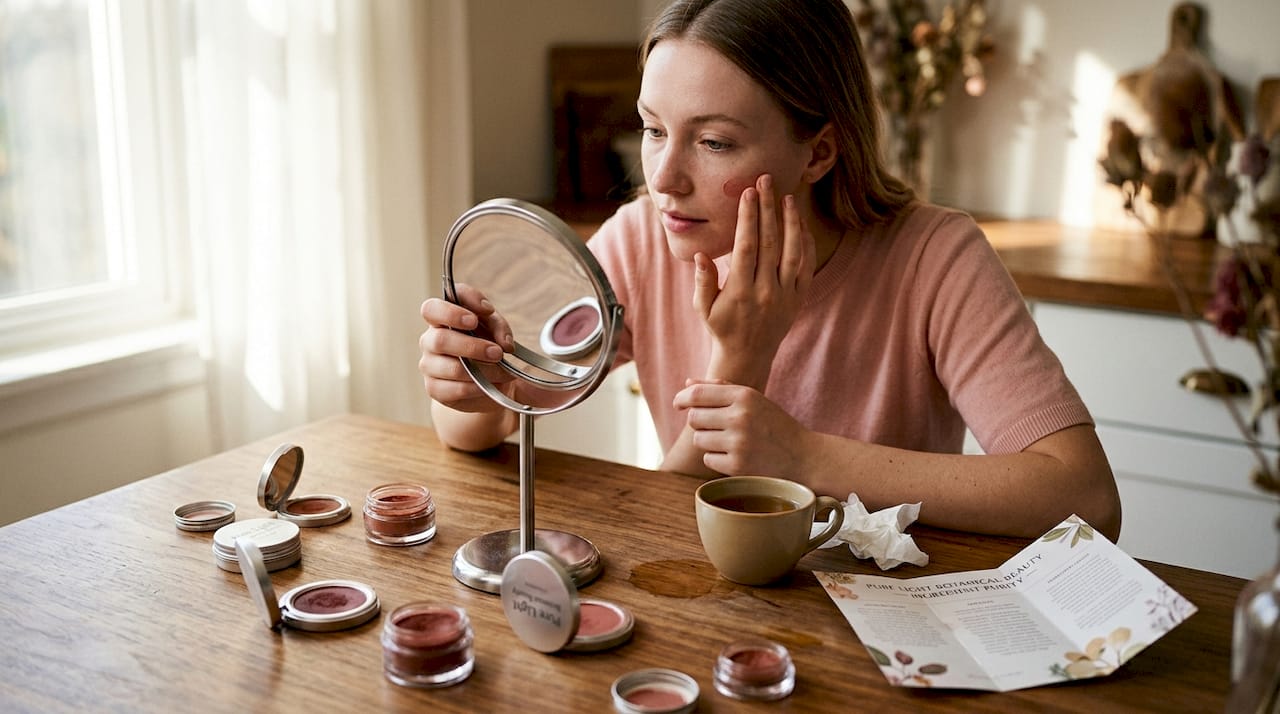
A helpful note on ingredient transparency: the most trustworthy organic brands list every ingredient in plain language, explain what each one does, and source their botanicals responsibly. If a brand is vague about its sourcing or ingredient origins, that is a reason to pause.
One often overlooked factor is preservative choice. Even clean products need some form of preservation to stay safe. Look for brands that use naturally derived preservatives like vitamin E (tocopherol), rosemary extract, or non-GMO phenoxyethanol at low concentrations rather than parabens or formaldehyde-releasing agents.
For more ideas on building a complete gentle routine, the nourishing sensitive skin tips from Pure Light are a wonderful starting point.
Key takeaway: Formula type affects both performance and skin comfort. Cream blushes nourish. Powder blushes control shine. Both can be equally safe when ingredients are carefully selected and transparently listed.
Which blush formula is right for you?
After seeing the differences, here are step-by-step pointers for finding your perfect organic blush fit.
Choosing between a powder and cream blush often comes down to what your skin needs most throughout the day. Cream formulas hydrate and suit drier, mature skin types, while powder blushes absorb excess oil for a natural matte look on oilier complexions. But the decision is more personal than a simple skin type label. Here is a self-assessment process to guide you:
- Assess your skin’s hydration level by midday. If your skin looks tight or feels flaky by noon, a cream blush will serve you better. If you notice a shine across your T-zone, a powder formula will help balance that.
- Consider your application preference. Cream blushes blend most beautifully with clean fingertips or a damp sponge, making them fast and intuitive. Powder blushes require a brush and a slightly more controlled hand.
- Think about your base routine. Cream blushes layer best over moisturizer or a light serum foundation. Powder blushes sit more comfortably over matte or semi-matte foundations. Mixing formula types (cream under powder) gives you the best of both and extends wear time significantly.
- Factor in your wellness goals. If your skin is in a reactive phase, such as during an eczema flare or hormonal cycle shift, a simple, minimal-ingredient cream blush with calming botanicals is the gentler choice.
- Consider your skin tone and the depth of color you want. Cream blushes are buildable but tend toward a natural, lived-in flush. Powder blushes allow more intensity and precision.
Pro Tip: If you are new to cream blushes, start with just one small dot on the apple of each cheek, blend upward toward your temples with a fingertip, and build gradually. Less is more until you find your sweet spot.
The sensitive skin makeup must-haves guide offers a broader look at building a full routine that supports reactive skin, which pairs beautifully with your blush choice.
Here is a quick self-assessment checklist before you commit to a formula:
- Does my skin feel tight or dewy by midday?
- Do I prefer fast, fingers-only application?
- Is my skin currently in a reactive or healing phase?
- Do I want subtle warmth or a more visible flush?
- Am I layering over a matte or a luminous base?
Your answers will point clearly toward cream or powder, and from there, choosing the right shade becomes the fun part.
Why clean ingredients matter most for sensitive skin blush
Here is the truth that most beauty conversations avoid: the “clean beauty” label means almost nothing on its own. There is no federally regulated definition of clean beauty in the United States. Brands can use the term freely, without meeting any independent standard. This is not a reason to give up on clean beauty, but it is a very strong reason to look past the label and read the actual ingredient list yourself.
For sensitive skin specifically, simplicity is protection. The fewer ingredients in a formula, the fewer opportunities for a reaction. A blush that works with five or six intentional botanical ingredients is almost always safer for reactive skin than one with twenty ingredients, even if every single one claims to be “natural.”
We believe the real gold standard is not a certification or a buzzword. It is an ingredient list that you can read, understand, and feel confident about. When a brand uses rice powder, mango butter, chamomile extract, and mineral pigments, you know exactly what is touching your skin. That clarity is powerful.
There is also a longer-term dimension to this. Sensitive skin that is consistently exposed to harsh or unnecessary ingredients becomes more reactive over time. The opposite is also true: skin that is consistently fed calming, nourishing botanicals gradually becomes more resilient. Choosing clean blush is not just a daily comfort decision. It is an investment in your skin’s long-term health.
Read more about the deeper case for more on botanical blush and why botanicals are genuinely different from simply “natural-sounding” ingredients. The distinction matters more than most people realize.
Investing in ingredient clarity is an act of self-respect. It says that your skin is worth understanding, worth protecting, and worth the extra thirty seconds it takes to scan a label before you buy.
Discover gentle, botanical blushes for your sensitive skin
If you are ready to put this advice into action, there is an easy path to safer, more radiant color for sensitive skin.
Pure Light Botanical Beauty was created for exactly this moment: when you are done settling for products that leave your skin guessing. Every formula in the collection is built around clean, plant-based ingredients chosen for both their skin-nourishing properties and their beautiful performance on sensitive skin.
The Pure Light Botanical Beauty blush collection brings together carefully selected cream blushes that hydrate, calm, and color in one gentle step. Whether you are drawn to the warm berry flush of Cherry Quartz organic blush or exploring the full range of botanically rich shades, every option is crafted with your skin’s comfort and radiance in mind. This is beauty as a healing ritual, not a compromise.
Frequently asked questions
What makes a blush truly organic?
A truly organic blush uses plant-based, non-synthetic ingredients and avoids harsh chemicals or artificial dyes. The most trustworthy organic blushes also carry third-party certifications that verify ingredient sourcing and formula safety.
Are powder or cream organic blushes better for sensitive skin?
Powder blushes suit oily or combination skin by absorbing oil, while cream blushes hydrate dry or mature skin. Both can be safe for sensitive skin when formulated with gentle, clean ingredients: powder formulas from rice powder and botanical extracts give a matte finish, while cream formulas with mango butter or castor oil deliver a dewy glow.
How do I avoid irritation from organic makeup?
Always check for allergen-free and fragrance-free labels, and do a patch test before full application. Starting with minimal-ingredient formulas gives your sensitive skin the best chance to adjust without reacting.
What are key ingredients to look for in organic blush for sensitive skin?
Look for rice powder, mango butter, and botanical extracts, which provide soothing color without harshness. Cream formulas with mango butter or castor oil hydrate dry and mature skin, while rice powder formulas absorb oil for a clean matte finish.
Recommended
- 7 Types of Clean Makeup for Sensitive Skin and Confidence – Pure Light Botanical Beauty
- 7 Essentials for a Clean Makeup Checklist for Sensitive Skin – Pure Light Botanical Beauty
- 7 Types of Natural Makeup for Sensitive, Radiant Skin – Pure Light Botanical Beauty
- 7 Non-Toxic Beauty Must-Haves for Sensitive Skin Relief – Pure Light Botanical Beauty