

RMS Beauty is a clean, organic-leaning color cosmetics brand best known for skin-first formulas like the Living Luminizer, and it’s worth trying if you want minimal, dewy makeup that treats your face like skin first and a canvas second. It won’t satisfy you if you want a full shade range or matte long-wear coverage.
Here’s what to know before you buy anything:
- Start with one product: the Living Luminizer is the brand’s signature and the easiest way to judge if the formula philosophy works on your skin.
- Expect to pay: most RMS items fall in the $19 to $44 range, with a few outliers on either end.
- Check stock first: availability shifts between the official RMS Beauty site and authorized retailers, so confirm before you commit to a shade.
The fastest way to find out if RMS earns a spot in your routine is to buy a single hero product from an authorized retailer, patch-test it, and build from there.
Key Takeaways
RMS Beauty delivers genuinely clean, skin-first color cosmetics best suited to dry and normal skin types, but shoppers with reactive or eczema-prone skin should verify ingredients and patch-test before committing.
| Point | Details |
|---|---|
| Start with one hero product | Try the Living Luminizer first before committing to a full RMS routine. |
| Buy through authorized retailers | Stick to the official RMS site, Credo Beauty, or Ulta to avoid counterfeit listings. |
| Verify ingredients yourself | Check for a full INCI list and a stated organic percentage before buying. |
| Know your skin type fit | RMS suits dry and normal skin best; oily and eczema-prone skin need extra caution. |
| Consider Purelightbotanicalbeauty for sensitive skin | Choose Purelightbotanicalbeauty’s Radiant Makeup Services when you need botanical, skin-healing formulas matched in person. |
Table of Contents
- What Is RMS Beauty and Who Founded It?
- Which RMS Products Should You Try First?
- Where Can You Buy RMS Beauty and What Does It Cost?
- What Does “Clean” Actually Mean for RMS Beauty?
- Does RMS Beauty Work for Your Skin Type?
- What Do Verified Reviews Say About RMS Beauty?
- What Happened to RMS Beauty?
- How Do You Choose the Right RMS Product and Shade?
- Where RMS Beauty Fits and Where It Falls Short
- A Botanical Alternative Worth Trying
- Where to Verify Ingredients and Check Retailer Authenticity
What Is RMS Beauty and Who Founded It?
RMS Beauty was founded by Rose-Marie Swift, a longtime professional makeup artist who built the brand around a simple frustration: most makeup marketed as “safe” or “green” still contained synthetic fillers, silicones, and preservatives she didn’t want on client skin. Swift has spoken about that founding philosophy in retailer interviews and appearances, describing RMS as an attempt to make color cosmetics behave more like skincare. That origin story still shapes how the brand formulates today.
RMS positions itself squarely in the clean and organic beauty space, favoring raw, food-grade oils and pigments over heavily processed alternatives. The brand’s aesthetic leans toward a lit-from-within, your-skin-but-better look rather than full coverage or high-drama color payoff.
A few brand facts worth knowing before you shop:
- RMS markets itself as cruelty-free, a claim you can cross-check against third-party cruelty-free databases if certification matters to you.
- Packaging tends toward glass jars and minimal plastic, which lines up with the brand’s sustainability messaging, though RMS has not published a full lifecycle sustainability report the way some retailers do for their private-label lines.
- The brand’s official Instagram account has built a large following, and its social presence functions as a running product catalog and philosophy statement as much as a marketing channel.
- Retailer presence at major beauty chains acts as a quiet trust signal. Brands don’t typically get shelf space at large clean-beauty retailers without passing some form of ingredient vetting.
Which RMS Products Should You Try First?
If you’re going to sample RMS Beauty, start with the products that made the brand famous rather than working through the full catalog blind. Here’s the shortlist that consistently earns repeat purchases:
- Living Luminizer: a cream highlighter with a wet, dewy finish that works as a standalone glow or mixed into foundation. This is the product most reviewers point to first.
- UnCoverup: a thick, buildable concealer designed to cover without settling into fine lines, best for spot correction rather than full under-eye coverage.
- Lip2Cheek: a multi-use cream tint for lips and cheeks that gives a flush finish rather than a matte stain.
- “Un” Cover-Up Duo Stick: combines concealer and setting powder in one stick, convenient for travel or minimal routines.
- Beauty Oil: a facial oil positioned as both skincare and makeup prep, meant to be worn under or over color products.
- ReDimension Hydra Powder Blush: a pressed powder blush with a cream-like finish, aimed at people who want powder application but a cream-like result.
- Master Mixer: a universal makeup mixer that turns powders into liquids or thins out thick formulas, useful if you’re blending RMS products with items from other brands.
Packaging format matters more with RMS than with most brands. Cream products live in pots, which means fingers do most of the application work, while sticks and duo formats travel better and reduce contamination risk. If you’re new to finger-application makeup, budget a few extra minutes the first time you try a pot formula. It behaves differently than a pump or a wand.
Where Can You Buy RMS Beauty and What Does It Cost?
RMS Beauty sells through its official site and through major authorized clean-beauty retailers, and price ranges shift depending on product category rather than brand-wide pricing tiers.
Authorized channels worth checking:
- The official RMS Beauty website, which typically carries the fullest catalog and current promotions.
- Credo Beauty, a retailer built specifically around clean-beauty vetting standards, both online and through its app.
- Ulta, which lists RMS products through both its website and mobile app, giving you a second place to compare reviews and check loyalty point eligibility.
Typical price ranges by category:
- Luminizers and highlighters: roughly $34 to $44
- Concealers: roughly $30 to $36
- Lip and cheek tints: roughly $30 to $34
- Multi-sticks and duo formats: roughly $32 to $40
- Facial oils: roughly $54 to $68
Before you check out anywhere, look for the full INCI (International Nomenclature of Cosmetic Ingredients) list on the product page. A legitimate retailer listing will show it in full, not as a vague “clean ingredients” summary. Authorized retailer apps also tend to surface verified customer reviews and clear return windows, both of which matter more with makeup than with most product categories since shade mismatches are common on a first order.
Pro Tip: Before buying from a third-party site you haven’t used before, search the exact product name plus “INCI list.” If a retailer’s page is missing the full ingredient breakdown while the official RMS site has it, treat that as a signal to buy direct or through a retailer you already trust, like Ulta or Credo.
What Does “Clean” Actually Mean for RMS Beauty?
“Clean” is a marketing term, not a regulated one, and RMS’s use of it means formulating without certain synthetic preservatives and fillers rather than meeting a single certified organic standard across the whole line. Some products lean more organic than others, so the honest approach is to check each item individually rather than assuming the whole catalog meets one bar.
Here’s a practical checklist to run on any RMS product page before you buy:
- Full INCI list present? A complete ingredient list, not a shortened “highlights” version, is the baseline trust signal.
- Organic percentage stated? If a product claims “made with organic ingredients,” look for what percentage that actually covers. Vague wording without a number is worth questioning.
- Known allergens flagged? Essential oils, certain plant extracts, and nut-derived oils are common irritants even in clean formulas.
- Third-party retailer presence? Products carried by vetted clean-beauty retailers have generally cleared some baseline ingredient screening beyond the brand’s own claims.
Common clean-beauty terms and what they actually verify:
| Marketing Term | What It Typically Means | How to Verify |
|---|---|---|
| “Organic ingredients” | Some inputs are organically sourced | Check for a stated percentage or specific ingredient callouts |
| “Non-toxic” | No regulated, standardized definition | Cross-check the INCI list against known irritant databases |
| “Clean beauty” | Excludes a brand-defined list of synthetics | Compare the brand’s excluded-ingredients list to the actual INCI |
| “Cruelty-free” | No animal testing at any production stage | Look for a certifying body or a clear brand statement |
| “Natural” | Not regulated; largely a marketing descriptor | Read the ingredient list rather than trusting the label |
Resources like the Good Face Project exist specifically to help shoppers cut through this kind of language and compare ingredient claims against independent standards. Supply-chain traceability tools are also becoming more common in the clean-beauty space, letting shoppers verify sourcing claims that go beyond what’s printed on the box.
Pro Tip: If a product page has no INCI list at all, uses only vague language like “natural formula,” and isn’t carried by any recognized clean-beauty retailer, treat that as three red flags stacking up, not one.
Does RMS Beauty Work for Your Skin Type?
RMS formulas tend to favor dry, normal, and mature skin, since most hero products lean dewy and cream-based rather than matte or oil-absorbing. If your skin runs oily or you live somewhere humid, you may find the finish shifts or slides by midday, and that’s the most consistent complaint in user feedback.
Here’s how skin type maps to fit:
- Dry and normal skin generally get the best results, since the cream formulas add moisture rather than fighting for it.
- Combination skin can work well with strategic placement (Living Luminizer on high points, mattifying powder elsewhere) rather than an all-over cream approach.
- Oily skin may need to set RMS cream products with a translucent powder to extend wear time.
- Sensitive and reactive skin often does well with the shorter ingredient lists RMS uses, but that’s not a guarantee. Fragrance and certain plant oils can still trigger reactions.
- Eczema-prone skin should patch-test any new formula on a small area of the inner arm for 24 to 48 hours before applying to the face, since even “clean” ingredient lists include actives that can aggravate compromised skin barriers.
If your skin needs more targeted, barrier-supportive formulation than a color-cosmetics brand typically offers, it’s worth looking at clean beauty options built specifically for eczema-prone skin rather than assuming any brand labeled “clean” will be gentle enough.
What Do Verified Reviews Say About RMS Beauty?
Customer feedback on RMS Beauty is fairly consistent across retailer review sections, and the pattern holds whether you’re reading Ulta reviews or comments on the brand’s own site.
What people praise most often:
- The natural, no-makeup finish, especially on the Living Luminizer and Lip2Cheek.
- Multi-use convenience, since several products work on lips, cheeks, and eyes interchangeably.
- Skin feel, with many reviewers noting the products feel more like skincare than traditional makeup.
What people complain about most often:
- A limited shade range compared to mainstream and even some other clean brands, which is a real barrier for shoppers with deeper or lighter skin tones.
- Price relative to quantity, since several products come in smaller volumes than conventional counterparts at similar price points.
- Wear time on oily skin, where the dewy finish can shift faster than a matte alternative.
The brand’s Instagram following, in the hundreds of thousands, functions as an informal reputation signal. A large, active following combined with consistent authorized-retailer availability generally suggests the brand delivers a consistent enough experience to retain repeat buyers, even if individual reviews are mixed on specifics like shade matching.
If you’re weighing whether to buy the full RMS lineup or just one hero item, the review pattern points toward starting with a single high-value product rather than committing to a routine’s worth of items you haven’t tried.
What Happened to RMS Beauty?
If you’ve seen this question floating around, it usually stems from shoppers noticing stock inconsistencies or gaps at specific retailers rather than any dramatic brand shutdown. RMS Beauty remains an active, operating brand. Founder Rose-Marie Swift has continued to appear in retailer interviews and brand communications discussing product philosophy and formulation choices, which is not the pattern you’d expect from a brand winding down.
What this means practically for shoppers:
- Stock gaps are usually retailer-specific, not brand-wide. Check the official RMS site if a specific retailer shows an item as out of stock.
- Follow official channels (the brand’s own site and verified social accounts) for the most current word on new launches, reformulations, or availability changes.
- Authenticity checks still matter, especially if you’re buying from a third-party marketplace rather than an authorized retailer. A missing INCI list or a price that seems too low compared to authorized retailers is worth treating with caution.
Quick FAQ:
Is RMS Beauty still in business? Yes, the brand continues to operate and sell through its official site and authorized retailers.
Why is a product sometimes out of stock everywhere? Popular hero products like the Living Luminizer occasionally sell through faster than restocks, particularly around gifting seasons.
How Do You Choose the Right RMS Product and Shade?
Picking the right RMS product comes down to matching format to your skin type and undertone before you match a specific shade name. Here’s a step-by-step approach that cuts down on returns:
- Identify your undertone first (warm, cool, or neutral) using natural daylight rather than indoor lighting, since most shade-matching mistakes happen under artificial light.
- Compare swatch photos across multiple sources, not just the brand’s official product photo, since screen calibration varies and influencer swatches on different skin tones give you a fuller picture.
- Request a sample size if the retailer offers one, particularly for concealers and tinted products where an exact match matters more than with a highlighter.
- Check the retailer’s return policy before buying, especially for a first-time shade purchase, since color cosmetics returns are handled differently across retailers.
- Test cream and stick formats on the back of your hand first, then transfer to your face with a fingertip or brush once you’ve confirmed the shade reads correctly against your skin.
Format changes the testing approach too. A cream multi-stick needs warmth from your fingers to blend properly, so swipe and wait a few seconds before judging the finish. A pressed powder blush, by contrast, shows its true color faster and is easier to judge straight from the pan.
Before you finalize a purchase, run through this quick checklist:
- Does the price match what you’d expect for the category, or does it seem suspiciously discounted?
- Have you read at least a few verified reviews mentioning your skin type specifically?
- Are there any ingredients on the INCI list you know irritate your skin?
- Does the retailer offer a return or exchange if the shade doesn’t match?
Where RMS Beauty Fits and Where It Falls Short
RMS Beauty earns its reputation honestly. Rose-Marie Swift built a genuinely different formulation philosophy, and products like the Living Luminizer hold up under real scrutiny. The ingredient lists are shorter than most mainstream color cosmetics, and the skin-first finish is not just marketing language. It shows up in how the products actually wear.
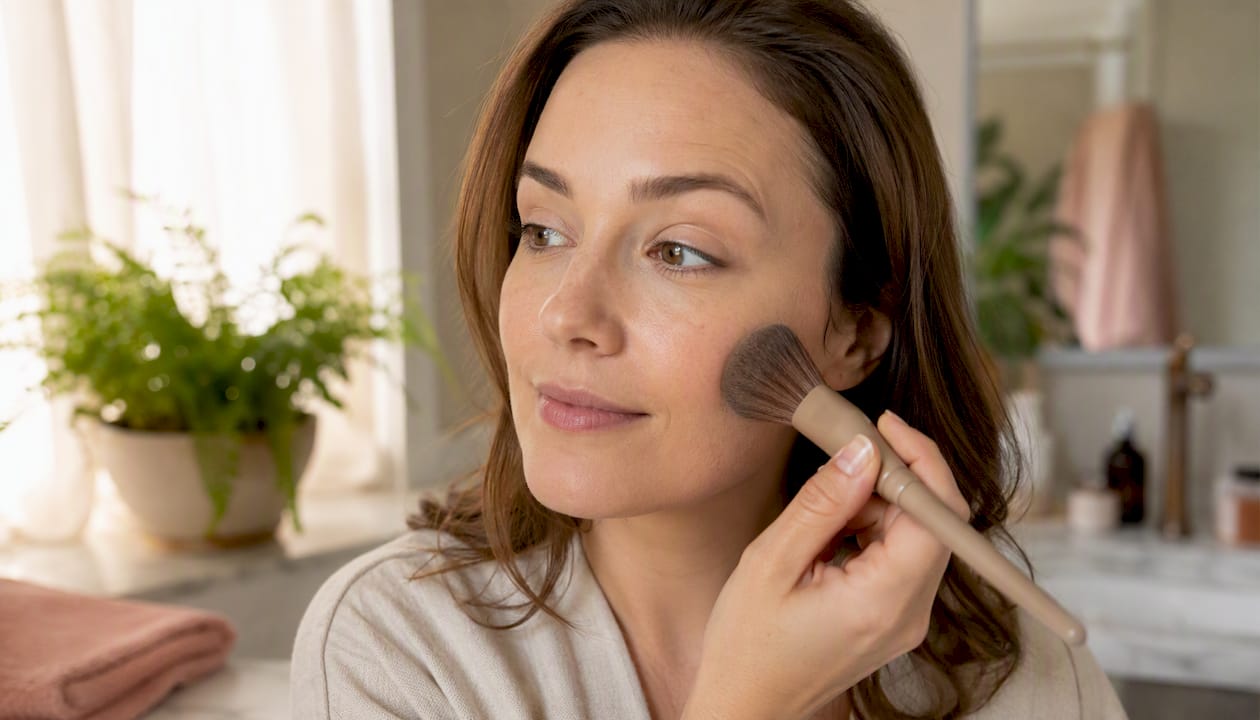
Where I think the brand comes up short is in narrowing its focus almost entirely to color cosmetics without building out the kind of deeper skin-support formulation that sensitive and reactive skin actually needs. Clean pigments and fewer synthetic fillers help, but they don’t address barrier repair or the specific triggers that make eczema-prone skin unpredictable. That’s a different formulation problem than “make a good highlighter,” and it takes ingredients and testing built around healing rather than around finish.

That gap is exactly where Purelightbotanicalbeauty spends its formulation effort. Botanical actives chosen for skin health first, makeup performance second, aimed specifically at people whose skin doesn’t tolerate the industry’s version of “gentle.” If your skin has ever reacted to a product marketed as clean, that distinction is worth sitting with before you buy your next highlighter.
A Botanical Alternative Worth Trying
If your skin needs more than a shorter ingredient list, Purelightbotanicalbeauty formulates specifically for sensitive and eczema-prone skin, pairing color cosmetics with actual skin-healing botanicals rather than treating clean beauty as a marketing category. Where RMS focuses on minimal synthetic fillers, Purelightbotanicalbeauty builds each formula around ingredients meant to support your skin barrier while you wear it, not just avoid irritating it.
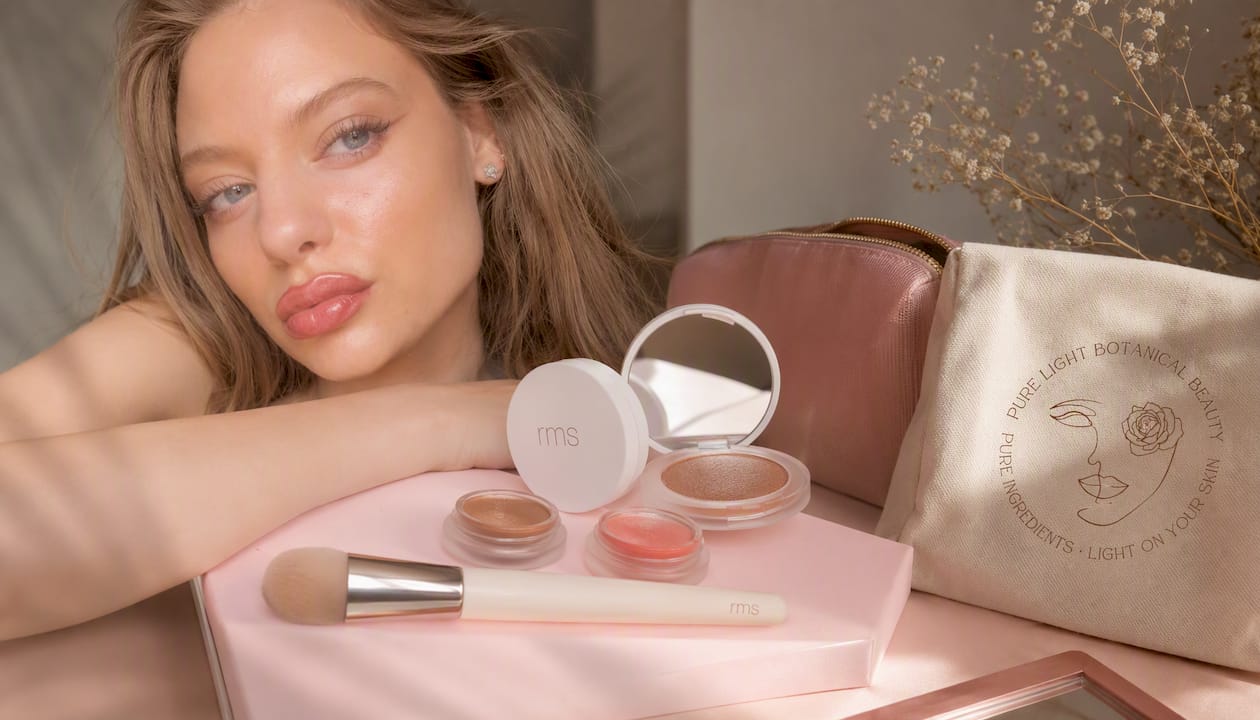
For readers who want that in-person shade guidance and color matching that clean beauty shoppers often struggle to get online, the brand’s Radiant Makeup Services offer sensitive-skin color matching with an actual person walking you through formula and shade fit, rather than guessing from a swatch photo. If eczema-prone or reactive skin has made you cautious about trying new makeup, book a session through the Radiant Makeup Services page and get matched to a formula built for your skin, not just labeled clean for it.
Where to Verify Ingredients and Check Retailer Authenticity
Before you finalize any RMS Beauty purchase, a few page types are worth bookmarking:
- Official product pages on the RMS Beauty site, which typically carry the most complete and current INCI lists.
- Authorized retailer listings at places like Ulta and Credo Beauty, which include verified customer reviews alongside ingredient information.
- Independent ingredient-transparency resources like the Good Face Project, useful when you want a second opinion beyond brand marketing copy.
- Brand social channels, which tend to be the fastest place to catch restock announcements or formulation updates.
Retailer impact and sourcing reports, when published, add another layer of confirmation beyond what a brand says about itself. They’re not always easy to find, but when a retailer does publish one, it’s worth a few minutes of reading before you trust a sustainability claim at face value. For a broader look at how sustainable beauty claims hold up under scrutiny, Purelightbotanicalbeauty’s sustainability resource walks through what to look for beyond the marketing language.
Recommended
- Top 8 Clean Beauty Products 2025 for Radiant Skin – Pure Light Botanical Beauty
- Best Clean Lipstick Brands 2025 – Expert Comparison 2025 – Pure Light Botanical Beauty
- Top 5 Best Clean Beauty Brands – 2026 Comparison Guide – Pure Light Botanical Beauty
- The Essential Guide to Clean Cosmetics Benefits – Pure Light Botanical Beauty