

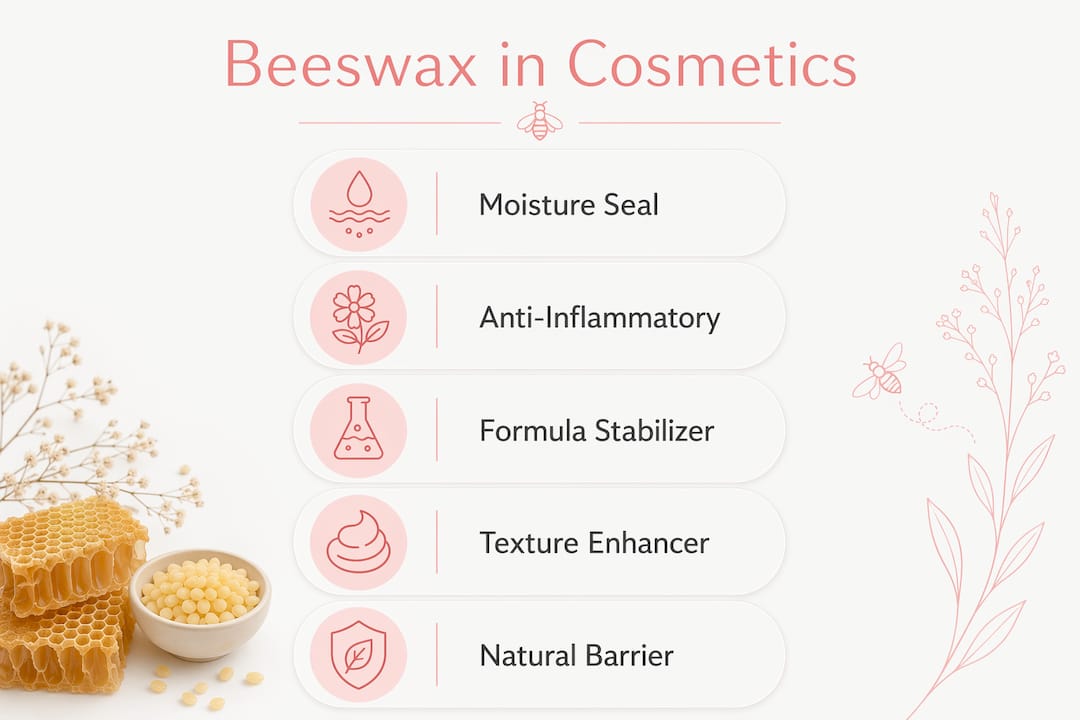
Beeswax is one of the most meticulous, time-honored ingredients in cosmetics, and its role is far more layered than most people realize. Known on ingredient labels as Cera Alba, it functions as an occlusive agent that forms a breathable, semi-permeable film on the skin’s surface, slowing transepidermal water loss (TEWL) without suffocating the skin. It also softens, structures, and stabilizes formulas, from the firmest lipstick bullet to the softest healing balm. Beyond texture, beeswax carries genuine antioxidant and anti-inflammatory properties that soothe irritated or sensitive skin. Here is a quick picture of what it brings to a formula:
- Occlusive protection: Slows moisture evaporation from the skin’s surface
- Humectant support: Attracts and helps bind water to the skin
- Emollient action: Softens and smooths dry or rough areas
- Structural integrity: Thickens and firms balms, sticks, and creams
- Anti-inflammatory and antioxidant properties: Calms irritation and protects against oxidative stress
- Emulsifier: Forms in situ soaps in traditional cold cream formulations
What makes beeswax so beneficial for skin and cosmetics?
Beeswax earns its place in formulas through a combination of physical barrier support and gentle bioactivity. As an occlusive, it reduces moisture evaporation by forming an open-network film rather than a sealed, impermeable layer. That distinction matters for long-term comfort. Petroleum-based occlusives can feel heavy and trap heat; beeswax lets skin breathe while still sealing in hydration.
Its anti-inflammatory and antioxidant properties make it particularly valuable for sensitive or reactive skin. Studies show that topical beeswax can help alleviate symptoms of dermatitis, psoriasis, and imbalances in the skin’s natural flora. A 2018 study found that natural products like beeswax outperformed synthetic alternatives in managing sensitive skin, minimizing irritation while delivering soothing benefits.
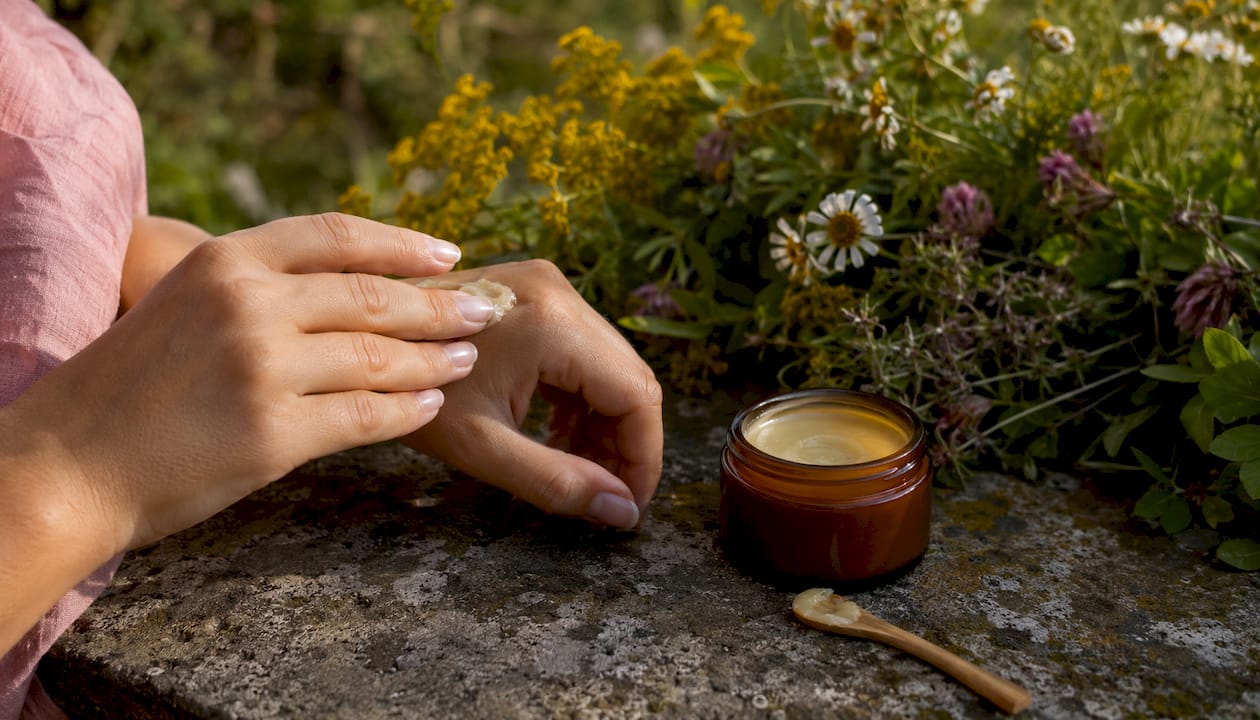
The industry reflects this confidence. In 2017, 7% of new product launches in the eye color, lip color, and lip care categories contained beeswax or a beeswax derivative, surpassing paraffin, dimethicone, and polyethylene in new launch frequency.
Key skin benefits at a glance:
- Reduces TEWL and helps skin retain its own moisture
- Softens and lubricates dry, rough, or chapped areas
- Soothes inflammation associated with eczema and dermatitis
- Provides antiseptic properties that protect against pathogenic microorganisms
- Delivers trace vitamin A to support skin regeneration after damage
- Creates a protective shield against environmental stressors
Pro Tip: Layer a beeswax-containing balm over a humectant moisturizer, not under it. Beeswax seals in moisture that is already present; it does not add water on its own.
Where does beeswax actually show up in your products?
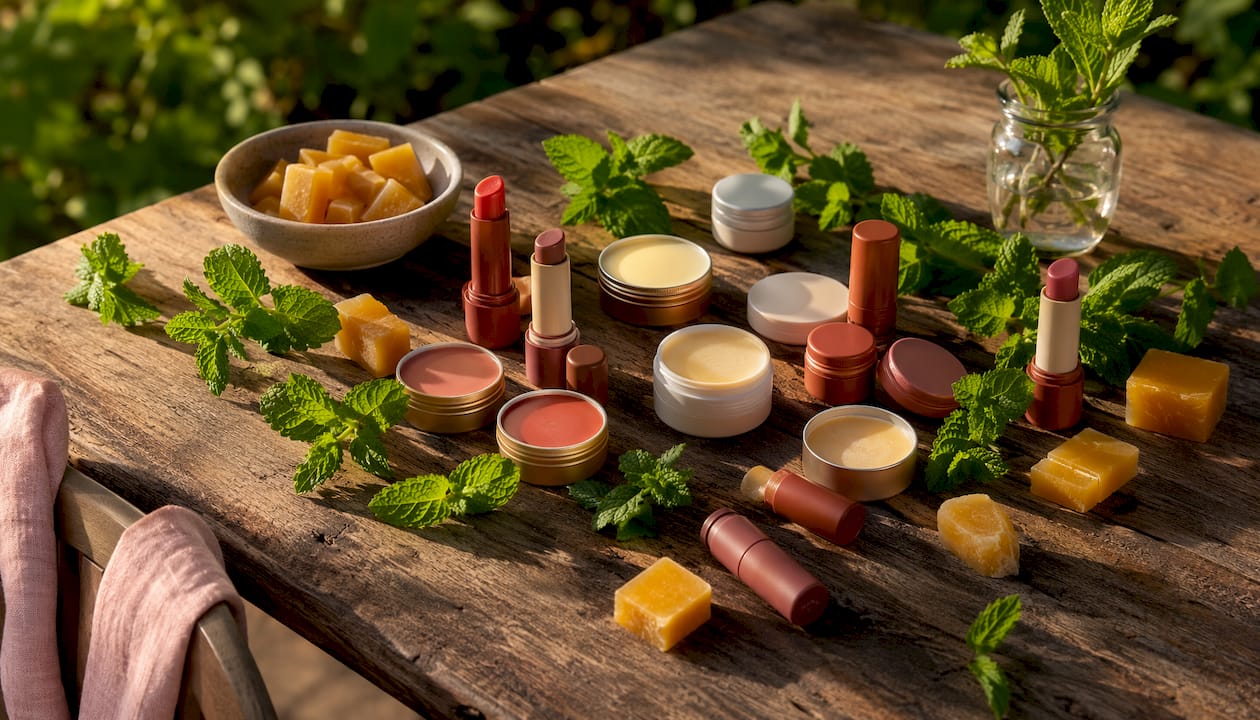
The range of beeswax cosmetic applications is genuinely broad. Lip balms and lipsticks are the most familiar, but beeswax also appears in mascaras, pomades, ointments, cold creams, eye shadows, foundations, and protective hand creams. Its concentration varies depending on the formula’s texture requirements, with typical cosmetic use ranging from 2% to 40%—lower percentages for creams and balms, and higher for firm stick products like lipsticks and pomades.
What makes beeswax uniquely useful is its dual role as both a structuring agent and a plasticizer. The monoesters, hydrocarbons, and fatty acids provide structure; the di- and complex esters add flexibility. That combination prevents crystallization and bloom in stick products, which is a problem that single-function waxes cannot solve on their own.
In emulsion formulas, beeswax acts as both a thickener and an emulsifier. When heated with a base, its free fatty acids form in situ soaps, which is the chemistry behind traditional cold creams used since 400 AD. That same mechanism simplifies modern formulations by reducing the need for synthetic surfactants.
Common beeswax cosmetic applications:
- Lip balms and lip care treatments
- Lipsticks and tinted lip products
- Mascaras and eye makeup
- Cold creams and cleansing balms
- Protective hand and body ointments
- Pomades and hair styling products
- Foundation creams and balm-based highlighters
What should you know about allergies, purity, and sourcing?
Beeswax carries an EWG safety score of 1 and a comedogenic rating of 2 out of 5, placing it firmly in the low-risk category for most skin types. It is generally well tolerated because it works as a protective occlusive rather than an exfoliating active. Still, anyone with known sensitivities to bee-derived ingredients should patch test before committing to daily use.
Purity level shapes how beeswax performs and who it suits. Unrefined beeswax retains its natural antibacterial components and warm aroma, but it may also carry impurities and pollen residue that could trigger reactions in sensitive individuals. Refined and bleached forms offer greater color consistency and fewer potential irritants, though the bleaching process does reduce some of the bioactive properties. For natural cosmetics formulations, lightly refined yellow beeswax often strikes the best balance between purity and bioactivity.
Ethical sourcing is a real consideration. Beeswax is an animal-derived product, and its “natural” label depends heavily on how it is harvested. Responsible beekeeping practices protect colony health and support pollinator populations. Consumers who prioritize sustainability should look for brands that disclose their sourcing standards.
Key considerations for conscious consumers:
- Patch test if you have bee-related allergies or very reactive skin
- Choose lightly refined beeswax for a balance of purity and bioactive benefit
- Verify sourcing transparency before purchasing products marketed as “natural”
- Understand that bleached beeswax loses some antibacterial properties
- Beeswax is not vegan; plant-based alternatives exist for those who need them
Common misconceptions about beeswax in skincare
The most persistent myth is that beeswax functions like a natural retinol. It does not. Beeswax contains only trace amounts of vitamin A, which supports skin regeneration by maintaining a hydrated barrier rather than driving cellular turnover. Its anti-aging value comes from preserving that hydrated environment, which reduces the appearance of fine lines caused by dehydration. It cannot resurface skin, stimulate collagen, or fade pigment the way retinoids or acids do.
Another common misread is that beeswax creates an impermeable seal. The open-network film it forms is breathable by design, allowing skin to function normally while still offering meaningful protection. That breathability is precisely what makes it more comfortable for long-term wear than heavy petroleum-based occlusives.
Clearing up the most common misunderstandings:
- Not a retinol substitute: Beeswax contains trace vitamin A but does not drive cellular renewal
- Not an impermeable barrier: Its film is semi-occlusive and allows skin to breathe
- Not a hydrator on its own: It seals in existing moisture but does not add water to the skin
- Not universally vegan: It is animal-derived; plant-based waxes serve as alternatives
- Not identical across grades: Refined, unrefined, and bleached forms differ meaningfully in bioactivity
How does beeswax compare to carnauba and candelilla wax?
Beeswax, carnauba, and candelilla wax each bring distinct properties to a formula, and formulators choose between them based on the texture, performance, and values a product needs.
Carnauba wax, derived from Brazilian palm leaves, has a higher melting point than beeswax and produces a harder, glossier finish. It is vegan and widely used in lipsticks and mascara for its shine and durability. However, it lacks beeswax’s plasticizing properties, which means formulas relying solely on carnauba can feel brittle or drag on application.
Candelilla wax, sourced from a Mexican shrub, is also vegan and melts at a higher temperature than beeswax. It is roughly twice as hard, so formulators typically use it at lower concentrations to achieve comparable texture. It does not offer the same dual structuring-and-plasticizing function that makes beeswax so forgiving in stick formulas.
Beeswax remains the most chemically complex of the three, which is why finding a one-to-one replacement is genuinely difficult. Its combination of emulsification, plasticization, and skin-soothing bioactivity is not replicated by a single plant-based wax.
How is beeswax regulated and labeled in the United States?
The U.S. Food and Drug Administration classifies beeswax as generally recognized as safe (GRAS) for use in cosmetics. On ingredient labels, it appears as Cera Alba (white beeswax) or Cera Flava (yellow beeswax), in compliance with the International Nomenclature of Cosmetic Ingredients (INCI) naming system that the FDA requires for all cosmetic products sold in the United States.
Beeswax does not require special approval for cosmetic use, but products making drug claims, such as treating eczema or healing wounds, fall under FDA drug regulations and require a different regulatory pathway. Organic or sustainably sourced beeswax may carry USDA certification, which signals adherence to specific agricultural standards. Vegan certifications, by contrast, will explicitly exclude beeswax, so labels matter when sourcing transparency is a priority.
How does beeswax affect product stability and shelf life?
Beeswax is one of the most stabilizing ingredients a formulator can choose. It improves product stability by thickening emulsions, enhancing firmness, and improving sensory properties like gloss and after-feel in creams and balms. Its plasticizing esters prevent the sweating, crystallization, and bloom that shorten the usable life of stick and balm products.
Beeswax also resists oxidation better than many plant oils, which means it does not go rancid quickly on its own. In formulas, it helps protect other ingredients, particularly unsaturated oils, from oxidative degradation. The result is a product that holds its texture, color, and performance longer on the shelf and in the hands of the person using it.
Key Takeaways
Beeswax functions as a multifunctional cosmetic ingredient that protects the skin barrier, structures formulas, and extends product stability, making it one of the most meticulous choices in natural beauty formulation.
| Point | Details |
|---|---|
| Occlusive moisture retention | Beeswax forms a breathable film that slows transepidermal water loss without sealing out air. |
| Dual structuring and plasticizing | Its unique chemistry prevents crystallization and bloom in sticks and balms, a function no single plant wax fully replicates. |
| Industry preference | In 2017, 7% of new lip and eye product launches contained beeswax, surpassing paraffin and synthetic wax alternatives. |
| Low safety concern | Beeswax carries an EWG score of 1 and a comedogenic rating of 2/5, making it broadly suitable for sensitive skin. |
| Concentration range | Typical use spans 2%–40%, with softer balms at the lower end and firmer stick products at the higher end of the range. |
At Purelightbotanicalbeauty, beeswax is not just an ingredient. It is an expression of the belief that protection and beauty can come from the same source. The Botanical Beauty Balm with Calendula and Rose pairs beeswax’s barrier-building resilience with the healing warmth of botanicals, crafted for skin that deserves both nourishment and care. Explore the full collection at Purelightbotanicalbeauty and discover what it feels like when your beauty ritual truly heals.
Recommended
- The Role of Natural Waxes in Cosmetics Explained – Pure Light Botanical Beauty
- Oil-Based Beauty: Exploring the Benefits of Water-Free Cosmetics – Pure Light Botanical Beauty
- Understanding the Role of Botanicals in Beauty – Pure Light Botanical Beauty
- Role of Lip Oils: Complete Guide for Healthy Lips – Pure Light Botanical Beauty