

What cyclical beauty means and why it changes everything
Cyclical beauty is the practice of adapting your skincare routine to the four phases of your menstrual cycle, rather than following the same regimen every single day. Your skin is not static. Hormonal fluctuations throughout the month shift its texture, oil production, sensitivity, and resilience in ways that a one-size-fits-all routine simply cannot address. When you align your care with those shifts, you stop fighting your skin and start working with it.
The term “cycle syncing” is the more clinical phrase you’ll encounter in dermatology and wellness circles, and it captures the same principle: timing your skincare choices to match your body’s real-time hormonal state. Cyclical beauty takes that idea further, weaving it into a broader philosophy of self-awareness, intentional ritual, and respect for your body’s natural intelligence.
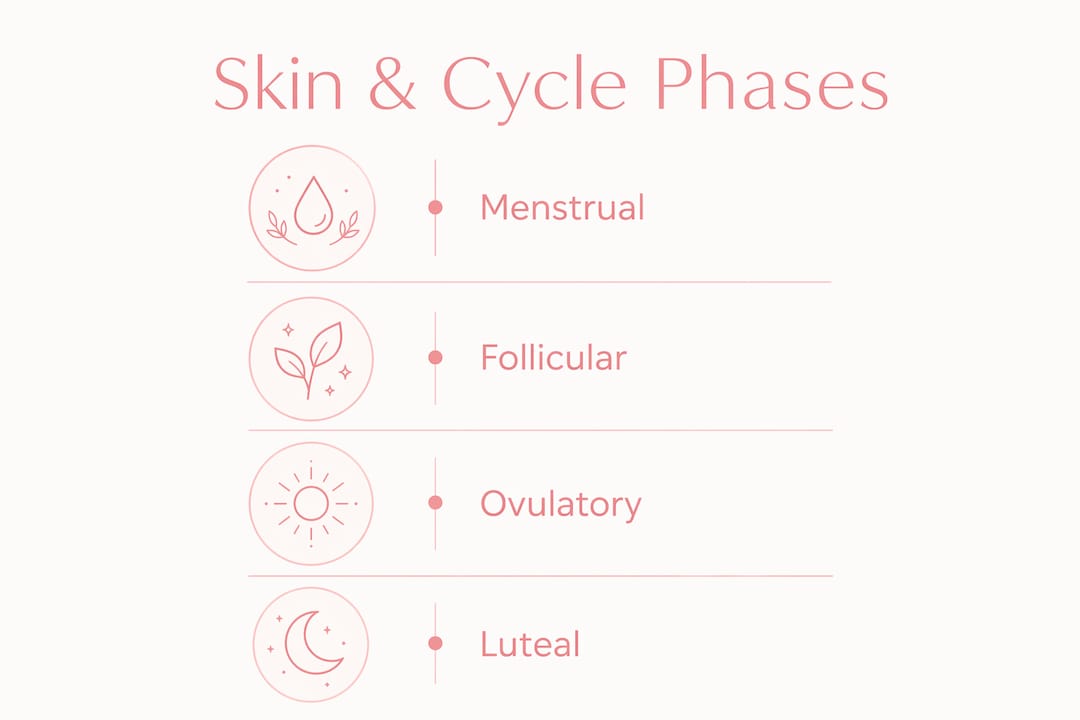
The four menstrual phases at the heart of this practice are:
- Menstrual phase (days 1–5 approximately): Estrogen and progesterone drop to their lowest. Skin tends to feel dry, sensitive, and reactive. The focus here is gentle, nourishing care.
- Follicular phase (days 6–13 approximately): Estrogen rises steadily. Skin brightens, cell turnover increases, and barrier function strengthens. This is the window for mild exfoliation and active ingredients.
- Ovulatory phase (days 14–16 approximately): Estrogen peaks. Skin often looks its most radiant and resilient. Lightweight hydration and antioxidant protection serve it well.
- Luteal phase (days 17–28 approximately): Progesterone surges, then both hormones fall. Sebum production increases, pores appear larger, and breakouts are most likely. Targeted treatments, including retinol and salicylic acid, tend to perform best here.
Beyond skincare, cyclical beauty touches lifestyle choices too: sleep, nutrition, movement, and emotional self-care. At Purelightbotanicalbeauty, this philosophy resonates deeply, because every botanical formula we create is designed to meet your skin where it actually is, not where a trend says it should be.
How each menstrual phase shapes your skin
Understanding the hormonal mechanics behind each phase gives you a real foundation for smarter skincare decisions. Estrogen and progesterone are the two primary drivers, and their rise and fall throughout the cycle create predictable, trackable changes in skin behavior.
Menstrual phase
Estrogen and progesterone are at their lowest during menstruation. The skin’s barrier function can feel compromised, making it more prone to redness, tightness, and sensitivity. Prostaglandins, the compounds that trigger uterine contractions, also promote mild inflammation throughout the body, which can show up on the face as increased reactivity.
Follicular phase
As estrogen climbs, collagen synthesis accelerates and the skin’s moisture-retention capacity improves. Cell turnover picks up, which means dead skin clears more efficiently. This phase is genuinely the best time to introduce exfoliating acids like glycolic or lactic acid, because the skin can handle them with less risk of irritation.
Ovulatory phase
Peak estrogen creates peak radiance. The skin looks plumper and more even-toned during this short window. Testosterone also spikes briefly around ovulation, which can slightly increase oil production for some people, so a lightweight, non-comedogenic moisturizer works better than a heavy cream.
Luteal phase
Progesterone’s rise stimulates sebaceous glands, producing more oil and creating the conditions for clogged pores and hormonal breakouts, typically along the jawline and chin. Skin reactivity also increases as both hormones begin their descent toward the end of the phase. Using harsh exfoliants or high-concentration actives during this window can worsen inflammation rather than calm it.
| Phase | Key hormones | Typical skin condition | Skincare priority |
|---|---|---|---|
| Menstrual | Low estrogen, low progesterone | Dry, sensitive, reactive | Gentle cleansers, rich moisturizers, calming botanicals |
| Follicular | Rising estrogen | Brightening, resilient | Mild exfoliation, vitamin C, light hydration |
| Ovulatory | Peak estrogen, brief testosterone rise | Radiant, slightly oily | Antioxidants, lightweight moisture, SPF |
| Luteal | High then falling progesterone | Oily, breakout-prone, reactive | Retinol, salicylic acid, soothing anti-inflammatories |
Skin insight: The luteal phase is when most people notice the clearest hormonal skin changes. Timing your targeted treatments to this window, rather than using them daily, tends to produce better results with less irritation.
How to adapt your skincare routine across the cycle
Cycle syncing your skincare does not require a complete product overhaul. It asks for thoughtful timing: knowing when to push and when to pull back.
-
Start with a simple tracking practice. Apps like Clue or Flo let you log cycle dates and note daily skin observations. After two or three months, patterns become visible and your routine adjustments become much more intuitive.
-
Menstrual phase: prioritize barrier repair. Swap your regular cleanser for a creamy, fragrance-free formula. Layer a ceramide-rich moisturizer over a hyaluronic acid serum. Skip retinol, exfoliating acids, and anything with a high concentration of active ingredients.
-
Follicular phase: introduce your actives. This is the phase where your skin can genuinely benefit from glycolic acid, lactic acid, or a vitamin C serum. Cell turnover is already elevated, so these ingredients amplify a natural process rather than forcing it.
-
Ovulatory phase: keep it light. Your skin is doing much of the work on its own. A mineral SPF, a niacinamide serum to manage any oil, and a clean tinted product like Purelightbotanicalbeauty’s Botanical Crème Blush are all you really need.
-
Luteal phase: treat strategically. Retinol used two to three nights per week during this phase addresses the increased cell turnover and breakout tendency without the daily irritation risk. Salicylic acid spot treatments work well here too. Avoid layering multiple actives on the same night.
-
Adjust for your individual cycle. Hormonal contraception, perimenopause, stress, and illness all alter the hormonal pattern. Cycle syncing should empower you to listen to your skin’s real-time signals, not lock you into a rigid schedule that doesn’t reflect your actual biology.
-
Treat treatment intensity as a variable, not a constant. Using a strong exfoliant at the wrong phase can trigger inflammation that takes days to resolve. Matching intensity to your skin’s current resilience is the core skill cyclical skincare builds.
Pro Tip: Keep a small skincare journal alongside your cycle tracker. Note which products felt soothing versus irritating each week. Within a few cycles, you’ll have a genuinely personalized map of your skin’s rhythms.
The benefits of this approach are real: fewer reactive flare-ups, more targeted use of expensive actives, and a deeper sense of connection to your own body. The limitation worth naming honestly is that it requires consistency in tracking and a willingness to experiment. If your cycle is irregular or you use hormonal contraception, the four-phase model may not map cleanly onto your experience, and that’s worth knowing before you begin.
Cyclical beauty vs. circular beauty: understanding the difference
These two terms get confused often, and the distinction matters if you want to make genuinely informed choices about your beauty practice.
Cyclical beauty centers on the biological. It’s about your body’s internal rhythms, specifically the hormonal fluctuations of the menstrual cycle, and how those rhythms shape your skin’s needs from week to week.
Circular beauty is an environmental and design philosophy. It applies circular economy principles to the beauty industry, prioritizing recyclable packaging, ingredient transparency, and the use of industry by-products like coffee grounds or fruit seeds to eliminate single-use waste. A circular beauty brand asks: what happens to this product after you’ve finished it?
The two philosophies are distinct but not opposed. A brand can be committed to both: formulating products that support your skin through every cycle phase while also being transparent about ingredient origins and packaging end-of-life. At Purelightbotanicalbeauty, that dual commitment is baked into the brand’s foundation. You can read more about what sustainable beauty standards actually require of a brand.
Cyclical aesthetics is a third, broader concept worth knowing. It’s a design and lifestyle philosophy that values recurring natural rhythms, durability, and ecological interconnectedness over constant novelty. Where linear consumption says “buy new, discard old,” cyclical aesthetics says “repair, refill, and find beauty in transformation.” It advocates for closed-loop systems, upcycling, and seeing longevity as a form of beauty in itself.
| Concept | Core focus | Primary domain | Key values |
|---|---|---|---|
| Cyclical beauty | Hormonal cycle syncing | Personal skincare | Biological attunement, skin health |
| Circular beauty | Waste elimination, sustainable design | Product and packaging | Recyclability, ingredient transparency |
| Cyclical aesthetics | Natural rhythms, durability | Design and lifestyle | Regeneration, ecological interconnection |
- Cyclical beauty asks: What does my skin need right now, given where I am in my cycle?
- Circular beauty asks: What happens to this product and its packaging after I’m done with it?
- Cyclical aesthetics asks: How can beauty itself reflect the rhythms and resilience of the natural world?
Beauty trend cycles have compressed dramatically in the digital era, moving from decade-long shifts to cycles of just a few years. Cyclical beauty offers a counterpoint to that acceleration: a stable, personal ritual that doesn’t depend on what’s trending this season.
Botanical beauty and cyclical care: a perspective from Purelightbotanicalbeauty
There is something quietly radical about treating your skincare as a living practice rather than a fixed routine. Cyclical beauty asks you to pay attention, to notice, and to respond with care rather than habit. That spirit of attentiveness is exactly what drives every formula at Purelightbotanicalbeauty.

Plant-based ingredients are particularly well-suited to cyclical skincare because many botanicals carry natural anti-inflammatory, antioxidant, and barrier-supporting properties that translate across multiple cycle phases. Calendula and chamomile calm the reactive skin of the menstrual phase. Rosehip and sea buckthorn, both rich in vitamins C and E, amplify the follicular phase’s natural radiance. Green tea extract and niacinamide help manage the excess sebum of the luteal phase without stripping the skin’s protective layer.
For those with sensitive skin or eczema, the cyclical approach is especially meaningful. Hormonal fluctuations can trigger eczema flares, and knowing that the luteal phase tends to bring heightened reactivity gives you the chance to be proactive rather than reactive. Purelightbotanicalbeauty’s formulations are built with this in mind: every ingredient is chosen for its skin-supporting function, not just its cosmetic effect. The intentional beauty approach we practice means that a lip oil or a crème blush is never just color. It’s nourishment.
Pro Tip: During the luteal phase, swap heavy foundation for a botanical tinted moisturizer or a light crème blush. You get coverage without the pore-clogging risk that heavier formulas carry when sebum production is already elevated.
The emotional dimension of cyclical beauty deserves equal attention. The menstrual phase, with its low energy and inward pull, is a natural invitation to slow down your routine and treat skincare as a restorative ritual rather than a task. The follicular phase’s rising energy aligns beautifully with trying something new, a fresh serum, a different application technique, or simply taking more time with your reflection. Cyclical beauty, practiced with awareness, becomes a form of self-knowledge. And self-knowledge, as anyone who has ever truly listened to their body knows, is its own kind of radiance.
Ingredient transparency is non-negotiable in this practice. When you’re timing your skincare to your cycle, you need to know exactly what’s in each product and why. Vague “natural” claims aren’t enough. Look for brands that name their botanical sources, explain their formulation choices, and stand behind the science behind their ingredients.
Key Takeaways
Cyclical beauty works because it aligns skincare timing with the hormonal shifts of the menstrual cycle, giving your skin what it actually needs in each phase rather than what a generic routine assumes it always needs.
| Point | Details |
|---|---|
| Four phases, four approaches | Menstrual, follicular, ovulatory, and luteal phases each call for different product types and treatment intensities. |
| Timing actives matters | Retinol and exfoliating acids perform best in the luteal and follicular phases; use them during the menstrual phase and you risk inflammation. |
| Cyclical vs. circular beauty | Cyclical beauty is about hormonal skin care; circular beauty is about sustainable product design and waste elimination. |
| Flexibility over rigidity | Hormonal contraception and individual variability mean cycle syncing should guide awareness, not replace listening to your skin. |
| Botanicals complement every phase | Plant-based ingredients like calendula, rosehip, and niacinamide support skin across multiple cycle phases without harsh side effects. |
Recommended
- What is adaptive beauty? Guide to holistic skin care – Pure Light Botanical Beauty
- What Is Ritual Beauty and Why It Transforms Your Skin – Pure Light Botanical Beauty
- Purposeful beauty: Mindful rituals for sensitive, radiant skin – Pure Light Botanical Beauty
- Intentional beauty: A wellness approach to glowing skin – Pure Light Botanical Beauty