

TL;DR:
- Intentional beauty emphasizes wellness, mindful practices, and clean, plant-based skincare over quick fixes.
- Stress reduction through rituals like breathing and proper ingredient choices can significantly improve sensitive skin.
- Building a routine gradually with purpose and presence supports lasting skin health and self-respect.
Good skin doesn’t have to come from a 12-step chemical routine. For many women, especially those managing sensitive skin or eczema, the answer is actually simpler and more personal than that. Mindfulness in beauty rituals reduces eczema flare-ups by 40%, and botanicals like chamomile can reduce severity by 70%. That’s not a small number. Intentional beauty is the practice of treating your skincare and makeup routine as a wellness ritual, not just a cosmetic task. In this article, we’ll walk you through what it means, why it works, and exactly how to build a routine that genuinely serves your skin and your soul.
Table of Contents
- What is intentional beauty? Defining a holistic approach
- The science behind intentional beauty: Mindfulness and skin health
- Key rituals and products: Building your intentional beauty routine
- Real-life transformation: Stories, results, and common challenges
- Beyond products: Why intentional beauty is an act of self-respect
- Pure Light Botanical Beauty: Your partner on the intentional beauty journey
- Frequently asked questions
Key Takeaways
| Point | Details |
|---|---|
| Mindful routines matter | Intentional beauty means blending clean products with mindfulness rituals for better skin health. |
| Botanicals make a difference | Ingredients like chamomile may reduce eczema issues by up to 70 percent. |
| Emotional wellness counts | Lowering stress through beauty rituals improves both your skin and overall sense of well-being. |
| Start with simple steps | Gentle cleansing, hydration, and brief mindful moments form the foundation of intentional routines. |
What is intentional beauty? Defining a holistic approach
Intentional beauty isn’t a product category. It’s a mindset. At its core, it means aligning every choice you make in your beauty routine with your overall well-being, not just how you look in the mirror.
Traditional beauty routines tend to focus on results that are visible and fast. Think: cover the blemish, blur the pores, match the trend. Intentional beauty flips that entirely. The question shifts from “Does this make me look better?” to “Does this support my skin, my health, and how I feel?”
Making intentional beauty choices means reaching for clean, plant-based formulas that work with your skin rather than against it. It also means how you apply those products matters as much as what you apply.
Here’s how intentional beauty compares to a conventional routine:
| Feature | Traditional beauty | Intentional beauty |
|---|---|---|
| Focus | Appearance and trend | Wellness and skin health |
| Ingredients | Often synthetic or chemical | Clean, plant-based botanicals |
| Routine style | Quick and task-oriented | Slow, mindful, and ritualistic |
| Skin philosophy | Cover and correct | Nourish and support |
| Emotional element | Minimal | Central to the practice |
A well-designed intentional routine often includes rituals that nurture the soul alongside the skin. According to Emily Algar’s approach to beauty, consistent simple rituals like oil pulling, double cleansing, hydration, and breathing practices during skincare form the backbone of a truly intentional routine.
Core elements of an intentional beauty practice include:
- Choosing products with recognizable, clean ingredients
- Slowing down and being present during your routine
- Using hydration as both a physical and emotional reset
- Incorporating breathing, prayer, or gratitude while applying products
- Selecting botanicals that actively support skin repair and calm
This is beauty as a relationship with yourself. Not a task to rush through before work.
The science behind intentional beauty: Mindfulness and skin health
Here’s where things get genuinely interesting. Intentional beauty isn’t just feel-good philosophy. There’s real science behind why slowing down and choosing better ingredients produces better skin.
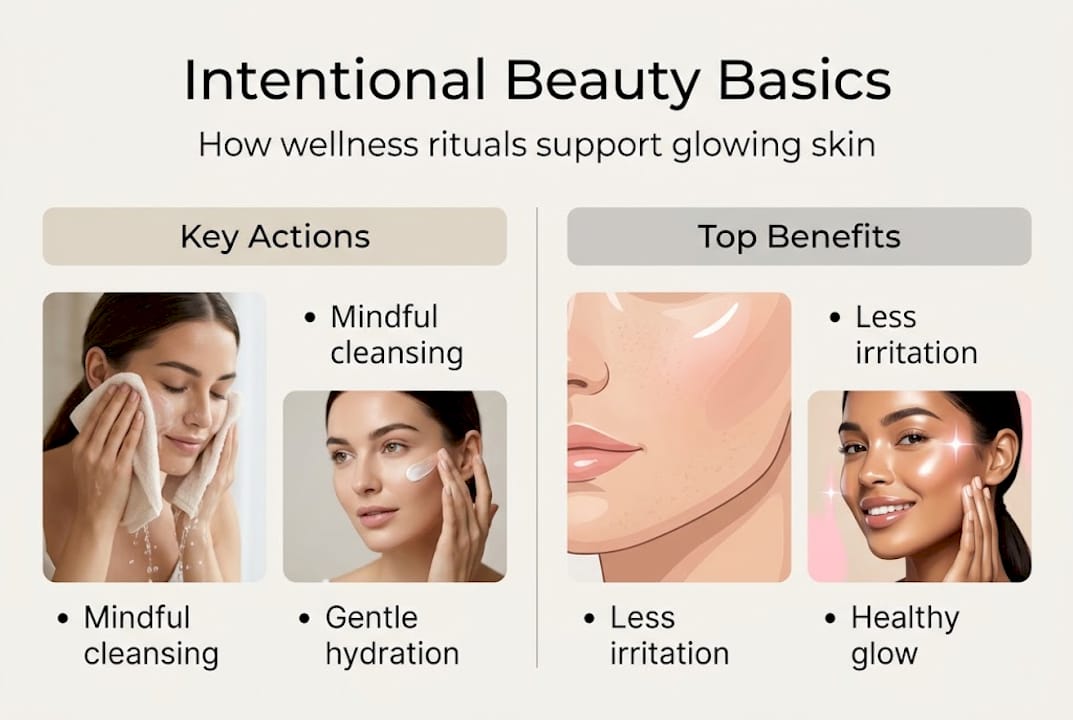
Stress is one of the most powerful triggers for sensitive skin conditions. When your body is stressed, it releases cortisol, a hormone that increases inflammation and disrupts the skin barrier. For women with eczema, this is a familiar cycle: stress spikes, skin flares, which causes more stress. Intentional beauty interrupts that loop.
Mindfulness during a beauty routine, even something as simple as three deep breaths while cleansing, activates the parasympathetic nervous system. That’s your body’s “rest and heal” mode. When your nervous system calms down, so does your skin.
“Intentional beauty combines physical care with emotional wellness, using rituals to lower stress that directly impacts skin conditions like eczema.” Read more about beauty for inner growth.
The botanical side of this is equally compelling:
| Ingredient | Benefit for sensitive skin | Evidence level |
|---|---|---|
| Chamomile | Reduces inflammation and eczema severity by up to 70% | Strong |
| Calendula | Soothes redness and supports barrier repair | Moderate to strong |
| Aloe vera | Hydrates and calms irritated skin | Strong |
| Rosehip oil | Supports skin regeneration | Moderate |
| Green tea extract | Antioxidant protection and reduced reactivity | Moderate |
Key stat: Eczema flare-ups reduced by 40% when mindfulness is integrated into beauty rituals. That’s the kind of result that comes not from a prescription, but from consistency and intention.
The emotional dimension matters too. When you feel cared for during your routine, even if you’re the one doing the caring, your body responds physically. This is why intentional beauty isn’t soft science. It’s the mind-body connection made visible on your skin.
Key rituals and products: Building your intentional beauty routine
Knowing the why is powerful. But you also need the how. Here’s a practical, step-by-step approach to building an intentional beauty routine that actually works for sensitive skin.
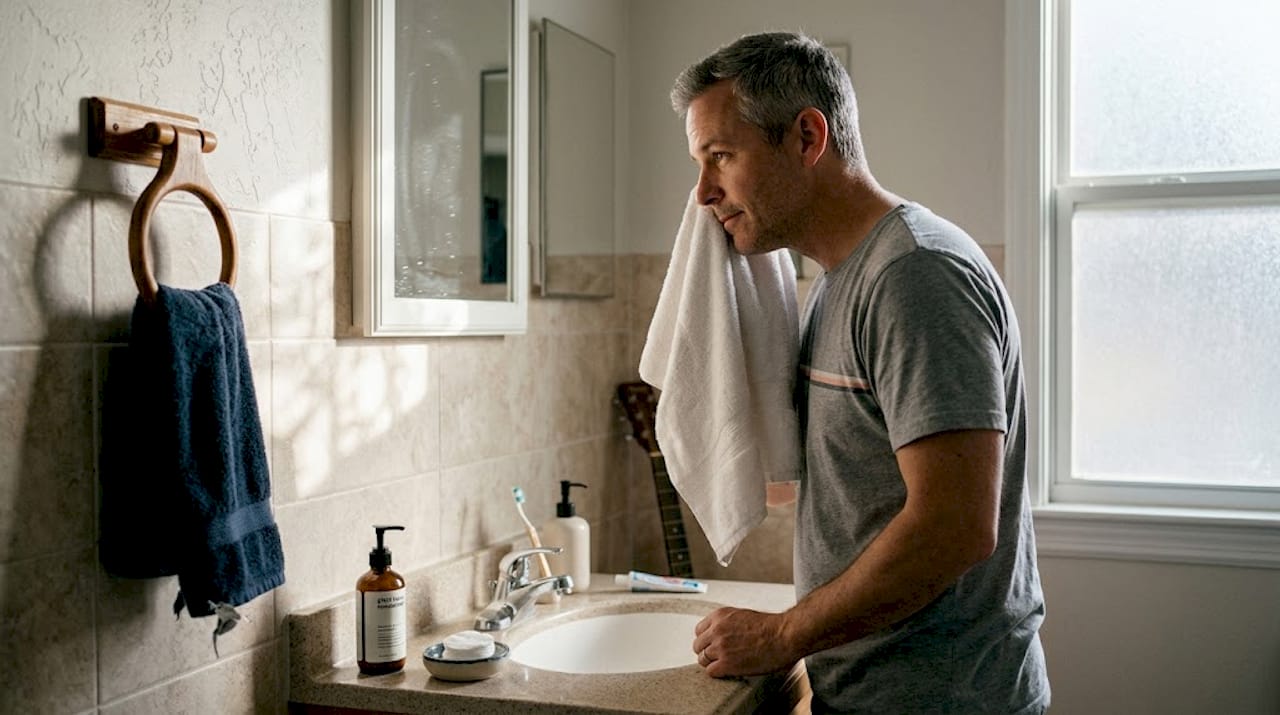
As consistent simple rituals show, the key is layering physical care with intentional presence. You don’t need to overhaul everything at once.
Step-by-step intentional beauty routine:
- Set an intention before you begin. Even one word. “Calm.” “Nourish.” “Gentle.” This shifts your mindset from task mode to care mode.
- Double cleanse with a clean oil, then a gentle botanical cleanser. This removes impurities without stripping your barrier, which is critical for sensitive skin.
- Hydrate with intention. Pat, don’t rub. Notice the texture, the scent, the sensation. This moment of presence is where the mindfulness begins.
- Apply botanical serums or oils mindfully. Choose formulas with ingredients you recognize. Massage gently, stimulating circulation and lymphatic flow.
- Add a mindfulness anchor. Three deep breaths. A moment of gratitude. A quiet affirmation. This is not extra time. It’s part of the ritual.
- Choose makeup as skin care. Look for nourishing daily rituals that include plant-based formulas designed to protect while they enhance.
- Close the routine with intention. A moment of acknowledgment. You showed up for yourself today. That matters.
For those just starting out, explore these beauty routine steps to build a foundation that feels sustainable rather than overwhelming.
Pro Tip: Start with just two mindful moments in your current routine, one at the beginning and one at the end. Add steps gradually. Overwhelm is the enemy of consistency, and consistency is everything in intentional beauty.
When choosing products, read ingredient lists. Fewer ingredients with names you can pronounce is almost always a better sign than a long list of synthetic compounds, especially for sensitive or reactive skin.
Real-life transformation: Stories, results, and common challenges
Transformation in intentional beauty rarely looks like an overnight glow-up. It looks more like: fewer flare-ups this month. A little more calm during your morning routine. Noticing that your skin feels softer after three weeks of consistent ritual.
Many women who shift to intentional beauty come in frustrated. They’ve tried everything. Prescription creams. Elimination diets. Product after product. What they often haven’t tried is slowing down and choosing ingredients that actually work with their biology.
Common wins women report after switching:
- Eczema flare-ups becoming less frequent and less intense
- Reduced morning anxiety because the routine feels grounding
- Skin that feels softer and more resilient without more products
- A greater sense of self-connection and body awareness
- Makeup sitting better on skin that is properly nourished
That 40% reduction in eczema flare-ups isn’t a statistic from a lab with perfect conditions. It reflects what happens when real people slow down and make consistent, plant-based choices.
Common mistakes when starting out:
- Switching everything at once. This makes it impossible to know what’s helping. Change one thing at a time.
- Expecting immediate results. Skin renews itself in roughly 28 days. Give your routine at least six weeks before evaluating.
- Confusing “natural” with “safe for sensitive skin.” Always patch test, even with botanical products.
- Skipping the mindfulness piece. The physical products matter. But so does the nervous system regulation.
Pro Tip: Keep a simple skin journal. Note what you used, how you felt during your routine, and how your skin looks the next morning. Patterns will emerge within two weeks, and they’ll tell you more than any quiz or diagnostic tool.
If you’re looking for mindful makeup for sensitive skin, there are approaches that make application itself feel like part of the ritual. And if you want to track your glowing skin steps, beginning with small, manageable shifts leads to the most lasting change. Understanding beauty rituals for sensitive wellness is what ties all of it together.
Beyond products: Why intentional beauty is an act of self-respect
Most beauty content focuses on what to buy. This one is different, and so is the practice it describes.
Intentional beauty is, at its root, a daily act of self-respect. It says: I am worth slowing down for. My skin deserves ingredients that heal, not just cover. My mornings deserve a moment of presence, not just a rush to presentability.
For women with sensitive skin or eczema, this reframe is especially powerful. So much of the experience of reactive skin involves shame, frustration, and the feeling that your body is working against you. Intentional beauty shifts you from victim of your skin to active participant in your healing.
This is what why beauty rituals matter comes down to: not the ritual itself, but what it signals to you. That you are worth consistent care. That healing is a process, not a purchase.
The brands, products, and routines that support beauty for inner growth understand this. They design for the whole person, not just the surface. And when you approach your own routine with that same wholeness in mind, the results go far deeper than what the mirror shows.
Intentional beauty is not a trend. It’s an ongoing relationship with yourself, one that grows more nourishing the longer you tend to it.
Pure Light Botanical Beauty: Your partner on the intentional beauty journey
Ready to take the next step in your intentional beauty practice? You don’t have to figure it out alone.
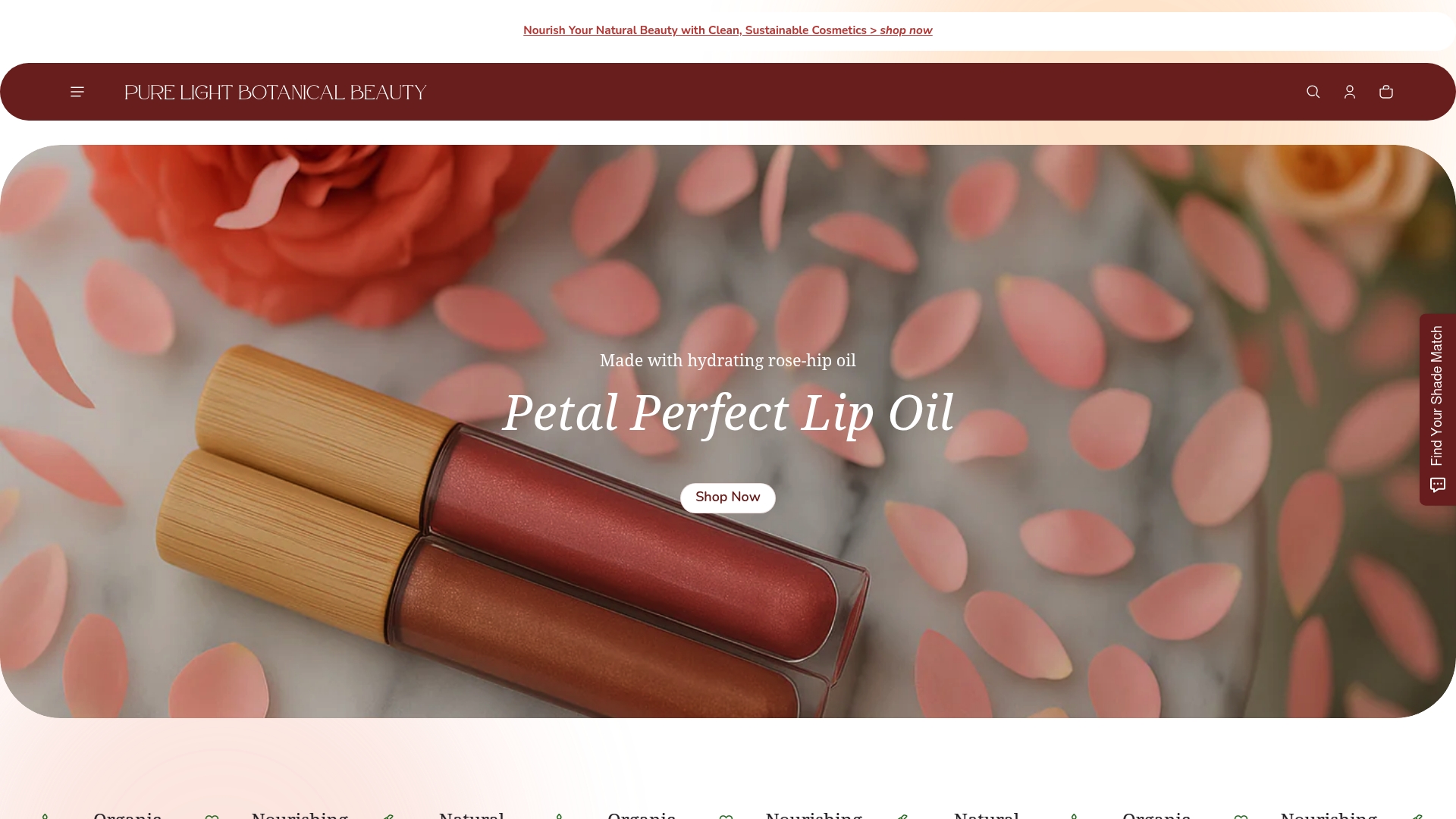
Pure Light Botanical Beauty was built on the exact principles we’ve explored here: clean ingredients, botanical science, and beauty as a wellness ritual. Every product in the line is formulated to nourish sensitive skin while supporting the mindful, intentional routines that actually create lasting change. From Petal Perfect Lip Oil to Botanical Crème Blush, each formula is both performance-driven and skin-nurturing. Explore the full collection and discover glowing skin secrets rooted in nature, backed by science, and designed for you.
Frequently asked questions
How is intentional beauty different from a basic skincare routine?
Intentional beauty aligns your skincare with your wellness goals by merging clean, plant-based products with mindful practices like breathing during cleansing. A basic routine focuses only on the physical steps.
Can intentional beauty routines help with eczema or sensitive skin?
Yes. Mindfulness-based beauty rituals have been shown to reduce eczema flare-ups by 40%, and botanicals like chamomile reduce eczema severity by 70%, making this approach especially effective for reactive skin.
What are the first steps to building an intentional beauty routine?
Begin with gentle double cleansing, mindful hydration, and one simple mindfulness anchor like deep breathing or gratitude, using consistent simple rituals as your daily foundation.
Is intentional beauty only for people with sensitive skin?
Not at all. The stress-lowering and wellness benefits of mindful, plant-based beauty apply to everyone. Those with sensitive skin conditions simply tend to notice the physical results most clearly.
Recommended
- Why intentional beauty choices transform sensitive skin care – Pure Light Botanical Beauty
- Why Beauty Matters for Inner Growth and Healing – Pure Light Botanical Beauty
- Beauty as Healing: Transforming Skin and Soul – Pure Light Botanical Beauty
- How beauty habits transform skin and mental health – Pure Light Botanical Beauty