

TL;DR:
- Ritual beauty involves deliberate, mindful skincare practices that promote emotional well-being and skin health. It emphasizes intention and sensory engagement over task completion, creating a meaningful self-care experience rooted in cultural traditions. This approach reduces stress and enhances emotional focus, making beauty routines a form of sacred time rather than chores.
Ritual beauty is defined as the intentional, sensory, and mindful practice of engaging with skincare and self-care to nurture both skin health and emotional well-being. Unlike a standard routine, a beauty ritual carries deliberate meaning. It treats each step as an act of care rather than a task to complete. The concept draws from cultural anthropology, psychology, and plant-based wellness, making it one of the most complete approaches to personal care available today. Purelightbotanicalbeauty was built on exactly this belief: that beauty and healing share the same source.
What is ritual beauty, and how does it differ from a regular routine?
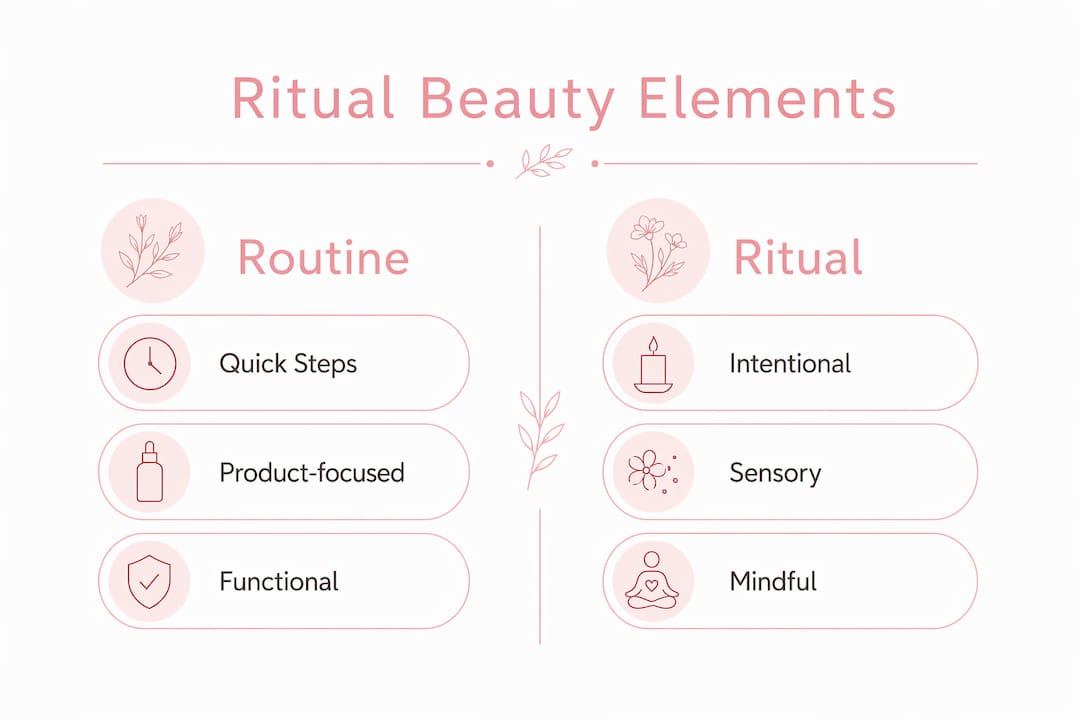
Ritual beauty and a standard beauty routine look similar on the surface. Both involve cleansing, moisturizing, and applying products. The difference lies entirely in intention and attention.
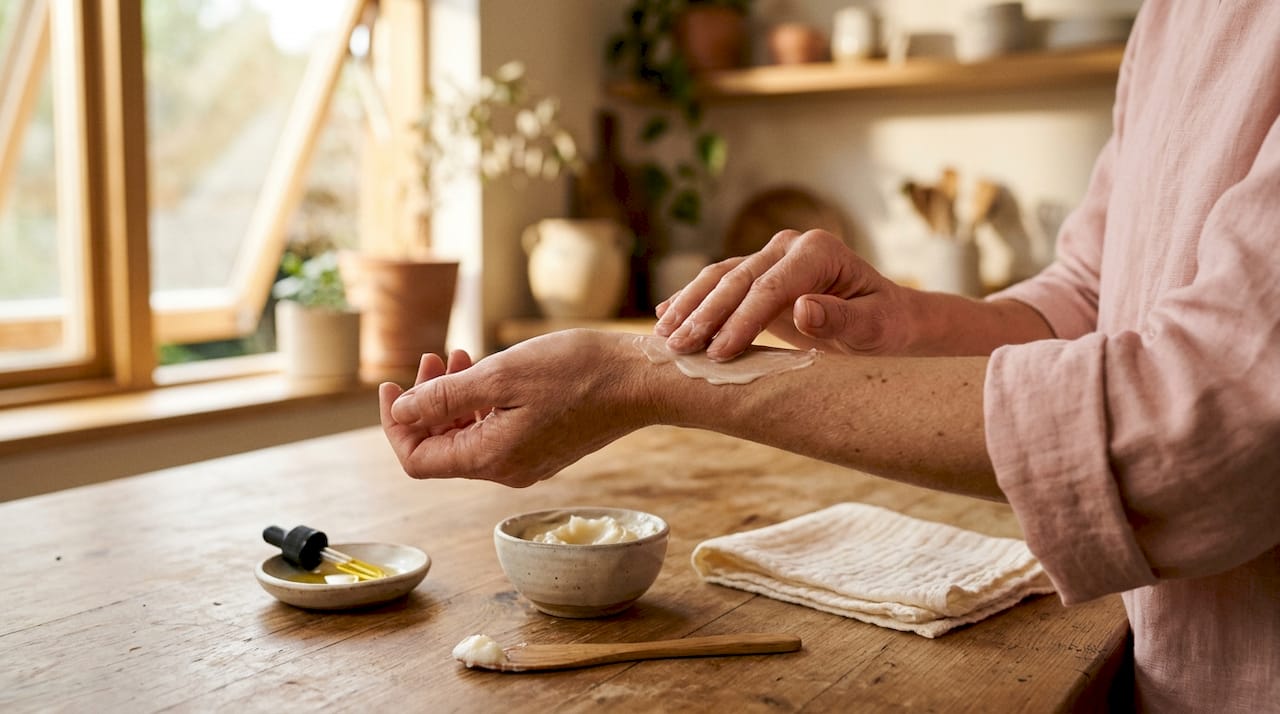
A regular routine is task-oriented. You complete it to check a box, often while distracted by a phone or rushing before work. A beauty ritual, by contrast, is presence-oriented. You slow down, engage your senses, and treat each step as a deliberate act of self-care. Research confirms that deliberate sequence and sensory attention in skincare activate psychological mechanisms that produce real emotional benefits, independent of what products you use. That finding matters because it means the ritual itself carries the power, not just the formula in the bottle.
Here is what separates a ritual from a routine in practice:
- Intention: You begin with a clear purpose, whether that is calming your nervous system, honoring your skin, or simply pausing before a busy day.
- Sensory engagement: You notice the scent of a botanical oil, the texture of a crème blush on your fingertips, the warmth of water on your face.
- Emotional presence: You stay with the experience instead of rushing through it.
- Meaning: Each product and step holds a reason for being there.
Luxury formulations are specifically designed around repetition, soothing textures, and sensory cues to create this calming effect. The principle applies equally to clean, plant-based products that prioritize skin health alongside experience.
Pro Tip: Before you begin your ritual, place your phone in another room for five minutes. That single act signals your nervous system that this time belongs to you.
How do cultural roots shape ritual beauty practices?
Beauty rituals are not a modern wellness trend. Anthropological research shows that beautification has served as a marker of social power, cultural identity, and rites of passage across human history. Adornment has always communicated something deeper than aesthetics. It marks transitions, signals belonging, and expresses who you are within your community.
Many cultures have passed down specific beauty practices as a form of ancestral connection. In West African traditions, shea butter application is both a skin care practice and a communal act of care passed from mother to daughter. In Ayurvedic tradition, abhyanga, the practice of warm oil self-massage, is a daily ritual tied to physical and spiritual balance. These are not routines. They are ceremonies.
“Ritual beauty serves as spiritual work rooted in heritage and self-empowerment. When you engage with your beauty practice as a form of ancestral connection, you amplify inner radiance beyond surface appearance.” — Adorned & Aligned, Essence
For women in marginalized communities especially, beauty rituals carry a particular weight. They are acts of reclamation, self-definition, and pride. Understanding this history deepens the meaning of your own practice. You can read more about ritualistic beauty across cultures and how these traditions inform modern approaches to intentional care.
The modern ritual beauty movement draws directly from this well. When you choose plant-based ingredients, slow down your application, and treat your skincare as sacred time, you are participating in a tradition that stretches back thousands of years.
What are the psychological and emotional benefits of ritual beauty?
The psychological case for ritual beauty is strong and growing. Research on ritualized beauty practices-1933-1945) shows that organized, sensory-focused beauty care reduces psychological stress and restores internal stability. The mechanism is similar to art therapy: the act of engaging with texture, scent, and deliberate movement quiets the nervous system and creates emotional renewal.
Three core psychological benefits stand out:
- Anxiety reduction: Mindful skincare routines produce measurable drops in anxiety by giving the mind a focused, low-stakes task to complete.
- Improved focus: The deliberate sequence of a ritual trains attention, which carries over into the rest of your day.
- Emotional transition: A morning ritual signals the brain that you are shifting from rest to readiness. An evening ritual signals the shift from output to recovery.
What makes this especially significant is that these benefits exist independently of product efficacy. The ritual structure itself does the psychological work. A simple cleanser applied with full attention and intention produces more emotional benefit than an expensive serum applied while scrolling.
Pro Tip: Try applying your facial oil or moisturizer using slow, upward strokes with your fingertips. The physical act of gentle touch activates the parasympathetic nervous system, the part responsible for rest and calm.
Purelightbotanicalbeauty products like the Petal Perfect Lip Oil and Botanical Crème Blush are formulated to support this experience. Their plant-based textures and clean ingredients make sensory engagement feel natural, not forced. You can explore more about mindful beauty practices and how they support skin health alongside emotional well-being.
How to create a beauty ritual that actually sticks
Building a personal beauty ritual does not require a complete overhaul of your current routine. It requires a shift in approach. Follow this phased process to build something sustainable.
- Observe for seven days. Before changing anything, watch what you already do. Notice which steps feel rushed, which feel good, and which you skip entirely. This observation phase gives you honest data about your starting point.
- Set one primary goal. Choose a single focus: calming sensitive skin, building a morning grounding practice, or supporting skin barrier repair. One goal keeps the ritual clear and prevents it from becoming overwhelming.
- Prepare your environment. Silencing devices, adjusting lighting, and adding a calming scent signal the nervous system to pause. Dim lighting and a candle or essential oil diffuser cost almost nothing but change the entire quality of the experience.
- Add one upgrade at a time. Industry guidance recommends allowing 10–14 days of adaptation before adding another new element. This gives both your skin and your mind time to respond.
- Review monthly. A ritual that no longer fits your life becomes a burden. Monthly reassessment keeps the practice restorative rather than obligatory.
The table below shows the practical difference between a routine and a ritual at each stage of your practice.
| Element | Standard routine | Beauty ritual |
|---|---|---|
| Intention | Complete steps quickly | Begin with a clear purpose |
| Environment | Wherever you happen to be | Prepared space with sensory cues |
| Attention | Divided, often distracted | Focused on sensation and presence |
| Product choice | Based on trend or habit | Chosen for skin need and sensory fit |
| Review | Rarely or never | Monthly, with flexibility to adapt |
For women with sensitive skin or eczema, this intentional approach matters even more. Clean, plant-based formulas reduce the risk of irritation while the ritual structure reduces the stress that often triggers flares. Purelightbotanicalbeauty’s holistic beauty ritual guide for sensitive skin walks through exactly how to build this kind of practice.
Key Takeaways
Ritual beauty is the most complete approach to skincare because it addresses skin health, emotional well-being, and personal identity at the same time.
| Point | Details |
|---|---|
| Ritual vs. routine | Rituals are intention-driven and sensory-focused; routines are task-driven and often distracted. |
| Psychological benefits | Deliberate beauty sequences reduce anxiety and improve focus regardless of product efficacy. |
| Cultural roots | Beauty rituals have served as rites of passage and identity markers across cultures for thousands of years. |
| Building your ritual | Observe first, set one goal, prepare your environment, and add changes gradually over 10–14 days. |
| Flexibility is required | Monthly reviews keep a ritual restorative rather than turning it into another obligation. |
Why I believe ritual beauty is the most underrated form of self-care
I have watched women spend hundreds of dollars on products and still feel disconnected from their skincare. The products were good. The problem was never the formula. The problem was that the practice had no soul.
When I started treating my morning skincare as protected time rather than a pre-work checklist, everything shifted. Not because I added expensive steps, but because I stopped multitasking through them. I put my phone down. I lit a candle. I actually felt the texture of what I was applying. That five-minute change produced more calm than any supplement I had tried.
What I find most compelling about ritual beauty is that it does not require perfection. A ritual that takes three minutes with full attention beats a ten-step routine done on autopilot every single time. The research backs this up. The psychological benefit comes from the deliberate sequence and sensory focus, not from the number of products on your shelf.
The cultural dimension also moves me. When I learned that the act of applying oil to skin has been a communal, spiritual practice in cultures around the world for centuries, my own practice felt less like vanity and more like participation in something ancient and meaningful. That reframe changed how I show up for it.
My honest advice: start smaller than you think you need to. Pick two products you already love. Give them your full attention for one week. Notice what happens to your mood, your skin, and your relationship with yourself. The ritual will grow from there on its own.
— Kaitlyn
Products from Purelightbotanicalbeauty built for intentional beauty
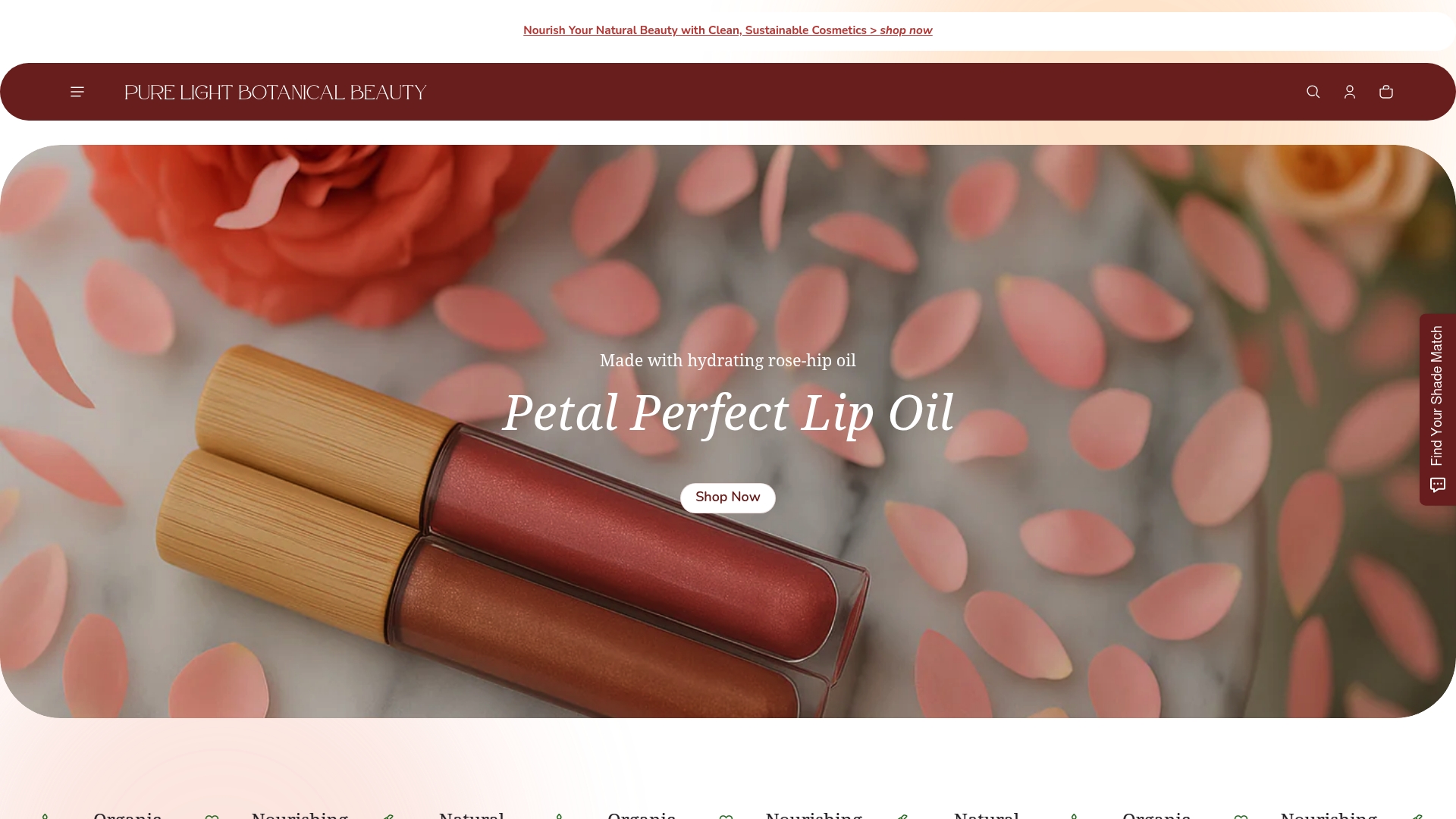
Purelightbotanicalbeauty was created for exactly this kind of practice. Every formula in the line, from the Petal Perfect Lip Oil to the Botanical Crème Blush and Nourishing Lipstick, is built with clean, plant-based ingredients that support skin health while delivering a sensory experience worth slowing down for. These products work especially well for women with sensitive skin or eczema, because the botanicals nourish the skin barrier while the ritual structure supports emotional calm. Visit Purelightbotanicalbeauty to find products that feel as good to apply as they look on your skin.
FAQ
What is the ritual beauty definition?
Ritual beauty is the intentional, mindful practice of engaging with skincare and self-care as a sensory and emotionally meaningful experience. It differs from a standard routine by prioritizing presence, purpose, and sensory engagement over speed and task completion.
How do I start a ritual skincare routine from scratch?
Observe your current habits for seven days, then set one clear skin or wellness goal. Add one new intentional element at a time and allow 10–14 days of adaptation before making further changes.
Do ritual beauty practices actually improve skin health?
Yes. Research shows that mindful skincare sequences reduce stress, and chronic stress is a known trigger for skin conditions including eczema and breakouts. Calming the nervous system through ritual directly supports skin barrier function.
How long should a beauty ritual take?
A ritual can be as short as three to five minutes. Duration matters less than the quality of attention. Full presence during a brief ritual produces more benefit than a distracted twenty-minute routine.
What makes ritual beauty practices different across cultures?
Anthropological research shows that beauty practices across cultures serve as rites of passage, expressions of social identity, and acts of community connection. The specific ingredients and methods vary, but the core function of marking meaning through care is universal.
Recommended
- Examples of Ritualistic Beauty Across Cultures – Pure Light Botanical Beauty
- How to Build a Skincare Ritual That Transforms Your Skin – Pure Light Botanical Beauty
- Why Beauty Rituals Matter for Sensitive Skin Wellness – Pure Light Botanical Beauty
- How to create a holistic beauty ritual for sensitive skin – Pure Light Botanical Beauty