

Clinical benchmarks show a 93.7% drop in dryness and a 72.5% boost in hydration using minimalist, peptide-rich routines, and that single finding flips conventional beauty wisdom on its head. Most of us have been taught that more products mean better skin. More serums, more steps, more actives. But for sensitive and eczema-prone skin, that logic can quietly work against you. Slow beauty challenges that assumption at its core. It asks you to do less, choose better, and trust that your skin already knows how to heal when you stop overwhelming it. This is both a philosophy and a practice, grounded in real science and genuine self-care.
Table of Contents
- What is slow beauty and why does it matter?
- The science: How slow beauty supports sensitive skin
- Emotional wellness: The slow beauty ritual
- How to practice slow beauty with sensitive skin
- Explore clean, calming solutions for your skin
- Frequently asked questions
Key Takeaways
| Point | Details |
|---|---|
| Slow beauty heals skin | Minimalist, gentle routines with barrier support deliver measurable reductions in dryness and irritation. |
| Fewer products, greater results | Prioritizing quality and microbiome-respecting ingredients can outperform multi-step routines for sensitive skin. |
| Emotional benefits matter | Slow beauty rituals lower stress and boost self-confidence—key factors for calm, radiant skin. |
| Practical, evidence-based steps | Adopt a patch-test-first approach and introduce new products slowly for safer improvements. |
| Expert-backed over hype | Dermatologists advocate slow, consistent routines targeting long-term health over quick fixes. |
What is slow beauty and why does it matter?
Slow beauty is not a trend. It is a deliberate shift in how we think about skin and the products we put on it. Where fast beauty chases novelty, viral ingredients, and instant results, slow beauty prioritizes long-term skin health through microbiome-respecting formulations and barrier fortification. The skin barrier, the outermost protective layer of your skin, is everything. When it is intact, skin stays hydrated, calm, and resilient. When it is compromised, irritation, redness, and eczema flares follow.
For those with sensitive skin, reactive skin, or conditions like atopic dermatitis (the clinical term for eczema), fast beauty routines can be genuinely harmful. Rotating through new products constantly, layering too many actives, or following trends designed for resilient skin types can strip the barrier and trigger flares.
| Feature | Slow beauty | Fast beauty |
|---|---|---|
| Focus | Barrier support and long-term health | Instant results and trend-driven |
| Product count | Minimal, intentional | Often layered and complex |
| Ingredient philosophy | Skin-compatible, clean, gentle | Varies widely, often reactive |
| Skin type suitability | Sensitive, eczema-prone, reactive | Typically resilient skin types |
| Pace of change | Gradual, monitored | Frequent product swaps |
“Slow beauty is not about doing nothing. It is about doing the right things, consistently, with ingredients your skin can actually recognize and use.” — Slow Beauty Expert, Attracta Beauty Awards 2026
Who benefits most from slow beauty?
- Women with eczema or atopic dermatitis
- Those with reactive or rosacea-prone skin
- Anyone whose skin flares after trying new products
- People recovering from over-exfoliation or barrier damage
- Sensitive skin types who feel overwhelmed by complex routines
The science: How slow beauty supports sensitive skin
The evidence behind slow beauty is not soft or anecdotal. Minimal routines with 3 to 4 products reduce irritants, lower transepidermal water loss (TEWL, the rate at which water escapes through the skin) by 37%, and improve barrier function for atopic dermatitis. That is a measurable, clinical outcome from simply using fewer, better products.
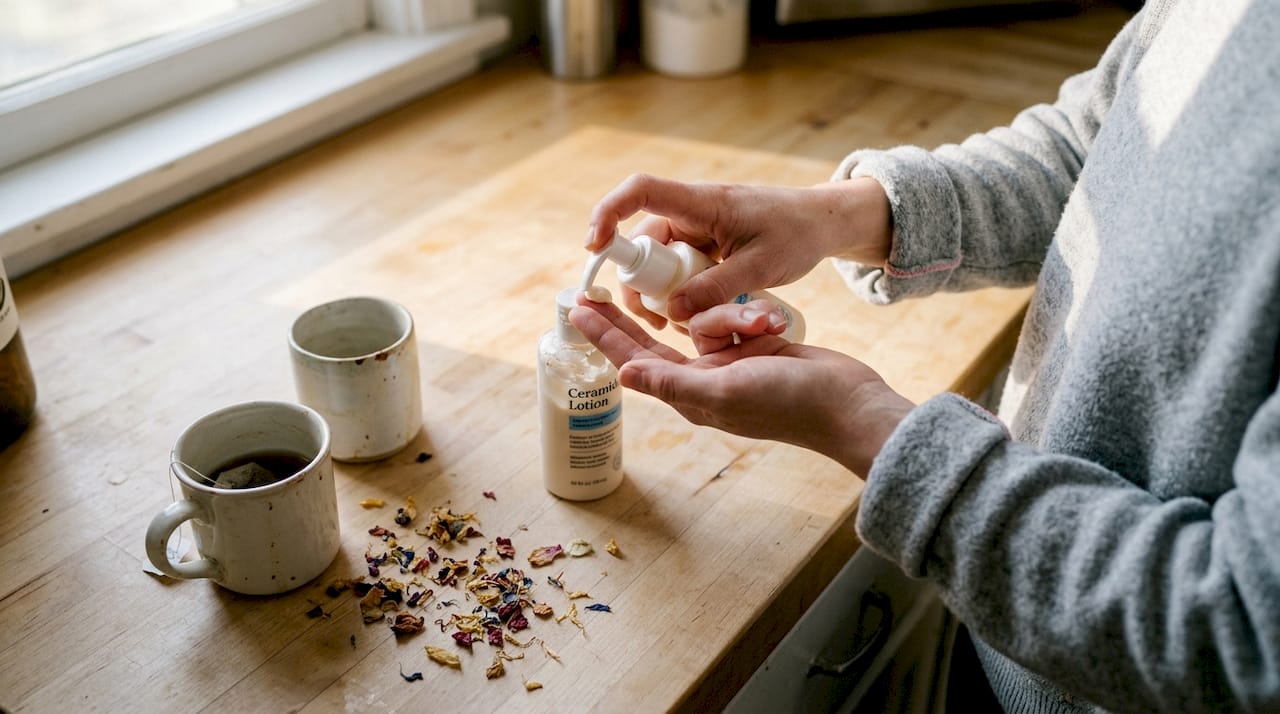
The key actives that make slow beauty work are not exotic. Ceramides rebuild the lipid structure of the skin barrier. Niacinamide (a form of vitamin B3) calms inflammation and reduces redness. Colloidal oatmeal soothes and protects irritated skin. Peptides signal the skin to repair itself. A 4-week peptide serum trial delivered 93.7% less dryness, 72.5% more hydration, and a measurably stronger barrier. These are not small improvements.
| Ingredient | Benefit for sensitive skin | Clinical result |
|---|---|---|
| Ceramides | Barrier repair and moisture retention | Reduces TEWL significantly |
| Niacinamide | Anti-inflammatory, reduces redness | Improves barrier in 4 weeks |
| Colloidal oatmeal | Soothes, protects, anti-itch | Recognized as a skin protectant |
| Peptides | Signals skin repair and hydration | 93.7% less dryness in 4 weeks |
Pro Tip: Start with just 3 to 4 core products: a gentle cleanser, a barrier-supporting moisturizer, and one targeted active. Introduce anything new one at a time, waiting at least two weeks before adding another. This is how you learn what your skin actually loves.
Signs your skin is responding well to a slow beauty approach:
- Less redness and fewer flares over time
- Skin feels calm and comfortable after your routine
- Reduced tightness or dryness throughout the day
- Fewer reactions to environmental triggers
- A more even, settled skin tone
For guidance on natural product layering and skin-soothing tips, these resources can help you build your routine with confidence.
Emotional wellness: The slow beauty ritual
Here is something the skincare industry rarely talks about openly: stress is one of the most powerful triggers for sensitive skin and eczema flares. When cortisol (your primary stress hormone) spikes, it disrupts the skin barrier, increases inflammation, and makes reactive skin even more reactive. A slow beauty ritual does not just protect your skin physically. It actively buffers the stress response.
Mindful beauty rituals reduce stress and improve self-esteem for those with sensitive skin. When you slow down and treat your routine as a moment of care rather than a task to rush through, you shift your nervous system into a calmer state. That shift has real, measurable effects on your skin.
“The act of caring for your skin with intention is itself therapeutic. It is a daily practice of self-recognition that builds resilience, both emotionally and physically.” — Slow Beauty Expert, Attracta Beauty Awards 2026
Emotional benefits of a slow beauty practice:
- Grounding: A consistent ritual anchors your day and creates a sense of stability
- Self-acceptance: Caring for your skin as it is, not as you wish it were, builds genuine body positivity
- Reduced anxiety: Predictable, gentle routines lower the mental load of managing sensitive skin
- Confidence: Seeing steady improvement over weeks builds trust in yourself and your skin
Pro Tip: Create a calming environment for your beauty routine. Dim the lights, play soft music, or light a candle. These small cues signal safety to your nervous system and amplify the mind-skin benefits of your ritual.
Exploring the importance of rituals, beauty for inner growth, and self-love in beauty can deepen your understanding of how this practice works on every level.
How to practice slow beauty with sensitive skin
Knowing the philosophy is one thing. Building the actual routine is another. Here is how to start without overwhelming your skin or yourself.
Steps to create your slow beauty routine:
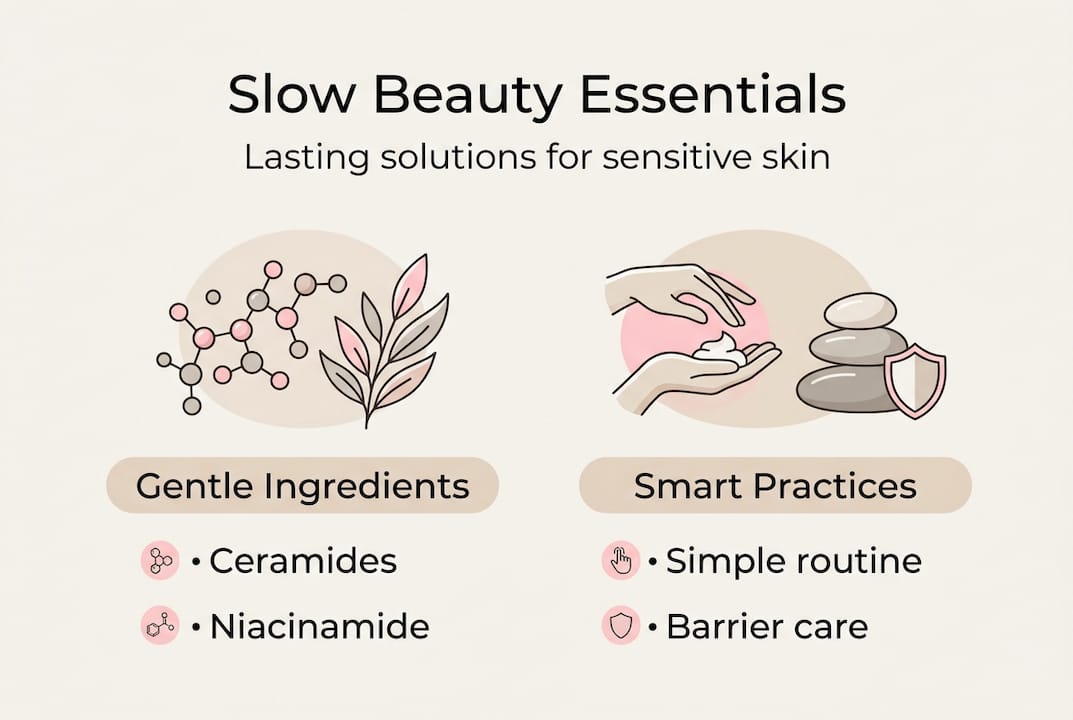
- Patch test everything. Before applying any new product to your face, test it on the inside of your wrist or behind your ear for 48 hours. This one step prevents most reactions.
- Check every ingredient label. Look for ceramides, niacinamide, oatmeal, and peptides. Avoid synthetic fragrances and unnecessary essential oils, which trigger sensitivity in 31% of cases.
- Layer gently and intentionally. Apply products from thinnest to thickest consistency. Give each layer a moment to absorb before adding the next.
- Monitor your skin’s response. Keep a simple log for the first few weeks. Note what feels good, what causes tightness, and when your skin looks its calmest.
- Resist the urge to swap quickly. Give each new product at least two to four weeks before judging its effect. Skin renewal cycles take time.
Ingredients to prioritize:
- Ceramides, hyaluronic acid, and glycerin for hydration
- Niacinamide and colloidal oatmeal for calming
- Peptides for barrier repair
- Zinc oxide for gentle sun protection
Ingredients to approach with caution:
- Synthetic fragrances and parfum
- High-concentration essential oils
- Harsh physical or chemical exfoliants
- Alcohol-based toners
- Unnecessary preservatives or dyes
Common pitfalls to avoid: switching products too quickly before your skin has time to adjust, overloading on botanicals without checking for sensitivities, and ignoring stress as a skin trigger. Your skin-soothing beauty tips and minimalist routine advice are your best companions here.
Pro Tip: Focus on how your skin feels, not just how it looks. Comfort, softness, and reduced sensitivity are signs of real progress. Slow beauty rewards patience, not perfection.
Explore clean, calming solutions for your skin
If this approach resonates with you, you do not have to figure it out alone. Pure Light Botanical Beauty was built specifically for women who want beauty products that work with their skin, not against it. Every formula is crafted with clean, plant-based ingredients chosen for their ability to support the skin barrier, calm inflammation, and nourish sensitive skin from within.
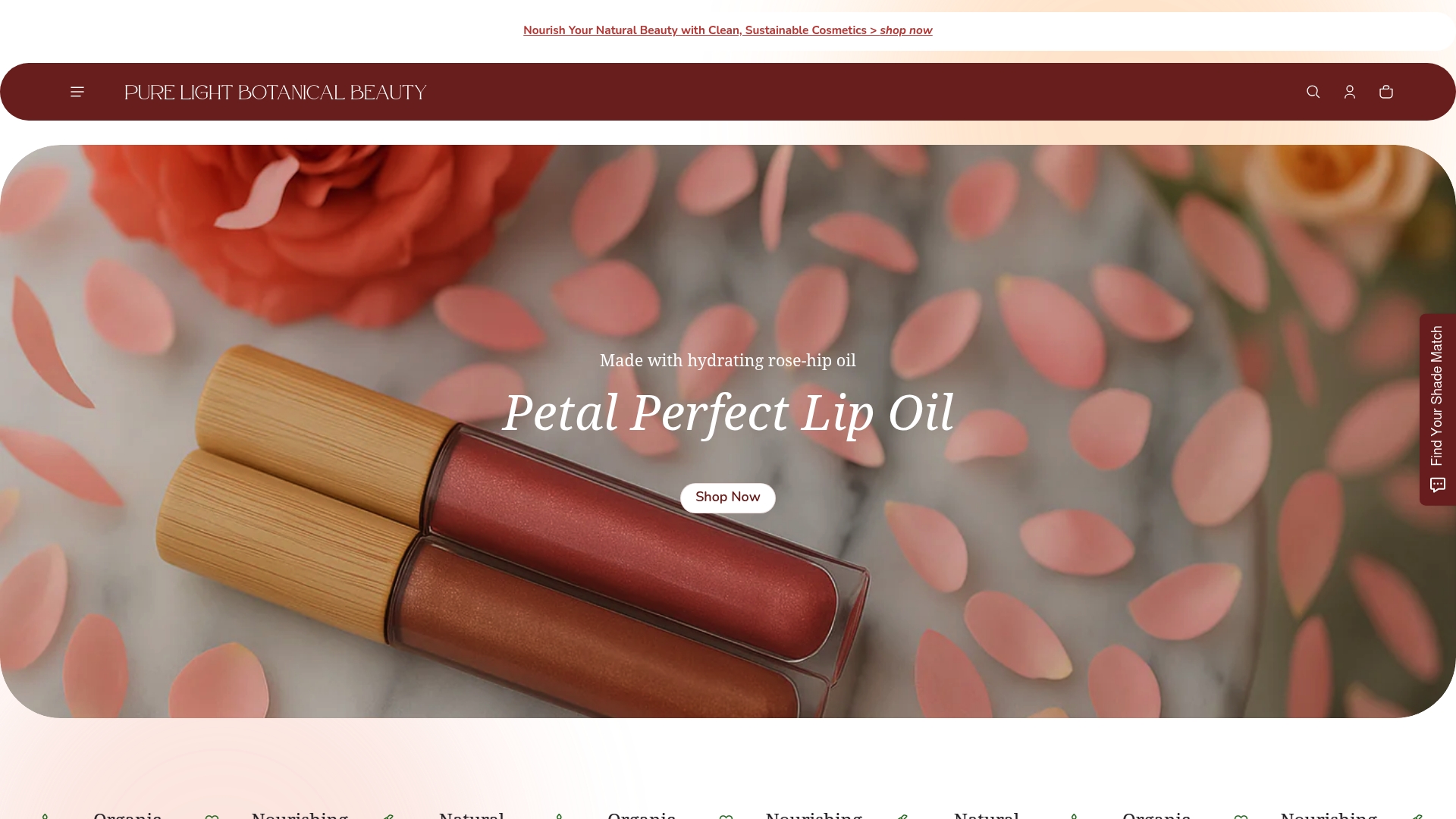
From gentle makeup that doubles as skin care to deeply nourishing formulas designed for eczema-prone skin, the collection reflects the slow beauty philosophy in every product. You will also find a growing library of resources, including guides on minimalist healing routines, ingredient education, and ritual-building support. Your skin deserves care that is both effective and kind. We are here to help you find it.
Frequently asked questions
Is slow beauty better for eczema than traditional beauty routines?
Yes. Minimal routines improve barrier function and reduce irritants for atopic dermatitis, making slow beauty a clinically supported choice for eczema-prone skin.
How quickly can I expect results from a slow beauty routine?
Most people notice improved hydration and less irritation within 4 to 12 weeks. A 4-week clinical trial showed significant gains in hydration and barrier function with consistent use.
What ingredients should I avoid for sensitive skin in slow beauty?
Avoid synthetic fragrances, unnecessary essential oils, and harsh exfoliants. These ingredients trigger sensitivity in 31% of users with reactive or eczema-prone skin.
Can slow beauty routines replace makeup for sensitive skin?
Slow beauty reframes makeup as skin-first enhancement. Using quality pigments that avoid stripping the skin means your makeup becomes part of the healing ritual, not a barrier to it.
Do I need to use only natural products for slow beauty?
Not necessarily. The focus is on skin-compatible, barrier-fortifying ingredients rather than ‘natural’ for its own sake. Clean and non-irritating matters more than the natural label alone.
Recommended
- Why beauty is self-care for sensitive skin naturally – Pure Light Botanical Beauty
- Mindful beauty for sensitive skin healing in 2026 – Pure Light Botanical Beauty
- Why Beauty Is Self-Love: Holistic Healing for Sensitive Skin – Pure Light Botanical Beauty
- 7 Holistic Beauty Routines for Sensitive Skin Wellness – Pure Light Botanical Beauty