

Sensitive skin and hydration have a complicated relationship. You might assume that only dry, flaky skin needs extra moisture, but the truth is more nuanced. Sensitive and eczema-prone skin actually struggles most with holding onto water, and when that balance tips, the result is redness, stinging, and flare-ups that feel impossible to calm. Understanding how hydration works beneath the surface, and building a routine that supports it, can genuinely change how your skin feels every single day.
Table of Contents
- Understanding skin hydration: What happens beneath the surface
- How hydration protects your skin barrier
- Evidence-based hydration routines: Soak and seal for sensitive skin
- How to choose the right hydration products for sensitive and eczema-prone skin
- Signs your skin is hydrated and common mistakes to avoid
- Natural solutions for deeply hydrated, glowing skin
- Frequently asked questions
Key Takeaways
| Point | Details |
|---|---|
| Hydration is essential | Hydration keeps your skin barrier strong and reduces irritation in sensitive and eczema-prone skin. |
| Evidence-based routines work | Proven steps like the soak-and-seal method and ceramide creams can dramatically improve skin comfort and health. |
| Gentle products matter | Choosing fragrance-free, natural formulas helps reduce flare-ups and supports lasting hydration. |
| Check your progress | Hydrated skin feels soft and looks smoother, so monitor for these signs to adjust your routine as needed. |
Understanding skin hydration: What happens beneath the surface
Skin hydration is not just about splashing water on your face. It refers to the water content held within the outermost layer of your skin, called the stratum corneum. This layer acts like a protective film, keeping moisture in and irritants out. When it functions well, your skin feels soft, resilient, and calm. When it does not, everything from pollution to your own cleanser can trigger a reaction.
The stratum corneum needs 20-30% water content to stay smooth and maintain a healthy barrier. Below that threshold, the skin becomes rough, tight, and far more reactive. For women with sensitive or eczema-prone skin, reaching and staying within that range is genuinely harder because the barrier itself is structurally weaker.
Your skin uses two key systems to manage moisture. Lipids, which are fatty molecules between skin cells, act like mortar between bricks, sealing water inside. Aquaporins, specifically a protein called AQP3, act as tiny water channels that move moisture through skin layers. When either system is disrupted, water escapes faster than it can be replenished.
| Hydration factor | Healthy skin | Sensitive or eczema-prone skin |
|---|---|---|
| Stratum corneum water content | 20-30% | Often below 20% |
| Lipid barrier integrity | Strong and intact | Thinner, more permeable |
| Aquaporin function | Efficient moisture transport | Reduced or impaired |
| Reaction to irritants | Minimal | Heightened sensitivity |
“When the skin barrier is compromised, even gentle products can feel harsh. Hydration is not a luxury for sensitive skin. It is the foundation.”
Learning more about hydration for sensitive skin can help you see why this foundation matters so much before you choose any product.
How hydration protects your skin barrier
Think of your skin barrier as a security system. When it is well-hydrated, it keeps harmful things out and good things in. When it is dry and compromised, that system starts to fail. For sensitive and eczema-prone skin, this failure happens faster and more intensely than it does for other skin types.
Skin barrier lipids and aquaporins are critical in preventing transepidermal water loss, often called TEWL. TEWL is simply the rate at which water evaporates through your skin. Higher TEWL means your skin is losing moisture faster than it should, which leads to tightness, irritation, and vulnerability to triggers.
Common causes of barrier breakdown include:
- Hot showers or baths that strip natural oils
- Harsh cleansers with sulfates or strong detergents
- Cold, dry weather that pulls moisture from the skin
- Over-exfoliating or using too many active ingredients at once
- Stress, which can weaken the skin’s natural repair process
A well-hydrated barrier reduces stinging, smooths roughness, and creates a buffer against external irritants. Understanding skin barrier and water loss helps clarify why some products that seem harmless can still cause reactions on sensitive skin.

Hydrated vs. dehydrated barrier at a glance:
| Skin state | Barrier function | Sensitivity level | Recovery speed |
|---|---|---|---|
| Well-hydrated | Strong, intact | Low | Fast |
| Mildly dehydrated | Slightly permeable | Moderate | Moderate |
| Severely dehydrated | Compromised | High | Slow |
Building skin wellness routines around barrier protection is one of the most effective things you can do for reactive skin.
Pro Tip: Apply your moisturizer within three minutes of cleansing, while your skin is still slightly damp. This timing locks in the water that is already present on the surface, giving your barrier the best possible start.
Evidence-based hydration routines: Soak and seal for sensitive skin
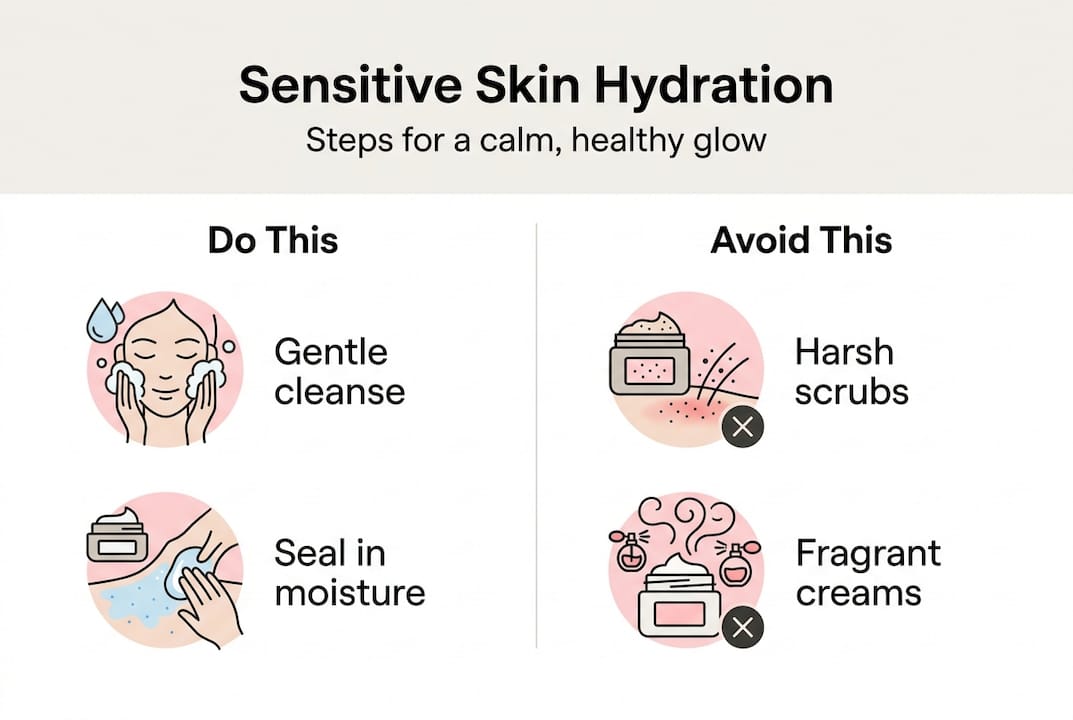
Knowing the science is one thing. Putting it into practice is where real change happens. The soak-and-seal method is one of the most well-supported routines for eczema-prone and sensitive skin, and it is simple enough to build into any daily ritual.
Here is how to do it:
- Cleanse gently using a fragrance-free, sulfate-free cleanser with lukewarm water. Avoid hot water, which strips lipids.
- Pat skin lightly with a soft towel, leaving it slightly damp rather than fully dry.
- Apply your moisturizer within three minutes to seal in the surface moisture before it evaporates.
- Choose a ceramide-rich formula that mimics the skin’s natural lipid structure for the deepest barrier support.
- Repeat morning and night, and add an extra layer after any water exposure during the day.
Ceramide creams and soak-seal routines improve skin scores by up to 80%, making them one of the most evidence-backed choices for eczema-prone skin. That is not a small improvement. That is a meaningful shift in how your skin feels and behaves daily.
For a full breakdown of steps for a healing routine, you can explore how each step builds on the last to create lasting results. Pairing this with nourishing skincare principles makes the routine even more effective.
If you use multiple products, understanding layering products for hydration ensures you are applying them in the right order so each one can actually absorb and work.
Pro Tip: Before adding any new hydrating product to your routine, patch test it on a small area of your inner arm for 24 to 48 hours. Sensitive skin can react to even well-intentioned ingredients, and a quick test saves you from a full-face flare-up.
How to choose the right hydration products for sensitive and eczema-prone skin
Not every moisturizer labeled “gentle” or “natural” is actually safe for sensitive or eczema-prone skin. Reading ingredient labels carefully is one of the most empowering habits you can build.
Look for these ingredients:
- Ceramides: Replenish the skin’s natural lipid barrier
- Glycerin: A humectant that draws water into the skin
- Hyaluronic acid: Holds moisture at the surface level
- Safe plant oils for skin like sunflower, safflower, and jojoba: Nourish without clogging
- Colloidal oatmeal: Clinically recognized for soothing irritated skin
Avoid these common irritants:
- Synthetic fragrance or parfum
- Harsh alcohols like denatured alcohol or alcohol denat.
- Strong acids at high concentrations (AHAs, BHAs) in daily moisturizers
- Preservatives like methylisothiazolinone, which are known sensitizers
The NEA Seal helps ensure products are free of common irritants for eczema, making it a reliable marker when you are scanning shelves or shopping online. EWG-verified products offer a similar level of transparency about ingredient safety.
Botanical-based formulas tend to have shorter, more recognizable ingredient lists, which reduces the risk of hidden irritants. Exploring moisturizers for sensitive skin with a plant-first lens can help you find options that feel as good as they perform. For additional guidance, soothing skincare tips offer practical ways to calm reactive skin between product changes.
Signs your skin is hydrated and common mistakes to avoid
Once you have a routine in place, your skin will start to tell you whether it is working. The signs of good hydration are subtle but consistent, and they build over time.
Signs your skin is well-hydrated:
- Feels soft and smooth to the touch, even hours after applying moisturizer
- Redness and blotchiness are less frequent or less intense
- Minimal flaking or tight, papery texture
- Comfortable throughout the day without needing to reapply constantly
- Makeup sits more evenly and does not cling to dry patches
Hydration supports softness, comfort, and reduces TEWL in sensitive skin, which means the improvements you feel are backed by real changes happening in your barrier.
Common mistakes that reverse your progress:
- Over-exfoliating: Removing too much of the surface layer strips the barrier before it can repair itself
- Skipping moisturizer on “good skin days”: Consistency matters more than intensity
- Layering too many actives: More products do not mean more results, especially for reactive skin
- Using hot water: It feels soothing in the moment but accelerates moisture loss
When in doubt, simplify. A gentle cleanser, a ceramide-rich moisturizer, and a mineral SPF is often all sensitive skin needs to thrive.
Pro Tip: In colder months or after travel, increase your moisturizer application to twice daily and consider adding a facial mist between steps. Environmental stressors pull moisture from the skin faster than you might expect. A holistic hydration check can help you adjust your routine seasonally.
Natural solutions for deeply hydrated, glowing skin
Your skin deserves products that work with it, not against it. At Pure Light Botanical Beauty, every formula is built around clean, plant-based ingredients chosen specifically for their ability to support sensitive and eczema-prone skin. From botanical oils to nourishing lip treatments, each product is designed to hydrate, protect, and gently restore your skin’s natural balance.
We believe that beauty and healing come from the same place: nature. That is why our products are formulated without synthetic fragrance, harsh alcohols, or unnecessary fillers. Whether you are building a new routine or refining one that already works, our guides and formulas are here to support you. Explore our impact on natural skincare and see how a gentler approach to beauty can make a real difference for your skin and your confidence.
Frequently asked questions
Why does sensitive skin need extra hydration?
Sensitive skin is prone to moisture loss due to a weaker skin barrier, which means water escapes more easily and irritants enter more readily. Consistent hydration helps rebuild that barrier and keeps discomfort at bay.
What is the best timing for applying moisturizer?
Apply moisturizer within three minutes after cleansing or bathing to seal in surface water before it evaporates. The soak-and-seal method within three minutes post-bath is considered optimal for eczema-prone skin.
Are plant oils safe for hydrating sensitive skin?
Certain plant oils like safflower and sunflower are gentle and beneficial for most sensitive skin types because they closely mimic the skin’s natural lipid structure. Always patch test any new oil before applying it to your full face.
How can I tell if my hydration routine is working?
Hydrated skin feels soft, smooth, and comfortable with fewer visible flakes or areas of redness. If your skin still feels tight or reactive after two weeks of consistent care, it may be time to reassess your product choices.
Recommended
- Why skin needs hydration: guide for sensitive skin 2026 – Pure Light Botanical Beauty
- What is skin nourishment? Complete guide for sensitive skin – Pure Light Botanical Beauty
- How to Embrace Natural Beauty Naturally for Sensitive Skin – Pure Light Botanical Beauty
- Why beauty is self-care for sensitive skin naturally – Pure Light Botanical Beauty