

What is skin nourishment? Complete guide for sensitive skin
Many people believe skin nourishment simply means hydration, but the truth goes far deeper. True skin nourishment involves a holistic approach that combines essential nutrients, moisture retention, and barrier repair, especially important for those with sensitive or eczema-prone skin. This guide explores plant-based methods to nourish your skin from the inside out, offering practical insights into how gentle botanical ingredients can transform your skin health. You’ll discover the difference between hydration and genuine nourishment, and learn how to build a routine that supports your skin’s natural healing processes.
Table of Contents
- What Is Skin Nourishment? Complete Guide For Sensitive Skin
- Understanding Skin Nourishment: Beyond Hydration
- Key Components And Mechanisms Of Skin Nourishment
- Approaches For Skin Nourishment In Sensitive And Eczema-Prone Skin
- Nuances, Comparisons, And Personalized Care For Optimal Skin Nourishment
- Explore Plant-Based Skin Nourishment Products At Pure Light Botanical Beauty
Key takeaways
| Point | Details |
|---|---|
| Holistic nourishment | Skin nourishment includes nutrients, hydration, and barrier protection working together. |
| Three key mechanisms | Humectants draw water, emollients repair barriers, and occlusives seal moisture. |
| Plant-based advantage | Gentle botanical ingredients like chamomile and jojoba oil soothe sensitive skin effectively. |
| Combined approach | Topical care plus anti-inflammatory diet reduces eczema flares by up to 40%. |
| Personalization matters | Patch testing and microbiome awareness optimize results for individual skin needs. |
Understanding skin nourishment: beyond hydration
Skin nourishment represents a comprehensive approach that extends far beyond simple hydration. While water content matters, holistic nourishment via nutrition and topicals for skin health encompasses essential nutrients, protective elements, and barrier support working in harmony. This holistic perspective becomes especially crucial for sensitive and eczema-prone skin, where compromised barriers demand more than surface-level moisture.
Your skin requires specific nutrients to function optimally. Vitamins A, C, D, and E support cellular repair and collagen production. Zinc reduces inflammation and promotes healing. Omega-3 fatty acids strengthen cell membranes and calm reactive skin. Polyphenols from plants provide antioxidant protection against environmental stressors. These nutrients work synergistically to maintain skin homeostasis and reduce inflammatory responses common in eczema.
Topical nourishment involves three distinct mechanisms. Humectants like glycerin and hyaluronic acid attract water molecules to the skin’s surface. Emollients such as botanical ingredients for sensitive skin fill gaps between skin cells, smoothing texture and repairing barrier function. Occlusives create a protective seal that prevents transepidermal water loss, locking in moisture and active ingredients.
Plant-based ingredients offer particular advantages for sensitive skin. Calendula oil soothes irritation while supporting barrier repair. Chamomile extract reduces redness and calms inflammation. Jojoba oil mimics skin’s natural sebum, providing nourishment without clogging pores. Oatmeal contains beta-glucans that strengthen immunity and reduce itching. These gentle botanicals deliver powerful results without harsh chemicals that trigger reactions.
True skin nourishment addresses the whole ecosystem of your skin, not just its water content. When you combine nutrient-rich ingredients with moisture retention and barrier protection, you create conditions for genuine healing and transformation.
The distinction between hydration and nourishment matters deeply. Hydration refers specifically to water content in skin cells. Nourishment encompasses hydration plus nutrients, lipids, and protective compounds that support long-term skin health. For eczema-prone skin, nourishment becomes the foundation for reducing flares and building resilience against triggers.
Key components and mechanisms of skin nourishment
Understanding how different ingredients work helps you make informed choices for your skin. Mechanics of key skin nourishment ingredients reveals the specific roles each component plays in maintaining healthy, comfortable skin.
Humectants form the first layer of nourishment by drawing moisture from the environment and deeper skin layers to the surface. Glycerin, a plant-derived humectant, attracts up to 10 times its weight in water. Hyaluronic acid holds 1000 times its weight in moisture, creating a plump, hydrated appearance. For sensitive skin, these ingredients provide essential hydration without irritation, preparing skin to receive deeper nourishment.
Emollients work differently by filling microscopic cracks in the skin barrier. Jojoba oil contains wax esters similar to human sebum, making it exceptionally compatible with sensitive skin. Calendula oil delivers anti-inflammatory compounds while softening rough patches. These benefits of botanical ingredients include barrier repair, reduced water loss, and improved texture. Emollients create the smooth, supple feel that characterizes well-nourished skin.

Occlusives provide the final protective layer. Plant butters like shea and cocoa butter form a breathable seal over skin, preventing moisture evaporation while allowing oxygen exchange. This seal becomes especially important after bathing, when skin loses water rapidly. For eczema-prone skin, occlusives reduce transepidermal water loss by up to 98%, maintaining the hydration and nourishment delivered by humectants and emollients.
| Ingredient Type | Primary Function | Plant-Based Examples | Best For |
|---|---|---|---|
| Humectants | Draw water to skin | Glycerin, hyaluronic acid, aloe vera | Dehydrated, dull skin |
| Emollients | Soften and repair barrier | Jojoba oil, calendula, chamomile | Rough, sensitive skin |
| Occlusives | Seal moisture | Shea butter, cocoa butter, candelilla wax | Eczema, very dry skin |
| Nutrients | Support cellular function | Vitamin E, rosehip oil, sea buckthorn | Aging, inflamed skin |
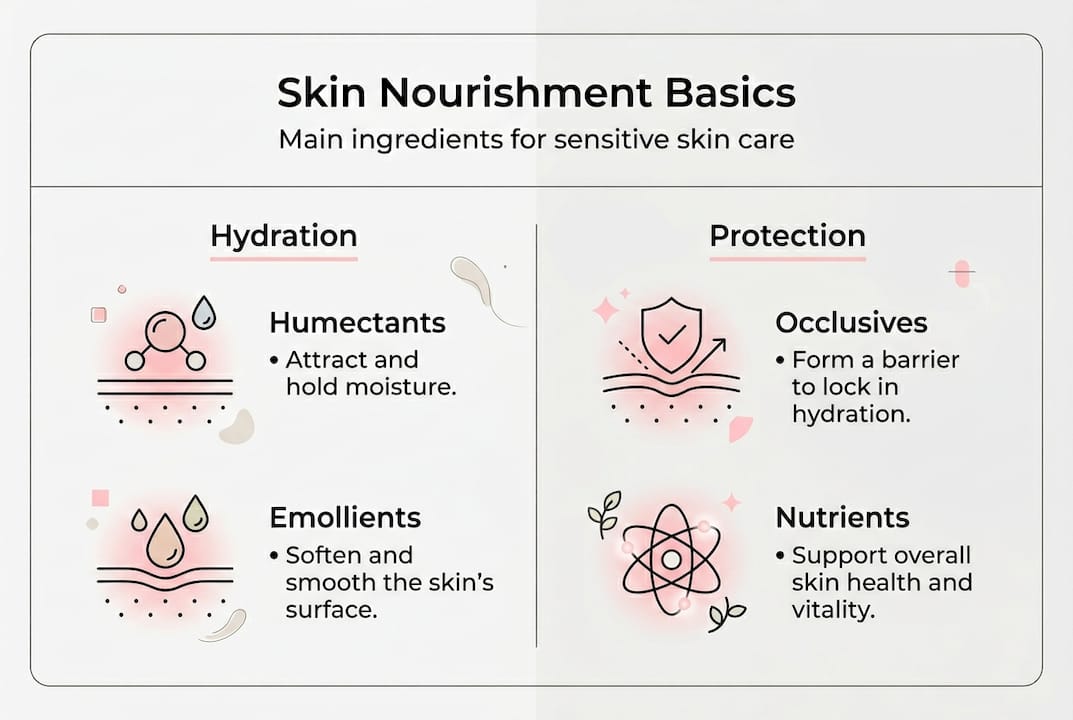
Nutrients support the underlying processes that keep skin healthy. Vitamin E protects cell membranes from oxidative damage. Vitamin C stimulates collagen synthesis and brightens skin tone. Essential fatty acids from plant oils reduce inflammation and strengthen barrier lipids. These nutrients work at the cellular level, creating lasting improvements rather than temporary cosmetic effects.
Pro Tip: Always patch test new plant oils on your inner forearm for 24 hours before applying to your face, even if they’re labeled for sensitive skin. Individual reactions vary, and this simple step prevents widespread irritation.
Approaches for skin nourishment in sensitive and eczema-prone skin
Gentle, consistent care forms the foundation of effective skin nourishment for reactive skin types. Natural eczema solutions with plant-based topical and dietary approaches demonstrate how combining thoughtful routines with anti-inflammatory nutrition reduces flares and supports barrier healing.
Your daily routine should prioritize gentle cleansing and immediate moisturization. Use lukewarm water rather than hot, which strips natural oils. Choose cleansers with oatmeal or chamomile that clean without disrupting pH balance. Pat skin dry instead of rubbing, leaving it slightly damp to maximize humectant effectiveness. This gentle approach respects your skin’s delicate state while preparing it for nourishment.
Follow this simple numbered routine for optimal results:
- Cleanse with a fragrance-free, plant-based cleanser containing soothing botanicals like chamomile or calendula.
- While skin remains damp, apply a thin layer of jojoba or calendula oil to deliver emollient nourishment and barrier repair.
- Seal everything with a plant butter or ceramide-rich cream to lock in moisture and create a protective barrier.
- Repeat this sequence within three minutes of bathing, when skin absorbs ingredients most effectively.
- Maintain consistency by performing this routine twice daily, adjusting product amounts based on seasonal needs.
Dietary choices significantly impact skin nourishment from within. Anti-inflammatory foods reduce the systemic inflammation that triggers eczema flares. Focus on omega-3 rich sources like flaxseeds, chia seeds, and walnuts. Colorful berries provide polyphenols that protect skin cells. Leafy greens offer vitamins A and C for repair and regeneration. These plant-based beauty benefits extend beyond topical application, creating whole-body support for skin health.
- Mindfulness practices reduce stress-related flares by up to 40%, making meditation and gentle movement valuable additions to your skin nourishment routine.
- Adequate sleep allows skin to complete repair cycles, with most cellular regeneration occurring between 10 PM and 2 AM.
- Hydration from within matters as much as topical moisture, with herbal teas and water supporting nutrient delivery to skin cells.
Pro Tip: Apply fragrance-free, ceramide-rich emollients consistently twice daily to improve barrier function by 50% within four weeks. Consistency matters more than expensive ingredients when healing sensitive skin.
The combination of gentle topical care and anti-inflammatory nutrition creates synergistic effects. Topical ingredients address immediate barrier needs while dietary changes reduce underlying inflammation. This dual approach produces more sustainable results than either method alone, particularly for chronic conditions like eczema where internal and external factors intertwine.
Nuances, comparisons, and personalized care for optimal skin nourishment
Effective skin nourishment requires attention to individual variations and emerging research. Nuances in skin nourishment: microbiome and dietary impacts reveals how personalized approaches based on microbiome health and dietary sensitivities optimize outcomes for sensitive skin.
Several key nuances deserve consideration when building your routine:
- Patch testing remains essential even with gentle plant ingredients, as individual sensitivities vary widely and unexpected reactions can occur.
- High-histamine foods like fermented products, aged cheeses, and certain fruits may trigger skin reactions in histamine-sensitive individuals.
- Vegan diets require careful planning to ensure adequate omega-3 intake through algae-based supplements or specific seed combinations.
- Microbiome imbalances, particularly Staphylococcus aureus overgrowth, contribute significantly to eczema flares and require targeted probiotic support.
- Seasonal adjustments matter, with richer occlusives needed in winter and lighter emollients preferred in humid summer months.
The debate between topical and dietary nourishment reveals important insights. While topical products deliver immediate barrier support and moisture retention, oral nutrients create more sustainable improvements in skin hydration and inflammation. This comparison helps you allocate resources effectively.
| Approach | Immediate Benefits | Long-Term Benefits | Best Applications |
|---|---|---|---|
| Topical plant oils | Instant barrier repair, moisture seal | Improved texture, reduced sensitivity | Daily maintenance, flare management |
| Dietary intake | Reduced inflammation, better sleep | Stronger barriers, fewer flares | Chronic eczema, systemic support |
| Combined method | Quick relief plus lasting change | Optimal skin health, resilience | Comprehensive sensitive skin care |
Oral nutrients like hyaluronic acid and collagen peptides improve skin hydration and elasticity more sustainably than topical application alone. They work from within to support the structures that keep skin plump, smooth, and resilient against environmental stressors.
Microbiome considerations add another layer of personalization. Eczema-prone skin often shows dysbiosis, with harmful bacteria outcompeting beneficial strains. Topical probiotics and prebiotic skincare support healthy microbial balance. Dietary fermented foods introduce beneficial bacteria systemically. Understanding your skin’s microbial ecosystem helps you choose nourishing makeup ingredients that support rather than disrupt this delicate balance.
Personalized routines integrate these insights into practical daily care. Track your flares in relation to dietary changes, stress levels, and product use. Notice which plant oils your skin absorbs readily versus those that sit on the surface. Adjust ingredient ratios seasonally, using more occlusives in dry climates and lighter emollients in humidity. This mindful observation creates a feedback loop that continuously refines your approach.
Some people respond better to certain botanical families. Those with ragweed allergies may react to chamomile despite its gentle reputation. Individuals sensitive to tree nuts should avoid related plant oils. Genetic variations in skin barrier proteins influence how effectively you retain moisture and process nutrients. These individual differences explain why universal recommendations rarely work perfectly for everyone.
The most effective approach combines evidence-based principles with personal experimentation. Start with proven gentle ingredients like oatmeal and jojoba oil. Introduce new elements one at a time, allowing two weeks to assess effects. Keep a simple journal noting products used and skin responses. This systematic approach reveals patterns that generic advice misses, creating a truly personalized nourishment strategy.
Explore plant-based skin nourishment products at Pure Light Botanical Beauty
Your journey toward nourished, comfortable skin deserves support from products designed specifically for sensitive and eczema-prone skin. Pure Light Botanical Beauty creates formulas that blend the science of botanicals with the artistry of natural beauty, offering gentle yet effective solutions for reactive skin types.
Each product combines carefully selected plant ingredients known for their soothing and barrier-supporting properties. Ceramide-rich formulas strengthen your skin’s natural defenses. Chamomile and calendula calm inflammation while delivering antioxidant protection. Jojoba and other plant oils provide emollient nourishment that feels weightless yet deeply moisturizing. These thoughtfully crafted products support the holistic nourishment principles explored throughout this guide.
Explore the blog for deeper insights into botanical benefits, ingredient spotlights, and seasonal skincare adjustments. You’ll find guidance on building routines that honor your skin’s unique needs while embracing the healing power of nature. The combination of quality products and informed application creates the foundation for lasting skin transformation.
FAQ
What are the best plant-based ingredients for sensitive skin nourishment?
Oatmeal, chamomile, calendula, and jojoba oil stand out as exceptionally gentle yet effective for sensitive skin. These botanicals soothe irritation, repair barrier function, and deliver moisture without triggering reactions. Ceramide-rich plant butters like shea and cocoa butter provide occlusive protection that seals in nourishment while allowing skin to breathe naturally.
How does diet influence skin nourishment for eczema?
Eating omega-3 rich plant foods like flaxseeds, walnuts, and chia seeds reduces systemic inflammation that triggers eczema flares. Colorful berries and leafy greens provide antioxidants that protect skin cells from oxidative stress. A personalized anti-inflammatory diet supports long-term skin health alongside topical treatments, with many people experiencing 30 to 40% fewer flares when combining both approaches.
Why is patch testing important for plant-based skincare?
Sensitive skin can react unpredictably even to gentle botanical ingredients due to individual allergies or sensitivities. Patch testing on a small area for 24 hours before full application identifies potential irritants safely. This simple precaution prevents widespread reactions and helps you build a product collection perfectly suited to your unique skin chemistry.
Can oral supplements replace topical skin nourishment?
Oral nutrients like hyaluronic acid, collagen peptides, and omega-3 supplements improve skin hydration and elasticity from within, creating more sustainable results than topical application alone. However, they complement rather than replace topical barrier repair and moisturization. The most effective approach combines both methods, with supplements addressing internal inflammation and deficiencies while topical products provide immediate barrier support and protection.
Recommended
- Role of Nourishment in Skincare: Healing Through Nature – Pure Light Botanical Beauty
- Understanding Nourishing Makeup Ingredients for Sensitive Skin – Pure Light Botanical Beauty
- Why skin needs hydration: guide for sensitive skin 2026 – Pure Light Botanical Beauty
- Skin-Friendly Makeup Tips: Complete Expert Guide – Pure Light Botanical Beauty