

If you have sensitive skin, you already know that finding safe beauty products can feel like navigating a minefield. A product labeled “gentle” or “hypoallergenic” can still leave your skin red, itchy, and inflamed. Fragrances alone are one of the leading causes of allergic reactions in beauty products, yet they appear in countless formulas marketed as skin-friendly. This guide cuts through the confusion, giving you clear definitions, science-backed insights, and practical steps to build a beauty routine that truly honors your skin.
Table of Contents
- What does allergen-free beauty actually mean?
- How do allergen-free beauty products work?
- Benefits for sensitive skin: Science and wellness integration
- What to watch for: Limitations and smart shopping
- Bringing allergen-free beauty into your daily routine
- Discover your path to truly soothing, allergen-free beauty
- Frequently asked questions
Key Takeaways
| Point | Details |
|---|---|
| Precise definition | Allergen-free beauty excludes common triggers, offering clearer safety than unregulated ‘hypoallergenic’ labels. |
| Barrier repair focus | Clinically tested ingredients like ceramides and hyaluronic acid soothe and strengthen sensitive skin. |
| Smart label reading | Always check ingredient lists, as even ‘clean’ or allergen-free items can contain sensitizers. |
| Patch testing vital | No product is 100% allergy-proof; patch test every new product, even those labeled allergen-free. |
| Wellness integration | Allergen-free routines not only reduce reactions but also support daily skin comfort and overall wellbeing. |
What does allergen-free beauty actually mean?
With so many labels competing for your attention, it helps to start with precise definitions. Allergen-free beauty refers to products formulated without common allergens such as synthetic fragrances, parabens, and artificial dyes. The goal is to remove the ingredients most likely to trigger an immune response in sensitive skin, not just reduce them.
This is where allergen-free and “hypoallergenic” part ways. “Hypoallergenic” is unregulated, meaning any brand can print it on a label without meeting a specific standard. It simply suggests a product is less likely to cause a reaction, but it offers no guarantee. Allergen-free, when backed by testing and transparent ingredient lists, is a much stronger commitment.
Here is a quick comparison to make this clear:
| Label | Regulated? | What it means | Reliable for sensitive skin? |
|---|---|---|---|
| Allergen-free | Varies by brand | Key allergens excluded | Yes, if tested |
| Hypoallergenic | No | Less likely to cause reactions | Not guaranteed |
| Fragrance-free | Partially | No added fragrance | Generally yes |
| Natural | No | Plant-derived ingredients | Not always |
Common allergens to watch for in beauty products include:
- Synthetic fragrances (often listed simply as “fragrance” or “parfum”)
- Parabens (methylparaben, propylparaben)
- Formaldehyde-releasing preservatives
- Certain dyes (Red 40, Yellow 5)
- Nickel (found in some pigments)
- Essential oils like lavender and tea tree
For a deeper look at how to read labels and choose wisely, our natural skincare guide and clean beauty trends resource are great starting points. Accurate labeling matters because your skin deserves honesty, not marketing language.
“Fragrance is one of the most common causes of allergic contact dermatitis, and its exclusion is a critical step in formulating truly allergen-free products.” — Allergen-free fragrance advances
How do allergen-free beauty products work?
Now that allergen-free beauty is defined, let’s look at how these products are actually formulated and tested. It is not simply a matter of leaving things out. Thoughtful formulation means replacing problematic ingredients with verified-safe alternatives that still deliver results.
Ingredient selection in allergen-free products avoids top triggers like synthetic fragrances, replacing them with either fragrance-free bases or botanicals that have been clinically verified as low-risk. Synthetic alternatives are sometimes safer than their natural counterparts because they can be isolated and tested more precisely.
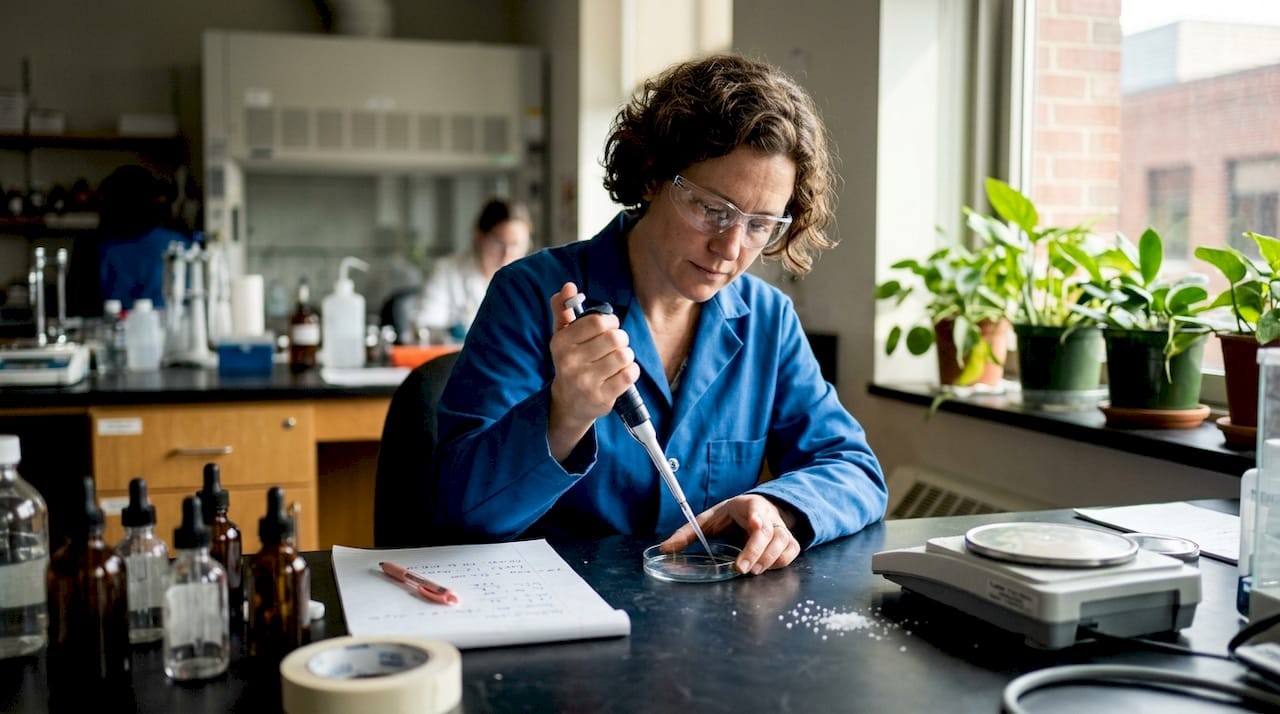
Here is a summary of common allergens and what replaces them:
| Common allergen | Why it’s problematic | Safer alternative |
|---|---|---|
| Synthetic fragrance | Top contact allergen | Fragrance-free base or tested botanicals |
| Parabens | Potential sensitizer | Phenoxyethanol, vitamin E |
| Artificial dyes | Skin irritant | Mineral pigments, plant-based color |
| Formaldehyde releasers | Reactive preservative | Sodium benzoate, potassium sorbate |
| Lanolin | Common allergen | Shea butter, plant oils |
So how does a product actually earn an allergen-free claim? The process typically follows these steps:
- Ingredient screening: Every raw material is checked against known allergen databases.
- Formulation review: A cosmetic chemist evaluates the full formula for sensitization risk.
- Stability testing: The product is tested to ensure ingredients do not degrade into irritants over time.
- Clinical testing: Methods like HRIPT trials (Human Repeat Insult Patch Testing) and dermatologist-led studies confirm safety on real skin.
- Consumer testing: Real users with sensitive skin trial the product under observation.
Researchers also track cosmetic allergy trends to update formulation standards as new sensitizers are identified. This is an evolving science, not a one-time checklist. For more on what to look for in your own routine, explore our non-toxic beauty essentials guide.
Pro Tip: Even with an allergen-free label, always patch-test a new product on a small area of skin, like your inner wrist, and wait 24 to 48 hours before applying it to your face.
Benefits for sensitive skin: Science and wellness integration
Understanding how these products work is just the start. Here is what that means for your sensitive skin and overall wellness. The benefits go beyond avoiding a reaction. The right allergen-free formula can actively repair and strengthen your skin.
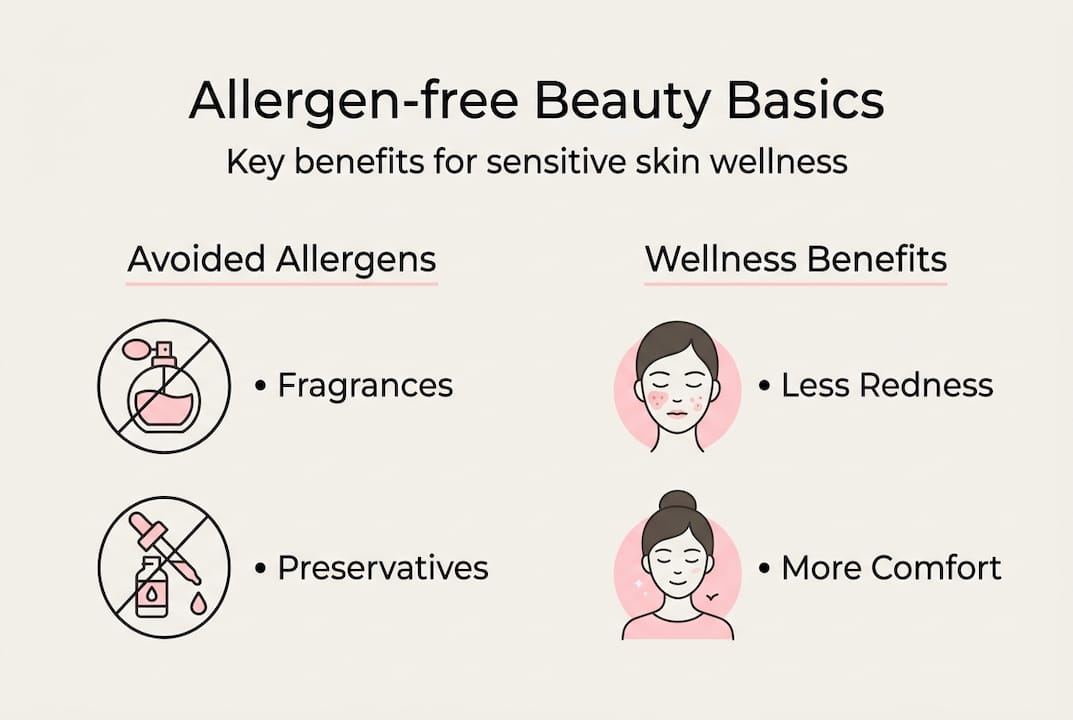
Clinical research shows that barrier-repairing formulas containing ceramides, niacinamide, and hyaluronic acid (HA) can increase filaggrin levels by 77%, boost HA by 157%, and raise lipid content by 30%, while also reducing transepidermal water loss (TEWL). That is a significant improvement in how well your skin holds moisture and defends itself.
Key ingredients to look for in allergen-free beauty products:
- Ceramides: Rebuild the skin’s protective barrier layer
- Hyaluronic acid: Draws moisture deep into the skin
- Niacinamide: Calms redness and strengthens barrier function
- Colloidal oatmeal: Soothes inflammation and reduces itch
- Aloe vera: Cools and hydrates reactive skin
- Centella asiatica: Supports healing and reduces sensitivity
The wellness connection here is real. When your skin is comfortable, you feel more at ease in your body. Chronic skin irritation is linked to stress, disrupted sleep, and lowered confidence. Choosing products that support your skin barrier is not just a beauty decision. It is a self-care practice.
For curated options that bring these benefits together, our plant-based beauty for sensitive skin and best products for skin relief pages are worth exploring.
Pro Tip: Look for products that list colloidal oatmeal or aloe vera in the first five ingredients. The higher up an ingredient appears, the more of it is actually in the formula.
What to watch for: Limitations and smart shopping
Despite the benefits, not all allergen-free claims are created equal. Here is what to watch for and how to shop wisely. The beauty industry is full of “free-from” marketing that sounds reassuring but does not always hold up under scrutiny.
“Free-from” claims are not standardized. A product labeled “free from parabens” may still contain other sensitizers. Removing one allergen does not make a formula safe for everyone. This is especially true with natural and botanical ingredients, which can be potent sensitizers in their own right.
“No product can be declared 100% allergy-proof. Even clean, plant-based formulas may contain ingredients that sensitize certain individuals.” — Clean Beauty Coalition
Botanicals that can still trigger reactions include:
- Lavender essential oil (common contact allergen)
- Tea tree oil (can irritate broken or reactive skin)
- Citrus extracts (phototoxic on sun-exposed skin)
- Rose hip oil (can cause reactions in those with salicylate sensitivity)
Here is how to shop smarter as a woman with sensitive skin:
- Read the full ingredient list, not just the front-of-pack claims.
- Search for clinical testing data on the brand’s website or product page.
- Cross-reference ingredients using a trusted cosmetic ingredient database.
- Patch-test every new product, even those from brands you trust.
- Introduce one new product at a time so you can identify the source of any reaction.
- Consult a dermatologist if you have a history of contact dermatitis or eczema.
For more guidance on making confident choices, our choosing clean beauty and clean makeup checklist resources walk you through the process step by step.
Bringing allergen-free beauty into your daily routine
Equipped with the facts, you are ready to make allergen-free beauty an empowering, nourishing part of your day. The transition from conventional to allergen-free products does not have to happen overnight. A gradual, intentional approach protects your skin and helps you find what truly works.
Integrating barrier-repair ingredients into your daily routine soothes skin and minimizes irritation over time. Think of your routine as three core steps: cleanse, hydrate, and protect.
- Cleanse gently: Use a fragrance-free, sulfate-free cleanser that does not strip your skin’s natural oils.
- Hydrate intentionally: Apply a moisturizer with ceramides and HA while skin is still slightly damp to lock in moisture.
- Protect daily: Use a mineral sunscreen (zinc oxide or titanium dioxide) rather than chemical filters, which can irritate sensitive skin.
- Layer makeup mindfully: Choose allergen-free foundations, blushes, and lip products that double as skin treatments.
- Remove thoroughly but gently: Use a micellar water or gentle cleansing balm to avoid rubbing or tugging.
Your daily checklist for allergen-free beauty:
- Fragrance-free across all products
- No artificial dyes in formulas touching your skin
- Patch-tested before first use
- Introduced one at a time
- Stored correctly to prevent ingredient degradation
- Reviewed every six months as your skin’s needs change
For a broader view of what allergen-free beauty can look like in practice, our types of clean beauty and fragrance-free makeup comparison articles offer practical, side-by-side guidance.
Discover your path to truly soothing, allergen-free beauty
At Pure Light Botanical Beauty, every product is built around one belief: your skin deserves ingredients that heal, not harm. Our formulas are thoughtfully crafted with clean, plant-based ingredients that support barrier repair, calm irritation, and let your natural radiance come through without compromise.
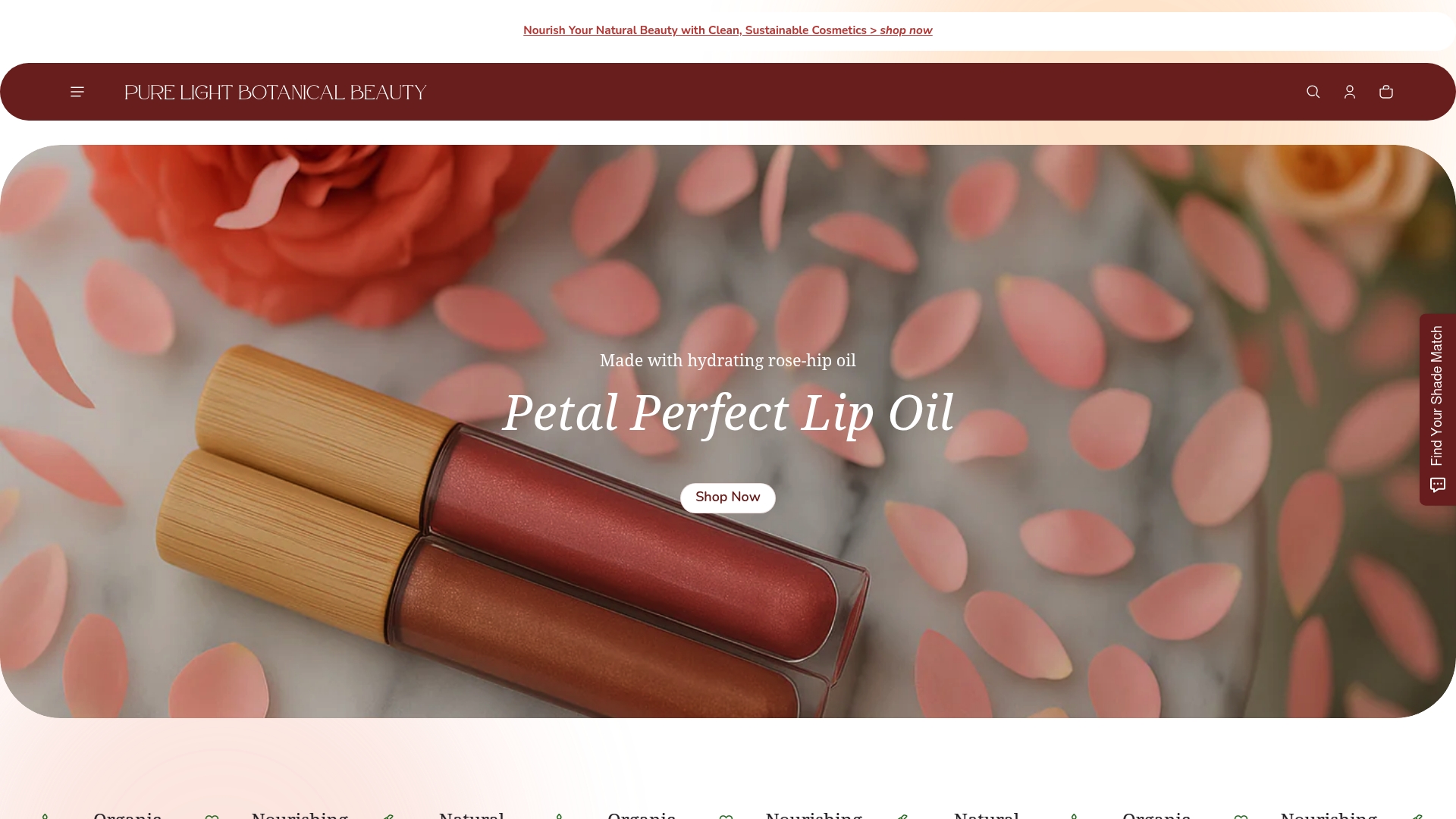
Whether you are just beginning your allergen-free journey or refining a routine that already feels close to right, we are here to support you. From our Botanical Crème Blush to our Nourishing Lipstick, each product is designed to feel like a small act of self-care. Explore our beauty wellness guide to see how science and nature work together in every formula we create. Your skin is not a problem to fix. It is something to honor.
Frequently asked questions
What ingredients are most likely to trigger allergic reactions in beauty products?
Fragrances and preservatives are the top cosmetic allergens, followed by parabens, certain dyes, essential oils, and nut-derived ingredients. If you have sensitive skin, these are the first things to look for on any ingredient list.
Is “allergen-free” really better than “hypoallergenic”?
Allergen-free means specific allergens have been excluded from the formula, while “hypoallergenic” is unregulated and only implies a lower likelihood of causing a reaction. For sensitive skin, allergen-free backed by testing data is the stronger choice.
Can I still have a reaction to an allergen-free product?
Yes. No product is 100% allergy-proof, which is why patch testing before full use is always the smart move, even with products designed for sensitive skin.
How can allergen-free beauty help my sensitive skin?
These products focus on soothing and repairing the skin barrier, which reduces redness, locks in moisture, and lowers your skin’s overall reactivity over time.
What should I look for when shopping for allergen-free beauty products?
Read the full ingredient list, look for clinical testing data, avoid known triggers like synthetic fragrances, and always patch-test before committing to a new product. When in doubt, a dermatologist can help you identify your personal triggers.
Recommended
- Beauty wellness: natural skincare guide for 2026 – Pure Light Botanical Beauty
- 7 Essential Clean Beauty Trends 2025 for Sensitive Skin – Pure Light Botanical Beauty
- Plant-Based Beauty: Transformative Benefits for Sensitive Skin – Pure Light Botanical Beauty
- How to Choose Clean Beauty for Sensitive Skin Relief – Pure Light Botanical Beauty