

Short answer: yes, the Beautyblender Original is worth it if you want an edgeless, second-skin finish and you’re willing to clean it properly. It earns its price through performance, not marketing. Wirecutter’s multi-month testing scored it strongly on quality, performance, durability, and price against dozens of rivals, and Allure has recognized it with repeat Best of Beauty honors.
Three reasons back that verdict:
- Performance: the aqua-activated foam blurs foundation, concealer, and cream blush without leaving streaks or sponge marks.
- Durability and value: with proper care it holds up for several months, which softens the sting of the price tag over time.
- Best-use fit: it handles liquids, creams, and light powder work equally well, so one sponge replaces several tools.
Sensitive, mature, and textured skin types tend to benefit most, since the soft foam presses product into skin instead of dragging across it.
Key Takeaways
The Beautyblender Original justifies its price through documented performance and durability, but only when used damp and cleaned consistently.
| Point | Details |
|---|---|
| Buy verdict | Worth it for daily users who want an edgeless finish and will clean it regularly. |
| Technique matters | Damp, bounced application reduces product waste and improves finish quality. |
| Lifespan expectation | Replace every three to six months, or sooner if torn or odorous. |
| Budget alternative | Sponges like EcoTools or E.L.F. work for occasional use but wear out faster. |
| Sensitive skin note | Latex-free material helps, but formula ingredients and cleanliness matter just as much. |
Useful Sources and Further Reading
- Allure’s Beautyblender review: cleaning and replacement guidance
- Sephora product listing: award history and manufacturer care instructions
Table of Contents
- Beauty Blender Original Performance, Texture, and Real-World Use
- How the Beautyblender Compares to Common Dupes and Alternatives
- How to Use a Beautyblender for the Best Finish
- Cleaning, Lifespan, and When to Replace Your Sponge
- Pros and Cons at a Glance
- Who Should Buy a Beautyblender: Final Recommendation
- Potential Allergenic or Material Sensitivity Issues
Beauty Blender Original Performance, Texture, and Real-World Use
The core claim behind every Beautyblender review is the same: this sponge delivers an edgeless, second-skin finish that brushes struggle to match. That happens because the aqua-activated foam expands when wet, doubling in size and softening enough to bounce product into skin rather than smear it across the surface. Reviewers consistently describe the result as streak-free, even on foundations that look patchy when brushed on.
Texture matters more than most buyers expect. Dry, the sponge feels dense and a little stiff. Damp, it turns springy and pliable, which changes how it drags across contours like the nose, under-eyes, and jawline. That elasticity is part of why makeup artists reach for it on mature and textured skin: the soft bounce blurs fine lines and dry patches instead of exaggerating them, producing a softer look than a stippling brush typically gives.
Absorption is where technique actually changes the outcome. The Beautyblender is engineered to hold water, not product, so formula sits on the surface and transfers to your face instead of disappearing into the foam. Skip the damp step and you’ll waste noticeably more foundation, since a dry sponge soaks up liquid like a paper towel. Testers who dampen it correctly report a subtle glow boost on matte formulas along with less product waste per application.
Durability holds up well under normal use. Expect resistance to tearing for an extended period before the foam starts breaking down at the tip, which is usually the first sign of wear.
- Works for foundation, concealer, cream blush, and powder setting
- Springy, elastic texture when wet; stiff and less forgiving when dry
- Minimal product absorption when used damp, per brand specifications
Pro Tip: Use the pointed tip for concealer under the eyes and the rounded base for cheeks and forehead. Switching zones on the same sponge stretches its lifespan and keeps your finish consistent.
How the Beautyblender Compares to Common Dupes and Alternatives
The original wins on performance and lifespan, but budget alternatives close the gap enough that they’re worth considering if price is your main concern. Byrdie and Wirecutter roundups consistently list the Real Techniques Miracle Complexion Sponge, EcoTools Perfecting Blender, IT Cosmetics sponge, E.L.F. beauty sponge, and Morphe sponge as the most common substitutes, each with its own trade-off in absorbency, texture, or durability.
A few practical takeaways from that comparison:
- Buy the original if you apply makeup daily and want the sponge to still perform well after months of washing.
- A budget sponge is a reasonable pick for occasional use, travel, or if you’re still learning technique.
- The EcoTools option tends to suit eco-conscious buyers looking for a plant-derived or recycled-material sponge, though absorbency runs higher.
- If sustainability matters most to you, look at overall material sourcing rather than price alone. Purelightbotanicalbeauty takes the same approach with its own ingredient sourcing and impact commitments.
How to Use a Beautyblender for the Best Finish
The single most important rule: use it damp, never dripping, and bounce the sponge instead of dragging it. Dragging creates streaks and pulls product off your skin instead of pressing it in.
- Wet the sponge fully under running water, then squeeze out excess until it feels damp, not soaked.
- Apply foundation or concealer directly to skin or dot it onto the sponge.
- Bounce the rounded base across cheeks, forehead, and jawline in small, quick taps.
- Switch to the pointed tip for under-eyes, nostril creases, and mouth corners.
- Finish by pressing lightly over the entire face to blend any visible edges.
This same damp-bounce approach works for setting powder and cream blush, not just foundation. For a full routine on prepping skin before you start, a skin prep guide for natural makeup pairs well with this technique.
Pro Tip: If your sponge feels too saturated, squeeze it in a towel rather than re-wetting. Over-wetting dilutes product and leaves a patchier finish.
Cleaning, Lifespan, and When to Replace Your Sponge
Clean your sponge after every use, or at minimum a quick daily rinse, to keep bacteria from building up in the damp foam and transferring onto skin. Dermatologists and Allure both recommend regular washing paired with replacing the sponge every few months or so, depending on how often you use it.
- Daily: rinse with warm water and a gentle cleanser until water runs clear.
- Weekly: do a deeper clean by working cleanser into the foam and letting it soak briefly before rinsing.
- Monthly check: inspect for tears, flattening, or a sour smell that won’t rinse out.
Sephora’s product guidance points to a slightly wider window, replacing every few months depending on wear. Either way, treat lingering odor, torn foam, or lost springiness as your signal to retire it.
Replacement cadence at a glance: most sourced guidance lands between three and six months of regular use before a sponge should be replaced, according to Allure and Sephora’s own product care recommendations.
Pros and Cons at a Glance
Pros:
- Edgeless, streak-free finish across liquid, cream, and powder formulas
- Adopted widely by professional makeup artists and repeat Allure award winner
- Holds up for months with proper cleaning
Cons:
- Higher upfront price than most drugstore sponges
- Wastes product if used dry instead of damp
- Requires consistent cleaning to avoid bacteria buildup
Who Should Buy a Beautyblender: Final Recommendation
If you apply makeup regularly and want a consistent, streak-free finish, the original earns its price. Here’s how that breaks down by buyer type:
- Beginners: the forgiving bounce technique makes mistakes easier to blend out than with brushes.
- Makeup artists/pros: durability and consistent performance across clients justify the cost.
- Oily or large-pore skin: the second-skin finish helps foundation sit smoothly without settling into texture.
- Sensitive or eczema-prone skin: suitable when paired with gentle, plant-based formulas and frequent cleaning.
- Budget shoppers: a dupe like the EcoTools or E.L.F. sponge is acceptable for occasional use, but expect a shorter lifespan.
Potential Allergenic or Material Sensitivity Issues
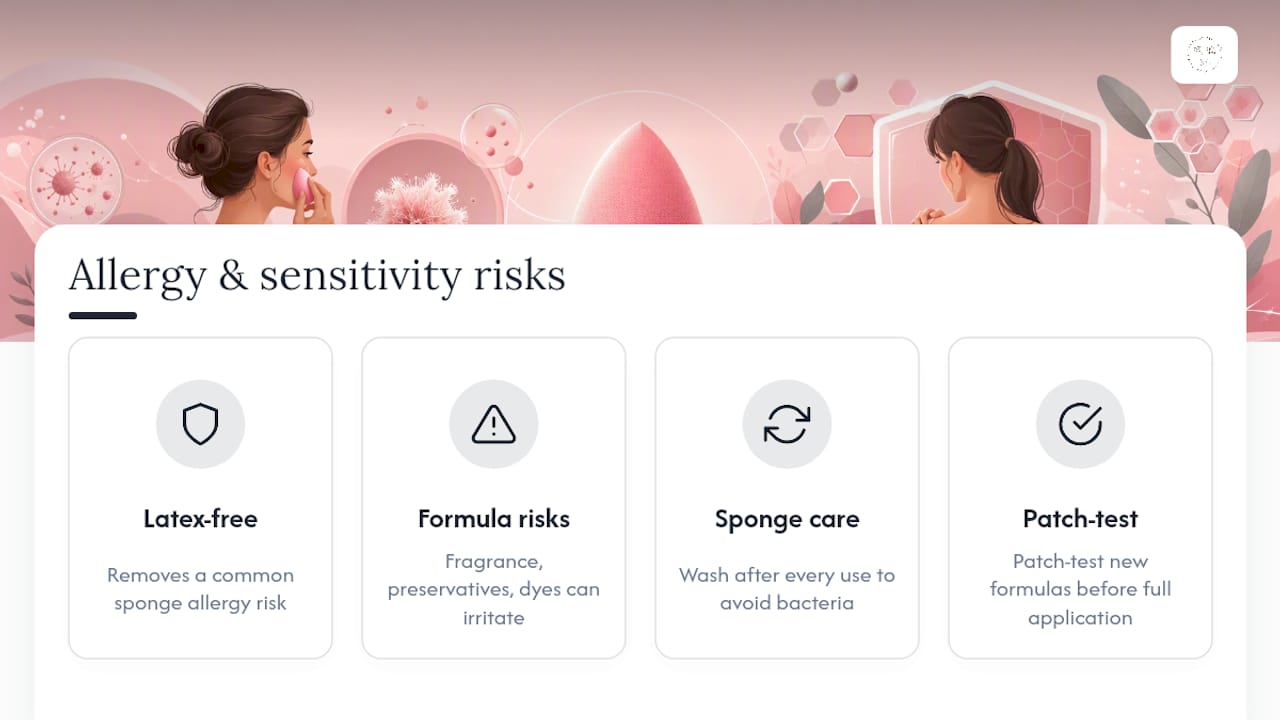
The Beautyblender Original is latex-free, which removes one of the most common sponge-related allergy concerns right away. Latex sensitivity is a real issue for a meaningful portion of makeup users, so this material choice matters more than it might seem at first glance.
That said, a sponge itself is rarely the sole trigger for a skin reaction. The bigger risk usually comes from what’s loaded onto it: fragrance, preservatives, or synthetic dyes in the foundation or concealer you’re applying. A clean sponge with an irritating formula on top can still cause redness or breakouts, and a dirty sponge with a gentle formula can cause the same problem from bacteria buildup alone.
Anyone with eczema, rosacea, or reactive skin should watch for two separate variables: the sponge’s cleanliness and the formula’s ingredient list. Foam that isn’t rinsed thoroughly can trap old product, oils, and bacteria, which then sits directly against skin during every application. Patch-testing new formulas before full-face application, and washing the sponge after every use rather than every few days, cuts that risk significantly. If you notice ongoing irritation, switching to non-irritating, plant-based formulas often resolves the issue faster than switching sponges.
Notes for Sensitive or Eczema-Prone Skin
Skin-safety best practices matter as much as the sponge itself, which lines up with the clean-beauty ethos Purelightbotanicalbeauty builds into every formula. Rinse your sponge after each use, patch-test new products first, and skip application entirely over broken or actively flared skin.
Kaitlyn
Recommended
- IT Cosmetics My Sculpted Face: Honest Review and Guide – Pure Light Botanical Beauty
- RMS Beauty: Is the Clean Makeup Brand Worth Buying? – Pure Light Botanical Beauty
- The Balm Makeup: Bestsellers, Reviews, and Buying Guide – Pure Light Botanical Beauty
- Clean vs Natural Ingredients: Finding Balance with Pure Light Botanica – Pure Light Botanical Beauty