

Centella asiatica, niacinamide, and ceramides make up the most reliable trio for calming irritated or sensitive skin, with aloe vera close behind for acute redness. Choose leave-on formulas like serums and creams over rinse-off cleansers, since calming actives need contact time to work. Give any new routine two to four weeks before judging results. That’s the timeline your barrier actually needs to rebuild.
TL;DR:
- Calming ingredients like centella, niacinamide, and ceramides rebuild the skin barrier and should be used in leave-on formulas for best absorption and effectiveness.
- Most soothing ingredients work through four pathways: reducing inflammation, neutralizing free radicals, physically repairing the barrier, and drawing in moisture; different ingredients target different pathways.
- Introducing one calming active at a time with a two-week gap helps identify which ingredients actually benefit sensitive skin, especially during flare-ups.
- Fragrance and essential oils should be avoided entirely during active irritation, as they can worsen sensitivity rather than help it.
- Building a routine with gentle cleansing, leave-on calming treatments, and barrier-repairing moisturizers ensures long-term relief rather than short-term masking of redness.
Table of Contents
- The Best Calming Skincare Ingredients and What Each One Does
- How Calming Ingredients Actually Calm Your Skin
- Building a Routine Around Calming Ingredients
- Who’s Behind This Guide
- Why Most Calming Skincare Advice Misses the Point
- Where Calendula and Rose Fit Into a Calming Routine
The Best Calming Skincare Ingredients and What Each One Does
Not every calming ingredient works the same way, and that’s precisely why the smartest routines combine a few different types rather than leaning on one hero product. Below are the ten ingredients worth knowing, drawn from decades of dermatological formulation and the botanical traditions Purelightbotanicalbeauty draws from directly.
- Aloe vera (Aloe barbadensis). This is the ingredient most people reach for first, and for good reason. Aloe’s anti-inflammatory compounds calm redness, irritation, and sunburn quickly. Look for it in gels and lightweight creams, and patch test if you have a known latex sensitivity, since aloe belongs to a related plant family.
- Niacinamide (vitamin B3). A workhorse active that calms irritation, strengthens the skin barrier, and evens tone over time. It performs best in serums at concentrations between 2% and 5%. Start low if your skin is reactive.
- Centella asiatica (cica). A staple of botanical skincare for a reason: it supports barrier recovery while calming visible redness. Cica shows up in serums, creams, and balms, often paired with other soothing plant extracts.
- Ceramides. These lipids don’t calm inflammation directly so much as they rebuild the wall that keeps irritants out and moisture in. Ceramides restore the lipid bilayer that chronic redness tends to erode. Creams and rich balms deliver them best, since they need a fat-based vehicle to penetrate.
- Hyaluronic acid (sodium hyaluronate). A humectant, not an anti-inflammatory, hyaluronic acid pulls moisture into the skin and plumps the surface. Pair it with an occlusive cream or oil to lock that hydration in, or it can evaporate and leave skin feeling tighter than before.
- Colloidal oatmeal (Avena sativa). The beta-glucans in oatmeal soothe chronic conditions like eczema and reduce itching directly. It works in both rinse-off masks and leave-on creams, though creams hold the benefit longer.
- Allantoin. Often overlooked, allantoin softens and calms in one step, and it shows up frequently in after-treatment products designed to calm skin following peels or procedures.
- Bisabolol. Derived from chamomile, bisabolol calms and softens with a light, non-greasy feel, making it a favorite in gel and lightweight lotion formulas for people who dislike heavy textures.
- Licorice root extract (glycyrrhetinic acid). Some botanical extracts, including licorice, can match low-dose hydrocortisone for reducing redness in certain contexts. That’s a meaningful claim, but licorice root carries real cautions: avoid it during pregnancy and check for interactions if you take certain medications.
- Green tea (Camellia sinensis). Rich in polyphenols that calm and protect against environmental stress, green tea works well layered under sunscreen in the morning, when antioxidant support matters most.
How Calming Ingredients Actually Calm Your Skin
These ingredients work through four distinct pathways, and knowing which is which helps you combine them without wasting money. Anti-inflammatory ingredients like allantoin, niacinamide, bisabolol, licorice extract, and colloidal oatmeal interrupt the chemical signals that tell your skin to flare, blocking inflammatory messengers before redness spreads. Antioxidants like green tea neutralize the free radicals that stress cells and worsen sensitivity over time. Barrier-repair ingredients, primarily ceramides, physically restore the lipid layer that chronic irritation breaks down. Humectants like hyaluronic acid work differently still, drawing water into the skin rather than fighting inflammation at all.
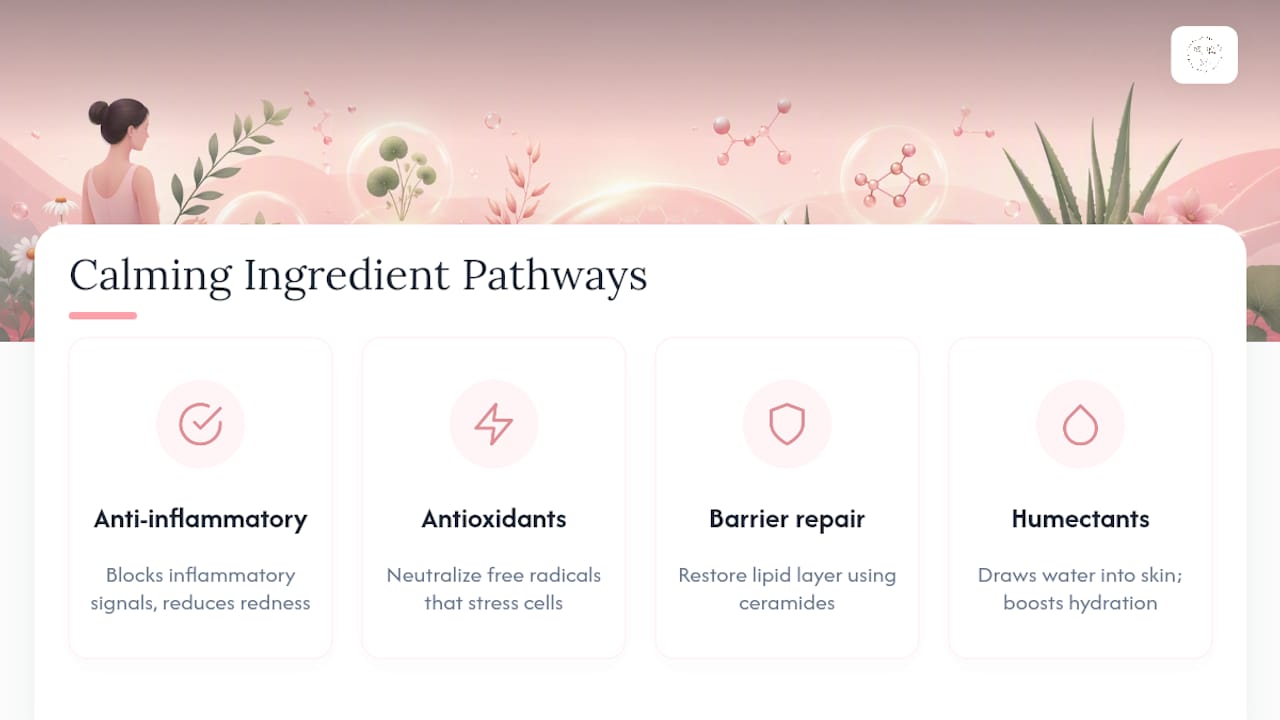
Formulation experts who study rinse-off versus leave-on delivery note that soothing ingredients work best in leave-on products because they need time to penetrate the stratum corneum and modulate your skin’s immune response. A five-second rinse with a calming cleanser rarely moves the needle on chronic redness. As for combinations, calendula and cica pair safely with almost anything gentle. The one pairing to avoid: high-concentration acids (glycolic, salicylic) layered onto a freshly compromised barrier, which can undo the calming work before it starts.
Building a Routine Around Calming Ingredients
A simple sequence works better than a complicated one: cleanse gently, apply a calming serum or essence while skin is still damp, follow with a moisturizer or balm, and finish with SPF during the day. That leave-on layer, whether serum or cream, is where the real calming work happens.
- Patch test first. Apply a small amount to your inner forearm and wait 24 to 48 hours before using it on your face.
- Introduce one active at a time. Give each new ingredient two weeks before adding another, so you can tell what’s actually helping.
- Taper during flare-ups. Drop exfoliating acids and retinoids the moment you notice redness, and lean on centella asiatica or oatmeal until skin settles.
- Match texture to skin type. Oils suit very dry, flaking skin; balms suit targeted rough patches; gels suit oilier or acne-prone skin that still needs calming.
Pro Tip: Skip fragrance and essential oils entirely while your skin is actively irritated, even the ones marketed as “calming.” Fragrance is one of the most common triggers for reactive skin, and it undoes the work your other ingredients are doing.
For a deeper ingredient reference, this guide to soothing ingredients breaks down formulation details, and if you’re rebuilding a full routine, choosing clean beauty products walks through what to look for on a label.
Who’s Behind This Guide
This guide comes from Caitlin Grey at Purelightbotanicalbeauty,. The formulation philosophy starts with botanicals first, calendula, rose, cica, and their relatives, layered with evidence-backed actives where the science calls for it. Most people following a consistent leave-on routine see visible barrier improvement within two to four weeks, though this window functions as a general guideline rather than a guarantee, and individual results vary… For more on the ingredients behind these formulas, visit the full ingredient breakdown.
Why Most Calming Skincare Advice Misses the Point
The conventional advice on calming skin treats every red or reactive patch the same way: slap on an anti-inflammatory and wait. That’s incomplete. Chronic redness from eczema or rosacea usually isn’t a signal that your skin needs more calming ingredients piled on. It’s a signal that your moisture barrier is compromised and your immune response is reacting to that gap. Humectants paired with barrier lipids like ceramides often do more for lasting comfort than repeatedly reapplying anti-inflammatories, because you’re addressing the structural problem instead of muting the alarm.
I’d also push back on the idea that more actives equal faster results. Introducing five calming ingredients at once tells you nothing when your skin improves, because you can’t isolate what worked. One active, two to four weeks, then the next. That’s slower than what most product marketing promises, but it’s the only way to actually know what your skin responds to.
If I had to prioritize one thing for someone starting fresh: fix the barrier before you chase the redness. Ceramides and consistent moisture do quieter, more durable work than any single “calming” ingredient marketed on its own.
— Caitlin Grey
Where Calendula and Rose Fit Into a Calming Routine
A calming routine built on centella, niacinamide, and ceramides gets an extra layer of support from botanicals like calendula and rose, both known for their gentle, soothing history in skin care. The Botanical Beauty Balm brings those two botanicals together in a leave-on format designed to sit as the final step in your routine, sealing in whatever serum or treatment you applied underneath.
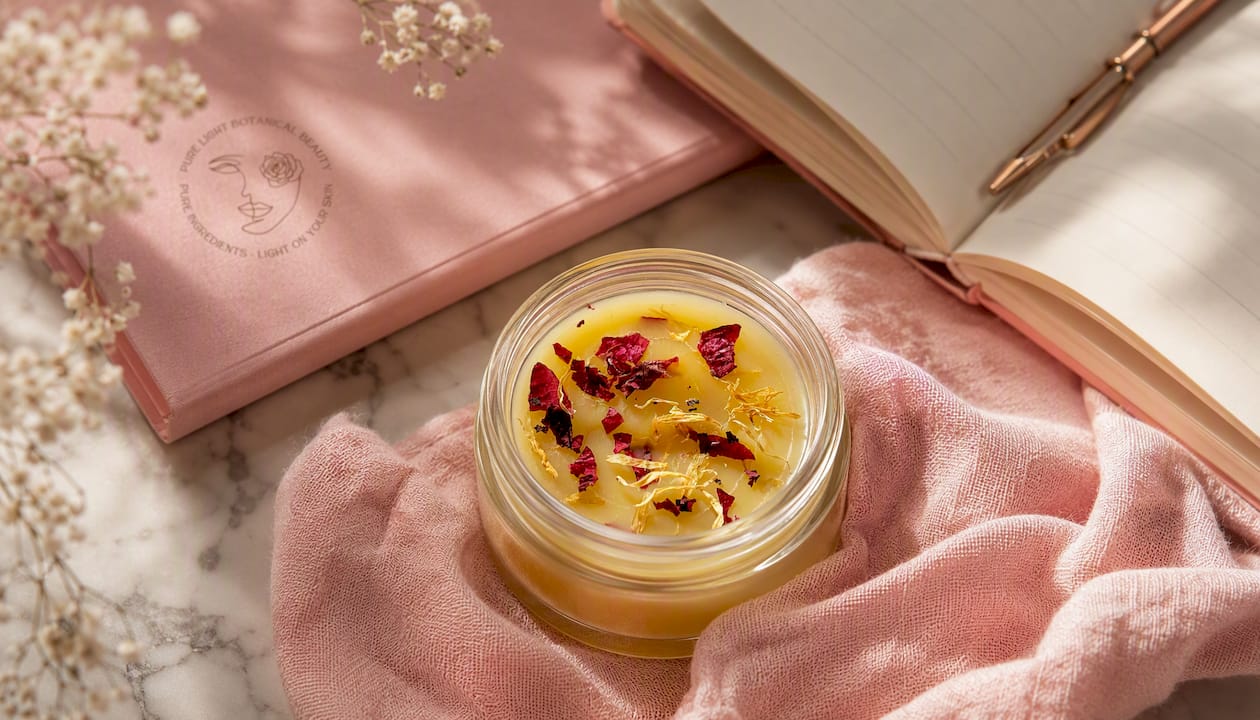
Use it as your last layer at night, or dab it directly onto flaky, red, or tight patches during the day when your skin needs targeted attention rather than a full reapplication. Because it’s a leave-on balm rather than a rinse-off product, it stays in contact with your skin long enough for calendula and rose to do their quiet work, no rushing, no washing it away before it has a chance to settle in. If you’re ready to add this step to your routine, you can find the Botanical Beauty Balm on our product page and see exactly what goes into every jar.