

Nearly 80% of American women report increased concerns about ingredient transparency in their beauty routines. For those with sensitive skin, navigating endless product labels can feel overwhelming when all you want is something safe, gentle, and aligned with your holistic values. Discover how fair trade beauty standards offer more than just clean plant-based ingredients—these principles create a foundation where ethical sourcing, skin health, and emotional well-being unite for truly mindful self-care.
Table of Contents
- Defining Fair Trade Beauty Standards
- Types of Fair Trade Beauty Ingredients
- How Ethical Sourcing Supports Communities
- Impact on Sensitive Skin and Wellness
- Key Certifications and Misconceptions
- Risks and Alternatives in Ingredient Sourcing
Key Takeaways
| Point | Details |
|---|---|
| Fair Trade Principles | Fair Trade Beauty prioritizes ethical sourcing, worker dignity, and environmental responsibility through ten fundamental principles established by the WFTO. |
| Ingredient Transparency | Fair Trade beauty products emphasize the importance of transparent sourcing and the stories behind each ingredient to ensure ethical consumerism. |
| Community Impact | Ethical sourcing creates economic opportunities, educational access, and social empowerment for marginalized communities worldwide. |
| Navigating Certifications | Understanding fair trade certifications helps consumers identify truly ethical products while avoiding misconceptions in the beauty market. |
Defining Fair Trade Beauty Standards
At its core, Fair Trade Beauty represents a holistic approach to skincare and cosmetics that prioritizes ethical sourcing, worker dignity, and environmental responsibility. Unlike traditional beauty supply chains, fair trade practices ensure that every ingredient tells a story of human respect and sustainable production. These standards go beyond mere product creation to create meaningful economic opportunities for farmers and workers in developing regions.
The World Fair Trade Organization (WFTO) establishes comprehensive guidelines that define fair trade beauty standards through ten fundamental principles. These principles address critical aspects of ethical production, including:
- Transparent and accountable business practices
- Fair compensation that supports sustainable livelihoods
- Safe and healthy working conditions
- No child or forced labor practices
- Non discrimination and gender equity
- Environmentally sustainable production methods
- Respect for cultural identity and traditional knowledge
Certification processes for fair trade beauty products involve rigorous third party verification of clean beauty standards that track every stage of ingredient sourcing and production. These audits ensure that companies meet strict ethical guidelines, providing transparency from harvest to final product. Brands committed to fair trade demonstrate a profound understanding that beauty is not just about external appearance, but about creating positive global connections.
Pro tip: When shopping for fair trade beauty products, look for recognized certification logos from organizations like Fair Trade International or World Fair Trade Organization to guarantee ethical sourcing and worker protection.
Types of Fair Trade Beauty Ingredients
Fair Trade Beauty Ingredients represent a carefully curated selection of natural, ethically sourced materials that transform skincare from a simple cosmetic process into a global movement of sustainability and social responsibility. These ingredients are not just components of beauty products, but powerful narratives of economic empowerment and environmental stewardship. Decoding the ingredient list becomes an act of conscious consumption when consumers understand the journey behind each botanical extract and natural compound.
The most common fair trade beauty ingredients span a diverse range of natural resources, carefully selected for their potency and ethical sourcing. Key ingredients include:
- Vegetable Oils: Argan, coconut, and jojoba oils sourced from cooperative farms in Morocco, India, and South America
- Botanical Extracts: Aloe vera, chamomile, and green tea from sustainable agricultural communities
- Essential Oils: Lavender from French provinces, rose from Bulgarian farms, and bergamot from Italian cooperatives
- Organic Butters: Shea butter from West African women’s cooperatives, cocoa butter from sustainable South American farms
Beyond traditional ingredients, innovative green chemistry is expanding the landscape of fair trade beauty components. Biotechnology now enables the development of sustainable ingredients that reduce environmental impact while supporting local economies. These advanced ingredients are not just environmentally friendly, but they represent a sophisticated approach to beauty that prioritizes human and ecological well-being.
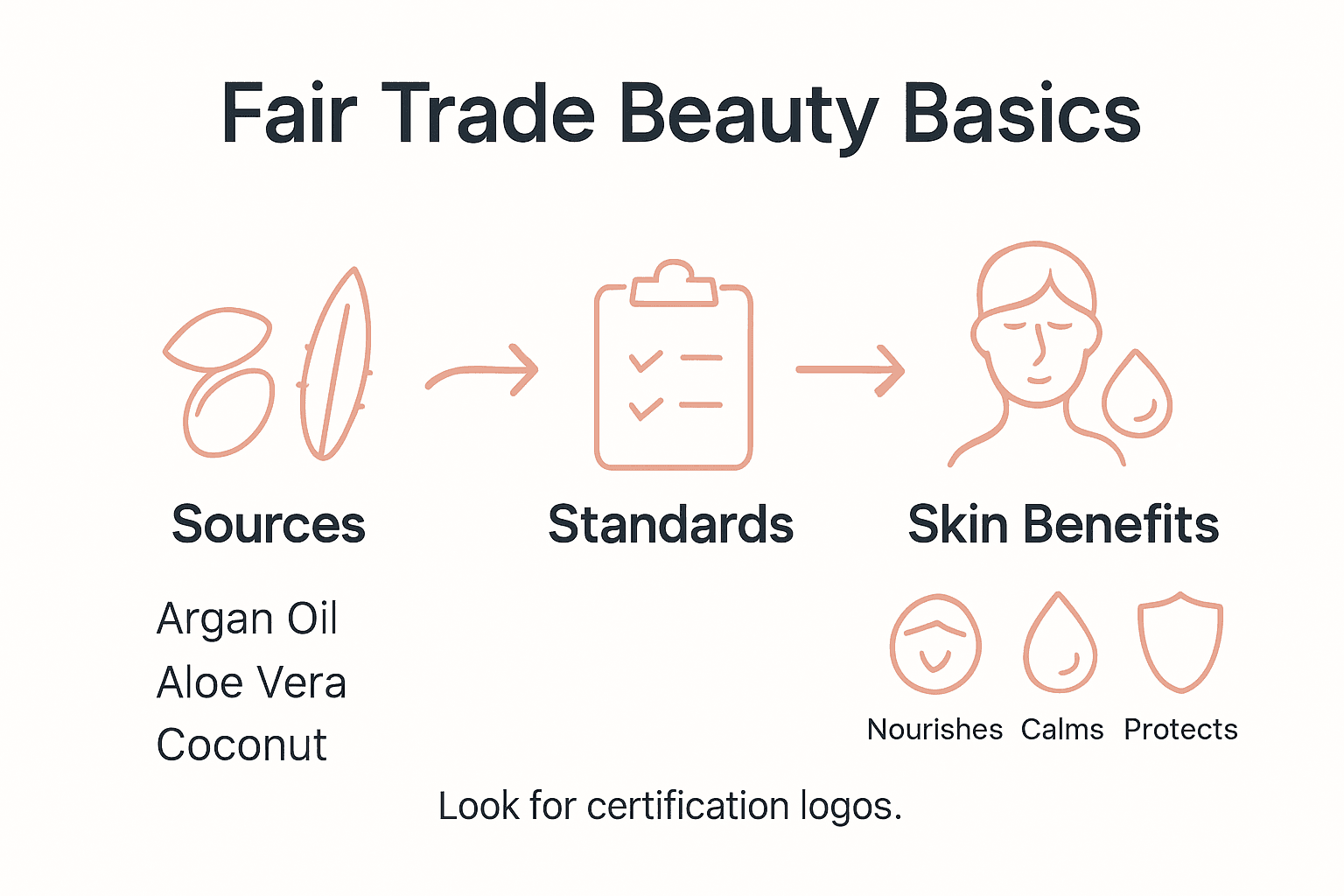
Here is a summary of common fair trade beauty ingredient types and their unique benefits:
| Ingredient Type | Main Source Regions | Skin Benefit Highlight |
|---|---|---|
| Vegetable Oils | Morocco, India, South America | Deep hydration and nourishment |
| Botanical Extracts | Africa, Europe, Asia | Soothing and antioxidant effects |
| Essential Oils | France, Bulgaria, Italy | Aromatherapy and skin balancing |
| Organic Butters | West Africa, South America | Softening and barrier protection |
| Biotech Ingredients | Global innovation labs | Eco-friendly, reduced footprint |
Pro tip: When exploring fair trade beauty products, look for brands that provide transparent sourcing information and actively share the stories of the farmers and communities behind their ingredients.
How Ethical Sourcing Supports Communities
Ethical sourcing represents far more than a corporate buzzword—it is a transformative approach that fundamentally reshapes economic opportunities for marginalized communities worldwide. By prioritizing fair compensation and sustainable practices, brands create powerful pathways for social and economic empowerment. Green chemistry in beauty plays a critical role in this process, ensuring that every ingredient tells a story of human dignity and environmental respect.
The impact of ethical sourcing extends across multiple dimensions of community development:
- Economic Stability: Providing fair wages that exceed local minimum standards
- Educational Opportunities: Investing in worker training and skill development programs
- Women’s Empowerment: Creating leadership roles and economic independence for women in agricultural communities
- Healthcare Access: Supporting community health initiatives and medical infrastructure
- Environmental Protection: Implementing sustainable farming practices that preserve local ecosystems
Beyond financial transactions, ethical sourcing builds meaningful relationships between global brands and local producers. These partnerships create collaborative frameworks where communities are active participants rather than passive suppliers. By valuing traditional knowledge and supporting sustainable agricultural practices, ethical sourcing transforms supply chains into vehicles of social progress and environmental stewardship.

Pro tip: Research brands that publish transparent impact reports detailing their community investments and sustainable sourcing practices to make truly informed purchasing decisions.
Impact on Sensitive Skin and Wellness
Sensitive skin requires more than just superficial treatment—it demands a holistic approach that addresses both physiological and emotional wellness. Mindful beauty practices reveal that ethically sourced ingredients can transform skincare from a mere cosmetic routine into a healing experience that nurtures skin at its deepest level. The intricate connection between ingredient quality, skin health, and emotional well-being goes far beyond traditional beauty paradigms.
The most profound benefits of fair trade beauty for sensitive skin emerge through carefully selected botanical ingredients:
- Anti-Inflammatory Properties: Natural extracts that reduce skin redness and irritation
- Skin Barrier Protection: Ingredients that strengthen and restore the skin’s natural defense mechanisms
- Stress Reduction: Botanicals that help mitigate neurogenic inflammation
- Emotional Wellness: Products that create a sense of connection and mindful self-care
- Holistic Healing: Ingredients that support both physical and emotional skin health
Understanding sensitive skin requires recognizing it as a complex interplay between environmental triggers, emotional states, and biological responses. Ethical sourcing ensures that each ingredient not only meets rigorous quality standards but also carries the potential for deep healing. By prioritizing ingredients that are sustainably and compassionately produced, brands can offer more than just skincare—they provide a pathway to holistic wellness that honors both human and ecological well-being.
Pro tip: Perform a patch test with new products and track how your skin responds, paying attention to both physical reactions and emotional sensations during your skincare routine.
Key Certifications and Misconceptions
Fair trade beauty certifications represent a complex landscape of ethical standards that go far beyond simple marketing claims. Clean beauty certification requires rigorous verification processes that ensure transparency, accountability, and genuine commitment to social and environmental responsibility. Understanding these certifications means decoding a nuanced system of global ethical practices that protect both people and the planet.
Key certifications in fair trade beauty include:
- Fairtrade International Certification: Ensures fair wages and safe working conditions
- World Fair Trade Organization Label: Verifies comprehensive ethical trading practices
- Organic Certification: Confirms pesticide-free and sustainable agricultural methods
- Cruelty-Free Certification: Guarantees no animal testing throughout production
- Vegan Certification: Validates the absence of animal-derived ingredients
Common misconceptions about fair trade beauty certifications can mislead consumers and undermine the genuine impact of ethical sourcing. Many people mistakenly believe that ‘natural’ or ‘organic’ automatically means fair trade, or that certifications are simply marketing tactics. In reality, these certifications represent complex auditing processes that require ongoing commitment, transparency, and measurable social and environmental impact. Each certification tells a deeper story of global interconnectedness, revealing how consumer choices can directly support community development and ecological sustainability.
The table below compares major fair trade beauty certifications and what they monitor:
| Certification | Main Focus | Oversight Method |
|---|---|---|
| Fairtrade International | Worker rights, fair wages | On-site audits |
| WFTO Label | Supply chain ethics | Organization-wide assessment |
| Organic Certification | Pesticide-free farming | Farm monitoring |
| Cruelty-Free Certification | Animal welfare | No animal testing audits |
| Vegan Certification | No animal-derived inputs | Ingredient verification |
Pro tip: Look beyond certification logos and research the specific standards and verification processes behind each claim to truly understand a product’s ethical commitment.
Risks and Alternatives in Ingredient Sourcing
Ingredient sourcing in fair trade beauty represents a complex balance between ethical intentions and potential unintended consequences. Non-toxic beauty essentials require a nuanced approach that goes beyond surface-level sustainability claims. The journey from raw material to finished product involves navigating intricate environmental, social, and economic challenges that demand critical examination and innovative solutions.
Key risks in ethical ingredient sourcing include:
-
Environmental Overexploitation: Increased demand for natural ingredients can lead to:
- Deforestation
- Biodiversity loss
- Intensive farming practices
-
Economic Vulnerability: Small-scale producers facing:
- High production costs
- Limited market access
- Potential quality control challenges
-
Supply Chain Complexity: Difficulties in ensuring:
- Consistent ethical standards
- Transparent sourcing
- Fair compensation
Alternative approaches are emerging to address these challenges, focusing on regenerative agriculture, local community empowerment, and advanced biotechnology. These strategies aim to create a more holistic model of ingredient sourcing that prioritizes ecological balance, worker well-being, and long-term sustainability. By developing innovative sourcing methods, brands can transform potential risks into opportunities for positive global impact.
Pro tip: Research brands that provide detailed sourcing transparency and invest in direct relationships with farming communities to ensure genuine ethical practices.
Embrace Ethical Beauty That Nurtures Your Skin and Soul
The article highlights the challenges of finding beauty products that align with fair trade principles while truly supporting sensitive skin and holistic wellness. If you seek fair trade beauty that honors ethical sourcing, skin health, and emotional well-being, Pure Light Botanical Beauty offers thoughtfully crafted solutions rooted in nature’s healing power. Our formulas combine clean, plant-based ingredients sourced with respect for communities and the environment to nourish your skin deeply and gently.
Discover the difference of skincare that is as kind to the world as it is to your skin. Each product is a ritual that celebrates transparency, mindful self-care, and the art of natural beauty. From soothing botanical extracts to responsibly sourced organic butters, our line reflects the harmony between sustainable sourcing, wellness, and radiant skin.
Experience the nurturing presence of Pure Light Botanical Beauty and join a movement where ethical sourcing and sensitive skin care meet. Visit Pure Light Botanical Beauty to explore our range and start your journey towards beauty that feels as good as it looks.
Explore more about ethical ingredient sourcing and clean beauty at Clean Beauty Certification Explained and deepen your understanding of botanical benefits at Decode a Pure Beauty Ingredient List.
Ready to transform your skincare ritual with ethically crafted products that honor your skin’s unique needs?
Step into a world where conscious beauty is a daily act of self-love. Visit Pure Light Botanical Beauty now and discover products designed to nurture, heal, and illuminate your natural glow.
Frequently Asked Questions
What are the benefits of using fair trade beauty products?
Fair trade beauty products prioritize ethical sourcing, which supports sustainable livelihoods and environmental protection. They often contain high-quality, natural ingredients that can benefit skin health, especially for sensitive skin.
How do I know if a beauty product is truly fair trade?
Look for recognized certification logos from organizations like Fair Trade International or the World Fair Trade Organization on product packaging. These certifications guarantee adherence to strict ethical sourcing and labor practices.
What types of ingredients are commonly used in fair trade beauty products?
Common fair trade beauty ingredients include vegetable oils like argan and coconut, botanical extracts such as aloe vera and green tea, essential oils like lavender and rose, and organic butters including shea and cocoa butter, all sourced ethically to ensure quality and sustainability.
How does ethical sourcing impact the communities involved in beauty ingredient production?
Ethical sourcing fosters economic stability, educational opportunities, women’s empowerment, and environmental protection by ensuring fair wages and safe working conditions for local producers, transforming supply chains into vehicles for social and economic empowerment.
Recommended
- What is Clean Beauty? Understanding Its Importance and Benefits – Pure Light Botanical Beauty
- Sustainable Makeup: Empowering Sensitive Skin Wellness – Pure Light Botanical Beauty
- Benefits of Conscious Cosmetics: Complete Guide – Pure Light Botanical Beauty
- Understanding Why Clean Beauty Works for Your Skin – Pure Light Botanical Beauty
- Přírodní Máslo na Tetování – Péče a Hojení Po Tetování | mamradkerky.cz