

How science defines its role in botanical beauty
The role of science in botanical beauty is not decorative. It is the meticulous architecture beneath every plant-based formula that determines whether an ingredient truly heals, protects, or nourishes, or simply sits inert in a jar. Science validates what nature offers, then refines it into something your skin can actually use.
At its core, botanical science does several things simultaneously:
- Validates efficacy and safety through toxicological studies, clinical trials, and in vitro skin models that confirm a plant compound does what traditional use has long claimed
- Optimizes extraction and preservation using methods like supercritical fluid extraction and encapsulation to protect delicate actives from degradation before they ever reach your skin
- Advances formulation through nanocarriers, solid lipid nanoparticles, and rheological control that maximize how deeply and effectively botanical actives penetrate the skin barrier
- Bridges ethnobotanical heritage with modern innovation, using physico-chemical analysis to translate centuries of traditional knowledge into clinically reliable ingredients
- Supports sustainability through plant cell culture and nanostructuring techniques that reduce environmental impact without sacrificing ingredient quality
- Ensures regulatory compliance by meeting the safety and labeling standards required for botanical products to reach the US market with integrity
Understanding botanical ingredients through this scientific lens is what separates a truly effective natural formula from one that merely sounds good on a label.
Table of Contents
- How science extracts and preserves botanical ingredients
- What formulation science does for botanical skincare
- How science validates safety and efficacy in botanical beauty
- How traditional botanical knowledge and modern science work together
- Sustainability and the future of botanical beauty science
- Biotechnology is reshaping how botanical ingredients are created
- Why standardization and quality control matter in botanical extracts
- Clinical testing confirms what botanical beauty products actually do
- Purelightbotanicalbeauty brings this science to life in every formula
- Key Takeaways
How science extracts and preserves botanical ingredients
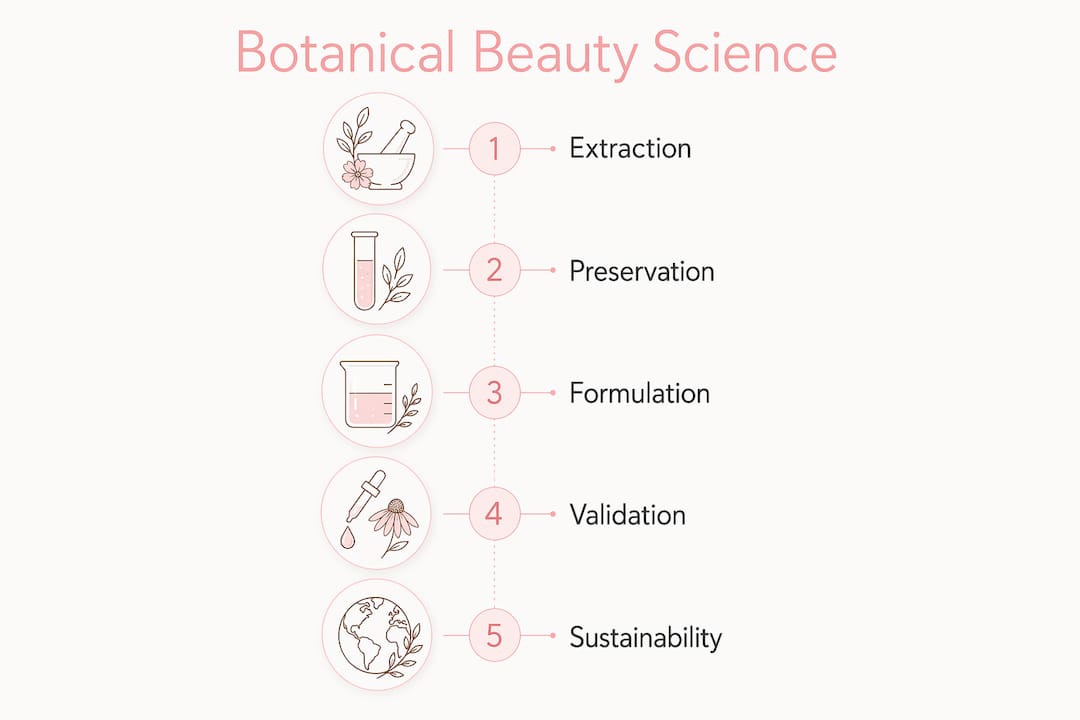
The journey from plant to product is far more complex than harvesting and blending. Botanical actives are often fragile. Polyphenols oxidize. Antioxidants degrade under light. Volatile compounds evaporate. Without precise scientific intervention at the extraction stage, the most potent plant in the world delivers little more than color and scent to a formula.
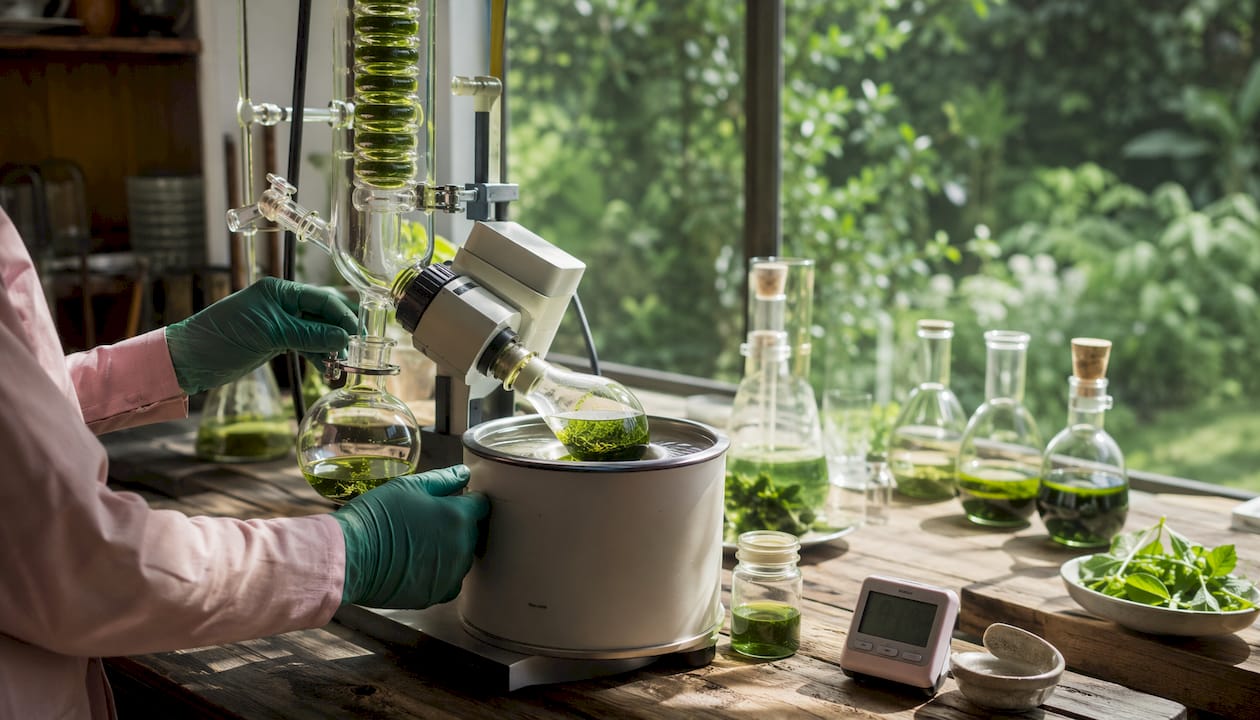
Solvent extraction remains one of the most widely used methods, drawing bioactive compounds from plant material using ethanol, water, or other solvents calibrated to the target molecule’s polarity. Supercritical fluid extraction, which uses carbon dioxide at specific temperature and pressure thresholds, offers a cleaner alternative that preserves heat-sensitive compounds without solvent residue. Microbial fermentation has emerged as a particularly elegant approach: specific microbial strains break down plant cell walls to release polysaccharides and other actives that would otherwise remain inaccessible. Research on Passiflora edulis (passion fruit) demonstrates this beautifully, with fermentation-derived polysaccharides showing measurable antioxidant and photoprotective activity against UVB damage.
Preservation is where science becomes equally critical. Once extracted, botanical actives face oxidation, light exposure, and microbial contamination. Encapsulation in solid lipid nanoparticles or emulgel matrices shields polyphenols from these threats, maintaining product efficacy across a product’s full shelf life. Antioxidant co-ingredients like vitamin E or rosemary extract are often added not for their own skin benefits but as molecular guardians protecting the primary botanical active. Plant cell culture technology represents the frontier of this work, producing phyto-ingredients under controlled laboratory conditions that eliminate the variability of seasonal harvests and reduce energy, carbon, and water use in the process.
Pro Tip: When reading a botanical skincare label, look for encapsulation language like “liposomal,” “nanoparticle,” or “microencapsulated” near a key active. These terms signal that the brand invested in protecting the ingredient’s potency, not just its presence.
Quality control at the raw material stage is non-negotiable. Batch-to-batch consistency in botanical extracts depends on standardized testing for active compound concentration, contaminant screening, and phytochemical profiling before a single gram enters a formula.
What formulation science does for botanical skincare
Knowing that a plant compound is beneficial is one thing. Getting it to work inside a finished product is another challenge entirely. Formulation science is where botanical beauty either delivers on its promise or quietly fails.
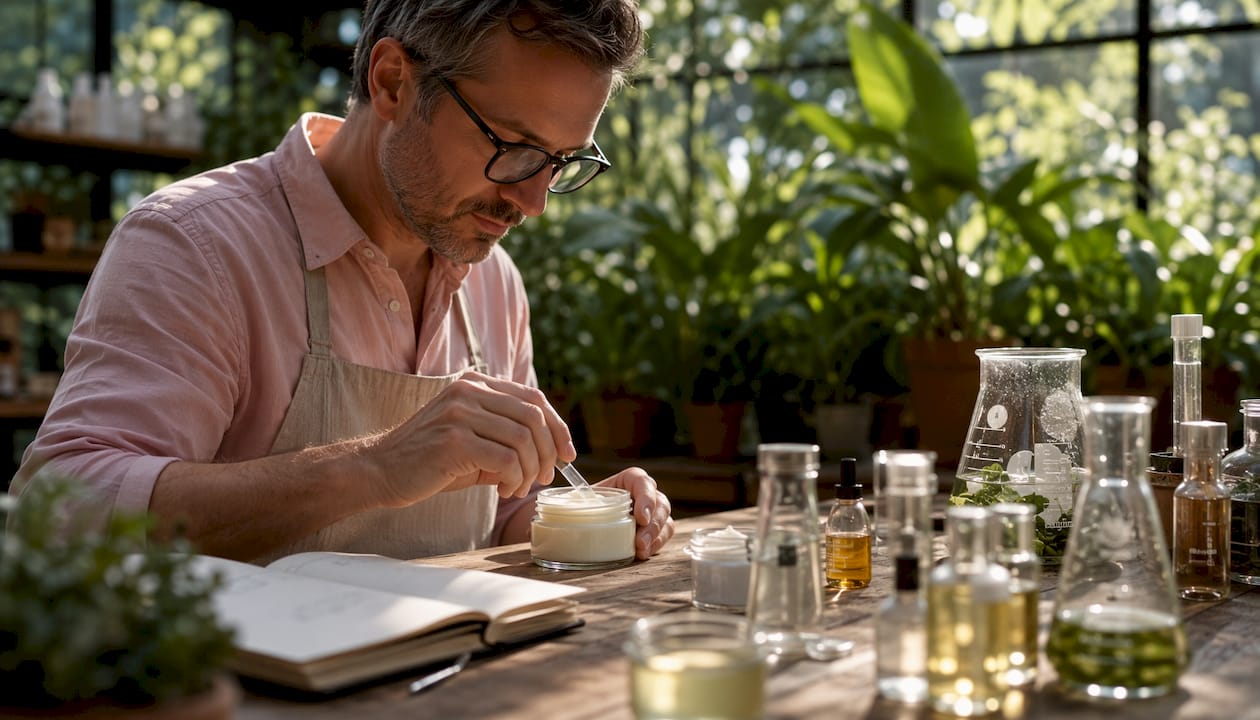
The central obstacle is bioavailability. Many natural bioactive compounds cannot cross the skin barrier in their raw form. Their molecular size, polarity, or instability means they remain on the surface rather than reaching the dermal layers where they can influence collagen synthesis, reduce inflammation, or neutralize free radicals. This is precisely why the presence of a botanical ingredient alone does not guarantee efficacy. Advanced formulation is what closes that gap.
Key scientific strategies in botanical formulation include:
- Nanocarriers and solid lipid nanoparticles (SLNs): These microscopic delivery vehicles encapsulate botanical actives and guide them through the skin barrier. Prunus persica (peach) leaf extracts loaded into SLNs demonstrated enhanced anti-elastase, anti-collagenase, and anti-tyrosinase activities compared to unformulated extracts, along with in-vivo wrinkle reduction.
- Emulgels: Hybrid systems combining emulsion and gel properties that improve both skin feel and ingredient stability, particularly useful for water-sensitive botanical actives.
- Rheological control: Managing a formula’s viscosity and flow behavior ensures consistent ingredient distribution throughout the product and predictable skin application.
- Orthogonal experimental design: Rather than testing one variable at a time, this approach simultaneously evaluates multiple formulation factors, including extract concentration, emulsifier type, and solvent ratios, to identify the optimal combination efficiently. Orthogonal experimental designs, such as the L16(4^5), are techniques used to efficiently optimize multiple formulation factors simultaneously, leading to stable and effective botanical products without trial-and-error waste.
- Synergistic ingredient pairing: Science identifies which botanical actives amplify each other’s effects, such as combining vitamin C with ferulic acid to stabilize and enhance antioxidant performance.
Balancing all of this with texture, scent, and the sensory experience a person actually wants to use daily is where formulation becomes both science and art. A formula that works brilliantly in a lab but feels heavy or irritating on skin will never fulfill its potential. The best botanical formulations achieve both.
How science validates safety and efficacy in botanical beauty
Trust in a botanical product must be earned through evidence, not assumed because an ingredient is natural. The scientific validation process for botanical beauty ingredients is rigorous, layered, and increasingly standardized, particularly for brands operating in the US market.
| Validation Stage | Method Used | What It Confirms |
|---|---|---|
| Toxicological screening | In vitro cytotoxicity assays | No harmful cellular effects at use concentrations |
| Skin penetration testing | Franz diffusion cell studies | Active compound reaches target skin layer |
| Efficacy measurement | SPF testing, antioxidant assays | Quantified protective or restorative activity |
| Clinical trials | Controlled in-vivo human studies | Real-world skin improvement under standardized conditions |
| Contaminant exclusion | Heavy metal and microbial testing | Product is free from unsafe impurities |
| Phytochemical profiling | HPLC, mass spectrometry | Consistent active compound concentration batch to batch |
In vitro and in vivo studies, including SPF measurements and cytotoxicity assays, validate both the safety and efficacy of plant extracts in skincare formulations. Regulatory compliance in the US requires that botanical extracts meet safety standards supported by laboratory data before market entry, covering toxicology, contaminant exclusion, and ingredient traceability.
Phytochemical profiling using high-performance liquid chromatography (HPLC) and mass spectrometry ensures that the concentration of active compounds like quercetin, resveratrol, or rosmarinic acid remains consistent from one production batch to the next. Without this standardization, a product that performed well in clinical testing could deliver a fraction of that activity in the version a person actually purchases. Transparent labeling, grounded in this data, is what allows informed choices and builds the kind of trust that lasts beyond a single purchase.
How traditional botanical knowledge and modern science work together
There is something quietly profound about the relationship between ancestral plant wisdom and contemporary laboratory science. Generations of healers, herbalists, and communities around the world developed an intimate understanding of which plants soothed, which healed, and which protected. Modern science does not replace that knowledge. It listens to it, then asks why.
Ethnobotany, the study of how human cultures have used plants across history, serves as one of the most productive sources of ingredient discovery in botanical beauty today. When a traditional remedy consistently appears across multiple cultures for the same application, that convergence is a signal worth investigating scientifically. The process typically unfolds in several stages:
- Identification: Researchers document traditional plant uses through ethnobotanical surveys, interviewing practitioners and reviewing historical records.
- Isolation: Laboratory analysis isolates the specific compounds responsible for the observed effects, separating active molecules from inert plant material.
- Mechanism elucidation: Scientists determine how the compound interacts with skin cells, receptors, or enzymes, explaining the biological basis for the traditional claim.
- Formulation development: Once the mechanism is understood, the active can be extracted, stabilized, and incorporated into a modern delivery system.
- Clinical validation: Controlled trials confirm that the formulated ingredient produces the expected benefit in real skin, under measurable conditions.
Physico-chemical analyses and skin models confirm traditional botanical actions, enabling modern formulation innovations that honor the original insight while expanding its reach. Turmeric’s anti-inflammatory properties, long central to Ayurvedic practice, are now understood through curcumin’s inhibition of NF-κB signaling pathways. Willow bark’s pain-relieving tradition led directly to the isolation of salicin and, ultimately, to salicylic acid as a cornerstone of modern acne and exfoliation science.
This exchange is not one-directional. Science also reveals limitations in traditional use, identifying compounds that are effective topically but unstable in certain formulations, or that require specific pH conditions to remain active. That refinement is itself a form of respect: taking something valuable and making it more reliably available to more people.
Sustainability and the future of botanical beauty science
The botanical beauty industry faces a tension that science is actively working to resolve: the demand for plant-derived ingredients is growing, but the ecosystems those plants come from are finite. Sustainable sourcing is no longer a marketing preference. It is a scientific and ethical imperative.
Plant cell culture technology is one of the most promising responses to this challenge. By cultivating plant cells in controlled bioreactor environments, researchers can produce high-value phyto-ingredients without harvesting wild populations or clearing agricultural land. This approach decreases energy, carbon, and water use compared to conventional farming while delivering consistent ingredient quality unaffected by drought, seasonal variation, or soil depletion.
Nanostructuring methods offer another dimension of sustainability. Rice bran oil encapsulated in nanofibers, for example, shows high biocompatibility and preserves phytochemicals under mild processing conditions, meaning less raw material is needed to achieve the same efficacy. When a formula requires less of an ingredient to work, the environmental footprint of producing that ingredient shrinks proportionally.
Minimalist formulations, which use fewer but more precisely chosen ingredients, represent both a sustainability strategy and a skin-compatibility advantage. Fewer ingredients mean fewer potential irritants, simpler supply chains, and lower overall environmental impact. For people with sensitive skin or conditions like eczema, this approach is not just philosophically appealing; it is clinically meaningful.
The challenges of scaling these methods remain real. Plant cell culture requires significant infrastructure investment. Nanostructuring processes demand technical expertise that not every manufacturer possesses. But the trajectory is clear, and the brands willing to invest in these approaches now are building the foundations of a more resilient botanical beauty industry.
Biotechnology is reshaping how botanical ingredients are created
Biotechnology has moved botanical beauty well beyond what any garden or greenhouse can produce. Where traditional extraction depends on what a plant naturally synthesizes, biotechnology can amplify, modify, or replicate those processes at a molecular level, opening possibilities that were unimaginable even two decades ago.
Microbial fermentation is perhaps the most accessible example. Specific bacteria and yeast strains are engineered or selected to produce botanical compounds, including hyaluronic acid, certain peptides, and polysaccharides, with greater purity and consistency than plant extraction alone. The result is an ingredient with a defined molecular profile, free from the agricultural variability that affects conventionally harvested botanicals.
CRISPR-based gene editing is beginning to influence botanical ingredient development as well. Researchers can now modify plant genomes to increase the concentration of specific beneficial compounds, reduce the presence of potential allergens, or improve a plant’s resilience to environmental stress. While regulatory pathways for gene-edited botanical ingredients in cosmetics are still evolving in the US, the scientific groundwork is advancing rapidly.
Biosynthesis, the laboratory production of plant compounds using engineered microorganisms, allows ingredients like bakuchiol (a natural retinol alternative derived from Psoralea corylifolia) to be produced at scale without the agricultural pressure that wild harvesting creates. This matters both for supply chain stability and for conservation of plant species that face overharvesting pressure. The science of botanical skincare is increasingly inseparable from these biotechnological advances, and understanding that connection helps you evaluate which products are genuinely built on scientific foundations.
Why standardization and quality control matter in botanical extracts
A botanical extract is only as reliable as the science behind its production. Without standardization, the same plant species harvested from different regions, seasons, or growing conditions can yield dramatically different concentrations of active compounds. That variability is not a minor inconvenience. It is the difference between a product that performs consistently and one that delivers unpredictable results.
Standardization in botanical extracts means establishing a defined minimum concentration of one or more marker compounds, typically the actives responsible for the ingredient’s known benefits. A standardized green tea extract, for instance, specifies a minimum percentage of epigallocatechin gallate (EGCG), ensuring that every batch delivers a therapeutically relevant amount of that antioxidant. Without that specification, a formula could contain green tea extract that is mostly inert plant fiber with negligible EGCG content.
Quality control extends across the entire production chain. At the raw material stage, testing screens for pesticide residues, heavy metals, microbial contamination, and adulterants. During processing, HPLC and mass spectrometry confirm that active compound concentrations fall within the specified range. Finished product testing then verifies stability, pH, and microbiological safety before a product reaches anyone’s hands. Regulatory compliance in the US requires that this data be documented and traceable, supporting both market authorization and consumer transparency.
The practical implication for anyone choosing botanical beauty products is significant. Standardized extracts with documented quality control represent a fundamentally different level of scientific commitment than products that simply list a plant name on the label. That distinction is worth understanding, and it is one reason why botanical extracts that soothe sensitive skin deserve careful scrutiny beyond the ingredient list.
Clinical testing confirms what botanical beauty products actually do
Clinical testing is where botanical beauty products prove themselves, or don’t. It is the stage that separates a well-intentioned formula from one with documented, reproducible results. And it is the foundation on which genuine trust between a brand and its customers is built.
The clinical validation process for botanical skincare typically begins with in vitro studies using reconstructed human skin models. These three-dimensional tissue constructs mimic the structure and function of real skin closely enough to predict how a formula will behave in vivo, without the ethical and logistical complexity of immediate human trials. Researchers measure cell viability, inflammatory marker expression, and barrier function changes to establish a safety and activity profile for the formulation.
Human clinical trials follow, designed with control groups, standardized application protocols, and objective measurement tools. Corneometry measures skin hydration. Tewametry quantifies transepidermal water loss as a marker of barrier integrity. Cutometry assesses skin elasticity. Mexameter readings track pigmentation changes. These instruments remove subjectivity from efficacy claims, replacing “skin feels smoother” with measurable data on hydration percentage or elasticity coefficient.
Dermatologist-tested and hypoallergenic claims, which appear frequently on botanical beauty products, require specific patch testing protocols under dermatological supervision. Repeat insult patch testing (RIPT) exposes a panel of volunteers to repeated product applications to identify any sensitization potential. For products targeting sensitive skin or eczema-prone skin, this testing is not optional. It is the scientific basis for the claim that a product is genuinely safe for that population.
The integrity of clinical testing also depends on transparency: published protocols, defined endpoints, and honest reporting of results, including those that show modest rather than dramatic effects. That honesty is itself a mark of scientific credibility, and it is the standard that botanical beauty brands with genuine scientific foundations hold themselves to.
Purelightbotanicalbeauty brings this science to life in every formula
What you have just read is the science that makes botanical beauty worth believing in. Purelightbotanicalbeauty was built on exactly this foundation: the conviction that plant-based beauty deserves the same scientific rigor as any other category of skincare, and that the women who choose it deserve products that have genuinely earned their trust.
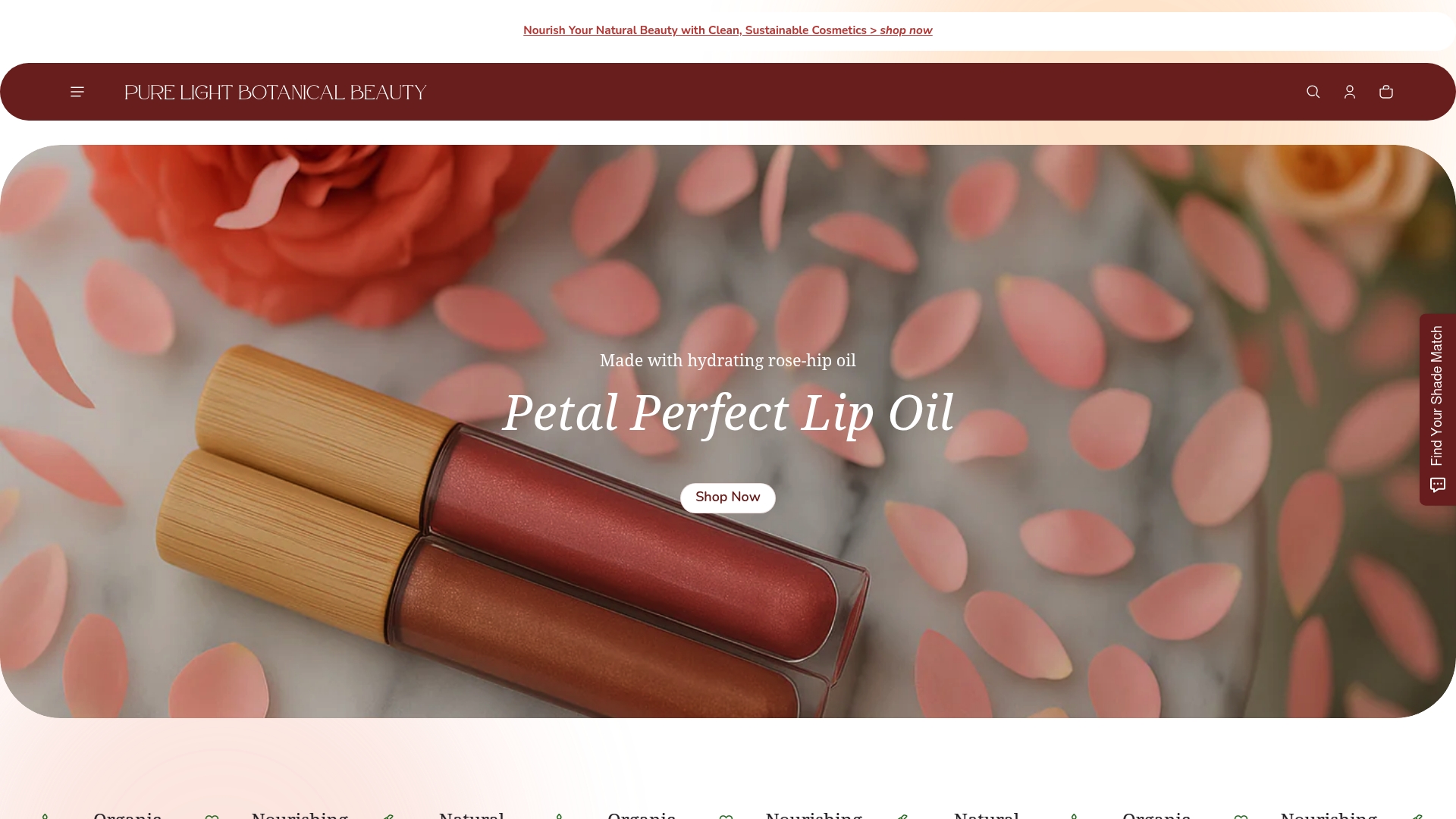
Every formula in the Purelightbotanicalbeauty line, from the Petal Perfect Lip Oil to the Botanical Crème Blush and Nourishing Lipstick, is crafted with clean, plant-based ingredients selected for both their traditional heritage and their scientifically confirmed skin benefits. The brand’s particular focus on sensitive skin and eczema-prone skin reflects a commitment to the kind of clinical thoughtfulness this article describes: choosing ingredients that have been validated, formulated for real bioavailability, and tested for genuine safety. Beauty here is not a performance. It is a practice of nourishment, and every product is designed to feel as purposeful as it looks.
Visit Purelightbotanicalbeauty to explore the full collection and find the formula that fits where you are in your skin’s story right now.
Key Takeaways
Science validates, optimizes, and ensures the safety of botanical ingredients, making it the essential foundation of every effective and trustworthy plant-based beauty product.
| Point | Details |
|---|---|
| Bioavailability requires formulation | A botanical ingredient’s presence alone does not guarantee efficacy; nanocarriers and SLNs are needed to deliver actives through the skin barrier. |
| Standardization ensures consistency | Standardized extracts specify minimum active compound concentrations, preventing batch-to-batch variability that undermines product performance. |
| Clinical testing builds real trust | In vitro skin models and controlled human trials using tools like corneometry and tewametry replace subjective claims with measurable results. |
| Sustainability is a scientific priority | Plant cell culture technology reduces energy, carbon, and water use while producing consistent, high-quality botanical ingredients at scale. |
| Purelightbotanicalbeauty applies this science | Every formula is crafted with clinically considered, plant-based ingredients formulated for sensitive and eczema-prone skin with genuine scientific care. |
Recommended
- Understanding the Role of Botanicals in Beauty – Pure Light Botanical Beauty
- What is Botanical Beauty? Understanding Natural Radiance – Pure Light Botanical Beauty
- The Role of Aromatherapy in Beauty: A Science-Backed Guide – Pure Light Botanical Beauty
- Understanding the Benefits of Botanical Beauty – Pure Light Botanical Beauty