

Beauty means wholeness in the most literal sense: a thing is beautiful when it possesses integrity, the quality of being fully and harmoniously itself. Thomas Aquinas identified three conditions for beauty — integritas (completeness), consonantia (harmony of parts), and claritas (luminous clarity) — and that classical framework, echoed in interpersonal neurobiology’s understanding of integration, tells us something profound about skincare. When you choose rituals and ingredients that restore integrity to your skin and your sense of self, you are practicing beauty in its deepest meaning. Purelightbotanicalbeauty was built on exactly this conviction: that botanical care is not mere decoration but a genuine act of wholeness.
Table of Contents
- Why does beauty mean wholeness, philosophically speaking?
- How beauty supports wholeness in your brain and skin
- Beauty and wholeness extend beyond your own skin
- Principles for bringing wholeness into your beauty routine
- Which botanicals actually support skin integrity?
- A 5-step mindful skincare ritual for wholeness
- How to make wholeness last beyond a single ritual
- Key Takeaways
- Beauty as a practice I believe in
- Explore Purelightbotanicalbeauty’s botanical collection
- Further reading and sources
Why does beauty mean wholeness, philosophically speaking?
Classical metaphysics treats beauty not as a surface quality but as a transcendental property of being — meaning it belongs to a thing’s very existence, not its appearance. The Philosophy Institute’s exposition of this tradition makes the point plainly: a thing is beautiful when truth and goodness integrate so completely that its essence shines through. Aquinas refined this into three elements:
- Integrity (integritas): possessing everything that belongs to a thing’s nature — completeness, not cosmetic perfection.
- Proportion (consonantia): the harmonious relationship of parts to each other and to the whole purpose of the thing.
- Clarity (claritas): the luminosity that results when essence is fully expressed — the quality we recognize as radiance.
What makes this framework so useful for personal beauty narratives is what integrity does not mean. It does not mean flawless or unaged. A wildflower growing through cracked pavement possesses integrity precisely because it is fully realizing its nature under real conditions. A manufactured plastic bloom, however perfect its symmetry, lacks it. Your skin, with its texture and history and sensitivity, can express genuine beauty in the Aquinas sense — and that reframe changes everything about how you approach a skincare routine.
How beauty supports wholeness in your brain and skin
Interpersonal neurobiology, the field developed by researchers including Daniel Siegel, frames beauty as an integration process: engaging with beauty encourages present-moment awareness and helps the brain move away from two dysfunctional extremes, chaos and rigidity, toward a balanced, integrated state. That balance is not merely pleasant. It associates directly with improved emotional regulation, reduced stress hormones, and lower systemic inflammation.
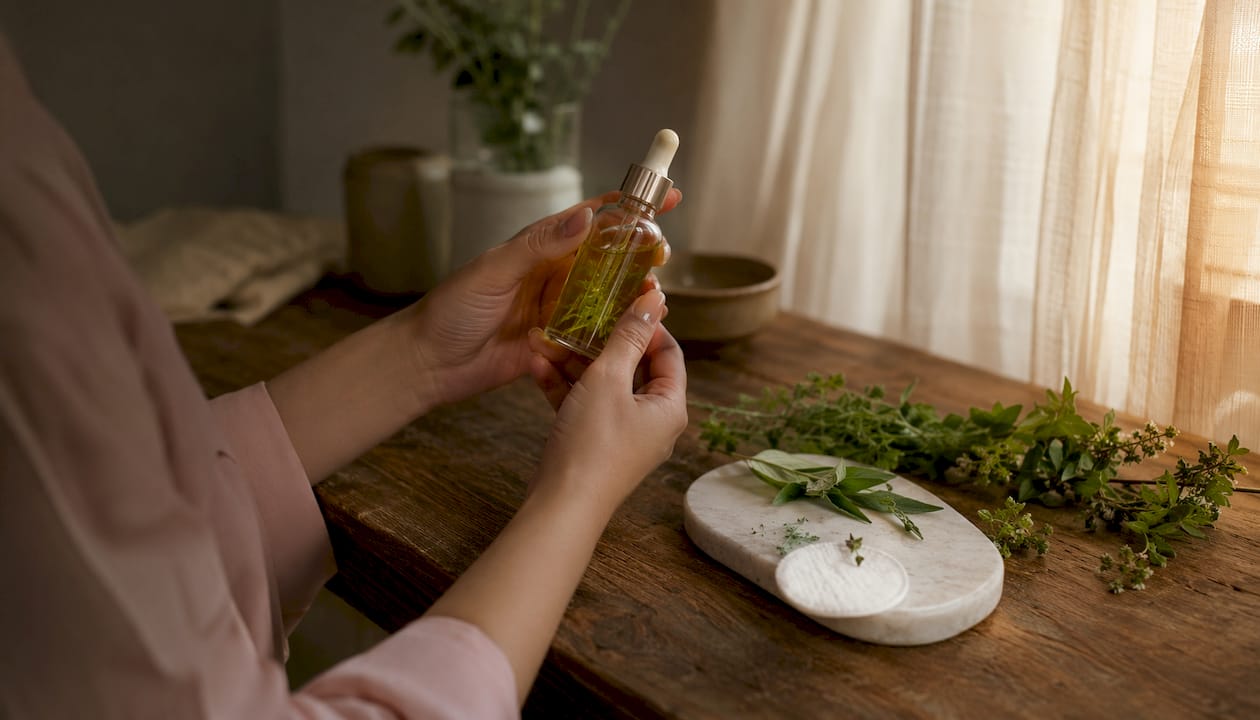
Why does that matter for your skin? Chronic stress elevates cortisol, which degrades the skin’s barrier function and triggers inflammatory cascades that worsen conditions like eczema and rosacea. Practices that support neural integration, including mindful skincare rituals, time in natural environments, and attunement with others, reduce those triggers at the source.
Research published in Psychology Today found that spending regular time in green spaces has been associated with better health and well-being. That figure is worth holding onto: two hours weekly is a modest, achievable threshold, and it suggests that beauty rituals for sensitive skin need not be elaborate to be effective.
Wholeness as a neurological state: Integration is the brain’s way of linking differentiated parts into a functional whole. Beauty, experienced mindfully, is one of the most accessible pathways to that state.
Community and attunement amplify these benefits further. When beauty rituals are shared — whether through a wellness community, a cultural tradition, or simply a moment of genuine connection — the integration effect deepens. Belonging is itself a form of wholeness.
Beauty and wholeness extend beyond your own skin
Process philosophers Patricia Adams Farmer and Jay McDaniel argue that wholeness is irreducibly relational and ecological. You cannot fully realize personal wholeness while fragmenting the community or natural systems around you. That is not a moral abstraction; it has direct implications for how you shop.
Dr. Rochelle Rowe’s historical and social commentary adds another layer: beauty rituals have long functioned as acts of self-protection and identity reclamation, particularly for communities navigating hostile social contexts. Care for the self, in this reading, is simultaneously care for one’s community and a quiet assertion of dignity. The practitioner reflections gathered in Echoes of Eden make a similar point: beauty heals “broken places” by reconnecting people to a deeper reality, not by concealing damage.
For botanical skincare consumers, this translates into concrete choices:
- Favor brands that practice regenerative or ethical sourcing of plant ingredients.
- Choose products with minimal, recyclable packaging or refill options where available.
- Support community-minded brands whose values extend beyond the transaction.
- Recognize that your self-care as self-love is also a contribution to a wider culture of care.
Principles for bringing wholeness into your beauty routine
Translating philosophy into practice does not require a complete routine overhaul. These principles, grounded in both the classical and neurobiological frameworks above, give you a working foundation:
- Simplicity: fewer, well-chosen products support barrier integrity better than layered complexity. Overloading sensitive skin fragments its natural function.
- Nourishment over correction: choose ingredients that feed the skin’s own repair processes rather than masking symptoms.
- Ritualized attention: slow, deliberate application activates the present-moment awareness that supports neural integration. Speed undermines the effect.
- Consistency: skin integrity builds over time, not overnight. A modest daily ritual outperforms an intensive weekly one.
- Safety first: always patch-test new botanicals on a small area of inner arm for 24 hours before full application, especially for eczema-prone or reactive skin.
Pro Tip: Before applying any product, take three slow breaths and name one sensation you notice in your skin. This micro-practice anchors attention in the present moment and measurably shifts the nervous system toward the integrated state that supports healing.
Which botanicals actually support skin integrity?
Ingredient choices are where philosophy meets biochemistry. The following categories reflect research-backed guidance for sensitive and eczema-prone skin:
| Botanical Category | Examples | How It Supports Wholeness | Safety Notes |
|---|---|---|---|
| Anti-inflammatory | Calendula, chamomile, green tea extract | Reduces inflammatory signaling that disrupts barrier function | Generally well tolerated; patch-test chamomile if ragweed-sensitive |
| Barrier-repair | Oat extract (colloidal oatmeal), sea buckthorn, rosehip seed oil | Replenishes lipid layers; restores integrity at the cellular level | Oat extract is FDA-recognized for eczema relief; avoid if oat allergy exists |
| Gentle hydrators | Aloe vera, hyaluronic acid (plant-derived), glycerin | Humectants draw moisture into the skin without occlusion | Safe for most skin types; pair with an occlusive to prevent transepidermal water loss |
| Antioxidants | Vitamin C (from kakadu plum or rosehip), vitamin E, niacinamide | Protects against oxidative stress that ages and fragments skin | High-percentage vitamin C can irritate sensitive skin; start at lower concentrations |
Dos and don’ts for sensitive and eczema-prone skin:
- Do pair a humectant (glycerin, aloe) with a gentle occlusive (shea butter, plant-based squalane) to seal moisture in.
- Do choose fragrance-free or naturally low-fragrance formulas.
- Don’t apply high-percentage essential oils directly to compromised skin — even “natural” does not mean non-irritating at high concentrations.
- Don’t introduce more than one new product per week; isolating variables protects you from mystery reactions.
Pro Tip: Apply your thinnest, most water-based layer first and your richest, most occlusive layer last. This sequence mirrors the skin’s own layered architecture and maximizes absorption at each step without overwhelming the barrier.
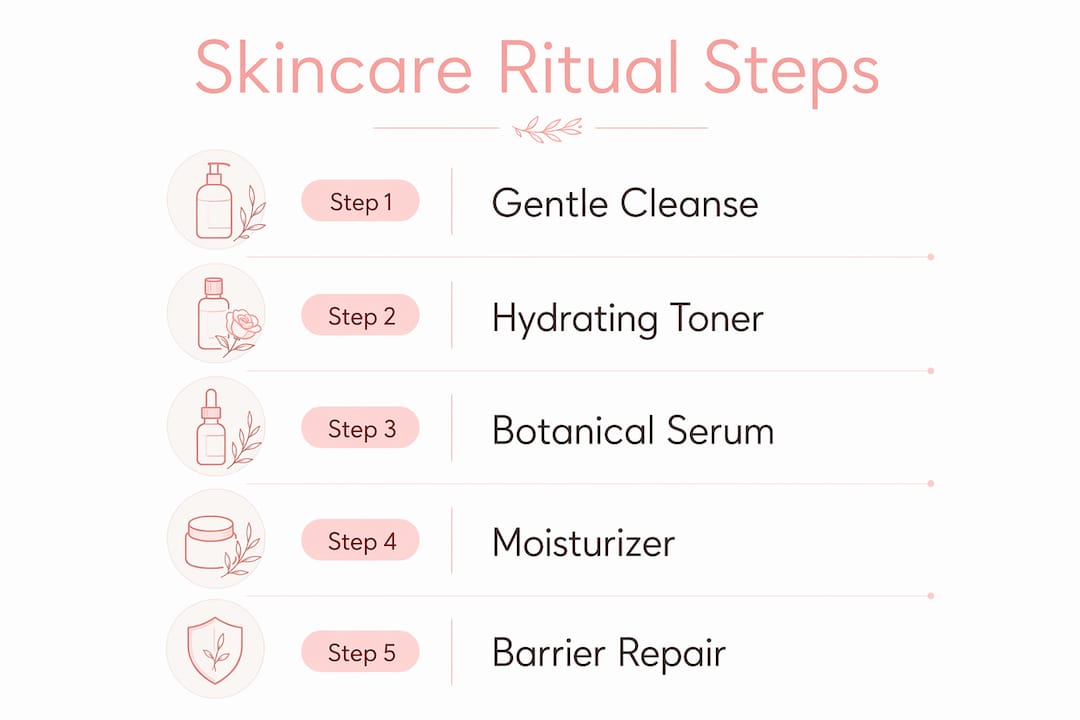
A 5-step mindful skincare ritual for wholeness
This ritual is designed to be completed in 8–10 minutes. On eczema flare days, reduce to steps 1, 2, and 5 only, and prioritize barrier-repair ingredients throughout.
- Cleanse (2 minutes): Use a gentle, low-pH cleanser with lukewarm water. Notice the temperature and texture. This is not a task to rush — it is the moment of transition from external demands to self-care.
- Hydrate (1 minute): Apply a humectant mist or toner while skin is still slightly damp. Feel the coolness settle. On flare days, plain thermal water is sufficient.
- Treat (2 minutes): Press a targeted serum (antioxidant or barrier-repair) into skin with flat palms rather than rubbing. The pressure activates circulation without friction.
- Nourish (2 minutes): Seal with a plant-based moisturizer or facial oil. Warm a small amount between your palms first — the heat releases botanical actives and the gesture itself signals care.
- Close with intention (1–2 minutes): Rest your palms lightly over your face. Take three slow breaths. You might silently name one thing you appreciate about your skin today. This closing step is where the neurobiological integration happens — do not skip it.
Keep product layers minimal. On flare days, barrier repair is the only priority; a holistic ritual for sensitive skin does not require complexity to be effective.
How to make wholeness last beyond a single ritual
A single mindful ritual is a beginning. Durability requires habit architecture. The most reliable approach is habit stacking: anchoring your skincare ritual to an existing daily behavior, such as brushing your teeth or making morning coffee, so it inherits the automaticity of the established habit. Micro-goals work better than ambitious overhauls; committing to the five-step ritual three mornings a week builds more lasting integration than a daily aspiration that collapses under pressure.
Measure progress in non-appearance-centered ways: reduced flare frequency, improved sleep quality, a greater sense of calm during the ritual itself. These markers reflect genuine wholeness more accurately than mirror-based assessments. Joining a community, whether a local green-space walking group, an online botanical beauty forum, or a brand-led wellness event, extends the integration benefits that attunement provides.
Key Takeaways
Beauty means wholeness because a thing is beautiful when it fully and harmoniously expresses its own nature, and botanical skincare rituals are one of the most direct ways to practice that integration daily.
| Point | Details |
|---|---|
| Beauty equals integrity | Aquinas’ integritas means completeness, not perfection; your skin can be beautiful in any condition when cared for with intention. |
| Two hours in green spaces matters | Spending at least two hours weekly in natural environments correlates with measurably better health and well-being. |
| Pair humectant with occlusive | Layering glycerin or aloe under shea butter or squalane seals moisture and supports barrier repair for sensitive skin. |
| Ritual closes with breath | The final intentional pause in a skincare ritual is where neural integration occurs; skipping it reduces the wholeness benefit. |
| Purelightbotanicalbeauty’s approach | Clean botanical formulas designed for sensitive and eczema-prone skin express the integrity principle in every ingredient choice. |
Beauty as a practice I believe in
The idea that beauty means wholeness is not a poetic metaphor to me — it is the organizing principle behind every product and piece of writing I create at Purelightbotanicalbeauty. What I find most compelling about the Aquinas framework is its refusal to equate beauty with perfection. Integrity means being fully yourself, which is something your skin can express even on a difficult eczema day, even in the middle of a stressful season. The neurobiological research reinforces this: the integration that beauty supports is not a destination but a practice, renewed each time you slow down and pay attention.
I also believe, with Dr. Rochelle Rowe’s scholarship in mind, that caring for your skin is never purely personal. It is a quiet act of claiming your own worth in a world that sometimes makes that feel radical. Every ritual you commit to is a small assertion that you are worth the care. That conviction is what Purelightbotanicalbeauty was built to support, one plant-based formula at a time.
Explore Purelightbotanicalbeauty’s botanical collection
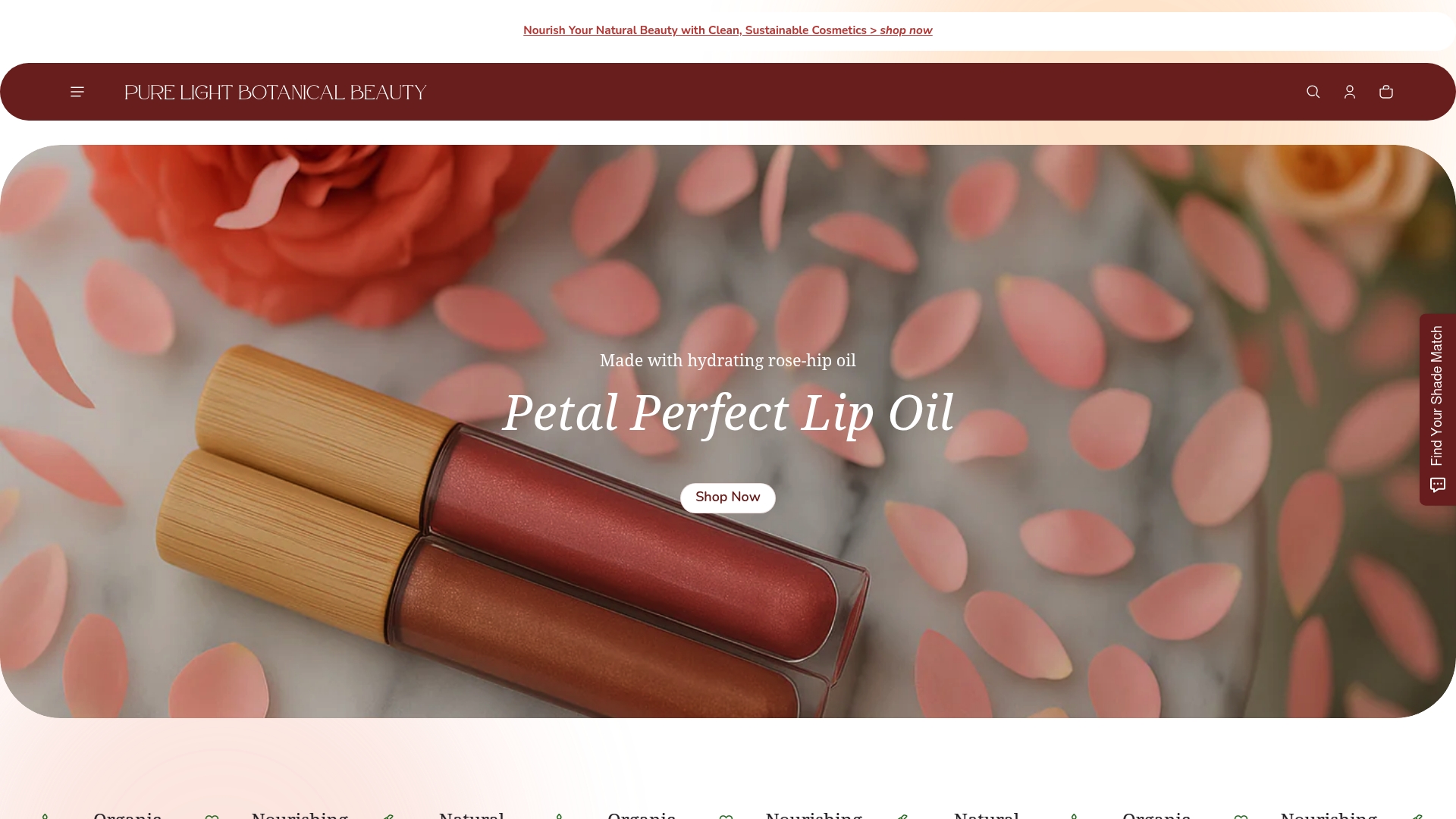
If the idea of beauty as wholeness resonates with you, the next step is finding products that actually live up to it. Purelightbotanicalbeauty formulates every product with clean, plant-based ingredients chosen specifically for their ability to nourish sensitive and eczema-prone skin without compromise. The Petal Perfect Lip Oil, Botanical Crème Blush, and Nourishing Lipstick are each designed to feel as restorative as they look, because color and care should come from the same source.
Before introducing any new botanical product, patch-test on your inner arm for 24 hours. For severe or persistent skin conditions, please consult a dermatologist before changing your routine. When you are ready to explore, visit Pure Light Botanical Beauty to find formulas that honor your skin’s integrity.
Further reading and sources
- Thomas Aquinas on beauty: Beauty as a Transcendental Property of Being, Philosophy Institute
- Sean Berube, Aquinas’ 3 Elements of Beauty
- Daniel Siegel and interpersonal neurobiology: How Beauty Can Support a More Wholesome, Meaningful, and Integrated Life, Psychology Today
- Patricia Adams Farmer and Jay McDaniel, Wholeness and Beauty (process philosophy)
- Wholeness: The Secret Ingredient of Beauty, Echoes of Eden
- Dr. Rochelle Rowe, Black Beauty and Wholeness, Diverse Minds
- The Beauty of Wholeness: Integrating Mind, Body, Spirit, Beauty Savor
- Kaitlyn, Why Beauty Matters for Inner Growth and Healing, Purelightbotanicalbeauty
Recommended
- Why Beauty Is Self-Love: Holistic Healing for Sensitive Skin – Pure Light Botanical Beauty
- What is Botanical Beauty? Understanding Natural Radiance – Pure Light Botanical Beauty
- What Is Beauty From Within? Complete Guide – Pure Light Botanical Beauty
- Why Beauty Inside Out: Complete Guide to Holistic Glow – Pure Light Botanical Beauty