

Your emotional state shapes how healthy and attractive you look right now, not just over time. Emotional balance influences skin biology, facial expression, posture, and the scent-driven mood cues that observers read within seconds of seeing you. Three things you can try today: slow your skincare application to a deliberate, intentional pace; add one deep exhale before you begin your morning routine; and get seven to eight hours of sleep tonight.
-
- Slow, mindful product application can lower cortisol and trigger a relaxation response similar to short meditation sessions.
- A single night of poor sleep measurably worsens facial impressions, making you appear more tired and older to observers.
- Breathwork before skincare can release micro-tension in the jaw and brow, improving circulation and product absorption.
A peer-reviewed study published in PMC found that mild psychological stress worsened facial impressions for up to three hours after the stressor, with observers significantly more likely to describe stressed faces as “tired” or “old.”
Table of Contents
- What does the research say about emotion, perceived beauty, and skin?
- How emotional balance biologically affects your skin
- How emotions change the way others perceive your attractiveness
- Why ritualized beauty practices help regulate your emotional state
- How to choose products that support emotional balance and sensitive skin
- An evidence-based action plan to cultivate emotional balance for skin and beauty
- How Purelightbotanicalbeauty builds products to support emotional balance and sensitive skin
- Key Takeaways
- Beauty as an act of care, not performance
- Purelightbotanicalbeauty: where botanical science meets emotional ritual
- Authoritative sources and further reading
What does the research say about emotion, perceived beauty, and skin?
The evidence connecting emotional states to appearance is no longer speculative. It spans experimental psychology, psychodermatology, and the emerging field of neurocosmetics, and the findings are consistent enough to reshape how we think about beauty routines.
| Study / Source | Method | Key Finding |
|---|---|---|
| PMC stress and facial impressions | Stroop Color-Word Test; 700-person online survey | Mild stress worsened impressions such as “tired” and “old” for several hours |
| Denis Pelli et al., Journal of Vision | Experimental emotion manipulation | Subject’s internal emotional state modulates perceived beauty of others |
| PLOS ONE, negative affect study | Self-rating vs. observer rating | Negative affect caused individuals to rate their own faces less attractive than neutral observers did |
| MDPI neurocosmetics review | Literature review of olfactory pathways | Scent accesses limbic circuits directly, enabling rapid mood modulation |
| Psychreg beauty rituals review | Behavioral and psychological review | Predictable grooming routines reduce anxiety and act as accessible mindfulness |
The PMC study’s design is worth understanding. Participants completed a standardized stress task, and an online panel of 700 observers then rated their facial photographs. The result was clear: stress produced measurable changes in facial blood flow and muscle tension that strangers could detect without any context. That finding matters because it confirms the role of emotional balance in beauty is not abstract. It is visible, and it is rapid.
Study limitations are real. Most lab-based stress research uses short, controlled stressors rather than chronic life stress, and self-report surveys carry bias. Still, the convergence across methods, from imaging to behavioral ratings to clinical dermatology, makes the overall direction of evidence persuasive.
How emotional balance biologically affects your skin
The pathway from emotional state to skin condition runs through two primary systems: the hypothalamic-pituitary-adrenal axis and the autonomic nervous system. When you experience sustained stress or negative affect, cortisol rises. Elevated cortisol increases sebum production, degrades collagen, and triggers inflammatory cytokines that worsen conditions like acne, eczema, and rosacea.
The autonomic nervous system adds another layer. Sympathetic activation, the “fight or flight” response, redirects blood flow away from the skin’s surface, reducing the microcirculation that gives skin its natural flush and radiance. Parasympathetic dominance, the state associated with calm and rest, does the opposite: it supports barrier repair, reduces transepidermal water loss, and allows anti-inflammatory processes to proceed.
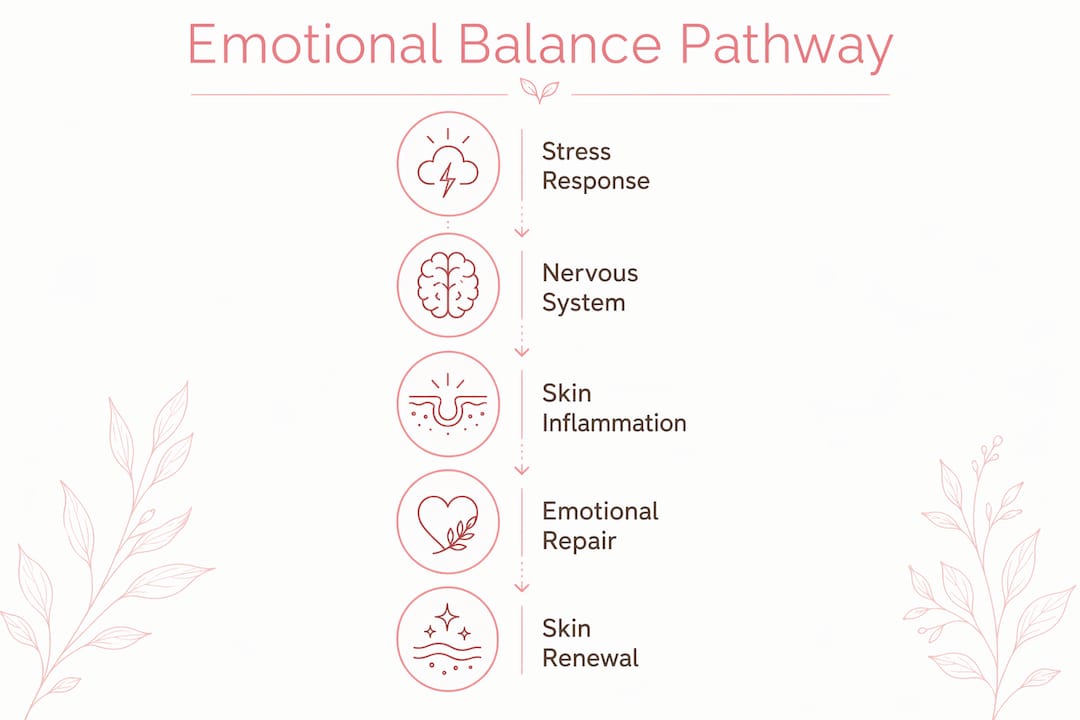
Emotional tension also produces micro-tension patterns in the jaw, brow, and shoulders. This physical holding restricts local circulation and can blunt the effectiveness of topical products by reducing absorption. Breathwork and gentle facial release before application address this directly, and the effect on visible glow can be noticeable within a single session.
Positive emotional states support skin repair through the same pathways in reverse. Calm, consistent mood reduces inflammatory load, supports the skin’s acid mantle, and allows restorative sleep, which is when the majority of cellular repair occurs. The relationship between emotional wellness and skin health is genuinely bidirectional: better skin can lift mood, and better mood supports skin.
Pro Tip: If a skin condition like eczema or rosacea flares repeatedly despite consistent topical care, consider whether a mental health clinician should be part of your care team. Psychodermatology research consistently shows that combined dermatological and psychological treatment produces better outcomes than either approach alone.
How emotions change the way others perceive your attractiveness
Attractiveness is not a fixed physical property. Research by Denis Pelli and colleagues demonstrated that a person’s internal emotional state modulates how beautiful they perceive others, and the effect is dynamic. Congruence between internal state and outward expression amplifies perceived beauty; incongruence reduces it. Feeling distressed while presenting a composed face creates a subtle mismatch that observers detect, even without being able to name it.
Nonverbal cues carry most of this signal:
- Relaxed facial muscles around the eyes and mouth signal safety and openness, which observers consistently rate as more attractive than tension-held expressions.
- Soft, sustained eye contact correlates with emotional presence and confidence, two qualities that researchers link to attractiveness judgments across cultures.
- Open posture with released shoulders communicates ease and self-assurance, qualities that read as vitality.
- Skin flush and microcirculation shift visibly with autonomic state. Calm, parasympathetic dominance produces the warm, even tone associated with health.
The olfactory pathway adds a dimension most people overlook. Scent travels directly to the limbic system, bypassing the cortex, which means a calming fragrance can shift emotional state before conscious thought catches up. Neurocosmetics researchers describe this as one of the fastest available routes to mood regulation, making scent a design priority rather than an afterthought in products intended to support emotional balance.
Empathy amplifies all of these effects. Research shows that people with higher emotional intelligence show stronger coupling between their felt emotional state and their beauty judgments, meaning the emotion-to-appearance relationship is more pronounced for both the person experiencing the emotion and the observer reading it.

Why ritualized beauty practices help regulate your emotional state
A beauty ritual is not just a sequence of steps. When performed with intention and consistency, it functions as a behavioral anchor: a predictable, sensory-rich experience that signals safety to the nervous system and frees cognitive resources from vigilance. Psychreg’s review of beauty ritual psychology found that grooming routines reduce anxiety and create present-moment attention comparable to accessible mindfulness practice.
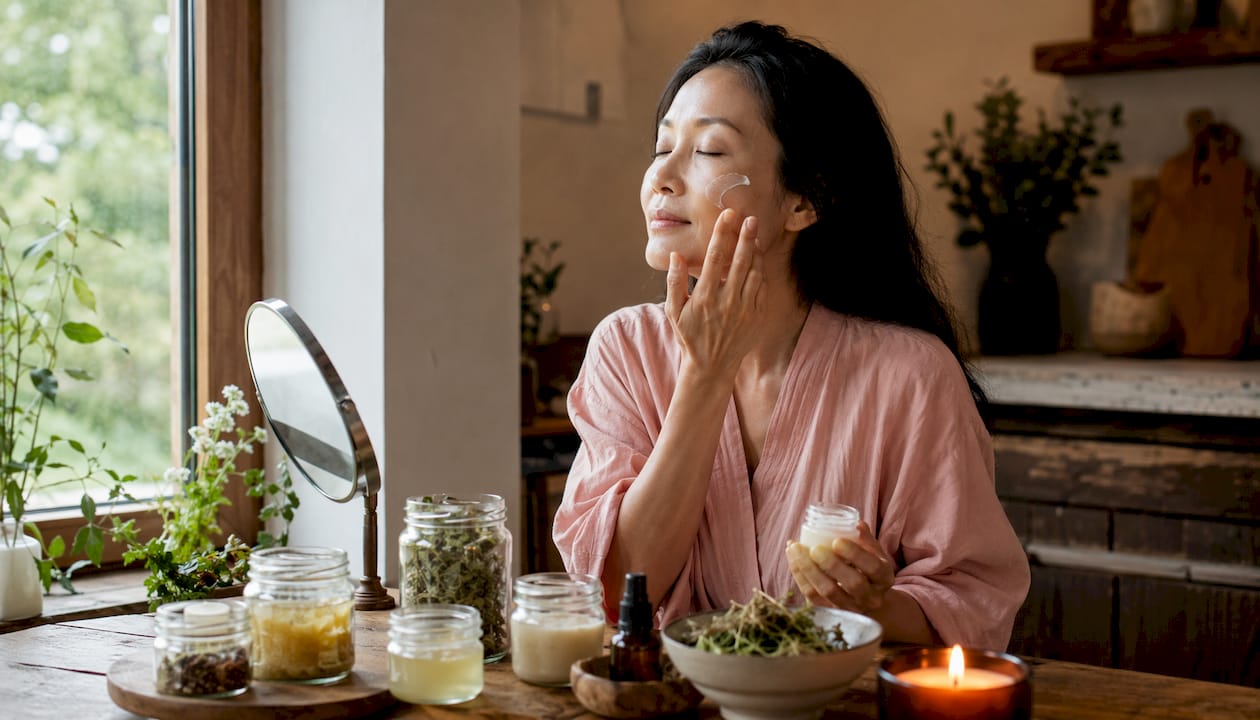
Three ritual structures that translate this science into daily life:
Morning grounding ritual (5–7 minutes): Begin with one slow exhale to release jaw tension. Apply a gentle cleanser with deliberate, circular strokes, attending to the sensation of temperature and texture. Follow with a botanical serum or oil, using upward strokes that stimulate lymphatic flow. The goal is not speed. It is the parasympathetic shift that comes from intentional touch.
Evening repair ritual (8–10 minutes): Dim the light. Use a calming scent, lavender or chamomile, to signal the transition from alertness to rest. Apply a barrier-supporting moisturizer slowly, pausing at the jaw and temples where tension accumulates. This ritual works with the skin’s nighttime repair cycle and reinforces the emotional cue that the day is complete.
5-minute stress reset: Three slow breaths, a brief facial self-massage releasing the brow and jaw, and one product applied with full attention. This is enough to interrupt a cortisol spike and redirect the nervous system.
Pro Tip: For sensitive or eczema-prone skin, choose fragrance-free or low-concentration botanical scents for your rituals. The calming effect of intentional touch and slow application is independent of fragrance, so you can access the mood benefits without the irritation risk.
For a detailed guide to building rituals that respect reactive skin, the holistic beauty ritual guide at Purelightbotanicalbeauty walks through each step with sensitive skin in mind.
How to choose products that support emotional balance and sensitive skin
Not every product marketed for “emotional wellness” delivers on that promise, and some cause harm in the attempt. Choosing well means weighing emotional benefit against dermatological safety, and those two goals occasionally pull in opposite directions.
| Approach | Emotional Effect | Sensitivity Risk | Evidence Level |
|---|---|---|---|
| Aromatherapy-first (high essential oil concentration) | Strong, rapid mood shift via olfactory-limbic pathway | Moderate to high; common allergens in undiluted oils | Moderate; mechanistic evidence strong, clinical skin-safety data limited |
| Dermatologist-first, low-fragrance | Minimal direct scent-based mood effect | Low; formulated to avoid known irritants | High; well-supported for barrier repair and inflammation reduction |
| Balanced botanical approach (low-concentration, skin-safe botanicals) | Gentle mood support via scent and texture | Low to moderate; depends on specific ingredients | Emerging; supported by neurocosmetics and psychodermatology research |
Concrete selection criteria worth applying:
- Fragrance concentration: Look for products where fragrance is listed low on the ingredient list, or where the brand specifies essential oil percentages. High concentrations increase sensitization risk over time.
- Allergen avoidance: Common fragrance allergens include linalool, limonene, and cinnamal. If your skin is reactive, scan ingredient lists for these.
- Non-comedogenic formulations: For acne-prone or stressed skin, avoid heavy occlusive oils like coconut oil as primary ingredients.
- Soothing actives: Niacinamide, centella asiatica, colloidal oatmeal, and ceramides support barrier repair and reduce inflammation without emotional-claim overreach.
Red flags in emotional beauty marketing include vague claims like “clinically proven to reduce stress” without a cited study, essential oil concentrations above 1–2% for leave-on products, and preservatives like methylisothiazolinone, a known sensitizer. The aromatherapy and beauty guide at Purelightbotanicalbeauty covers scent selection and safety in practical detail.
An evidence-based action plan to cultivate emotional balance for skin and beauty
The most effective approach combines sleep, movement, breathwork, and consistent skincare into a rhythm your nervous system can predict and rely on.
7-day starter routine:
- Day 1: Set a consistent sleep and wake time. Aim for 7–8 hours. This single change produces measurable improvements in skin repair and mood within days.
- Day 2: Add a 5-minute morning breathwork session: four counts in, hold four, out four. Do this before any screen time.
- Day 3: Slow your evening skincare to 8 minutes. Apply each product with full attention to texture and sensation.
- Day 4: Add 20 minutes of moderate movement, a walk, yoga, or stretching. Movement reduces cortisol and increases circulation to the skin.
- Day 5: Practice one moment of mirror work: look at your face with curiosity rather than criticism. PLOS ONE research shows negative self-evaluation lowers perceived attractiveness in a measurable feedback loop; interrupting that loop matters.
- Day 6: Add one social connection, a real conversation, not a scroll. Social contact regulates the autonomic nervous system and reduces inflammatory markers.
- Day 7: Review: note any changes in mood, sleep quality, or skin texture. Progress in mood typically appears within days to two weeks; visible skin changes take four to eight weeks of consistency.
Daily habits that sustain the gains:
- Sleep hygiene: no screens 30 minutes before bed, consistent wake time, cool room temperature.
- Short breathwork: even three slow exhales before a stressful moment shifts autonomic state.
- Consistent skincare: the ritual effect depends on repetition, not product complexity.
- Social contact: at least one meaningful interaction daily.
Expect mood benefits within one to two weeks of consistent practice. Visible skin improvements, reduced redness, improved texture, fewer breakouts, typically require four to eight weeks. Track both by keeping a brief daily note on mood and one weekly photograph in consistent lighting.
How Purelightbotanicalbeauty builds products to support emotional balance and sensitive skin
Purelightbotanicalbeauty’s approach to product design reflects the principles this article has outlined. Every formula begins with the question of what the skin needs to feel calm and supported, and what the person applying it needs to feel present and cared for.
The brand’s product features map directly to the emotional and skin outcomes the research describes:
- Gentle botanical actives like plant-derived oils and soothing extracts support barrier repair without the inflammatory risk of synthetic fragrances or harsh preservatives.
- Texture choices favor lightweight, skin-melting formulas that reward slow, intentional application, reinforcing the tactile ritual effect.
- Low-irritant scent profiles allow the olfactory-limbic mood benefit without the sensitization risk of high essential oil concentrations.
A practical evening ritual using Purelightbotanicalbeauty products: apply the Botanical Crème Blush with fingertips in slow, upward strokes, attending to the warmth of the product and the sensation of touch. Follow with the Petal Perfect Lip Oil, applied deliberately, as a closing gesture of care. This two-step sequence takes under three minutes and delivers both the tactile anchoring and the gentle botanical nourishment the skin needs overnight. It suits sensitive and eczema-prone skin particularly well.
Pro Tip: If you have a diagnosed skin condition like eczema or rosacea, consult a dermatologist before adding new products to your routine. Purelightbotanicalbeauty’s formulas are designed with sensitive skin in mind, but individual skin responses vary, and a dermatologist can help you identify which ingredients are safe for your specific profile.
Key Takeaways
Emotional balance shapes perceived beauty and skin health through measurable biological pathways, and consistent rituals are one of the most accessible tools for cultivating both.
| Point | Details |
|---|---|
| Stress alters appearance rapidly | Mild stress worsened facial impressions for up to 3 hours in a 700-person PMC study. |
| Cortisol drives skin flares | Elevated cortisol increases sebum, inflammation, and barrier breakdown, worsening acne and eczema. |
| Ritual pace matters | Slow, intentional application lowers cortisol and creates a relaxation response similar to meditation. |
| Mood changes come first | Expect mood benefits within one to two weeks; visible skin improvements take four to eight weeks. |
| Purelightbotanicalbeauty | Botanical formulas and texture-focused design support both emotional ritual and sensitive-skin safety. |
Beauty as an act of care, not performance
There is a quiet but significant shift happening in how we understand beauty, and I find it genuinely moving. For too long, beauty was framed as something you performed for others, a surface presentation managed through the right products and the right techniques. What the research in psychodermatology and neurocosmetics is revealing is something far more intimate: that the state you bring to your mirror matters as much as what you put on your skin.
The beauty feedback loop described in PLOS ONE research, where negative self-evaluation lowers perceived attractiveness, is not a flaw in human psychology. It is an invitation. It tells us that the inner work, the breathwork, the slow ritual, the moment of genuine self-regard, is not separate from beauty care. It is beauty care. And that reframes everything. When you slow down your evening routine, you are not just applying moisturizer. You are sending a signal to your nervous system that you are safe, that you are worth attending to, that this moment belongs to you. That signal has measurable downstream effects on cortisol, on skin barrier function, on how you carry yourself the next morning.
The brands and practices that understand this are not selling a product. They are offering a practice. That distinction is worth holding onto as you build your own routine.
Purelightbotanicalbeauty: where botanical science meets emotional ritual
The gap between knowing what supports emotional balance and actually building it into your day is where most people get stuck. Purelightbotanicalbeauty was created to close that gap, offering clean, plant-based formulas that make the ritual easy to begin and worth returning to.
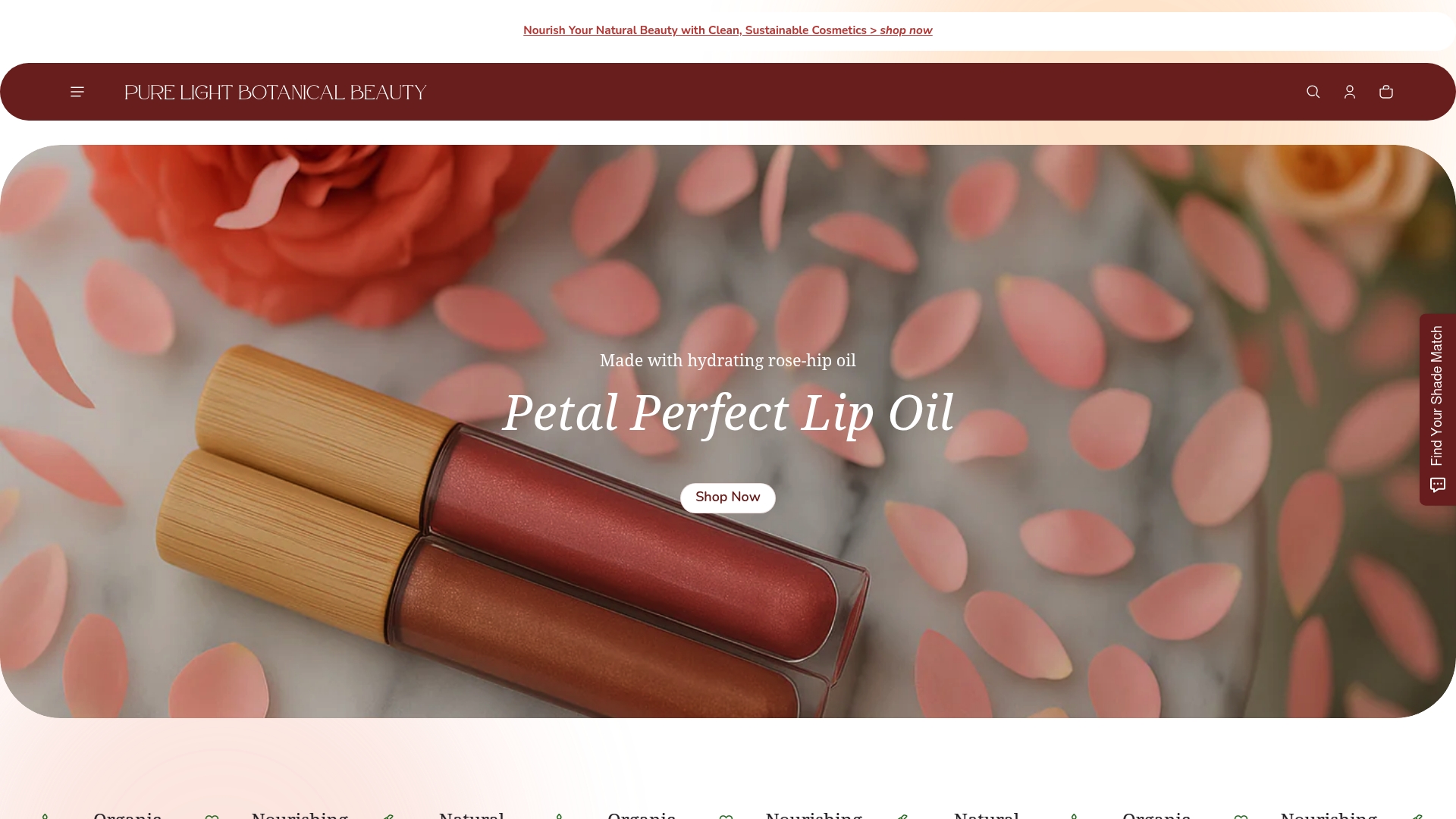
Products like the Petal Perfect Lip Oil and Botanical Crème Blush are formulated with gentle botanicals that nourish sensitive and eczema-prone skin while rewarding the kind of slow, intentional application that the research shows actually shifts your nervous system. There are no harsh preservatives, no high-concentration irritants, and no overreaching wellness claims. Just meticulous, clean formulas designed to feel as good as they perform. If you are managing a skin condition, please consult a dermatologist before introducing new products. For everyone ready to begin, explore the full collection at Purelightbotanicalbeauty and find the ritual that fits your skin and your life.
Authoritative sources and further reading
The findings in this article draw from peer-reviewed research and respected clinical reviews. The sources below represent the strongest evidence base for the claims made.
| Source | Focus | When to consult |
|---|---|---|
| PMC: Effects of mild psychological stress on facial impressions | Stress, facial blood flow, observer ratings | Primary evidence for stress-appearance link |
| Journal of Vision (Denis Pelli et al.) | Emotion modulation of perceived beauty | Mechanisms of emotion-beauty coupling |
| PLOS ONE: Negative affect and self-perception of attractiveness | Beauty feedback loop, cognitive techniques | Self-perception and combined care approaches |
| MDPI neurocosmetics review | Olfactory-limbic pathways, scent and mood | Scent selection and product design rationale |
| Psychreg: Psychology of beauty rituals | Ritual, mindfulness, anxiety reduction | Ritual design and behavioral anchoring |
Seek professional help when skin flares are severe, persistent, or accompanied by significant distress. A board-certified dermatologist can assess inflammatory conditions like eczema and rosacea; a licensed mental health clinician can address chronic stress, anxiety, or mood symptoms that may be driving skin reactivity. The two disciplines work best together.
This article is general information, not medical or dermatological advice. Consult a qualified professional for guidance specific to your skin condition or mental health needs.
Recommended
- The Role of Emotional Wellness in Beauty and Skin Health – Pure Light Botanical Beauty
- Makeup for Emotional Wellness: What the Science Says – Pure Light Botanical Beauty
- Mental health beauty tips: calm skin and mind naturally – Pure Light Botanical Beauty
- Why Beauty Matters for Inner Growth and Healing – Pure Light Botanical Beauty